

 Send
Send Share
Share
 Details
 Guide
Guide

 Download
 Similars
 Diaporama
 Stats
StatsUntitled


 Read More
Giclée / Art Print
Museum-quality giclée or canvas print with fast production and flexible finish options. ( Buy Hand Made Painting Switch to Digital Image)




































Pick from our preset sizes that match the artwork's original proportions.

Type the width and the height you need, to fit your frame or your wall. A print can only be cut, never made bigger than the picture, so a size with a different shape loses a part of the image. We send you a digital mockup to approve before we print anything. The picture shown on this page does not show the real cut — only the mockup does.
Worldwide Delivery () in 2 weeks instead of standard 4/5 weeks. (21 October)

Free Worldwide Express Shipping

High-Quality Linen Canvas

Full Shipping Insurance

Customs Tax Refund Guarantee

True Color Matching Guarantee

100-Day Return Policy (Defects Only)

100% Money-Back Guarantee

Bulk Discount Offer
 Glass option is only available in size under 110 CM

Untitled
Giclée / Art Print
Reproduction Size
-


Total Price
$ 81
The Geometry of Perception: An Encounter with Moholy-Nagy's Vision
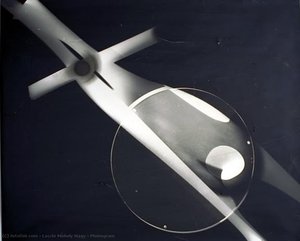
To stand before an image like this "Untitled" photograph by László Moholy-Nagy is not merely to observe a scene, but to undergo a visual interrogation. It is a masterful convergence of industrial rigor and ephemeral natural beauty, rendered through the experimental lens of early modern photography. The composition immediately arrests the viewer with its stark, monochromatic drama. Here, the familiar landscape—the suggestion of water, the distant boats—is fractured, reassembled by an almost architectural intervention. Moholy-Nagy does not simply record; he constructs a dialogue between man's ingenuity and nature’s flow, trapping it within a framework of wood and taut wire.
Constructivism and the Modern Machine Aesthetic
This work stands as a potent artifact of its time, deeply rooted in the spirit of Constructivism and New Objectivity. Moholy-Nagy, a pioneer whose career spanned the revolutionary fervor of the Bauhaus movement, believed that art must engage with the realities of the machine age. The photograph embodies this philosophy; every diagonal wire, every rigid wooden support, speaks to an embrace of industrial materials and geometric purity. The interplay between the structural gate—a clear articulation of rectilinear form—and the chaotic network of intersecting lines suggests a visual symphony played on the strings of modern technology. It is art that refuses sentimentality in favor of objective, exhilarating structure.
Texture, Tone, and the Play of Light
The technical brilliance lies within its tonal mastery. Rendered entirely in shades of gray, the piece achieves a breathtaking depth through contrast. One can almost feel the tactile difference between the rough grain of the wood, the near-invisible tension of the wires, and the smooth, reflective plane of the water below. The lighting, diffused yet dramatic, sculpts shadows that are as important to the composition as the illuminated forms themselves. This careful handling of light and shadow transforms what might be a simple photograph into a complex study in visual texture, inviting close contemplation of every subtle gradation from deep obsidian black to luminous white.
Symbolism: Fragmentation and Reassembly
Beyond its formal qualities, the piece resonates with profound symbolic weight. The fragmented composition itself suggests themes of perception—how we are forced to view reality through constructed filters or moments of disruption. Is the gate a barrier, or is it a portal? The tension between the solid foreground structure and the receding depth toward the water evokes a sense of both enclosure and boundless possibility. It speaks to the modern condition: one is always framed, always viewed through intersecting systems—be they social, technological, or artistic.
Bringing the Avant-Garde Home
For the collector or designer seeking an object that transcends mere decoration, this reproduction offers intellectual depth alongside breathtaking visual impact. It is a piece that demands conversation, challenging preconceived notions of what art should be. To incorporate such a work into a space is to infuse it with the dynamism of early 20th-century utopian thought—a sophisticated nod to Bauhaus principles that celebrates clarity, structure, and the exhilarating potential found at the intersection of art and industry.
Questions & Answers
What stage of László Moholy-Nagy's development does "Untitled" represent?
"Untitled" belongs to the Bauhaus period of László Moholy-Nagy's career. This classification relates the work to the artist's development.
Is "Untitled" available as a fine art print?
To get a print of "Untitled" by László Moholy-Nagy, simply order it on its Fine Art Print page: a fine art print on cotton canvas or archival canvas paper.
How light is "Untitled" overall?
The perceived brightness of "Untitled" by László Moholy-Nagy is deep_shadow. It can be matched to the light of the intended space.
Artist Biography
László Moholy-Nagy: A Pioneer of Modern Art and the Bauhaus
- Born: Bacs-Kajala, Hungary (1895)
- Died: 1946
László Moholy-Nagy was a profoundly influential Hungarian painter, photographer, sculptor, and designer. He is best known for his significant contributions to the Bauhaus school and his pioneering work in Constructivism, typography, photography, and kinetic art. His artistic philosophy centered on integrating technology and industry into the arts, advocating for a new vision of creativity that embraced the modern world.
Early Life and Influences
- Early Years & Family: Born László Weisz to a Jewish family in Bacsborsód, Hungary, he later adopted the surname Moholy-Nagy. His cousin was the renowned conductor Sir Georg Solti.
- Education and War Service: He initially studied law in Budapest before serving in World War I, sustaining a serious injury. This period exposed him to avant-garde movements through journals like "Jelenkor" and the “activist” circle around Lajos Kassák’s journal "Ma."
- Early Artistic Training: Following his military service, he studied with Hungarian Fauvist artist Róbert Berény, demonstrating an early interest in modern artistic trends. He briefly supported the Hungarian Soviet Republic.
- Key Influences: Moholy-Nagy was heavily influenced by Constructivism and Suprematism, movements that emphasized geometric abstraction and industrial materials. These influences are evident in his later works.
The Bauhaus Years and "New Vision"
- Joining the Bauhaus: In 1923, Moholy-Nagy joined the Bauhaus school in Weimar, Germany, initially co-teaching the preliminary course with Josef Albers and eventually replacing Johannes Itten as head of the metal workshop.
- Shifting the Bauhaus Direction: His arrival marked a shift away from Expressionism towards a more Constructivist and design-oriented approach, aligning with the school’s original aims.
- "New Vision" (Neues Sehen): Moholy-Nagy is most famously known for coining the term "New Vision," which championed the camera's ability to reveal aspects of reality invisible to the human eye. This concept underpinned his photographic and artistic experimentation.
- Photograms: He pioneered the photogram technique – creating images by placing objects directly on light-sensitive paper, without a camera – demonstrating innovative approaches to photography.
- Experimentation with Materials & Technology: Moholy-Nagy embraced industrial materials like metal, plexiglass, and electric lighting in his sculptures and designs, reflecting his belief in the integration of art and technology.
Major Achievements and Innovations
- "Lichtrequisit einer elektrischen bühne" (Light-Space Modulator): Completed in 1930, this kinetic sculpture used moving parts and projected light to create dynamic patterns on surrounding surfaces, considered a precursor to both kinetic art and light art.
- Photography & Film: His photographic work explored abstraction, texture, and movement, often utilizing unconventional techniques like photomontage and experimental lighting. He also ventured into filmmaking.
- Teaching Legacy: As an educator at the Bauhaus and later at the New Bauhaus in Chicago (which he founded), Moholy-Nagy profoundly influenced generations of artists and designers.
- Stage Design & Advertising: Beyond his fine art practice, he designed sets for theatrical productions and created advertising campaigns, demonstrating a versatility that reflected his design philosophy.
Historical Significance
- Pioneer of Modern Art: László Moholy-Nagy stands as a pivotal figure in 20th-century modern art, bridging the gap between painting, sculpture, photography, and industrial design.
- Influence on Bauhaus Design: His contributions to the Bauhaus school were instrumental in shaping its curriculum and aesthetic, leaving a lasting impact on design education worldwide.
- Advocate for Technological Integration: Moholy-Nagy's emphasis on integrating technology into art anticipated many developments in contemporary art practices.
- Legacy of "New Vision": His concept of “New Vision” continues to inspire artists and photographers to explore the possibilities of perception and representation through innovative techniques.

László Moholy-Nagy
1895 - 1946 , Hungary
Quick Facts
- Artistic Movement Or Style: Constructivism, Bauhaus
- Artists Or Movements Influenced By This Artist:
- Marianne Brandt
- György Kepes
- Andor Weininger
- Artists Who Influenced This Artist: ['Robert Berény']
- Date Of Birth: 1895
- Date Of Death: 1946
- Full Name: László Moholy-Nagy
- Nationality: Hungarian
- Notable Artworks:
- Small Composition
- Flower
- Mass Psychosis
- Untitled
- The Storm
- Photogram
- Place Of Birth: Bacs-Kajala, Hungary
Related Articles
Timeless Shadows: The Artistry, History, and Emotional Resonance of Black and White Photography
Explore the profound artistry of black and white photography. From historical mastery to the interplay of light and shadow, discover how monochrome captures timeless emotion and form through a sophisticated lens of art history.
Beyond Color: The Timeless Power and Artistry of Black and White Photography
Explore the profound artistry of black and white photography. From the chemistry of gelatin silver to the chiaroscuro of the Old Masters, discover how monochrome captures the eternal essence of light, form, and emotion for the discerning art collector.

Pictorialism: A Search for Artistic Photography's Soul – Aesthetics, Techniques & Legacy
Explore the captivating world of Pictorialism – a pivotal movement that transformed photography into fine art. Discover key artists like Stieglitz & Käsebier, techniques, and collecting tips from experts.

Monochrome Visions: Exploring the Aesthetic & Historical Significance of Black & White Photography
Explore the rich history & artistic power of black and white photography. From early techniques to iconic masters like Ansel Adams, discover why monochrome continues to captivate art lovers today. Expert insights for collectors.

Beyond the Lens: Photography's Enduring Influence on Modern & Contemporary Art
Explore photography's pivotal role in shaping modern & contemporary art. Discover key movements, influential artists like Stieglitz, and expert collecting advice from OriginalUniqueArt.


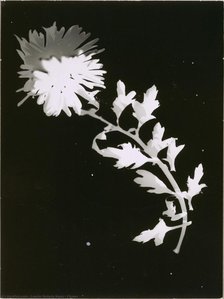




![Untitled [flower]](/media/artworks/images-thumb/eb/0d/eb0d8a64e9e5b1486ea88930be774245.jpg)


