Text size

() ·

A painting made for you, by hand

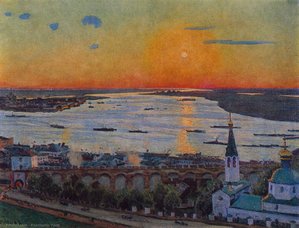
Disappearing Province

Hand Made Oil Reproduction

Hand-painted oil on canvas in your size and frame, made to order by our artists. ( Switch to Print Switch to Digital Image)

Collectible Description

Explore 'Disappearing Province' by Konstantin Yuon (1929). An oil painting of two women in a warm interior scene, showcasing Impressionist realism & rich textures. Discover Russian art history.

Artist Biography

Konstantin Yuon (1875-1958) was a renowned Russian painter evolving from Impressionist landscapes & Symbolism to Soviet Realism. Explore iconic works like 'Parade on Red Square' and his diverse artistic journey.

from ·

Chapter 1

How large should it be?

Slide to change the size; the picture on the left shows the frame at its real width. The proportions of the original are kept.

Standard
custom
CM
INCH

Pick from our preset sizes that match the artwork's original proportions.

width
height

Type the width and the height you need, to fit your frame or your wall. This is hand-painted, so for a size with a different shape the artist can paint a bit more around the picture, or cut a bit — you choose. We send you a digital mockup to approve before the painting starts. The picture shown on this page does not show the real result — only the mockup does.

Chapter 2

How should it arrive?

Choose the edges of the stretched canvas

Choose your frame

Corner sample of the WhiteWrap canvas edge finish, stretched on solid wood bars
White $1
Corner sample of the BlurSideWrap canvas edge finish, stretched on solid wood bars
Blurside $1
Corner sample of the ExtendedWrap canvas edge finish, stretched on solid wood bars
Extended $1
Corner sample of the P118B picture frame: moulded polystyrene, 5 cm wide and 3 cm thick
P118B $10
Corner sample of the P118H picture frame: moulded polystyrene, 5 cm wide and 3 cm thick
P118H $10
Corner sample of the P118W picture frame: moulded polystyrene, 5 cm wide and 3 cm thick
P118W $10
Corner sample of the P438Z picture frame: moulded polystyrene, 5.5 cm wide and 3.5 cm thick
P438Z $10
Corner sample of the P508JH picture frame: moulded polystyrene, 7 cm wide and 3.5 cm thick
P508JH $12
Corner sample of the P508YH picture frame: moulded polystyrene, 7 cm wide and 3.5 cm thick
P508YH $12
Corner sample of the P805H picture frame: moulded polystyrene, 5 cm wide and 3.5 cm thick
P805H $10
Corner sample of the P805Z picture frame: moulded polystyrene, 5 cm wide and 3.5 cm thick
P805Z $10
Corner sample of the P919BZ picture frame: moulded polystyrene, 7 cm wide and 3.5 cm thick
P919BZ $10
Corner sample of the P919G picture frame: moulded polystyrene, 7 cm wide and 3.5 cm thick
P919G $10
Corner sample of the P919XJ picture frame: moulded polystyrene, 7 cm wide and 3.5 cm thick
P919XJ $10
Corner sample of the P959ZH picture frame: moulded polystyrene, 5 cm wide and 3 cm thick
P959ZH $10
Corner sample of the P968JZ picture frame: moulded polystyrene, 6 cm wide and 4 cm thick
P968JZ $12
Corner sample of the W106C picture frame: solid wood, 5 cm wide and 3 cm thick
W106C $8
Corner sample of the W218G picture frame: solid wood, 5 cm wide and 3 cm thick
W218G $10
Corner sample of the W218JH picture frame: solid wood, 5 cm wide and 3 cm thick
W218JH $8
Corner sample of the W218Y picture frame: solid wood, 5 cm wide and 3 cm thick
W218Y $10
Corner sample of the W307PJ picture frame: solid wood, 6 cm wide and 3 cm thick
W307PJ $10
Corner sample of the W316G picture frame: solid wood, 6 cm wide and 3 cm thick
W316G $10
Corner sample of the W316PJ picture frame: solid wood, 6 cm wide and 3 cm thick
W316PJ $8
Corner sample of the W316Y picture frame: solid wood, 6 cm wide and 3 cm thick
W316Y $10
Corner sample of the W398PJ picture frame: solid wood, 5 cm wide and 3 cm thick
W398PJ $8
Corner sample of the W4111J picture frame: solid wood, 6.5 cm wide and 3.5 cm thick
W4111J $10
Corner sample of the W500HY picture frame: solid wood, 7 cm wide and 5 cm thick
W500HY $15
Corner sample of the W500JH picture frame: solid wood, 7 cm wide and 5 cm thick
W500JH $15
Corner sample of the W692G picture frame: solid wood, 8 cm wide and 4 cm thick
W692G $12
Corner sample of the W849H picture frame: solid wood, 5 cm wide and 3 cm thick
W849H $8
Corner sample of the W940BG picture frame: solid wood, 7.5 cm wide and 4.5 cm thick
W940BG $15
Corner sample of the W953PJ picture frame: solid wood, 6 cm wide and 3.5 cm thick
W953PJ $8
Corner sample of the H24-GOLD picture frame: carved wood with gesso, 10 cm wide and 6 cm thick
H24-GOLD $30
Corner sample of the H24-SILVER picture frame: carved wood with gesso, 10 cm wide and 6 cm thick
H24-SILVER $30
Corner sample of the H36-GOLD picture frame: carved wood with gesso, 15 cm wide and 6.5 cm thick
H36-GOLD $45
Corner sample of the H36-SILVER picture frame: carved wood with gesso, 15 cm wide and 6.5 cm thick
H36-SILVER $45
Frame preview
Framed

Moulding: . Overall size with the frame: .

Chapter 3

Who paints it, and should anything change?

Examples of what can be changed: Replace face with customer photo; Add pet (e.g., replace cat with dog); Include hidden message in background; Change background landscape or elements.
After order, OriginalUniqueArt.com team will email client for instructions and provide a mockup preview

Worldwide Delivery () in 3/4 weeks instead of standard 5 weeks. (4 November). No compromise on quality.

Chapter 4

The finishing touches

A nameplate, as in a museum?

Engraved Bronze Plaque Details

This elegant plaque features the artist's name and the title of the artwork, finely engraved for a timeless presentation.

It is made from bronze with a refined, elegant finish. The text is precisely laser-engraved for a sharp and permanent result. Measuring 9x2 cm, the plaque is compact yet easy to read. It's built to be durable and scratch-resistant, offering a professional, museum-quality look. Mounting is simple thanks to the included adhesive backing.

Transparent Acrylic Plaque Details

The plaque includes essential engraved details such as the artist's name, the title of the artwork, the date it was created, the type of media used-like oil on canvas or watercolor-a brief description of the piece, and a QR code that links to the complete artwork information.

It is crafted from clear acrylic, offering a sleek, modern appearance. The text is UV-engraved in black to ensure strong visual contrast. With a size of 10x15 cm, it ensures optimal readability. It comes equipped with two metal hooks for secure wall mounting. The plaque is designed to be weather-resistant, making it suitable for various environments, and it includes interactive features that work seamlessly with smartphone scanning.

Black Acrylic Plaque Details

This elegant plaque includes engraved information such as the artist's name, the title of the artwork, the date it was created, the type of media used (like oil on canvas or watercolor), a short description of the artwork, and a QR code for quick access to more information.

The plaque itself is made from refined black acrylic with a premium finish. The text is laser-engraved in white for high contrast and readability. Its size is 10x15 cm, designed to be easy to read. It comes with two metal hooks for professional mounting. The design is sleek and fits any interior style. It is also weather-resistant and durable, with built-in digital integration for mobile compatibility.

A protective varnish?

When do you need it?

Chapter 5

Your painting, as you ordered it

Disappearing Province

Reproduction Medium

Reproduction Size

-

Elite Senior Artist

More detail, finesse, and extra production time

-

Reproduction Frame

-

-

For artworks or reproductions larger than 105 cm (approximately 41 inches) on any side, the frame will be shipped as a kit, disassembled. This method ensures safe delivery and prevents damage during transport.

Professional assembly required - this is not a DIY product.
The kit must be assembled and the canvas stretched by an experienced professional framer, using wood glue (not supplied), a canvas stretching plier and clamps to hold the bars square while the glue dries. Incorrect assembly or uneven canvas tension can permanently damage the artwork and is not covered by our warranty.

  • All solid wood bars are included, precisely cut to size.

  • Assembled with the screws provided, plus wood glue for the corner joints, which is not supplied and must be sourced by your framer.

  • Professional tools are required and not included: a canvas stretching plier (tensioner) and clamps to hold the bars square while the glue dries.

Important:
The corner joints require wood glue, the bars must be held with clamps until the glue is fully dry, and tightening the canvas on the assembled frame requires a canvas stretching plier. None of these are included in the kit. Please arrange an experienced professional framer before ordering this size.

Nameplate

-

-

Protective Varnish

Glossy Varnish (enhances colors, protects against light/moisture)

-

Customize My Artwork

Examples of what can be changed: Replace face with customer photo; Add pet (e.g., replace cat with dog); Include hidden message in background; Change background landscape or elements.

-

Urgent

Worldwide Delivery () in 3/4 weeks instead of standard 5 weeks. (4 November). No compromise on quality.

-

Express Shipping

Worldwide Delivery () in 5 weeks. (11 November).

Included

Total Price

$ 325

Total Price $ 325

Glass option is only available in size under 110 CM

Included with every order

  • Free Worldwide Express Shipping
  • High-Quality Linen Canvas
  • Full Shipping Insurance
  • Customs Tax Refund Guarantee
  • True Color Matching Guarantee
  • 100-Day Return Policy (Defects Only)
  • 100% Money-Back Guarantee
  • Bulk Discount Offer

A Quiet Intimacy Captured in Oil

In the tenderly rendered masterpiece Disappearing Province, created in 1929 by the esteemed Russian master Konstantin Yuon, we are invited into a sanctuary of domestic warmth. The painting presents an evocative interior scene where two women—one elder, draped in a dark headscarf, and one younger, adorned with a vibrant red covering—are caught in a moment of quiet, shared existence. There is a profound sense of stillness here, as if the world outside has ceased to exist, leaving only the soft murmur of conversation and the gentle weight of companionship. The composition, while rich with detail, maintains a delicate balance, guiding the viewer's eye from the expressive faces of the subjects to the lush floral arrangements that breathe life into the room.

The artistry of Yuon shines through his masterful command of texture and light. Utilizing a thick impasto technique, the artist builds layers of oil paint that lend a tactile, three-dimensional quality to the canvas. This heavy application is particularly striking in the floral elements and the folds of the textiles, where the physical presence of the paint mirrors the richness of the subject matter. The lighting, appearing to stream from an unseen window to the right, bathes the scene in a golden, nostalgic glow, casting soft highlights that define the organic shapes of the figures and create a shallow, intimate depth of field. This interplay of light and shadow evokes the fleeting nature of memory, much like the title itself suggests.

A Tapestry of History and Symbolism

Beyond its surface beauty, Disappearing Province serves as a poignant window into a vanishing era. Painted during a period of significant transition in Russian history, the work carries an underlying layer of nostalgia. The cluttered yet harmonious arrangement of framed pictures on the wall and decorative elements suggests a deep reverence for family lineage and domestic stability. These objects act as silent witnesses to the passage of time, symbolizing the preservation of heritage amidst a changing landscape. The floral arrangements, often symbols of abundance and the ephemeral beauty of life, further reinforce this theme of finding permanence within the transient.

For the discerning collector or interior designer, this piece offers more than mere decoration; it provides an emotional anchor for a room. The warm color palette, dominated by earthy tones and punctuated by brilliant reds and soft greens, makes it an ideal centerpiece for spaces designed for contemplation and comfort. Whether placed in a sunlit library or a sophisticated living area, the painting’s blend of Impressionist realism and soulful storytelling invites conversation and inspires a sense of peace. Owning a high-quality reproduction of this work allows one to bring the timeless elegance and historical depth of Konstantin Yuon into the modern home, preserving a fragment of a beautiful, disappearing world.

Questions & Answers

What medium is "Disappearing Province" by Konstantin Yuon executed in?

Konstantin Yuon used the oil on canvas technique for "Disappearing Province". The technique defines the material nature of the original work.

Which palette and lead color define "Disappearing Province"?

"Disappearing Province" is defined by an earthy palette led by espresso (#453d3c).

How harmonious are the colors of "Disappearing Province" by Konstantin Yuon?

The color harmony of "Disappearing Province" is recorded as discordant palette.

More about this painting

Preview AR preview Switch to Print Switch to Digital Image Send
Details Guide Add to favorites Download Similars X-Ray Diaporama Q&A Stats

In numbers

  • 1929the year it was painted
  • 29frames to choose from
  • standard sizes, in its own proportions
  • 5weeks to paint and deliver it

About the original

Dimensions
79.0 x 104.0 cm
Konstantin Yuon

Konstantin Yuon

1875 - 1958, Russia

Quick facts about Konstantin Yuon

  • Full Name: Konstantin Fyodorovich Yuon
  • Nationality: Russian
  • Date Of Birth: 1875
  • Date Of Death: 1958
  • Place Of Birth: Moscow, Russia
  • Notable Artworks:
    • To the Trinity
    • Tverskoy Boulevard
    • New Planet
    • Parade on Red Square
  • Artistic Movement Or Style: Impressionism, Symbolism, Socialist Realism
  • Artists Who Influenced This Artist:
    • Konstantin Korovin
    • Valentin Serov
    • Camille Pissarro

Artist Biography

Early Life and Artistic Foundations

Konstantin Fyodorovich Yuon, born in Moscow on October 24, 1875, emerged from a family steeped in both Swiss-Russian heritage and artistic inclination. His brother, Paul Juon, would achieve renown as a composer, hinting at the creative currents flowing through their upbringing. From a young age, Konstantin demonstrated an affinity for visual expression, nurtured by a mother who fostered artistic pursuits within the home. This early exposure laid the groundwork for his formal education at the Moscow School of Painting, Sculpture and Architecture from 1892 to 1898. There, he came under the tutelage of distinguished masters like Konstantin Savitsky and Konstantin Korovin, absorbing their techniques and philosophies that would shape his initial artistic trajectory. These formative years weren’t confined to Russia; Yuon embarked on journeys to Western Europe, particularly Paris, where he encountered the burgeoning Impressionist movement. While captivated by artists such as Camille Pissarro, he didn't simply imitate—he synthesized these influences with a uniquely Russian sensibility, forging his own distinct style.

From Symbolism to Soviet Realism

Yuon’s early work is characterized by an evocative blend of Impressionistic landscapes infused with subtle Symbolist undertones. Paintings like To the Trinity (1903) and Tverskoy Boulevard (1909) exemplify this period, capturing fleeting moments of light and atmosphere while hinting at deeper emotional resonances. He wasn’t content to remain solely within the realm of Impressionism; Yuon began experimenting with lyrical landscapes that incorporated elements drawn from traditional Russian art forms—the delicate precision of Palekh miniature painting and the spiritual depth of icon artistry. This fusion created a visual language uniquely his own, steeped in national identity yet open to innovation. However, the political upheaval of the early 20th century dramatically altered the course of Yuon’s artistic development. As the Soviet era dawned, he navigated the shifting demands of a new ideological landscape. His style gradually evolved towards a more academic approach, embracing the tenets of Socialist Realism—a style that prioritized accessibility and served as a tool for propagating revolutionary ideals. This shift is powerfully evident in his monumental work Parade on the Red Square on November 7, 1941, a patriotic depiction of Soviet strength during wartime.

A Multifaceted Career and Institutional Leadership

Konstantin Yuon’s contributions extended far beyond the canvas. He was not merely a painter but also an influential figure in the organization and administration of the Russian art world. He co-founded both the Union of Russian Artists and, later, the Association of Artists of Revolutionary Russia, actively shaping the direction of artistic expression during periods of profound social change. His administrative talents were further recognized through his leadership roles: he served as director of the Research Institute of the Academy of Arts (1948–1950) and, culminating in a distinguished career, became the First Secretary of the Union of Soviet Artists (1956–1958). These positions afforded him considerable influence over artistic policy and education, allowing him to champion his vision for Russian art. His dedication was acknowledged with prestigious accolades, including the Stalin Prize in 1943 and the Order of Lenin, solidifying his status as a national treasure.

Legacy and Enduring Influence

Konstantin Yuon’s legacy is complex and multifaceted—a testament to an artist who navigated turbulent times while remaining committed to his craft. He stands as a pivotal figure in Russian art history, bridging the gap between the aesthetic sensibilities of the late 19th century and the ideological demands of the Soviet era. His early Symbolist landscapes possess a haunting beauty that continues to captivate viewers, while his later Socialist Realist works offer valuable insights into the artistic strategies employed by the Soviet regime. Today, Yuon’s paintings are held in prominent museum collections across Russia, including the Tretyakov Gallery and the Taganrog Art Museum, ensuring their accessibility for generations to come.
  • Notable Works: New Planet, Bean Vine, Parade on the Red Square on November 7, 1941.
  • Key Influences: Konstantin Savitsky, Konstantin Korovin, Valentin Serov, Camille Pissarro.
  • Artistic Movements: Impressionism, Symbolism, Socialist Realism.
His work continues to be studied and celebrated for its technical mastery, emotional depth, and historical significance—a lasting tribute to a remarkable artist who left an indelible mark on the cultural landscape of Russia.

Quick Facts

  • Artist: Konstantin Yuon
  • Artistic style: Realism
  • Medium: Oil paint on canvas
  • Title: Disappearing Province
  • Subject or theme: Two women in a domestic interior