Preview
 Send
Send Share
Share
 Details
 Guide
Guide

 Download
 Similars
 X-Ray
X-Ray Diaporama
 Q&A
Q&A Stats
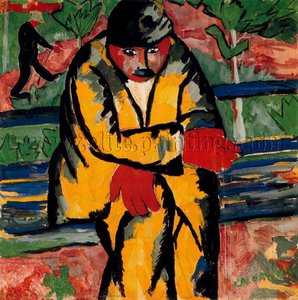
StatsSuprematism. Nonobjective Composition


 Read More
Giclée / Art Print
Museum-quality giclée or canvas print with fast production and flexible finish options. ( Buy Hand Made Painting Switch to Digital Image)




P118B $10

P118H $10

P118W $10

P438Z $10

P508JH $12

P508YH $12

P805H $10

P805Z $10

P919BZ $10

P919G $10

P919XJ $10

P959ZH $10

P968JZ $12

W106C $8

W218G $10

W218JH $8

W218Y $10

W307PJ $10

W316G $10

W316PJ $8

W316Y $10

W398PJ $8

W4111J $10

W500HY $15

W500JH $15

W692G $12

W849H $8

W940BG $15

W953PJ $8




Pick from our preset sizes that match the artwork's original proportions.

Type the width and the height you need, to fit your frame or your wall. A print can only be cut, never made bigger than the picture, so a size with a different shape loses a part of the image. We send you a digital mockup to approve before we print anything. The picture shown on this page does not show the real cut — only the mockup does.
Worldwide Delivery () in 2 weeks instead of standard 4/5 weeks. (10 November)

Free Worldwide Express Shipping

High-Quality Linen Canvas

Full Shipping Insurance

Customs Tax Refund Guarantee

True Color Matching Guarantee

100-Day Return Policy (Defects Only)

100% Money-Back Guarantee

Bulk Discount Offer
 Glass option is only available in size under 110 CM

Suprematism. Nonobjective Composition
Giclée / Art Print
Reproduction Size
-


Total Price
$ 81
Suprematism: A Radical Departure From Representation
Kazimir Severinovich Malevich’s *Suprematism*, specifically *Nonobjective Composition*, stands as a cornerstone of abstract art, representing not merely an aesthetic innovation but a profound philosophical assertion about the nature of artistic expression. Born in Kyiv Oblast, Ukraine in 1879 to Polish parents steeped in cultural traditions—a heritage that subtly influenced his artistic sensibilities—Malevich embarked on a journey toward redefining visual language itself. His formative years instilled within him an appreciation for symbolic imagery and folk art forms which would later coalesce into the core tenets of his groundbreaking movement. Early Artistic Explorations & Influences Before establishing Suprematism, Malevich traversed diverse stylistic landscapes, immersing himself in Impressionism, Symbolism, Fauvism, and Cubism. These engagements served as crucial stepping stones, exposing him to the prevailing artistic currents of Europe and equipping him with a toolkit of techniques—albeit one he would ultimately dismantle. A pivotal trip to Paris in 1912 proved transformative, catapulting him into direct contact with the vanguard of European art and fostering an unwavering conviction that art should transcend mere imitation of reality. This belief fueled his relentless pursuit of pure artistic feeling, prioritizing conceptual primacy over visual accuracy. The Birth of Suprematism & Its Theoretical Framework Malevich formally founded Suprematism in 1913—a movement predicated on the audacious declaration that “art must be free from any objective representation.” Rejecting the conventions of Cubism and Futurism, he championed a radically simplified aesthetic characterized by geometric forms—primarily squares, circles, and rectangles—rendered in limited color palettes. This uncompromising stance wasn’t merely stylistic; it stemmed from Malevich's engagement with philosophical ideas propagated by Nikolai Alexandrovich Berdyaev and Vladimir Mikhailovich Solovyov, who argued that art should serve as a conduit for spiritual transcendence. As Malevich eloquently articulated in his manifesto “From Cubism and Futurism to Suprematism,” the artist’s task was to liberate himself from the constraints of the observable world—to confront “the zero of form” and embrace “pure feeling.” Iconic Composition & Symbolic Resonance The painting *Nonobjective Composition* exemplifies Malevich's uncompromising vision. Featuring a dominant large circle positioned at the upper left corner alongside a smaller circle near the center-left area, punctuated by a central cross—a deliberate allusion to Christian iconography—the artwork eschews any discernible depiction of external objects. Instead, it presents an arrangement of shapes and colors—primarily red, black, yellow, blue, and white—that generate a mesmerizing visual experience for the viewer. The geometric forms themselves are imbued with symbolic significance: the circle represents wholeness and unity, mirroring Malevich’s belief in the interconnectedness of all things; the cross symbolizes spiritual aspiration and transcendence. Legacy & Influence Beyond Art History Malevich's Suprematism irrevocably altered the trajectory of art history, establishing a precedent for conceptual abstraction that continues to inspire artists today. His uncompromising commitment to pure feeling—his rejection of representational illusion—resonates powerfully across disciplines, informing approaches to design, architecture, and even music. Reproductions of *Nonobjective Composition*, skillfully crafted by OriginalUniqueArt.com, offer an unparalleled opportunity to engage with this seminal artwork and its enduring legacy—a testament to Malevich’s unwavering conviction that art could achieve a higher purpose beyond mere visual gratification.Questions & Answers
What size and orientation are recommended for a print of "Suprematism. Nonobjective Composition" by Kazimir Malevich?
large size, square orientation: that is the print setup suggested for "Suprematism. Nonobjective Composition" by Kazimir Malevich.
What feeling does "Suprematism. Nonobjective Composition" by Kazimir Malevich convey?
The recorded mood of "Suprematism. Nonobjective Composition" by Kazimir Malevich is serene, and its emotional tone is tranquil.
What technique and style characterize "Suprematism. Nonobjective Composition" by Kazimir Malevich?
"Suprematism. Nonobjective Composition" by Kazimir Malevich combines the acrylic on canvas technique with the Geometric Abstract Art style. Technique and movement describe the making and the style of the work.
Artist Biography
Early Life, Family and Training
Kazimir Malevich was born near Kiev, in the Kiev Governorate of the Russian Empire, around 1878 or 1879. He was raised in an ethnic Polish family, the son of Sewryn Antonovich Malevich, who managed a sugar factory. The family moved frequently, often settling in Ukrainian villages amidst sugar-beet plantations. These early years were spent far from urban cultural centers, surrounded instead by the textures of rural life and the folk art of the countryside.
His formal education in the visual arts began in Kiev, where he studied drawing between 1895 and 1896. Seeking more rigorous instruction, he moved to Moscow in 1904. It was here that his professional training took a more structured form at the Moscow School of Painting, Sculpture and Architecture. He remained in the city for several years, refining his technique in the studio of Fedor Rerberg from 1904 to 1910.
The Evolution of His Artistic Style
Malevich’s early creative output was a restless search for a visual language, moving through the textures of Impressionism, Symbolism, Fauvism, and Cubism. His development was deeply tied to the shifting currents of the Russian avant-garde, finding early direction through the influence of Natalia Goncharova and Mikhail Larionov. These formative years were marked by a fascination with the structural possibilities of form, often drawing from the cubist principles of Aristarkh Lentulov. He was a frequent participant in the era's defining exhibitions, including the second exhibition of the Soyuz Molodyozhi group in St. Petersburg in 1911. By 1912, his presence in the art scene was firmly established through his involvement with the Donkey's Tail collective in Moscow.
This period of experimentation was less a linear progression and more a series of radical departures. He moved from the representation of everyday life toward a more fragmented, analytical approach to space. His work during these years often focused on the lives of the peasantry, yet even these subjects began to lose their traditional descriptive qualities. The influence of the avant-garde was not merely stylistic but structural, as he sought to dismantle the visual world to find its essential components. This restless movement through various modes of expression provided the necessary friction for his eventual move toward total abstraction.
The Development of Suprematism
By 1915, Malevich had moved beyond the fractured planes of Cubism to reach a radical conclusion. He published his manifesto, From Cubism to Suprematism, marking the birth of a movement that sought to strip art of all worldly narrative. This was a pursuit of the supremacy of pure feeling, a belief that true expression lived not in the depiction of objects, but in the tension of form itself. He sought to escape the horizon-ring of the visible world, replacing the familiar with a language of absolute abstraction.
The resulting system was one of non-objective geometry. His compositions utilized basic shapes—squares, circles, and rectangles—set against monochromatic grounds to achieve a sense of spiritual weight. This was not a mere stylistic shift but a philosophical repositioning of the artist's purpose. In 1926, he further articulated these convictions in his book, The World as Non-Objectivity, published in Munich. Through these writings and his canvases, he attempted to define a new visual consciousness that functioned independently of the natural world.
- Black Square (1915)
- White on White (1918)
Key Works and Masterpieces
The transition from the tangible to the abstract is marked by a series of radical departures. In 1912–1913, the cubo-futurist painting The Knifegrinder captured a sense of fragmented movement, a precursor to the total dissolution of form. This was followed by the 1913 drawing Soldier, an arresting black and white study that stripped the human figure down to its essential, stark outlines. These early experiments with geometry and simplified lines signaled a growing dissatisfaction with the necessity of representing the visible world.
The most profound shift occurred in 1915 with the emergence of Black Square, a work that functioned as a foundational piece of abstract painting. It abandoned all traditional perspective, offering instead a singular, heavy presence. This period also saw the creation of The Red Cross on a Black Circle in 1915, alongside the 1918 composition The Black Cross on a Red Oval. These works moved toward a language of pure non-objective form, where color and shape operated independently of any recognizable subject.
By 1918, this pursuit of the essential reached a point of extreme refinement in the White on White series. These paintings explored the limits of perception, using white geometric shapes against a white background to investigate the purity of form and color. It was a quiet, almost spectral conclusion to a decade of intense visual upheaval.
- Black Square (1915)
- White on White (1918)
- The Knifegrinder (1912–1913)
- The Red Cross on a Black Circle (1915)
- The Black Cross on a Red Oval (1918)
- Soldier (1913)
Teaching and Artistic Circles
Malevich’s influence extended far beyond the solitary canvas through his active involvement in the pedagogical and collective life of the avant-garde. Between 1919 and 1922, he taught at the Vitebsk Practical Art School in the USSR, working alongside Marc Chagall. It was during this period that he became a member of the UNOVIS collective, a group dedicated to the principles of his new visual language. These years in Vitebsk were marked by a shared commitment to reshaping the aesthetic landscape through structured, radical thought.
His academic presence shifted across several major centers as the political and artistic climate evolved. He spent a significant period at the Leningrad Academy of Arts from 1922 to 1927. Later, his teaching took him to the Kiev State Art Institute between 1927 and 1929. His final instructional role was at the House of the Arts in Leningrad in 1930. Through these various institutions, he attempted to formalize the theories of non-objective form, passing his convictions to a generation of students navigating a rapidly changing social order.
Later Years and Death
The final chapter of Malevich’s life was marked by a forced retreat from the radical abstractions that had defined his career. By the early 1930s, the political climate shifted as the rise of Social Realism demanded a different kind of visual language. This pressure prompted a return to figuration, pulling him away from the non-objective purity he had spent decades pursuing. His later works reflected this tension, attempting to reconcile his previous theories with the requirement for representational forms.
Health began to fail him during this period of transition. He was diagnosed with cancer in 1933, a diagnosis that shadowed his remaining years. Despite the physical decline, he continued to engage with the artistic community until the very end. He died on 15 May 1935 in Leningrad at the age of 56.
Legacy and Influence on Modern Art
The ripples of Malevich’s radicalism reached far beyond the immediate circles of the Russian avant-garde. By stripping art of its representational duties, he provided a blueprint for the development of 20th-century abstract art. His theories on non-objective form offered a new vocabulary for those seeking to move past the imitation of nature. This shift in consciousness helped shape the trajectories of artists such as El Lissitzky and Alexander Rodchenko, who navigated the intersection of abstraction and the social realities of their time.
His reach extended into the mid-century movements that sought even greater reduction. The principles of geometric precision and the pursuit of the essential found echoes in the work of Josef Albers and Ad Reinhardt. Even the Minimalists, with their focus on the physical presence of the object and the rejection of illusion, drew from the foundations he laid. He challenged the necessity of the subject, proving that a composition could exist solely through the tension of color and shape.
Where to See His Works Today
The physical presence of his radical geometry can be found in several major institutions across the globe. In the United States, the Yale University Art Gallery holds The Knifegrinder, a work that captures the tension of his earlier Cubo-Futurist period. Meanwhile, the Hammer Museum in Los Angeles maintains a selection of his works, offering a connection to his visual language within a contemporary American context.
In Russia, his evolution from representational forms to pure abstraction is preserved in several state collections. The State Tretyakov Gallery in Moscow houses The aviator, while the State Russian Museum holds Black circle, a work from about 1913. These collections allow for a direct study of how he dismantled the visible world to find a new, non-objective reality.

Kazimir Malevich
1878 - 1935 , Ukraine
Related Articles

25 Masterpieces by Kazimir Malevich: The Ultimate Guide to Suprematism
Explore 25 iconic Kazimir Malevich masterpieces and the power of Suprematism. Discover the full collection online at OriginalUniqueArt.com.
Kazimir Malevich: Pioneering Suprematism & the Quest for Non-Objective Art
Explore the revolutionary art of Kazimir Malevich & his groundbreaking Suprematism movement. Discover the origins, core principles, and lasting impact of this pivotal force in modern abstract painting.

Geometric Abstraction's 10 Defining Masterpieces | Art for Your Home - OriginalUniqueArt
Explore 10 defining masterpieces of Geometric Abstraction! Discover Kandinsky, Mondrian & Malevich’s iconic works. Find museum-quality art reproductions and curated decor ideas to elevate your home at OriginalUniqueArt.com.

Suprematism Explained: The Radical Geometry and Pure Feeling of Kazimir Malevich
Explore the radical world of Suprematism. Discover how Kazimir Malevich revolutionized modern art through pure geometric abstraction, non-objective form, and the supremacy of feeling. An essential guide for art students and collectors seeking deep historical context.

Beyond Form & Color: Geometric Abstraction's Evolution in 20th/21st Century Art
Explore the evolution of geometric abstraction from Cubism to contemporary art. Discover key artists like Malevich & Mondrian, investment insights, and expert collecting advice at OriginalUniqueArt.


![Black circle [1913] State Russian Museum,](/media/artworks/images-thumb/62/67/6267e452b0c8476772a6511e19ce1616.jpg)