Preview
 Send
Send Share
Share
 Details
 Guide
Guide

 Download
 Similars
 X-Ray
X-Ray Diaporama
 Stats
StatsSuprematism (17)


 Read More
Giclée / Art Print
Museum-quality giclée or canvas print with fast production and flexible finish options. ( Buy Hand Made Painting Switch to Digital Image)




P118B $10

P118H $10

P118W $10

P438Z $10

P508JH $12

P508YH $12

P805H $10

P805Z $10

P919BZ $10

P919G $10

P919XJ $10

P959ZH $10

P968JZ $12

W106C $8

W218G $10

W218JH $8

W218Y $10

W307PJ $10

W316G $10

W316PJ $8

W316Y $10

W398PJ $8

W4111J $10

W500HY $15

W500JH $15

W692G $12

W849H $8

W940BG $15

W953PJ $8




Pick from our preset sizes that match the artwork's original proportions.

Type the width and the height you need, to fit your frame or your wall. A print can only be cut, never made bigger than the picture, so a size with a different shape loses a part of the image. We send you a digital mockup to approve before we print anything. The picture shown on this page does not show the real cut — only the mockup does.
Worldwide Delivery () in 2 weeks instead of standard 4/5 weeks. (26 October)

Free Worldwide Express Shipping

High-Quality Linen Canvas

Full Shipping Insurance

Customs Tax Refund Guarantee

True Color Matching Guarantee

100-Day Return Policy (Defects Only)

100% Money-Back Guarantee

Bulk Discount Offer
 Glass option is only available in size under 110 CM

Suprematism (17)
Giclée / Art Print
Reproduction Size
-


Total Price
$ 81
A Gateway to Pure Feeling: Exploring Kazimir Malevich’s Suprematism (17)
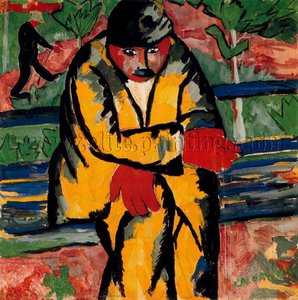
- Style & Subject: Created in 1916, *Suprematism (17)* is a pivotal example of the revolutionary abstract art movement founded by Kazimir Malevich. Departing radically from representational painting, this work eschews recognizable objects entirely, focusing instead on the fundamental elements of form and color. The composition features dynamic interplay between geometric shapes – rectangles, squares, triangles, and lines – floating within a pale beige field. It’s not *what* is depicted, but *how* it's arranged that holds the power.
- Technique & Composition: Malevich employed a flat painting technique, prioritizing the two-dimensional surface over illusionistic depth. Brushstrokes are blended to create smooth transitions between shapes, enhancing the sense of precision and control. The arrangement isn’t random; despite its seemingly chaotic energy, there's a deliberate balance achieved through careful placement. A dominant black rectangle anchors the lower left corner, while smaller forms dance across the upper portion, creating a visual hierarchy that guides the eye.
The Birth of Suprematism & Historical Context
- A Revolutionary Moment: *Suprematism (17)* emerged during a period of immense social and political upheaval in Russia, following the 1917 Revolution. Malevich believed that traditional art was tied to the material world and sought to create a purely spiritual aesthetic – an art liberated from objective reality. He termed this new approach “Suprematism,” meaning "the supremacy of pure artistic feeling."
- Breaking with Tradition: This work represents a decisive break from earlier movements like Cubism, which still retained some connection to the visible world. Malevich aimed for complete non-objectivity, believing that art should express inner emotions and spiritual truths rather than depict external appearances.
- Influenced by his Ukrainian heritage and early exposure to folk culture, Malevich sought a universal visual language transcending national boundaries.
Symbolism & Emotional Resonance
- Beyond Representation: While devoid of explicit symbolism in the traditional sense, *Suprematism (17)* invites contemplation on fundamental concepts like space, form, and perception. The geometric shapes can be interpreted as symbols of cosmic forces or spiritual energies.
- A Sense of Dynamism: The arrangement of lines and forms creates a feeling of movement and dynamism, suggesting an underlying energy that permeates the composition. This isn’t a static image; it feels alive with potential.
- Intellectual & Spiritual Exploration: Unlike art intended to evoke immediate emotional responses, *Suprematism (17)* encourages intellectual engagement and spiritual reflection. It's an artwork that rewards sustained viewing and invites viewers to explore their own inner worlds.
Integrating Suprematism into Contemporary Spaces
- A Statement Piece: A reproduction of *Suprematism (17)* can serve as a striking focal point in modern interiors. Its abstract nature and neutral color palette make it versatile enough to complement various design styles.
- Harmonious Contrast: The artwork’s geometric precision contrasts beautifully with organic forms, making it an ideal addition to spaces featuring natural materials or flowing lines.
- Inspiring Creativity: For those seeking a source of inspiration, *Suprematism (17)* embodies the power of abstraction and the pursuit of pure artistic expression. It’s a piece that can stimulate creativity and encourage innovative thinking.
Questions & Answers
Is "Suprematism (17)" by Kazimir Malevich a light or a dark artwork?
"Suprematism (17)" by Kazimir Malevich is recorded as brilliant, with a bright balance luminance.
How do I discover artworks close to "Suprematism (17)" by Kazimir Malevich?
Works similar to "Suprematism (17)" are listed on the artwork's Similars page.
Is "Suprematism (17)" by Kazimir Malevich a portrait, landscape or square composition?
"Suprematism (17)" by Kazimir Malevich has a square format. The format describes the proportions of the composition.
Artist Biography
Kazimir Malevich: A Pioneer of Abstract Art
Early Life and Influences
- Born in Kyiv Oblast, Ukraine in 1878 to a Polish family, Kazimir Severinovich Malevich’s early life was shaped by the rural Ukrainian landscape and its rich folk culture.
- His upbringing instilled in him an appreciation for traditional artistic expressions that would later subtly influence his work.
- Formal training began in Kyiv, but Malevich quickly sought broader artistic horizons, moving towards Moscow and eventually engaging with the burgeoning avant-garde movements of Europe.
- Key Influences: Early exposure to folk art, combined with a desire for modern expression, formed the foundation of his unique style.
Artistic Development & Key Movements
- Initially, Malevich explored various styles including Impressionism, Symbolism, Fauvism, and Cubism. A pivotal trip to Paris in 1912 exposed him to the latest developments in European art.
- He gradually moved away from representational forms, seeking a purely artistic language based on geometric shapes and color.
- This led to the development of Suprematism around 1915 – an abstract movement focused on “the supremacy of pure feeling” in art.
- Suprematism rejected any attempt to depict objects from the visible world, instead prioritizing basic geometric forms like squares, circles, and rectangles.
Major Achievements & Notable Works
- Black Square (1915): Arguably his most famous work, it represents a radical departure from traditional art and is considered a foundational piece of abstract painting.
- White on White (1918): A series exploring the purity of form and color, featuring white geometric shapes against a white background – pushing abstraction to its limits.
- Stroyuschiysya dom [House under Construction] (1916): An early example of Suprematism showcasing his unique perspective on Ukrainian culture through abstract forms.
- He also wrote extensively on art theory, articulating the philosophical principles behind Suprematism and advocating for a new artistic consciousness.
Historical Significance & Legacy
- Malevich’s work profoundly impacted the development of 20th-century abstract art, influencing movements like Minimalism and Constructivism.
- He challenged conventional notions of representation and paved the way for non-objective art.
- His ideas about pure feeling and geometric abstraction continue to resonate with artists today.
- Despite facing political persecution under Stalin – initially supported, then suppressed – Malevich persevered in his practice and teaching.
- Influence on Later Artists: He directly influenced artists like El Lissitzky and indirectly shaped countless others through the enduring legacy of Suprematism.
Later Life & Death
- In his later years, Malevich revisited figurative painting, attempting to synthesize his abstract principles with representational forms.
- He continued to teach and write about art until his death in Leningrad (now St. Petersburg) in 1935.
- His work remained relatively obscure for decades after his death but experienced a resurgence of interest in the latter half of the 20th century, solidifying his place as one of the most important figures in modern art history.

Kazimir Malevich
1878 - 1935 , Ukraine
Related Articles

Geometric Abstraction's 10 Defining Masterpieces | Art for Your Home - OriginalUniqueArt
Explore 10 defining masterpieces of Geometric Abstraction! Discover Kandinsky, Mondrian & Malevich’s iconic works. Find museum-quality art reproductions and curated decor ideas to elevate your home at OriginalUniqueArt.com.
Kazimir Malevich: 25 Masterpieces of Suprematism & Abstract Art | OriginalUniqueArt
Explore 25 iconic artworks by Kazimir Malevich, pioneer of Suprematism & abstract art. Discover the stories behind 'Black Square' and more! Find museum-quality prints & elevate your home decor with OriginalUniqueArt.com.

Beyond Form & Color: Geometric Abstraction's Evolution in 20th/21st Century Art
Explore the evolution of geometric abstraction from Cubism to contemporary art. Discover key artists like Malevich & Mondrian, investment insights, and expert collecting advice at OriginalUniqueArt.
Kazimir Malevich: Pioneering Suprematism & the Quest for Non-Objective Art
Explore the revolutionary art of Kazimir Malevich & his groundbreaking Suprematism movement. Discover the origins, core principles, and lasting impact of this pivotal force in modern abstract painting.

Suprematism Explained: The Radical Geometry and Pure Feeling of Kazimir Malevich
Explore the radical world of Suprematism. Discover how Kazimir Malevich revolutionized modern art through pure geometric abstraction, non-objective form, and the supremacy of feeling. An essential guide for art students and collectors seeking deep historical context.


![Black circle [1913] State Russian Museum,](/media/artworks/images-thumb/62/67/6267e452b0c8476772a6511e19ce1616.jpg)