Preview
 Send
Send Share
Share
 Details

 Download
 Similars
 X-Ray
X-Ray Diaporama
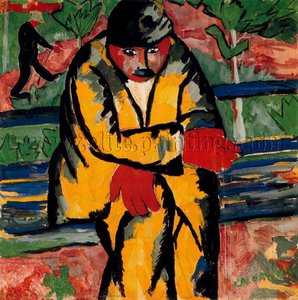
Red Cavalry


 Read More
Giclée / Art Print
Museum-quality giclée or canvas print with fast production and flexible finish options. ( Buy Hand Made Painting Buy Image)




P118B $10

P118H $10

P118W $10

P438Z $10

P508JH $12

P508YH $12

P805H $10

P805Z $10

P919BZ $10

P919G $10

P919XJ $10

P959ZH $10

P968JZ $12

W106C $8

W218G $10

W218JH $8

W218Y $10

W307PJ $10

W316G $10

W316PJ $8

W316Y $10

W398PJ $8

W4111J $10

W500HY $15

W500JH $15

W692G $12

W849H $8

W940BG $15

W953PJ $8




Pick from our preset sizes that match the artwork's original proportions.

You may enter your own dimensions to fit a specific frame or space. If your selected size does not match the original image's proportions, we will either crop the artwork or extend the image with a mirrored or solid-fill edge. A digital mockup will be sent for your approval before production begins.
Please note that the on-screen preview does not reflect the actual cropping or extension. Only the mockup will accurately show the final composition.
While custom sizes are available, we recommend selecting a dimension from the predefined list to preserve the original proportions.
Worldwide Delivery () in 2 weeks instead of standard 4/5 weeks. (22 August)

Free Worldwide Express Shipping

High-Quality Linen Canvas

Full Shipping Insurance

Customs Tax Refund Guarantee

True Color Matching Guarantee

60-Day Return Policy (Defects Only)

100% Money-Back Guarantee

Bulk Discount Offer
 Glass option is only available in size under 110 CM

Red Cavalry
Giclée / Art Print
Reproduction Size
-


Total Price
$ 81
Collectible Description
A Landscape of Feeling: Exploring Kazimir Malevich’s ‘Red Cavalry’
Red Cavalry, painted by Ukrainian-born artist Kazimir Malevich, is a pivotal work demonstrating his transition from representational art towards the radical abstraction of Suprematism. This piece isn't merely a painting; it’s a visual poem evoking vastness, solitude, and perhaps, a subtle narrative of movement within an undefined space.Deconstructing the Composition
The artwork presents a horizontal composition dominated by layered bands of color set against a subtly gradient sky. It's immediately striking for its geometric simplification – a hallmark of Malevich’s style. The landscape, if it can be called that, is distilled to essential forms: broad planes representing terrain, delineated by strong linear elements. These lines aren’t used to define objects realistically but rather to construct the *idea* of space and depth through overlapping layers.- Dominant Forms: The painting relies on horizontal bands that create a sense of expansive distance.
- Color Palette: A bold, contrasting palette is employed, with striking reds punctuating the composition against more muted tones.
- Brushwork: Thick, textured brushstrokes are visible, adding a tactile quality and emphasizing the materiality of the paint itself. This isn’t about illusionism; it's about the physical presence of art.
Malevich & The Birth of Suprematism
Kazimir Malevich (1878-1935) was a revolutionary figure in 20th-century art. Born in Kyiv, Ukraine, he initially experimented with various styles – Impressionism, Cubism, and Fauvism – before forging his own path. His quest led to Suprematism, an artistic movement centered on pure geometric forms and the expression of “pure feeling.” Red Cavalry, created around 1928-1932, sits within this transitional period, still hinting at representational elements while pushing towards complete abstraction. It reflects Malevich’s belief that art should transcend the visible world to access a higher spiritual reality.Symbolism and Interpretation
The small red figures positioned along the central band are enigmatic. Are they soldiers – referencing the historical “Red Cavalry” of the Russian Civil War? Or do they represent humanity traversing an abstract realm? Their scale relative to the landscape emphasizes a sense of isolation and perhaps, vulnerability. The color red itself carries multiple connotations: passion, energy, revolution, but also danger and warning.- The Red Figures: These figures are open to interpretation – representing individuals, forces, or even abstract concepts.
- Abstract Landscape: The simplified terrain evokes a sense of vastness and the sublime, prompting contemplation on our place within the universe.
- Color as Emotion: Malevich believed color held inherent spiritual power; the use of red is deliberate and emotionally charged.
Emotional Resonance & Interior Design
Red Cavalry evokes a contemplative, even melancholic mood. The vastness of the space combined with the solitary figures creates a sense of quiet introspection. This artwork would be a striking addition to modern or minimalist interiors, adding depth and intellectual weight to any room. Its bold colors and geometric forms complement contemporary furniture and architectural designs. A reproduction of this piece can serve as a powerful focal point, sparking conversation and inviting viewers into a world of abstract beauty and profound emotion. It’s a testament to Malevich's enduring legacy – an artist who dared to redefine the very essence of painting.Artist Biography
Kazimir Malevich: A Pioneer of Abstract Art
Early Life and Influences
- Born in Kyiv Oblast, Ukraine in 1878 to a Polish family, Kazimir Severinovich Malevich’s early life was shaped by the rural Ukrainian landscape and its rich folk culture.
- His upbringing instilled in him an appreciation for traditional artistic expressions that would later subtly influence his work.
- Formal training began in Kyiv, but Malevich quickly sought broader artistic horizons, moving towards Moscow and eventually engaging with the burgeoning avant-garde movements of Europe.
- Key Influences: Early exposure to folk art, combined with a desire for modern expression, formed the foundation of his unique style.
Artistic Development & Key Movements
- Initially, Malevich explored various styles including Impressionism, Symbolism, Fauvism, and Cubism. A pivotal trip to Paris in 1912 exposed him to the latest developments in European art.
- He gradually moved away from representational forms, seeking a purely artistic language based on geometric shapes and color.
- This led to the development of Suprematism around 1915 – an abstract movement focused on “the supremacy of pure feeling” in art.
- Suprematism rejected any attempt to depict objects from the visible world, instead prioritizing basic geometric forms like squares, circles, and rectangles.
Major Achievements & Notable Works
- Black Square (1915): Arguably his most famous work, it represents a radical departure from traditional art and is considered a foundational piece of abstract painting.
- White on White (1918): A series exploring the purity of form and color, featuring white geometric shapes against a white background – pushing abstraction to its limits.
- Stroyuschiysya dom [House under Construction] (1916): An early example of Suprematism showcasing his unique perspective on Ukrainian culture through abstract forms.
- He also wrote extensively on art theory, articulating the philosophical principles behind Suprematism and advocating for a new artistic consciousness.
Historical Significance & Legacy
- Malevich’s work profoundly impacted the development of 20th-century abstract art, influencing movements like Minimalism and Constructivism.
- He challenged conventional notions of representation and paved the way for non-objective art.
- His ideas about pure feeling and geometric abstraction continue to resonate with artists today.
- Despite facing political persecution under Stalin – initially supported, then suppressed – Malevich persevered in his practice and teaching.
- Influence on Later Artists: He directly influenced artists like El Lissitzky and indirectly shaped countless others through the enduring legacy of Suprematism.
Later Life & Death
- In his later years, Malevich revisited figurative painting, attempting to synthesize his abstract principles with representational forms.
- He continued to teach and write about art until his death in Leningrad (now St. Petersburg) in 1935.
- His work remained relatively obscure for decades after his death but experienced a resurgence of interest in the latter half of the 20th century, solidifying his place as one of the most important figures in modern art history.

Kazimir Malevich
1878 - 1935 , Ukraine
Quick Facts
- Artistic Movement Or Style: Suprematism, Abstract Art
- Artists Or Movements Influenced By This Artist:
- Minimalism
- Constructivism
- El Lissitzky
- Artists Who Influenced This Artist:
- Cubism
- Fauvism
- Impressionism
- Date Of Birth: 1878
- Date Of Death: 1935
- Full Name: Kazimir Severinovich Malevich
- Nationality: Ukrainian/Russian
- Notable Artworks:
- Black Square
- White on White
- House under Construction
- Place Of Birth: Kyiv, Ukraine
Related Articles
Kazimir Malevich: 25 Masterpieces of Suprematism & Abstract Art | OriginalUniqueArt
Explore 25 iconic artworks by Kazimir Malevich, pioneer of Suprematism & abstract art. Discover the stories behind 'Black Square' and more! Find museum-quality prints & elevate your home decor with OriginalUniqueArt.com.

Geometric Abstraction's 10 Defining Masterpieces | Art for Your Home - OriginalUniqueArt
Explore 10 defining masterpieces of Geometric Abstraction! Discover Kandinsky, Mondrian & Malevich’s iconic works. Find museum-quality art reproductions and curated decor ideas to elevate your home at OriginalUniqueArt.com.

Beyond Form & Color: Geometric Abstraction's Evolution in 20th/21st Century Art
Explore the evolution of geometric abstraction from Cubism to contemporary art. Discover key artists like Malevich & Mondrian, investment insights, and expert collecting advice at OriginalUniqueArt.

Kandinsky's Masterpieces: 25 Paintings That Define Abstract Art | OriginalUniqueArt
Journey through Wassily Kandinsky's 25 most iconic abstract paintings. Explore his revolutionary use of color, form & spiritual expressionism. Find museum-quality Kandinsky reproductions and elevate your home decor with OriginalUniqueArt.com. Discover all masterpieces on OriginalUniqueArt.com!
Beyond Form & Color: Geometric Abstraction's Enduring Legacy in Art History
Explore the captivating world of geometric abstraction! Discover its origins, key artists like Malevich & Mondrian, and why this movement remains highly valued by art collectors today. Expert insights at OriginalUniqueArt.


![Black circle [1913] State Russian Museum,](/media/artworks/images-thumb/62/67/6267e452b0c8476772a6511e19ce1616.jpg)