

 Send
Send Share
Share
 Details
 Guide
Guide

 Download
 Similars
 Diaporama
 Q&A
Q&A Stats
StatsSaint Anthony
 Ceramic
- Sculpture
- Contemporary Realism
 1900
1900- 19th Century
 38.0 x 17.0 cm
 National Museum of Ethnology
 Read More
The artwork displayed on this page is protected by copyright law, which means we cannot legally create or sell an identical reproduction. This protection is enforced under international agreements such as the Berne Convention and by national laws, including those outlined by the U.S. Copyright Law - Title 17.
This method fully complies with copyright regulations because it does not involve copying or duplicating the protected artwork. Instead, it is a creative reinterpretation - a new painting that is influenced by the original but not identical to it.
Giclée / Art Print
Museum-quality giclée or canvas print with fast production and flexible finish options. ( Buy Hand Made Painting Switch to Digital Image)




































Pick from our preset sizes that match the artwork's original proportions.

Type the width and the height you need, to fit your frame or your wall. A print can only be cut, never made bigger than the picture, so a size with a different shape loses a part of the image. We send you a digital mockup to approve before we print anything. The picture shown on this page does not show the real cut — only the mockup does.
Worldwide Delivery () in 2 weeks instead of standard 4/5 weeks. (29 October)

Free Worldwide Express Shipping

High-Quality Linen Canvas

Full Shipping Insurance

Customs Tax Refund Guarantee

True Color Matching Guarantee

100-Day Return Policy (Defects Only)

100% Money-Back Guarantee

Bulk Discount Offer
 Glass option is only available in size under 110 CM

Saint Anthony
Giclée / Art Print
Reproduction Size
-


Total Price
$ 81
A Tender Encounter in Glazed Clay
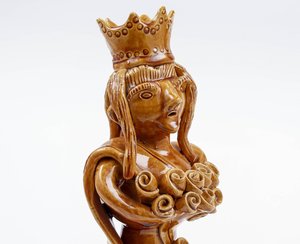
In the quiet, tactile world of Portuguese ceramics, few pieces capture the profound intimacy of faith and humanity quite like Saint Anthony. This exquisite sculpture, a masterwork of glazed clay by the contemporary ceramicist Júlia Ramalho de Sousa, presents a moment frozen in time: the tender embrace between Saint Anthony and the Christ Child. The piece is not merely a religious icon but a soulful exploration of connection, rendered through the earthy, warm tones of sculpted clay. As one gazes upon the intricate detailing of the faces and the delicate positioning of the hands, there is an immediate sense of the artist's deep reverence for her medium and her subject.
The sculpture breathes with a life that transcends its material composition. Through a masterful application of glaze, Ramalho de Sousa imbues the brown, ceramic surface with a soft, organic luster that mimics the warmth of skin and the weight of tradition. The craftsmanship is evident in every fold of the saint's garments and the gentle, watchful expression of the infant. This level of detail invites the viewer to linger, finding beauty in the subtle textures that suggest both the ruggedness of the earth and the refinement of high art. For the collector, this piece offers a rare opportunity to possess a fragment of Portuguese ceramic heritage, where the lineage of the legendary Rosa Ramalho meets the distinct, expressive voice of her granddaughter.
Symbolism and the Spirit of Tradition
Beyond its physical beauty, Saint Anthony serves as a powerful symbol of protection, devotion, and the enduring bond between the divine and the earthly. The composition, featuring Saint Anthony cradling the Baby Jesus, evokes a sense of peace and sanctuary. The presence of secondary figures in the background adds a layer of narrative depth, suggesting a larger, sacred scene that expands the emotional landscape of the work. This layering of figures creates a sense of community and shared spiritual experience, making the sculpture feel less like a solitary object and more like a window into a timeless devotion.
For interior designers and art enthusiasts alike, this piece acts as a profound focal point. Its earthy palette and classical subject matter allow it to integrate seamlessly into spaces that value organic textures and historical resonance. Whether placed in a sunlit alcove of a contemporary home or serving as a centerpiece in a curated gallery setting, the sculpture radiates an aura of contemplative calm. It is a work that does not demand attention through sheer scale, but rather commands it through its quiet, undeniable presence—a testament to the enduring power of clay to tell the most human of stories.
Questions & Answers
How is the mood of "Saint Anthony" by Júlia Ramalho De Sousa described?
"Saint Anthony" has an earthy atmosphere.
Where can I buy a digital image of "Saint Anthony" by Júlia Ramalho De Sousa?
"Saint Anthony" is available as a high-resolution digital image download, purchased directly on its Digital Image page.
What style does "Saint Anthony" belong to?
"Saint Anthony" by Júlia Ramalho De Sousa belongs to the Contemporary Realism movement. This movement provides the stylistic context of the work.
Artist Biography
A Legacy Forged in Clay: The World of Júlia Ramalho de Sousa
Júlia Ramalho de Sousa, born May 3, 1946, in Galegos, Barcelos, Portugal, carries a remarkable artistic lineage. Her story isn’t simply that of a talented ceramist; it's one deeply interwoven with the rich tradition of Portuguese claywork, specifically as the granddaughter of the celebrated Rosa Ramalho. This familial connection has profoundly shaped her creative journey, yet Júlia has carved out a distinct and expressive voice within the medium, establishing herself as a significant figure in contemporary ceramics. From an early age, she was immersed in the tactile world of clay, absorbing not just technical skills but also a profound respect for the material’s inherent qualities and potential. This formative experience laid the groundwork for a career dedicated to exploring the evocative power of sculpted form.Early Influences and Artistic Development
Growing up surrounded by Rosa Ramalho's work instilled in Júlia an appreciation for the raw beauty and earthy tones characteristic of traditional Portuguese pottery. However, while honoring this heritage, she didn’t simply replicate it. Instead, she embarked on a path of experimentation, seeking to infuse her creations with a more personal and contemporary sensibility. Her early works demonstrate a fascination with texture and volume, moving beyond purely functional forms towards increasingly sculptural pieces. This period was marked by a deliberate exploration of the human figure, often rendered in abstracted or stylized ways. The influence of Rosa Ramalho is visible in the grounding presence of her figures, but Júlia quickly developed a unique approach to surface treatment and composition. She began incorporating elements of Portuguese folklore and religious iconography into her work, imbuing her sculptures with layers of cultural meaning.Themes and Techniques
Júlia Ramalho de Sousa’s art is deeply rooted in the Portuguese landscape and its traditions. Her sculptures frequently depict figures engaged in everyday activities or representing archetypal characters from local stories. Saint Anthony, for example, showcases her ability to capture a sense of quiet contemplation and spiritual devotion within the clay form. The human figure remains central to her oeuvre, often serving as a vessel for exploring themes of faith, community, and identity. Her technique is characterized by a masterful handling of clay—a combination of hand-building, coiling, and sculpting methods. She employs a limited palette of earthy tones, allowing the natural texture and form of the clay to take precedence. The surfaces are often rough or deliberately unfinished, adding to the sculptures’ sense of immediacy and authenticity. This deliberate rawness is not a lack of skill but rather a conscious aesthetic choice—a rejection of polished perfection in favor of a more visceral connection with the material.Recognition and Historical Significance
Throughout her career, Júlia Ramalho de Sousa has garnered recognition for her unique artistic vision. Her work has been exhibited both nationally and internationally, earning her a reputation as one of Portugal’s leading contemporary ceramic artists. While she maintains strong ties to the traditions established by her grandmother, Rosa Ramalho, she is not simply a continuation of that legacy but rather an innovator who has expanded the possibilities of clay sculpture. She represents a bridge between generations—honoring the past while forging new paths for Portuguese ceramics in the 21st century. Her sculptures offer a powerful commentary on cultural identity and the enduring human spirit, solidifying her place as a significant voice within the broader landscape of contemporary art.- Her work is often seen as a celebration of Portuguese heritage.
- She skillfully blends traditional techniques with modern sensibilities.
- Júlia Ramalho de Sousa’s sculptures evoke a sense of intimacy and authenticity.
Júlia Ramalho De Sousa
1946 - , Portugal
Quick Facts
- Full Name: júlia ramalho de sousa
- Nationality: Portuguese
- Date Of Birth: 1946
- Place Of Birth: Vila Nova de Gaia, Portugal
- Notable Artworks: ['Saint Anthony']
- Artistic Movement Or Style: Contemporary Ceramics
- Artists Who Influenced This Artist: ['Rosa Ramalho']
Related Articles

The Enduring Form: Exploring Themes & Techniques in Sculpture Across Historical Periods
Explore the rich history of sculpture from ancient masterpieces to contemporary innovations. Discover key techniques, influential artists & investment potential for discerning art collectors.

Bronze Sculptures That Defined Art History | OriginalUniqueArt
Journey through art history with our Top 10 bronze sculptures! Explore masterpieces by Rodin, Michelangelo & more. Discover stories behind iconic statues and find museum-quality reproductions for your home decor at OriginalUniqueArt.com.

Bronze Age to Modern Masters: 10 Sculptures That Redefined Art | OriginalUniqueArt
Journey through art history with 10 legendary bronze sculptures – from Michelangelo's David to Rodin’s Thinker. Explore the stories, techniques & timeless beauty of these masterpieces. Find museum-quality reproductions & elevate your home decor on OriginalUniqueArt.com.

The Enduring Form: Sculpture Across History, Technique & Emotional Resonance
Explore the rich history of sculpture with OriginalUniqueArt. Discover key techniques, influential artists & investment potential for discerning collectors. Expert insights into valuing and collecting timeless masterpieces.

The Enduring Legacy of Bronze Sculpture: History, Techniques & Contemporary Interpretations
Explore the rich history & enduring appeal of bronze sculpture. Learn about casting techniques, iconic artists, collecting tips, & contemporary interpretations. Expert insights for discerning art collectors.
