
![Pas Mèche [nothing Doing] — Jules Bastien-lepage](/media/artworks/images-full/0a/a4/0aa443b038cfee7a0eeae71195adba8a.jpg)
 Preview
 Send
Send Share
Share
 Details
 Guide
Guide

 Download
 Similars
 X-Ray
X-Ray Diaporama
 Stats
StatsPas Mèche [Nothing Doing]


 Read More
Giclée / Art Print
Museum-quality giclée or canvas print with fast production and flexible finish options. ( Buy Hand Made Painting Switch to Digital Image)




P118B $10

P118H $10

P118W $10

P438Z $10

P508JH $12

P508YH $12

P805H $10

P805Z $10

P919BZ $10

P919G $10

P919XJ $10

P959ZH $10

P968JZ $12

W106C $8

W218G $10

W218JH $8

W218Y $10

W307PJ $10

W316G $10

W316PJ $8

W316Y $10

W398PJ $8

W4111J $10

W500HY $15

W500JH $15

W692G $12

W849H $8

W940BG $15

W953PJ $8




Pick from our preset sizes that match the artwork's original proportions.

Type the width and the height you need, to fit your frame or your wall. A print can only be cut, never made bigger than the picture, so a size with a different shape loses a part of the image. We send you a digital mockup to approve before we print anything. The picture shown on this page does not show the real cut — only the mockup does.
Worldwide Delivery () in 2 weeks instead of standard 4/5 weeks. (26 October)

Free Worldwide Express Shipping

High-Quality Linen Canvas

Full Shipping Insurance

Customs Tax Refund Guarantee

True Color Matching Guarantee

100-Day Return Policy (Defects Only)

100% Money-Back Guarantee

Bulk Discount Offer
 Glass option is only available in size under 110 CM
![Pas Mèche [Nothing Doing]](/static/images/originaluniqueart/artworks/painting.a1e74a1cb7dc.png)
Pas Mèche [Nothing Doing]
Giclée / Art Print
Reproduction Size
-


Total Price
$ 81
A Moment Frozen in Rural France: Jules Bastien-Lepage’s *Pas Mèche*
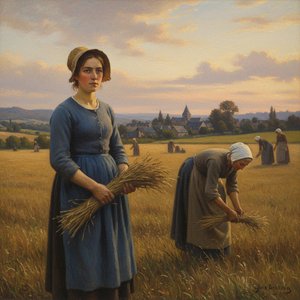
Jules Bastien-Lepage's *Pas Mèche* (Nothing Doing), painted in 1882, isn’t merely a portrait; it’s a carefully constructed tableau of rural life imbued with a quiet dignity and an unspoken narrative. The painting depicts a young boy, likely a barge worker, standing on the edge of a small village road, his gaze direct and unwavering. He is a figure of remarkable composure amidst what appears to be a mundane scene – a worn brown jacket, raggedy trousers, and large, unlaced boots speak to a life of hard work and simple means. Yet, within this apparent ordinariness lies a profound sense of observation and a subtle suggestion of melancholy. Bastien-Lepage, a pivotal figure in the transition from Realism to Naturalism, masterfully captures not just an image but also a feeling—a poignant awareness of time passing and the quiet realities of peasant existence. The title itself, *Pas Mèche*, is a French slang phrase meaning “Nothing Doing,” hinting at a state of weary resignation or perhaps simply a moment’s pause before returning to labor.The Naturalist Approach: Light, Texture, and Observation
Bastien-Lepage's artistic approach was deeply rooted in the tenets of Naturalism, a movement that sought to depict life as it truly was—without idealization or romantic embellishment. He achieved this through meticulous observation and a masterful understanding of light and texture. Unlike the polished surfaces favored by earlier academic painters, Bastien-Lepage employed loose, visible brushstrokes, allowing the canvas to breathe and revealing the materiality of his subjects. The paint itself seems almost tactile—one can practically feel the roughness of the boy’s clothing and the weathered surface of the road beneath his feet. He utilized a muted palette dominated by earthy browns, greens, and greys, reflecting the colors of the rural landscape he so faithfully rendered. Crucially, Bastien-Lepage spent considerable time *en plein air* (outdoors), directly observing his subjects in their natural environment, ensuring an unparalleled level of accuracy and authenticity in his depictions. This commitment to direct observation is evident in the boy’s posture, the way the light falls across his face, and the subtle details of the surrounding village.Symbolism Within Simplicity: The Tools of Labor
Beyond the immediate depiction of the boy, *Pas Mèche* is rich with symbolic elements. The fishing rod clutched in his hand immediately establishes his profession—a barge worker who would have been responsible for guiding and controlling the boats navigating the canals and rivers of France. The horn slung across his back was a vital tool for communication, alerting lockmasters to the approach of a boat. These seemingly simple objects – the rod, the horn, the worn boots – represent not just labor but also a connection to tradition, community, and the rhythms of rural life. The boy’s direct gaze is particularly significant; it suggests an awareness beyond his years, perhaps a recognition of the limitations imposed upon him by his circumstances. His stillness conveys a quiet dignity—a refusal to be defined solely by his humble profession.A Legacy of Rural Realism
Jules Bastien-Lepage’s *Pas Mèche* stands as a cornerstone of French Naturalist painting, profoundly influencing generations of artists. His ability to capture the essence of rural life with such honesty and sensitivity resonated deeply with audiences seeking an alternative to the idealized depictions prevalent in academic art. Born in 1848 and tragically dying at just thirty-six, Bastien-Lepage’s brief but impactful career left behind a body of work that continues to captivate viewers today. *Pas Mèche* exemplifies his signature style—a blend of meticulous observation, evocative light, and a profound understanding of the human condition. It's a painting that invites contemplation, prompting us to consider the lives of those who labor unseen and the quiet beauty found in the most unassuming corners of the world. Reproductions of *Pas Mèche* offer a valuable opportunity to bring this poignant work into any interior space, serving as a reminder of France’s rich artistic heritage and the enduring power of simple, honest representation.Questions & Answers
What is the recommended print size for "Pas Mèche [Nothing Doing]" by Jules Bastien-Lepage?
The recommended print size for "Pas Mèche [Nothing Doing]" by Jules Bastien-Lepage is medium.
What is the format of "Pas Mèche [Nothing Doing]"?
The format of "Pas Mèche [Nothing Doing]" is portrait. This is useful when planning where a reproduction will be placed.
What stage of Jules Bastien-Lepage's career does "Pas Mèche [Nothing Doing]" (1882) belong to?
Given its 1882 date, "Pas Mèche [Nothing Doing]" falls in Jules Bastien-Lepage's Mature Period.
Artist Biography
A Pioneer of Naturalism: The Life and Art of Jules Bastien-Lepage
Jules Bastien-Lepage emerged as a pivotal figure in late 19th-century French painting, a bridge between the established Realist tradition and the burgeoning Impressionist movement. Born in 1848 in the small village of Damvillers, nestled within France’s Meuse region, his artistic trajectory was deeply rooted in the landscapes and lives of rural France. This connection to his origins wasn't merely biographical; it became the very essence of his art, imbuing his canvases with an authenticity that resonated profoundly with audiences seeking a more honest depiction of the world around them. His brief but intensely productive career, tragically cut short by his death in 1884 at just thirty-six years old, left an indelible mark on the development of Naturalism and influenced artists across Europe.From Rural Roots to Artistic Training
Bastien-Lepage’s initial artistic education came from his father, himself a painter who recognized and nurtured his son's talent. The young Jules filled sketchbooks with studies of the countryside, capturing the rhythms of rural life with an observant eye. This early immersion in the natural world would remain a defining characteristic of his work. Formal training followed at the École des Beaux-Arts in Paris, beginning in 1867, where he studied under Alexandre Cabanel – a prominent academic painter known for his polished technique and historical subjects. While mastering the skills demanded by the Salon system, Bastien-Lepage simultaneously harbored a desire to break free from its constraints. The outbreak of the Franco-Prussian War in 1870 interrupted his studies, leading him to serve as a volunteer soldier. This experience, coupled with a subsequent illness, brought him back to Damvillers, reinforcing his commitment to portraying the lives of those he knew best: the peasants and laborers of his homeland.The Rise of Naturalism and Bastien-Lepage’s Style
Upon returning to Paris after the war, Bastien-Lepage began exhibiting works that signaled a departure from traditional academic painting. His style was characterized by an intricate application of paint – small, deliberate brushstrokes building up texture and form – combined with a palette dominated by warm, natural tones. He embraced *plein air* painting, working directly from nature to capture the fleeting effects of light and atmosphere. This dedication to observation and authenticity aligned him with the emerging Naturalist movement, which sought to depict life as it was, without idealization or romanticism. Haymaking (1877), exhibited at the Salon in 1879, proved to be a watershed moment, establishing Bastien-Lepage as a leader of this new artistic direction. The painting’s realistic portrayal of rural workers and its luminous depiction of the countryside captivated critics and audiences alike. He wasn't merely documenting peasant life; he was elevating it, imbuing his subjects with dignity and respect.Major Works and Lasting Influence
Bastien-Lepage’s success extended beyond genre scenes. His portraiture gained considerable acclaim, notably Portrait of my Grandfather (1874), which garnered early recognition, and a striking portrait of the celebrated actress Sarah Bernhardt in 1879 – a commission that brought him further prominence. He also tackled historical subjects with a naturalist sensibility, as exemplified by his painting Joan of Arc, now housed at the Musée d'Orsay. This work presented Joan not as a mythical heroine but as a young woman rooted in her rural origins, reflecting Bastien-Lepage’s commitment to portraying figures within their social and historical context. By 1883, his influence was so widespread that critics observed artists across Europe were emulating his style – a testament to the power of his vision. His work resonated with British painters like George Clausen and Tom Roberts, who incorporated elements of his naturalism into their own depictions of rural life. Jules Bastien-Lepage’s legacy lies not only in the beauty and emotional depth of his paintings but also in his role as a catalyst for artistic change. He paved the way for future generations of artists to explore new ways of representing the world around them, challenging conventional norms and embracing a more honest and authentic approach to art.
Jules Bastien-Lepage
1848 - 1884 , France
Quick Facts
- Full Name: Jules Bastien-Lepage
- Nationality: French
- Date Of Birth: 1848
- Date Of Death: 1884
- Place Of Birth: Damvilliers, France
- Notable Artworks:
- Portrait of my Grandfather
- Joan of Arc
- Haymaking
- October - gathering potatoes
- At Harvest Time
- Laura, Lady Alma Tadema
- Sarah Bernhardt
- Charcoal landscape, winter
- Artistic Movement Or Style: Naturalism
- Artists Who Influenced This Artist:
- Realist Movement
- George Clausen
- Tom Roberts
- Artists Or Movements Influenced By This Artist: ['Impressionism']
Related Articles

Echoes of Rural Life: Art's Enduring Representations of the Countryside
Explore the rich history of rural life in art! Discover masterpieces from Millet to Mauve & beyond. Learn about Realism, Barbizon School & find inspiration for your home with OriginalUniqueArt.

Léon Augustin L'Hermitte: Capturing the Soul of French Rural Life
Discover the captivating realist paintings of Léon Augustin L'Hermitte, masterfully depicting French rural life. Explore his technique, influences & legacy – a cornerstone of 19th-century art.

The Enduring Legacy of Oil on Canvas: Technique, History & Aesthetic Impact
Explore the rich history & techniques of oil painting – from Renaissance masters to Impressionism. Discover pigments, layering methods, and why this timeless medium endures. Expert insights for artists & art enthusiasts.

Oil on Canvas: A Historical & Technical Exploration of a Timeless Artistic Medium
Explore the rich history & enduring techniques of oil painting on canvas. Discover the science behind its longevity, conservation practices, and contemporary relevance. Expert insights for art enthusiasts.
Jules Breton: Capturing the Poetic Soul of French Rural Life
Explore the captivating world of Jules Breton, master of French Realism. Discover his iconic paintings of rural life, learn about his artistic journey, and find high-quality reproductions to elevate your art collection at OriginalUniqueArt.


![Pas Mèche [Nothing Doing]](/media/artworks/images-thumb/01/c8/01c885499ff56bb2e6383eef008f6c1b.jpg)


