
 Preview
 Send
Send Share
Share
 Details
 Guide
Guide

 Download
 Similars
 X-Ray
X-Ray Diaporama
 Q&A
Q&A Stats
StatsSt Jerome

- 252.0 x 133.0 cm


 Read More
Giclée / Art Print
Museum-quality giclée or canvas print with fast production and flexible finish options. ( Buy Hand Made Painting Switch to Digital Image)




P118B $10

P118H $10

P118W $10

P438Z $10

P508JH $12

P508YH $12

P805H $10

P805Z $10

P919BZ $10

P919G $10

P919XJ $10

P959ZH $10

P968JZ $12

W106C $8

W218G $10

W218JH $8

W218Y $10

W307PJ $10

W316G $10

W316PJ $8

W316Y $10

W398PJ $8

W4111J $10

W500HY $15

W500JH $15

W692G $12

W849H $8

W940BG $15

W953PJ $8




Pick from our preset sizes that match the artwork's original proportions.

Type the width and the height you need, to fit your frame or your wall. A print can only be cut, never made bigger than the picture, so a size with a different shape loses a part of the image. We send you a digital mockup to approve before we print anything. The picture shown on this page does not show the real cut — only the mockup does.
Worldwide Delivery () in 2 weeks instead of standard 4/5 weeks. (1 November)

Free Worldwide Express Shipping

High-Quality Linen Canvas

Full Shipping Insurance

Customs Tax Refund Guarantee

True Color Matching Guarantee

100-Day Return Policy (Defects Only)

100% Money-Back Guarantee

Bulk Discount Offer
 Glass option is only available in size under 110 CM

St Jerome
Giclée / Art Print
Reproduction Size
-


Total Price
$ 81
A Vision of Divine Contemplation
In the profound stillness of his study, St. Jerome emerges from the shadows of history, captured in a moment of eternal reflection by the Spanish Baroque master Juan de Valdés Leal. Painted in 1656, this monumental oil on canvas is far more than a mere religious portrait; it is a visceral encounter with the soul's pursuit of truth. As one gazes upon the saint, there is an immediate sense of being drawn into a private, sacred space where the boundaries between the earthly and the divine begin to blur. The composition is anchored by the figure of Jerome, rendered in striking hues of crimson and white, his presence commanding yet deeply humble. He sits amidst the tools of his scholarly devotion, his eyes fixed upon an open book that glows with the soft, flickering light of a nearby candle—a symbol of the illuminating power of scripture and the tireless intellectual labor required to grasp divine mysteries.
The atmosphere of the painting is thick with the weight of spiritual gravity, yet it is punctuated by moments of ethereal grace. Floating just above the saint’s head, an angelic figure descends, a celestial messenger bearing a sacred scroll. This presence provides a breathtaking counterpoint to the heavy, earthly textures of the study, suggesting that even in the deepest solitude of study, one is never truly alone when seeking the light of God. For the collector or designer, this interplay between the terrestrial and the celestial offers a profound emotional resonance, making the piece an ideal centerpiece for spaces dedicated to quiet thought, literature, or spiritual repose.
The Mastery of Light and the Vanitas Motif
Valdés Leal’s technical prowess is most evident in his masterful use of chiaroscuro, the dramatic interplay of light and shadow that defines the Baroque era. The artist manipulates light not merely to illuminate, but to sculpt form and evoke mood. Shadows pool deeply in the corners of the room, creating a sense of infinite depth, while sharp highlights catch the folds of Jerome’s heavy robes and the weathered texture of his skin, lending the figure an almost tactile realism. This technique directs the viewer's eye with surgical precision, moving from the luminous face of the saint to the symbolic objects scattered across his desk.
Embedded within this scholarly setting is a poignant reminder of the vanitas tradition—a theme central to the seventeenth-century consciousness. At Jerome’s feet rests a skull, a stark and sobering memento mori that serves as a silent witness to the inevability of death and the fleeting nature of mortal life. This symbol, paired with the candlelight that threatens to expire, creates a powerful tension between the permanence of faith and the transience of flesh. To possess a reproduction of such a work is to invite a conversation about legacy, time, and the enduring importance of what remains after the shadows fall. It is a masterpiece of texture and meaning, offering an unparalleled sense of drama and sophistication to any curated collection.
Questions & Answers
How strong is the contrast in "St Jerome" by Juan de Valdés Leal?
The light-dark contrast of "St Jerome" is recorded as bold. Contrast describes how strongly light and dark areas differ.
Is "St Jerome" held in the country of its creator?
Yes - the artwork is kept in the artist's home country. The birth country of Juan de Valdés Leal is Spain, and the museum holding the original of "St Jerome" is in Spain.
Is "St Jerome" more bright or more dark overall?
"St Jerome" by Juan de Valdés Leal is recorded as balanced, with a soft shadow luminance.
Artist Biography
early life and training
juan de valdés leal, a renowned spanish painter and etcher, was born on may 4, 1622, in seville, spain. he became a painter, sculptor, and architect, showcasing his versatility in the art world. by his twenties, he was studying under antonio del castillo in córdoba, honing his skills in the baroque era.notable works and collaborations
valdés leal's notable works include:- history of the prophet elias for the church of the carmelites
- martyrdom of st. andrew for the church of san francesco in córdoba
- triumph of the cross for la caridad in seville these works demonstrate his ability to capture somber and dramatic subjects, often exploring themes of vanitas, transience, and mortality. his collaboration with bartolomé esteban murillo, a fellow artist with a peaceful and serene style, led to the founding of the seville academy of art in 1656.
personal life and legacy
valdés leal married isabella carasquilla, also a painter, in 1647. the couple had five children, several of whom became artists, including lucas, maria, and laura. valdés leal passed away on october 15, 1690, in seville, leaving behind a legacy in the art world.viewing his artworks at OriginalUniqueArt.com
to explore more of valdés leal's works, visit https://OriginalUniqueArt.com/@/juan de valdés leal, where you can find:- 165 artworks by juan de valdés leal
- museum quality copies of his paintings
- baroque art style, characteristic of the era wikipedia: juan de valdés leal
discover more at OriginalUniqueArt.com
- museo de bellas artes de asturias (spain): explore the museum's collection, featuring european art from the 12th to the early 20th century.
- the museum of fine arts of seville, spain: learn about the museum's history, collection, and visiting information. experience the world of art with OriginalUniqueArt.com

Juan de Valdés Leal
1622 - 1690 , Spain
Quick Facts
- Full Name: Juan de Nisa Valdés Leal
- Nationality: Spanish
- Date Of Birth: 1622
- Date Of Death: 1690
- Place Of Birth: Seville, Spain
- Notable Artworks:
- History of the Prophet Elias
- Martyrdom of St. Andrew
- Triumph of the Cross
- Artistic Movement Or Style: Baroque painting
- Artists Who Influenced This Artist: ['Antonio del Castillo']
- Artists Or Movements Influenced By This Artist: ['Bartolomé Murillo']
Related Articles

Mastering Shadows: The 25 Most Powerful Artworks by Francisco Goya
Explore Goya's haunting masterpieces from courtly portraits to Black Paintings. Discover the full collection on OriginalUniqueArt.com.

About Us
Discover our story! We bring world-class art into your life through expert curation, personalized creations, and free previews. Trusted by individuals and businesses since 2000.
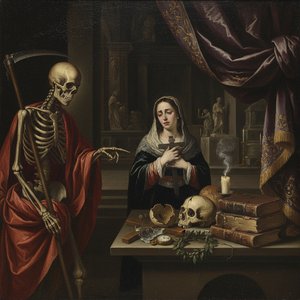
Juan de Valdés Leal: Baroque Realism, Memento Mori & Theatricality of Spanish Grief
Explore the powerful Baroque realism of Juan de Valdés Leal (1622-1690). Discover his somber masterpieces, iconic 'In Ictu Oculi', and profound explorations of mortality. Museum-quality reproductions available at OriginalUniqueArt.
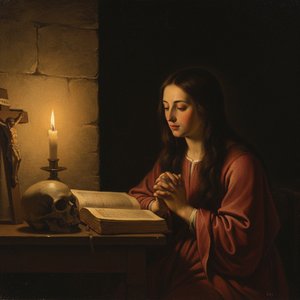
Georges de La Tour: Luminosity, Spirituality & Realism in Baroque Painting
Discover the captivating world of Georges de La Tour, a Baroque master renowned for his dramatic chiaroscuro & spiritual realism. Explore key works, influences, and his remarkable rediscovery. Learn more at OriginalUniqueArt.

Mastering Devotion: The Most Iconic Depictions of Saint Jerome in Art History
Explore the profound iconography of Saint Jerome through art history's most iconic masterpieces. From Renaissance serenity to Baroque drama, discover how legendary painters captured divine devotion in breathtaking oil paintings and fine art reproductions.


