Text size

() ·

A painting made for you, by hand

St Damian

Hand Made Oil Reproduction

Hand-painted oil on canvas in your size and frame, made to order by our artists. ( Switch to Print Switch to Digital Image)

Collectible Description

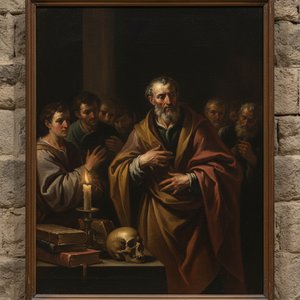
Explore Juan Carreño de Miranda’s ‘St Damian’ (1670). A stunning Baroque oil painting featuring a contemplative saint & angelic visitation. Rich textures, dramatic lighting & masterful technique – a captivating piece of Spanish art history.

Artist Biography

Juan Carreño de Miranda (1614-1685) was a prominent Spanish Baroque painter renowned for his elegant royal portraits, masterful use of light, and influence from Velázquez, capturing a significant era in Spanish art history.

from ·

Chapter 1

How large should it be?

Slide to change the size; the picture on the left shows the frame at its real width. The proportions of the original are kept.

Standard
custom
CM
INCH

Pick from our preset sizes that match the artwork's original proportions.

width
height

Type the width and the height you need, to fit your frame or your wall. This is hand-painted, so for a size with a different shape the artist can paint a bit more around the picture, or cut a bit — you choose. We send you a digital mockup to approve before the painting starts. The picture shown on this page does not show the real result — only the mockup does.

Chapter 2

How should it arrive?

Choose the edges of the stretched canvas

Choose your frame

Corner sample of the WhiteWrap canvas edge finish, stretched on solid wood bars
White $1
Corner sample of the BlurSideWrap canvas edge finish, stretched on solid wood bars
Blurside $1
Corner sample of the ExtendedWrap canvas edge finish, stretched on solid wood bars
Extended $1
Corner sample of the P118B picture frame: moulded polystyrene, 5 cm wide and 3 cm thick
P118B $10
Corner sample of the P118H picture frame: moulded polystyrene, 5 cm wide and 3 cm thick
P118H $10
Corner sample of the P118W picture frame: moulded polystyrene, 5 cm wide and 3 cm thick
P118W $10
Corner sample of the P438Z picture frame: moulded polystyrene, 5.5 cm wide and 3.5 cm thick
P438Z $10
Corner sample of the P508JH picture frame: moulded polystyrene, 7 cm wide and 3.5 cm thick
P508JH $12
Corner sample of the P508YH picture frame: moulded polystyrene, 7 cm wide and 3.5 cm thick
P508YH $12
Corner sample of the P805H picture frame: moulded polystyrene, 5 cm wide and 3.5 cm thick
P805H $10
Corner sample of the P805Z picture frame: moulded polystyrene, 5 cm wide and 3.5 cm thick
P805Z $10
Corner sample of the P919BZ picture frame: moulded polystyrene, 7 cm wide and 3.5 cm thick
P919BZ $10
Corner sample of the P919G picture frame: moulded polystyrene, 7 cm wide and 3.5 cm thick
P919G $10
Corner sample of the P919XJ picture frame: moulded polystyrene, 7 cm wide and 3.5 cm thick
P919XJ $10
Corner sample of the P959ZH picture frame: moulded polystyrene, 5 cm wide and 3 cm thick
P959ZH $10
Corner sample of the P968JZ picture frame: moulded polystyrene, 6 cm wide and 4 cm thick
P968JZ $12
Corner sample of the W106C picture frame: solid wood, 5 cm wide and 3 cm thick
W106C $8
Corner sample of the W218G picture frame: solid wood, 5 cm wide and 3 cm thick
W218G $10
Corner sample of the W218JH picture frame: solid wood, 5 cm wide and 3 cm thick
W218JH $8
Corner sample of the W218Y picture frame: solid wood, 5 cm wide and 3 cm thick
W218Y $10
Corner sample of the W307PJ picture frame: solid wood, 6 cm wide and 3 cm thick
W307PJ $10
Corner sample of the W316G picture frame: solid wood, 6 cm wide and 3 cm thick
W316G $10
Corner sample of the W316PJ picture frame: solid wood, 6 cm wide and 3 cm thick
W316PJ $8
Corner sample of the W316Y picture frame: solid wood, 6 cm wide and 3 cm thick
W316Y $10
Corner sample of the W398PJ picture frame: solid wood, 5 cm wide and 3 cm thick
W398PJ $8
Corner sample of the W4111J picture frame: solid wood, 6.5 cm wide and 3.5 cm thick
W4111J $10
Corner sample of the W500HY picture frame: solid wood, 7 cm wide and 5 cm thick
W500HY $15
Corner sample of the W500JH picture frame: solid wood, 7 cm wide and 5 cm thick
W500JH $15
Corner sample of the W692G picture frame: solid wood, 8 cm wide and 4 cm thick
W692G $12
Corner sample of the W849H picture frame: solid wood, 5 cm wide and 3 cm thick
W849H $8
Corner sample of the W940BG picture frame: solid wood, 7.5 cm wide and 4.5 cm thick
W940BG $15
Corner sample of the W953PJ picture frame: solid wood, 6 cm wide and 3.5 cm thick
W953PJ $8
Corner sample of the H24-GOLD picture frame: carved wood with gesso, 10 cm wide and 6 cm thick
H24-GOLD $30
Corner sample of the H24-SILVER picture frame: carved wood with gesso, 10 cm wide and 6 cm thick
H24-SILVER $30
Corner sample of the H36-GOLD picture frame: carved wood with gesso, 15 cm wide and 6.5 cm thick
H36-GOLD $45
Corner sample of the H36-SILVER picture frame: carved wood with gesso, 15 cm wide and 6.5 cm thick
H36-SILVER $45
Frame preview
Framed

Moulding: . Overall size with the frame: .

Chapter 3

Who paints it, and should anything change?

Examples of what can be changed: Replace face with customer photo; Add pet (e.g., replace cat with dog); Include hidden message in background; Change background landscape or elements.
After order, OriginalUniqueArt.com team will email client for instructions and provide a mockup preview

Worldwide Delivery () in 3/4 weeks instead of standard 5 weeks. (8 November). No compromise on quality.

Chapter 4

The finishing touches

A nameplate, as in a museum?

Engraved Bronze Plaque Details

This elegant plaque features the artist's name and the title of the artwork, finely engraved for a timeless presentation.

It is made from bronze with a refined, elegant finish. The text is precisely laser-engraved for a sharp and permanent result. Measuring 9x2 cm, the plaque is compact yet easy to read. It's built to be durable and scratch-resistant, offering a professional, museum-quality look. Mounting is simple thanks to the included adhesive backing.

Transparent Acrylic Plaque Details

The plaque includes essential engraved details such as the artist's name, the title of the artwork, the date it was created, the type of media used-like oil on canvas or watercolor-a brief description of the piece, and a QR code that links to the complete artwork information.

It is crafted from clear acrylic, offering a sleek, modern appearance. The text is UV-engraved in black to ensure strong visual contrast. With a size of 10x15 cm, it ensures optimal readability. It comes equipped with two metal hooks for secure wall mounting. The plaque is designed to be weather-resistant, making it suitable for various environments, and it includes interactive features that work seamlessly with smartphone scanning.

Black Acrylic Plaque Details

This elegant plaque includes engraved information such as the artist's name, the title of the artwork, the date it was created, the type of media used (like oil on canvas or watercolor), a short description of the artwork, and a QR code for quick access to more information.

The plaque itself is made from refined black acrylic with a premium finish. The text is laser-engraved in white for high contrast and readability. Its size is 10x15 cm, designed to be easy to read. It comes with two metal hooks for professional mounting. The design is sleek and fits any interior style. It is also weather-resistant and durable, with built-in digital integration for mobile compatibility.

A protective varnish?

When do you need it?

Chapter 5

Your painting, as you ordered it

St Damian

Reproduction Medium

Reproduction Size

-

Elite Senior Artist

More detail, finesse, and extra production time

-

Reproduction Frame

-

-

For artworks or reproductions larger than 105 cm (approximately 41 inches) on any side, the frame will be shipped as a kit, disassembled. This method ensures safe delivery and prevents damage during transport.

Professional assembly required - this is not a DIY product.
The kit must be assembled and the canvas stretched by an experienced professional framer, using wood glue (not supplied), a canvas stretching plier and clamps to hold the bars square while the glue dries. Incorrect assembly or uneven canvas tension can permanently damage the artwork and is not covered by our warranty.

  • All solid wood bars are included, precisely cut to size.

  • Assembled with the screws provided, plus wood glue for the corner joints, which is not supplied and must be sourced by your framer.

  • Professional tools are required and not included: a canvas stretching plier (tensioner) and clamps to hold the bars square while the glue dries.

Important:
The corner joints require wood glue, the bars must be held with clamps until the glue is fully dry, and tightening the canvas on the assembled frame requires a canvas stretching plier. None of these are included in the kit. Please arrange an experienced professional framer before ordering this size.

Nameplate

-

-

Protective Varnish

Glossy Varnish (enhances colors, protects against light/moisture)

-

Customize My Artwork

Examples of what can be changed: Replace face with customer photo; Add pet (e.g., replace cat with dog); Include hidden message in background; Change background landscape or elements.

-

Urgent

Worldwide Delivery () in 3/4 weeks instead of standard 5 weeks. (8 November). No compromise on quality.

-

Express Shipping

Worldwide Delivery () in 5 weeks. (15 November).

Included

Total Price

$ 300

Total Price $ 300

Glass option is only available in size under 110 CM

Included with every order

  • Free Worldwide Express Shipping
  • High-Quality Linen Canvas
  • Full Shipping Insurance
  • Customs Tax Refund Guarantee
  • True Color Matching Guarantee
  • 100-Day Return Policy (Defects Only)
  • 100% Money-Back Guarantee
  • Bulk Discount Offer

A Moment of Grace: Unveiling Juan Carreño de Miranda’s ‘St Damian’

Juan Carreño de Miranda's “St Damian,” painted in 1670, is more than just a portrait; it’s a carefully constructed tableau of faith, piety, and divine intervention. This vertical oil painting transports the viewer to a serene yet profoundly moving scene, capturing a pivotal moment between a young man – traditionally identified as Saint Sebastian – and an angelic visitation. The work, executed in the heart of the Spanish Baroque period, exemplifies the era’s dramatic use of light, rich textures, and emotional intensity, offering a glimpse into the spiritual life of 17th-century Spain.

Carreño's skill lies not merely in his technical mastery but in his ability to imbue the scene with palpable emotion. The central figure, rendered with remarkable detail, embodies quiet contemplation and vulnerability. His posture, slightly bowed, suggests a deep inner struggle – perhaps reflecting the suffering associated with Saint Sebastian’s martyrdom. The angel hovering above, bathed in ethereal light, represents grace and protection, its outstretched hand offering solace and reassurance. The inclusion of the book held by the saint is symbolic, representing knowledge, faith, and the pursuit of spiritual understanding.

Baroque Drama: Light, Composition, and Technique

The painting’s Baroque style is immediately evident in its dramatic use of light – a powerful beam originating from above and behind the figure, casting long shadows that sculpt his form and create a halo effect around his head. This chiaroscuro technique, borrowed from Caravaggio, intensifies the scene's emotional impact, drawing attention to the saint’s face and highlighting the angel’s radiant presence. The composition is carefully balanced, with the central figure dominating the canvas while maintaining a sense of spaciousness through the arched celestial background. Carreño masterfully employs layering techniques – glazing—to build up rich colors and textures, creating a sense of depth and volume that invites the viewer to step into the scene.

The artist’s attention to detail is remarkable. The folds of the drapery are rendered with meticulous precision, conveying both weight and movement. The subtle modeling of the face, combined with the delicate brushstrokes in the hair, imbue the figure with a sense of realism and humanity. Even the background foliage—lush and vibrant—is painted with an almost photographic accuracy, contributing to the overall impression of authenticity.

Symbolism and Historical Context

Beyond its aesthetic beauty, “St Damian” is rich in symbolism. The arrows piercing Saint Sebastian’s body are a potent reminder of his martyrdom, representing suffering and sacrifice for faith. The angel, a common motif in religious art, symbolizes divine grace and the promise of salvation. The book held by the saint speaks to the importance of knowledge and spiritual contemplation within the Christian tradition. Painted in 1670, during a period of intense religious fervor in Spain, the work reflects the deep piety and devotion that characterized the era.

Juan Carreño de Miranda was a leading figure in the Spanish Baroque movement, known for his elegant royal portraits and his ability to capture the psychological depth of his subjects. His works often explored themes of faith, morality, and human experience, reflecting the intellectual and spiritual currents of his time. The rediscovery of Caravaggio’s techniques during this period profoundly influenced Carreño's style, contributing to the dramatic lighting and emotional intensity that define “St Damian.”

A Timeless Masterpiece: Reproduction and Beyond

Reproductions of “St Damian” offer a remarkable opportunity to bring this captivating work into your home or office. The meticulous detail and rich colors of the original are faithfully reproduced, capturing the essence of Carreño’s artistic vision. Whether displayed as a statement piece in a grand salon or as a subtle accent in a more intimate setting, “St Damian” continues to inspire contemplation and evoke a sense of serenity and spiritual grace.

Questions & Answers

What other names is Juan De Miranda known by?

Juan De Miranda is also known as Juan Carreño De Miranda.

How can "St Damian" by Juan De Miranda be used in home decor?

"St Damian" is suggested for statement, and the recommended space is a living room.

What are the dimensions of the original "St Damian" by Juan De Miranda?

"St Damian" measures 110 x 83 cm in its original form. Original dimensions are a useful reference when choosing a reproduction size.

More about this painting

Preview AR preview Switch to Print Switch to Digital Image Send
Details Guide Add to favorites Download Similars X-Ray Diaporama Q&A Stats

In numbers

  • 1670the year it was painted
  • 29frames to choose from
  • standard sizes, in its own proportions
  • 5weeks to paint and deliver it
Juan De Miranda

Juan De Miranda

1614 - 1685, Spain

Quick facts about Juan De Miranda

  • Full Name: Juan Carreño de Miranda
  • Nationality: Spanish
  • Date Of Birth: 1614
  • Date Of Death: 1685
  • Place Of Birth: Aviles, Spain
  • Notable Artworks:
    • Charles II as Grandmaster
    • Queen Mariana of Austria
    • Duke of Pastrana's Portrait
  • Artistic Movement Or Style: Spanish Baroque
  • Artists Who Influenced This Artist: ['Diego Velázquez']
  • Artists Or Movements Influenced By This Artist:
    • Mateo Cerezo
    • Cabezalero
    • Donoso
    • Ledesma
    • Sotomayor

Artist Biography

A Legacy of Royal Likenesses: The Life and Art of Juan Carreño de Miranda

Born in the coastal city of Avilés, Spain, in 1614, Juan Carreño de Miranda emerged as one of the most significant Spanish portraitists of the Baroque era. His journey began within a family already touched by artistry—his father, also named Juan Carreño, was a painter himself. This early exposure undoubtedly laid the foundation for young Juan’s artistic inclinations. A pivotal moment arrived in 1623 when the family relocated to Madrid, a move that would irrevocably shape his career and propel him into the heart of Spanish courtly life. There, he embarked on formal training during the late 1620s, apprenticing under the esteemed Pedro de las Cuevas and Bartolomé Román. These masters instilled in him not only technical proficiency but also a keen understanding of aesthetic principles that would define his future work. His early promise quickly garnered attention, bringing him to the notice of none other than Diego Velázquez, a figure who would profoundly influence Carreño’s artistic development. Initial commissions, such as those adorning the cloister of Doña María de Aragón and the Iglesia de la Virgen del Rosario in Marlofa (La Joyosa), showcased a burgeoning talent and hinted at the mastery to come.

Ascension to Court Painter: A Royal Appointment

Carreño’s ascent was marked by both artistic merit and fortunate circumstance. In 1658, he secured a crucial role as an assistant on a royal commission—the creation of frescoes for the Alcázar of Madrid. Though tragically lost in the devastating fire of 1734, this project provided invaluable experience working within the grand scale and demanding expectations of royal patronage. However, it was the death of Sebastián de Herrera in 1671 that truly cemented Carreño’s position. He was appointed *pintor de cámara*, or court painter to the Queen, a role that would define his career for decades. This appointment wasn't merely a title; it was an immersion into the very fabric of Spanish power and prestige. He became intimately acquainted with the personalities, intrigues, and subtle nuances of the royal family and their courtiers—knowledge he masterfully translated onto canvas. He refused knighthood in the Order of Santiago, famously stating that painting itself bestowed honor upon the world, a testament to his unwavering dedication to his craft.

The Art of Character: Style and Influences

Carreño de Miranda’s style is deeply rooted in the Spanish Baroque tradition, yet it possesses a unique character all its own. He wasn't simply mimicking Velázquez; he was building upon that foundation, infusing his work with a distinct sensibility. His portraits are characterized by an unwavering commitment to realism—a meticulous depiction of physical features and opulent clothing. But beyond mere likeness, Carreño possessed the remarkable ability to capture the *inner* character of his subjects, their status, and even their psychological state. This wasn’t achieved through dramatic gestures or exaggerated expressions but rather through subtle details: a carefully rendered hand, a knowing glance, the precise fall of light across a face. The influence of Velázquez is undeniable—particularly in Carreño's masterful use of *chiaroscuro*, the interplay of light and shadow that lends depth and drama to his compositions. However, he also drew inspiration from Flemish masters like Anthony van Dyck, incorporating elements of aristocratic elegance and refined detail into his portraits. His work embodies a Baroque drama through dramatic lighting and composition, enhancing visual impact while maintaining an air of dignified restraint.

Masterworks and Enduring Significance

While Carreño produced religious altarpieces early in his career, it is for his portraits that he is most celebrated today. Among his most renowned works are *Charles II as Grandmaster of the Golden Fleece*, a striking depiction of the young king embodying regal authority; *Portrait of Queen Mariana of Austria*, capturing her austere grace and political power; and *Portrait of the Duke of Pastrana*, showcasing the nobleman’s wealth and status. These paintings, along with countless others depicting members of the Spanish royal family and court, offer an invaluable glimpse into a pivotal period in Spanish history. They are not merely portraits but historical documents—testaments to the lives, personalities, and power dynamics of those who shaped Spain's destiny. Carreño’s legacy extends beyond his own artistic achievements; he was also a dedicated teacher, nurturing a generation of talented pupils including Mateo Cerezo, Cabezalero, Donoso, Ledesma, and Sotomayor, ensuring the continuation of his style and influence long after his death in 1685. His ability to document the royal family with such unprecedented realism cemented his place as a key figure in Spanish Baroque art—a master of likeness who captured not just *what* they looked like, but *who* they were.

Quick Facts

  • Dimensions: 110 x 83 cm
  • Movement: Baroque
  • Title: St Damian
  • Medium: Oil on canvas
  • Notable elements: Angelic visitation