

 Preview
 Send
Send Share
Share
 Details

 Download
 Similars
 X-Ray
X-Ray Diaporama
Matthew Prior (1664–1721)
 Oil On Canvas
- WallArt
- Hudson River School
 1719
1719 125.0 x 101.0 cm
 Bodleian Libraries
 Read More
Giclée / Art Print
Museum-quality giclée or canvas print with fast production and flexible finish options. ( Buy Hand Made Painting Buy Image)




P118B $10

P118H $10

P118W $10

P438Z $10

P508JH $12

P508YH $12

P805H $10

P805Z $10

P919BZ $10

P919G $10

P919XJ $10

P959ZH $10

P968JZ $12

W106C $8

W218G $10

W218JH $8

W218Y $10

W307PJ $10

W316G $10

W316PJ $8

W316Y $10

W398PJ $8

W4111J $10

W500HY $15

W500JH $15

W692G $12

W849H $8

W940BG $15

W953PJ $8




Pick from our preset sizes that match the artwork's original proportions.

You may enter your own dimensions to fit a specific frame or space. If your selected size does not match the original image's proportions, we will either crop the artwork or extend the image with a mirrored or solid-fill edge. A digital mockup will be sent for your approval before production begins.
Please note that the on-screen preview does not reflect the actual cropping or extension. Only the mockup will accurately show the final composition.
While custom sizes are available, we recommend selecting a dimension from the predefined list to preserve the original proportions.
Worldwide Delivery () in 2 weeks instead of standard 4/5 weeks. (21 August)

Free Worldwide Express Shipping

High-Quality Linen Canvas

Full Shipping Insurance

Customs Tax Refund Guarantee

True Color Matching Guarantee

60-Day Return Policy (Defects Only)

100% Money-Back Guarantee

Bulk Discount Offer
 Glass option is only available in size under 110 CM

Matthew Prior (1664–1721)
Giclée / Art Print
Reproduction Size
-


Total Price
$ 81
Collectible Description
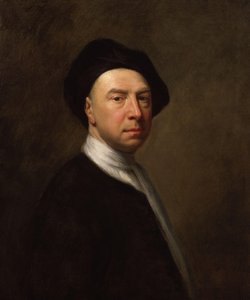
Matthew Prior (1664–1721) – A Portrait of Enlightenment’s Quiet Dignity
Jonathan Richardson the Elder's depiction of Matthew Prior, completed in 1719, transcends mere likeness; it embodies the spirit of the English Enlightenment. This meticulously crafted portrait captures Prior—a celebrated poet and playwright—seated with serene composure amidst a richly appointed study. Richardson’s masterful technique utilizes oil paint on canvas to achieve an astonishing level of detail, rendering textures from the velvet cushion beneath Prior's buttocks to the subtle sheen of his wig with remarkable accuracy. The artist skillfully employs chiaroscuro – dramatic contrasts between light and shadow – to sculpt Prior’s face and torso, emphasizing his intellectual presence and conveying a sense of contemplative repose.- Style: Richardson’s style aligns perfectly with the prevailing Neoclassical aesthetic of the period, prioritizing clarity, restraint, and idealized beauty. He consciously avoids flamboyant ornamentation, favoring instead a dignified simplicity that reflects Prior's character and intellectual pursuits.
- Technique: Richardson’s meticulous brushwork demonstrates an unparalleled understanding of anatomy and perspective. The artist painstakingly builds up layers of paint to create depth and luminosity, capturing the nuances of light reflecting off surfaces—a hallmark of Richardson’s approach.
- Historical Context: Painted during a time of burgeoning scientific inquiry and philosophical debate, Prior's portrait speaks to the broader cultural preoccupation with reason and virtue. It reflects the Enlightenment’s belief in human intellect as capable of achieving moral perfection and elevating the human condition.
Composition & Symbolism – An Interior Landscape Reflecting Inner Thought
The composition itself is deliberately understated yet profoundly symbolic. Prior sits centrally within a room dominated by two chairs—one positioned to his left, the other to his right—creating a sense of balance and equilibrium. Behind him rests a book, subtly illuminated by candlelight, representing Prior’s engagement with scholarship and intellectual contemplation. The placement of these elements underscores Richardson's intention to portray Prior not merely as an individual but as an embodiment of Enlightenment ideals – a man devoted to reason, learning, and artistic excellence.- Color Palette: Richardson employs a muted palette dominated by earthy tones—browns, creams, and ochres—creating a harmonious atmosphere that reinforces the portrait’s contemplative mood.
- Lighting: The strategic use of candlelight casts dramatic shadows across Prior's face and torso, highlighting his features and conveying an aura of solemn dignity.
- Furniture & Props: The inclusion of the chairs and the book serves as visual shorthand for Prior’s intellectual environment—a space dedicated to contemplation and scholarly pursuits.
Emotional Impact – Capturing Serenity Amidst Intellectual Engagement
Ultimately, Richardson succeeds in conveying a powerful emotional resonance. The portrait captures Prior's inner tranquility amidst the demands of his creative life—a testament to the artist’s ability to portray not just physical appearance but also psychological state. The gaze of Prior is direct yet gentle, suggesting both confidence and humility. This subtle expression invites viewers to contemplate the complexities of human intellect and the pursuit of virtue—themes central to Richardson's artistic vision and enduring legacy.Legacy & Influence – Inspiring Subsequent Generations of Portraitists
Jonathan Richardson the Elder’s ‘Portrait of Matthew Prior’ stands as a cornerstone of English portraiture, influencing countless artists who followed him. His meticulous attention to detail, masterful use of chiaroscuro, and profound understanding of psychological realism established new standards for artistic excellence—a legacy that continues to inspire admiration and emulation today. It remains a poignant reminder of the Enlightenment's aspiration to depict human dignity with both intellectual precision and emotional sensitivity.Artist Biography
A Legacy of Light and Logic: The Life of Jonathan Richardson the Elder
In the grand tapestry of eighteenth-century British art, few threads are as intellectually profound or visually enduring as those woven by Jonathan Richardson the Elder. Born in London’s St. Botolph parish on January 12th, 1667, Richardson’s journey was one shaped by both personal hardship and an extraordinary intellectual curiosity. Following the untimely loss of his father, William Richardson, the young artist found himself under the guidance of a stepfather, yet it was through a formal apprenticeship as a scrivener that he first began to hone the precision that would later define his brushwork. His true metamorphosis occurred when he entered the orbit of John Riley, a respected contemporary whose studio served as a crucible for Richardson’s developing talent. This period of training did more than teach him the mechanics of paint; it immersed him in a world where portraiture was not merely a record of likeness, but a profound exploration of character and social standing.
As his career flourished, Richardson emerged as a painter of remarkable distinction, carving out a niche that balanced the formal requirements of aristocratic patronage with a deeply personal, psychological depth. His work often eschewed the flamboyant, theatrical flourishes common in some Baroque circles, opting instead for an understated elegance and a mastery of subtle tonal gradations. Influenced by the dramatic chiaroscuro of Rembrandt and the meticulous observation found in the works of later masters like Wright of Derby, Richardson possessed a unique ability to capture the quiet dignity of his subjects. Whether rendering the intellectual gravity of Richard Hale or the serene, scholarly atmosphere surrounding Matthew Prior, his canvases served as windows into the Enlightenment spirit, prioritizing accuracy and an evocative sense of presence over mere ornamentation.
The Architect of English Art Theory
While his portraits remain cherished for their aesthetic grace, Richardson’s most enduring contribution to the art world lies in his role as a pioneer of art theory. He was far more than a practitioner of the craft; he was its most articulate philosopher. Through his seminal work, An Essay on Painting, published in 1715, Richardson provided a foundational framework for English art that sought to elevate the status of painters from mere craftsmen to respected intellectuals. This treatise did not merely discuss technique; it explored the very nature of beauty, the importance of invention, and the moral weight of the artist's vision. His writings acted as a bridge between the traditions of the Old Masters and the burgeoning national identity of British art, creating a discourse that would resonate for generations.
The historical significance of Richardson’s intellectual labor cannot be overstated, as he is widely credited with sparking the artistic journey of Sir Joshua Reynolds. By establishing a theoretical vocabulary for portraiture—one that emphasized the "grand style" and the importance of character—Richardson laid the groundwork for the Royal Academy and the formalization of art education in England. His influence can be traced through several key pillars of his legacy:
- The Development of Portraiture: He moved the genre away from static documentation toward a more nuanced, psychological exploration of the sitter.
- Artistic Philosophy: His writings provided the first cohesive English-language defense of painting as a high intellectual pursuit.
- Mentorship and Influence: Through his connections with artists like Thomas Hudson and his theoretical impact on Reynolds, he shaped the trajectory of the British school.
- The Enlightenment Connection: His ability to capture the "intellectual dignity" of figures such as George Oxenden helped visually document the era's shift toward reason and classical values.
Ultimately, Jonathan Richardson the Elder remains a monumental figure whose impact is felt both in the silent power of his portraits and the enduring resonance of his words. He was an artist who understood that to paint a face was to attempt to capture a soul, and to write about art was to define the very way a nation sees itself. His life stands as a testament to the power of combining technical mastery with profound philosophical inquiry, ensuring his place in the pantheon of the Great Masters.
Jonathan Richardson the Elder
1667 - 1745
Quick Facts
- Artistic Movement Or Style: Portraiture
- Artists Or Movements Influenced By This Artist: ['Joshua Reynolds']
- Artists Who Influenced This Artist: ['John Riley']
- Date Of Birth: 1667
- Date Of Death: 1745
- Full Name: Jonathan Richardson the Elder
- Nationality: English
- Notable Artworks:
- Portrait of the Artist's Son, Jonathan Richardson the Younger, in his Study
- Portrait of the Artist's Son, Jonathan
- Place Of Birth: London, England
Related Articles

Jonathan Richardson the Elder: Shaping British Art Through Portraiture & Pedagogy
Explore the life & work of Jonathan Richardson the Elder, a pivotal figure in 18th-century British art. Discover his portraits, influential 'Essay on Painting,' and lasting legacy as an artist, theorist, and collector. Learn more at OriginalUniqueArt.

Baroque Masterpieces: 10 Paintings That Defined an Era |
Journey through the drama & grandeur of Baroque art! Explore 10 masterpieces by Caravaggio, Rembrandt, Rubens & more. Discover stunning oil paintings, rich colors & timeless stories. Find museum-quality reproductions at .

The Dramatic Flourish: Exploring the Baroque Movement's Enduring Legacy in Art History
Explore the dramatic world of Baroque art! Discover iconic artists like Caravaggio & Rubens, defining techniques, and its lasting impact on art history. Expert insights for collectors & enthusiasts at OriginalUniqueArt.

Baroque Drama: Bringing Opulence & Emotion into Contemporary Interiors
Explore the opulent world of Baroque interior design! Discover key elements, modern applications & how to bring dramatic elegance into your home with 's authentic reproductions.

The Visceral Stage: Exploring Dramatic Narratives & Emotional Intensity in Baroque Art
Explore the dramatic world of Baroque art! Discover iconic masters like Caravaggio & Rembrandt, their techniques, and the movement's lasting impact. Expert insights for collectors & enthusiasts at OriginalUniqueArt.



