

 Preview
 Send
Send Share
Share
 Details
 Guide
Guide

 Download
 Similars
 X-Ray
X-Ray Diaporama
 Stats
StatsWhite Cloud
 111.0 x 111.0 cm
 Read More
Giclée / Art Print
Museum-quality giclée or canvas print with fast production and flexible finish options. ( Buy Hand Made Painting Switch to Digital Image)




































Pick from our preset sizes that match the artwork's original proportions.

You may enter your own dimensions to fit a specific frame or space. If your selected size does not match the original image's proportions, we will either crop the artwork or extend the image with a mirrored or solid-fill edge. A digital mockup will be sent for your approval before production begins.
Please note that the on-screen preview does not reflect the actual cropping or extension. Only the mockup will accurately show the final composition.
While custom sizes are available, we recommend selecting a dimension from the predefined list to preserve the original proportions.
Worldwide Delivery () in 2 weeks instead of standard 4/5 weeks. (25 September)

Free Worldwide Express Shipping

High-Quality Linen Canvas

Full Shipping Insurance

Customs Tax Refund Guarantee

True Color Matching Guarantee

100-Day Return Policy (Defects Only)

100% Money-Back Guarantee

Bulk Discount Offer
 Glass option is only available in size under 110 CM

White Cloud
Giclée / Art Print
Reproduction Size
-


Total Price
$ 81
Artist Biography
A Life Immersed in Observation: The World of John Philip Busby
John Philip Busby, born in Bradford in 1928, wasn’t merely a painter of birds and animals; he was an interpreter of the natural world, a chronicler of behavior, and a dedicated teacher who fostered generations of wildlife artists. His life, deeply rooted in observation and fueled by a profound respect for his subjects, unfolded as a testament to the power of drawing from life and the enduring beauty found within the intricacies of nature. From his early days exploring the landscapes around Ilkley Grammar School, Busby’s path was set – not towards replicating form, but understanding essence. National service provided a brief pause before formal training at Leeds College of Art and then Edinburgh College of Art (ECA), where scholarships allowed him to immerse himself in the artistic traditions of France and Italy. These formative experiences weren't about adopting stylistic trends; they were about honing his eye, learning to see light and shadow, and developing a technical foundation that would serve as the bedrock for his unique approach.From Academia to Artistic Voice
Upon returning from his travels, Busby’s talent and dedication led him back to ECA, this time as a member of staff in 1956. For over three decades, he imparted his knowledge of drawing and painting, emphasizing the importance of direct observation – a philosophy that resonated deeply with his students. This period also saw the creation of one of his most significant early works: the mural *Christ in Glory* for St. Columba’s-by-the-Castle in Edinburgh (1959). The work, imbued with the spiritual depth informed by his personal faith and travels, demonstrates a capacity to synthesize artistic skill with profound belief. His commitment to the art world was further solidified through membership in prestigious societies – the Royal Scottish Academy of Arts and Architecture (RSA) and the Royal Scottish Society of Painters in Watercolour (RSW), culminating in his presidency of the Society of Scottish Artists from 1976-1979. These roles weren’t merely honorary; they were active engagements with a vibrant artistic community, shaping the landscape of Scottish art during a period of significant change.The Naturalist and the Artist: A Symbiotic Relationship
Busby's true passion lay in the natural world, specifically birds. At just seventeen years old, he was present at the founding meeting of the Wharfedale Naturalists Society in 1945 – a testament to his lifelong dedication. This wasn’t simply an interest; it was a fundamental aspect of his being. He became a founder member of the Society of Wildlife Artists (SWLA), recognizing the need for a dedicated platform for artists focused on portraying wildlife with accuracy and sensitivity. His work transcended mere illustration, becoming a detailed study of behavior, capturing fleeting moments of life that often went unnoticed. This dedication extended beyond the canvas; he led courses in diverse locations – Switzerland, Crete, the Falklands, the Galapagos Islands, Orkney, and Gloucestershire’s Nature in Art – sharing his expertise and inspiring others to connect with nature through art.Legacy in Ink and Paint: Books, Projects & Continued Influence
The breadth of Busby's influence is perhaps best illustrated by his prolific output as an illustrator. Over thirty-five books bear his name, each a testament to his meticulous observation skills and artistic talent. These weren’t simply collections of pretty pictures; they were explorations of behavior, ranging from the complex social lives of seabirds to the predatory grace of tigers, the familiar charm of garden birds to the playful antics of otters. He also contributed significantly to collaborative projects with the Artists for Nature Foundation (ANF) in locations across Europe and beyond – Holland, Poland, Spain, Ireland, India, Portugal, and Israel – and participated in SWLA/Forestry Commission initiatives in the New Forest and Scotland’s oak woodlands. The 1991 STV production *Portrait of the Wild – Summer*, filmed in Shetland, offered a glimpse into his process and philosophy, further cementing his reputation as a leading figure in wildlife art. His enduring legacy lies not only in the stunning beauty of his paintings but also in the generations of artists he inspired to look closely, to understand deeply, and to portray the natural world with both accuracy and reverence. Busby’s work continues to resonate today, reminding us of the importance of observation, conservation, and the profound connection between art and nature.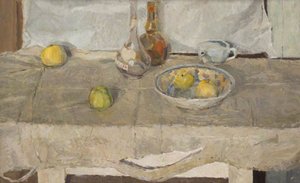
john philip busby
1928 - 2015
Quick Facts
- Artistic Movement Or Style: Wildlife Art
- Artists Or Movements Influenced By This Artist: ['Wildlife Artists']
- Date Of Birth: 1928
- Date Of Death: 2015
- Full Name: John Philip Busby
- Nationality: British
- Notable Artworks: ['Christ in Glory']
- Place Of Birth: Bradford, UK


