
 Preview
 Send
Send Share
Share
 Details
 Guide
Guide

 Download
 Similars
 X-Ray
X-Ray Diaporama
 Q&A
Q&A Stats
StatsTwo Camels


 Read More
Giclée / Art Print
Museum-quality giclée or canvas print with fast production and flexible finish options. ( Buy Hand Made Painting Switch to Digital Image)




P118B $10

P118H $10

P118W $10

P438Z $10

P508JH $12

P508YH $12

P805H $10

P805Z $10

P919BZ $10

P919G $10

P919XJ $10

P959ZH $10

P968JZ $12

W106C $8

W218G $10

W218JH $8

W218Y $10

W307PJ $10

W316G $10

W316PJ $8

W316Y $10

W398PJ $8

W4111J $10

W500HY $15

W500JH $15

W692G $12

W849H $8

W940BG $15

W953PJ $8




Pick from our preset sizes that match the artwork's original proportions.

Type the width and the height you need, to fit your frame or your wall. A print can only be cut, never made bigger than the picture, so a size with a different shape loses a part of the image. We send you a digital mockup to approve before we print anything. The picture shown on this page does not show the real cut — only the mockup does.
Worldwide Delivery () in 2 weeks instead of standard 4/5 weeks. (13 November)

Free Worldwide Express Shipping

High-Quality Linen Canvas

Full Shipping Insurance

Customs Tax Refund Guarantee

True Color Matching Guarantee

100-Day Return Policy (Defects Only)

100% Money-Back Guarantee

Bulk Discount Offer
 Glass option is only available in size under 110 CM

Two Camels
Giclée / Art Print
Reproduction Size
-


Total Price
$ 81
Identification of Two Camels by John Frederick Lewis
In this 1843 watercolor, John Frederick Lewis presents Two Camels. The work captures a quiet moment within an expansive, sandy landscape. One of the animals carries a solitary figure, while the other turns its head, adding a sense of life to the composition. It is a piece that reflects the artist's deep engagement with the light and atmosphere of the East.
The artist, John Frederick Lewis, achieved a remarkable level of detail through his command of the watercolor medium. This specific work, Two Camels, relies on subtle tonal shifts to define the textures of the desert terrain and the forms of the animals. The presence of several figures in the background suggests a wider, lived-in environment beyond the immediate subjects.
Composition and Visual Elements of the Work
The composition centers on two camels moving across a sandy expanse. There is a quiet sense of movement as they walk through the frame. The camel on the left has its head turned to the side, while the other camel faces straight ahead. A solitary figure is perched atop one of the animals, adding a human presence to the desert scene. In the distance, several people are visible in the background, suggesting a wider social setting beyond the immediate subjects.
Lewis organizes the space to emphasize the rhythm of the animals' gait. The placement of the figures and the camels creates a sense of progression across the landscape. The muted palette of sandy browns and pale blues establishes a tranquil atmosphere. This color choice allows the viewer to focus on the subtle postures of the camels and the figures within the environment.
Technique and Artistic Style of the Artist
Lewis demonstrates a profound command of watercolor, utilizing the medium to achieve a remarkable tonal range. Through careful layering and subtle blending, he captures the specific quality of desert light. His brushstrokes appear delicate, yet they possess a confidence that defines the forms of the camels and the figures in the background. This technical precision allows for a high level of textural detail across the sandy expanse.
The palette is intentionally muted, relying on a harmony of sandy browns and pale blues. This choice creates a tranquil atmosphere, avoiding the heavy drama often found in other works of this period. The colors work together to suggest the heat and the vastness of the landscape without overwhelming the viewer. It is a restrained approach that emphasizes the atmosphere of the scene.
Related Works by John Frederick Lewis
To understand the breadth of Lewis’s vision, one might look toward his watercolor A Bedouin, which exemplifies his specific Orientalist style. This approach to the genre is further reflected in A Young Turkish Woman, another striking example of his interest in the people and customs of the East. These works demonstrate his ability to capture the essence of a culture through a focused, observational lens.
His technical range extends into more structured environments as well. In The Ramesseum at Thebes, his remarkable attention to architectural detail becomes the primary focus. This precision contrasts with the intimate, domestic atmosphere found in his oil painting Harem Life in Constantinople, which depicts Ottoman domestic life with a quiet, detailed hand.
Questions & Answers
Do the colors of "Two Camels" appear strong or soft?
The color intensity of "Two Camels" is vivid. Intensity describes how strong the colors appear.
What type of artwork is "Two Camels" by John Frederick Lewis?
In the catalog, "Two Camels" by John Frederick Lewis is filed as wall art. The category helps find similar works.
How does the style of "Two Camels" relate to its creator's era?
"Two Camels" by John Frederick Lewis is placed in the Orientalist Painting movement, within the 19th-Century era of its creator.
Artist Biography
John Frederick Lewis: A Life in Orientalist Painting
Early Life and Training
John Frederick Lewis, a prominent English Orientalist painter, was born on July 14, 1804, in London. He was the son of Frederick Christian Lewis, an engraver and landscape painter. This familial artistic background undoubtedly influenced his early development. His formal training began under the tutelage of Sir Thomas Lawrence, where he honed his skills alongside fellow artists like Edwin Landseer. This foundational period instilled in him a strong understanding of technique and composition.
Artistic Career & Development
Lewis’s artistic career unfolded through several distinct phases, each marked by evolving styles and thematic focuses:
- Orientalist Period: Lewis embarked on extensive travels throughout the Mediterranean region, meticulously capturing its essence in detailed watercolor and oil paintings. He frequently revisited compositions, rendering them across multiple mediums.
- Spanish & Moroccan Influences (1832-1834): A tour of Spain and Morocco proved pivotal. He produced numerous lithographs later published as “Sketches and Drawings of the Alhambra” (1835) and “Lewis’s Sketches of Spain and Spanish Character” (1836).
- Egyptian Period (1841-1851): His sojourn in Cairo was arguably his most productive. Here, he perfected his Orientalist style, creating highly detailed works showcasing both realistic genre scenes and idealized depictions of upper-class Egyptian interiors.
Notable Works
Lewis created a substantial body of work celebrated for its meticulous detail and evocative atmosphere. Some of his most recognized pieces include:
- A Bedouin (Yale Center for British Art, New Haven) – A watercolor exemplifying his Orientalist style.
- The Ramesseum at Thebes (Yale Center for British Art, New Haven) – Showcasing his remarkable attention to architectural detail.
- A Young Turkish Woman (Yale Center for British Art, New Haven) – Another striking example of his Orientalist work.
- Harem Life in Constantinople - A detailed oil painting depicting Ottoman domestic life.
Influences and Artistic Style
Lewis’s style was shaped by several influences, most notably Sir Thomas Lawrence's emphasis on portraiture and composition. However, his direct observation of Middle Eastern cultures allowed him to develop a unique aesthetic characterized by:
- Meticulous Detail: A commitment to accurately representing textures, patterns, and architectural elements.
- Rich Color Palette: Employing vibrant hues inspired by the landscapes and costumes he encountered.
- Genre Scenes & Interior Views: Focusing on everyday life and intimate domestic settings.
Legacy and Historical Significance
Lewis’s contribution to the art world lies in his significant role in developing Orientalist painting. His meticulous representations of Islamic architecture, furnishings, and costumes set new standards for realism within the genre. He helped popularize a romanticized yet detailed vision of the Middle East among Western audiences. After returning to England in 1851, he continued to paint until his death on August 15, 1876, in Walton-on-Thames.
His work continues to be studied and admired for its artistic merit and historical insight into 19th-century perceptions of the Orient.

John Frederick Lewis
1805 - 1876 , United Kingdom
Quick Facts
- Name: John Frederick Lewis
- Movement: Orientalism
- Birth Date: July 14, 1804
- Death Date: August 15, 1876
- Birth Place: London, United Kingdom
- Nationality: British
- Date Of Birth: 1804
- Date Of Death: 1876
- Influenced By: Sir Thomas Lawrence
- Notable Works:
- A Bedouin
- The Ramesseum at Thebes
- A Young Turkish Woman
- Harem Life in Constantinople
- Place Of Birth: London, United Kingdom
Related Articles

Masterpieces of Nature: The Top 25 John Constable Artworks
Explore John Constable's iconic landscapes and Romantic masterpieces. Discover the full collection online at OriginalUniqueArt.com.
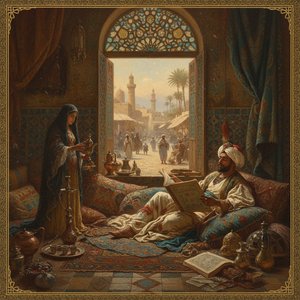
John Frederick Lewis: Orientalism, Detail & Genre Painting in 19th-Century British Art
Explore the captivating Orientalist paintings of John Frederick Lewis! Discover his mastery of detail, genre scenes & influence on 19th-century British art. Learn about his life, techniques & legacy at OriginalUniqueArt.

Watercolor Wonders: 10 Masterpieces That Redefined Art History | OriginalUniqueArt
Journey through 10 legendary watercolor masterpieces by Sargent, Turner & Homer! Explore iconic landscapes, portraits & floral art that redefined history. Find museum-quality reproductions and curated decor ideas at OriginalUniqueArt.com.

John Singer Sargent's 25 Masterpieces: Portraits & Beyond | OriginalUniqueArt
Explore 25 iconic John Singer Sargent paintings – from dazzling portraits to Impressionist landscapes. Discover the stories behind Madame X, El Jaleo & more! Find museum-quality art reproductions and elevate your home decor with OriginalUniqueArt.com.

Ephemeral Visions: Exploring the Artistic Legacy & Contemporary Practice of Watercolor Painting
Explore the captivating world of watercolor painting! Discover its rich history, essential techniques, influential artists & collecting tips. A comprehensive guide for art enthusiasts from OriginalUniqueArt.


