

 Preview
 Send
Send Share
Share
 Details
 Guide
Guide

 Download
 Similars
 X-Ray
X-Ray Diaporama
 Stats
StatsTwo Thousand Years Ago
 Oil
Oil- WallArt
- Romanticism
 1878
1878- 19th Century
 76.0 x 99.0 cm
 Read More
Giclée / Art Print
Museum-quality giclée or canvas print with fast production and flexible finish options. ( Buy Hand Made Painting Switch to Digital Image)




P118B $10

P118H $10

P118W $10

P438Z $10

P508JH $12

P508YH $12

P805H $10

P805Z $10

P919BZ $10

P919G $10

P919XJ $10

P959ZH $10

P968JZ $12

W106C $8

W218G $10

W218JH $8

W218Y $10

W307PJ $10

W316G $10

W316PJ $8

W316Y $10

W398PJ $8

W4111J $10

W500HY $15

W500JH $15

W692G $12

W849H $8

W940BG $15

W953PJ $8




Pick from our preset sizes that match the artwork's original proportions.

Type the width and the height you need, to fit your frame or your wall. A print can only be cut, never made bigger than the picture, so a size with a different shape loses a part of the image. We send you a digital mockup to approve before we print anything. The picture shown on this page does not show the real cut — only the mockup does.
Worldwide Delivery () in 2 weeks instead of standard 4/5 weeks. (23 October)

Free Worldwide Express Shipping

High-Quality Linen Canvas

Full Shipping Insurance

Customs Tax Refund Guarantee

True Color Matching Guarantee

100-Day Return Policy (Defects Only)

100% Money-Back Guarantee

Bulk Discount Offer
 Glass option is only available in size under 110 CM

Two Thousand Years Ago
Giclée / Art Print
Reproduction Size
-


Total Price
$ 81
A Nocturnal Symphony of Light and Shadow
In the quietude of 1878, John Atkinson Grimshaw captured a moment that transcends time in his evocative masterpiece, Two Thousand Years Ago. This painting is not merely a depiction of a scene, but an invitation into a dreamscape where the boundaries between reality and memory begin to blur. As a quintessential representative of the Romantic movement, the work eschews the harsh clarity of realism in favor of a profound emotional resonance. The canvas presents a serene and peaceful atmosphere, centered around two figures seated upon a bench before a stately building. They are lost in their own world, perhaps engaged in a whispered conversation or simply sharing the heavy, beautiful silence of the night. Through his masterful command of light, Grimshaw transforms a simple encounter into a timeless tableau of human connection.
The technical brilliance of this piece lies in Grimshaw’s legendary ability to manipulate moonlight and atmospheric effects. Known as a "Master of Moonlight," the artist employs a delicate palette of soft, muted colors that seem to glow from within the canvas itself. The way the light grazes the edges of the architecture and illuminates the subtle textures of the surroundings creates an incredible sense of depth and mystery. This technique does more than just provide visibility; it builds a palpable sense of intimacy. For the discerning collector or interior designer, this painting offers a unique ability to anchor a room with its tranquil energy, providing a focal point that is both sophisticated and deeply soothing.
Symbolism and the Poetic Landscape
Beyond the central figures, the composition is rich with subtle details that invite closer inspection and deeper contemplation. A vase placed near the edge of the frame and a cup positioned toward the center suggest a domesticity that has been momentarily paused to witness the grandeur of the night. The presence of two birds—one perched quietly on the bench and another caught in mid-flight above—serves as a poignant symbol of both stillness and transition. These small, living elements breathe life into the landscape, reminding the viewer of the continuous cycle of nature that persists even in our most private moments of reflection.
The title itself, Two Thousand Years Ago, adds a layer of historical weight and romantic longing to the visual experience. It suggests that the emotions felt by these two figures—the tenderness, the solitude, the awe of the night—are universal and eternal, echoing through the centuries. This sense of historical continuity makes the artwork particularly compelling for those who appreciate art that tells a story larger than its immediate subject. Whether displayed in a grand gallery setting or as a centerpiece in a contemporary home, this reproduction serves as a window into a world where every shadow holds a secret and every light beam tells a tale of enduring beauty.
Questions & Answers
What size is "Two Thousand Years Ago" by John Atkinson Grimshaw in real life?
The recorded dimensions of "Two Thousand Years Ago" by John Atkinson Grimshaw are 76 x 99 cm. Reproductions can be ordered in other sizes while keeping the same proportions.
How does the style of "Two Thousand Years Ago" relate to its creator's era?
"Two Thousand Years Ago" by John Atkinson Grimshaw is placed in the Romanticism movement, within the 19th-Century era of its creator.
How do I discover artworks close to "Two Thousand Years Ago" by John Atkinson Grimshaw?
The Similars page of "Two Thousand Years Ago" by John Atkinson Grimshaw presents related artworks.
Artist Biography
A Master of Moonlight: The Life and Art of John Atkinson Grimshaw
John Atkinson Grimshaw, born in Leeds in 1836, occupies a unique and evocative space within the pantheon of Victorian artists. He wasn’t merely a painter of landscapes; he was a chronicler of atmosphere, a poet of light and shadow, and a keen observer of the burgeoning industrial world around him. His journey from railway clerk to celebrated artist is a testament to his unwavering dedication and artistic vision—a story often recounted as an inspiring example of pursuing passion against societal expectations. Initially met with familial disapproval when he abandoned a stable career at age twenty-four to dedicate himself to painting, Grimshaw persevered, fueled by an innate talent that would ultimately define his legacy. His early exhibitions showcased modest still lifes – birds, fruit, blossoms – presented under the patronage of the Leeds Philosophical and Literary Society in 1862, but it was his later exploration of nocturnal scenes that truly set him apart, establishing a style instantly recognizable and deeply affecting.Influences and Artistic Development
Grimshaw’s artistic foundations were firmly rooted in the aesthetic currents of his time, yet he synthesized these influences into something distinctly his own. The Pre-Raphaelite movement exerted a significant impact, evident in his meticulous attention to detail, realism, and vibrant color palettes. He shared their commitment to capturing the beauty of the natural world with unwavering accuracy, but Grimshaw wasn’t simply an imitator. He forged his own path by embracing innovative techniques, most notably his open use of tools like the camera obscura or lenses to project scenes onto canvas. This practice, considered controversial by some contemporaries who questioned its artistic merit, allowed him to achieve remarkable precision in perspective and detail, creating images that possessed an almost photographic quality. James McNeill Whistler himself acknowledged Grimshaw’s mastery of nocturnal effects, famously conceding that he had believed himself the “inventor of nocturnes” until encountering Grimshaw's moonlit paintings. Beyond Pre-Raphaelite ideals, influences from artists like James Tissot and the broader Aesthetic Movement can be seen in his interior scenes, showcasing richly decorated rooms and a focus on capturing mood and emotion through light and shadow. He wasn’t afraid to experiment, blending traditional techniques with modern tools to achieve his desired effects—a boldness that set him apart from many of his peers.Major Achievements and Notable Works
The 1870s marked a period of significant success for Grimshaw. He established homes in both Leeds and Scarborough, the latter becoming a frequent subject of his art. It was during this time that he developed his signature style – atmospheric urban scenes rendered under twilight or the warm glow of gaslight. Liverpool from Wapping (1875) exemplifies this period, showcasing the industrial energy of the port city with a blend of realism and impressionistic brushwork. The painting captures not just the physical structures of the docks but also the bustling activity and the sense of constant motion that characterized Victorian Liverpool. Endymion on Mount Latmus (1879), inspired by Keats’ poem, demonstrates his ability to translate literary themes into visually stunning dreamscapes—a testament to his intellectual curiosity and artistic versatility. Dulce Domum (1885) is a particularly compelling example of his interior scenes, inviting the viewer into a world of quiet intimacy and refined elegance. On Hampstead Hill, another celebrated work, perfectly captures the transition from twilight to night, showcasing Grimshaw’s exceptional skill in manipulating light and shadow. His paintings were regularly exhibited at the Royal Academy between 1874 and 1885, solidifying his reputation within the established art world. These works weren't simply representations of places; they were emotional landscapes, imbued with a sense of mystery and quiet contemplation.Legacy and Historical Significance
Despite a period of relative obscurity following his death in 1893, John Atkinson Grimshaw’s work experienced a significant revival during the latter half of the twentieth century. A retrospective exhibition, “Atkinson Grimshaw – Painter of Moonlight,” held at the Mercer Art Gallery in Harrogate and the Guildhall Art Gallery in London in 2011, brought renewed attention to his captivating landscapes. Grimshaw’s enduring legacy lies in his ability to evoke a powerful sense of atmosphere and mood through his masterful use of light and detail. He wasn't merely documenting scenes; he was capturing emotions – the quiet solitude of a moonlit street, the bustling energy of a port city, the cozy warmth of a domestic interior. His work offers a unique window into Victorian life, revealing both its grandeur and its underlying sense of alienation. He remains an important figure in Victorian art history, celebrated for his distinctive style and his ability to transform ordinary scenes into extraordinary works of art. The influence of his atmospheric techniques can be seen in later artists who sought to capture the mood and emotion of a scene rather than simply its physical appearance. His willingness to embrace new technologies, like the camera obscura, also paved the way for future artistic experimentation. Grimshaw’s paintings continue to resonate with audiences today, reminding us of the beauty that can be found in the everyday and the power of art to transport us to another time and place.
John Atkinson Grimshaw
1836 - 1893 , United Kingdom
Quick Facts
- Full Name: John Atkinson Grimshaw
- Nationality: British
- Date Of Birth: 1836
- Date Of Death: 1893
- Place Of Birth: Leeds, United Kingdom
- Notable Artworks:
- Liverpool from Wapping
- Endymion on Mount Latmus
- Dulce Domum
- On Hampstead Hill
- Artistic Movement Or Style: Victorian, Pre-Raphaelite
- Artists Who Influenced This Artist:
- Pre-Raphaelites
- James Tissot
- Whistler
- Artists Or Movements Influenced By This Artist: ['Aesthetic Movement']
Related Articles

John Atkinson Grimshaw: Atmospheric Realism & the Victorian Nocturne
Explore the captivating world of John Atkinson Grimshaw, Victorian master of atmospheric nightscapes. Discover his iconic paintings, unique techniques & enduring legacy. Learn about collecting Grimshaw's art today!

John Augustus Atkinson: Romantic Visions of Rural England & Genre Painting's Evolution
Explore the captivating world of John Augustus Atkinson (1775-1830), a key figure in British Romanticism and genre painting. Discover his stunning Russian history scenes, naval art & delicate watercolors. Learn about his legacy at OriginalUniqueArt.
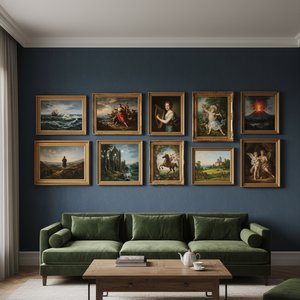
Romanticism's Greatest Artworks: 10 Masterpieces for Your Home |
Journey through Romanticism's soul with 10 iconic artworks by Delacroix, Goya & Turner. Explore emotional landscapes and historical drama. Find museum-quality art reproductions to elevate your home at – Discover all masterpieces online!

John Constable's Masterpieces: Explore 25 Iconic Landscapes for Your Home
Journey through John Constable's 25 most celebrated landscapes. Explore Romanticism, Dedham Vale & his masterful use of light in iconic paintings like 'Hay Wain'. Find museum-quality art reproductions and elevate your home decor on OriginalUniqueArt.com.

John Singer Sargent's 25 Masterpieces: Portraits & Beyond | OriginalUniqueArt
Explore 25 iconic John Singer Sargent paintings – from dazzling portraits to Impressionist landscapes. Discover the stories behind Madame X, El Jaleo & more! Find museum-quality art reproductions and elevate your home decor with OriginalUniqueArt.com.


