 Read More


 For artworks or reproductions larger than 105 cm (approximately 41 inches) on any side, the frame will be shipped as a kit, disassembled. This method ensures safe delivery and prevents damage during transport.


More about this painting
Text size

() ·
A print made for you, with care
Giclée / Art Print
Museum-quality giclée or canvas print with fast production and flexible finish options. ( Buy Hand Made Painting Switch to Digital Image)
Artist Biography
Swiss painter & Bauhaus master Johannes Itten (1888-1967) revolutionized art education with his color theory & innovative 'preliminary course'. Explore his legacy of Op Art influence and holistic learning!
from ·
Chapter 1
On which medium should it be printed?
Canvas is printed with giclée inks and can be stretched or framed like a painting; paper comes flat, or framed behind glass.
Chapter 2
How large should it be?
Slide to change the size; the picture on the left shows the frame at its real width. The proportions of the original are kept.
Standard
custom
CM
INCH
Pick from our preset sizes that match the artwork's original proportions.
Loading sizes...

width
height
Type the width and the height you need, to fit your frame or your wall. A print can only be cut, never made bigger than the picture, so a size with a different shape loses a part of the image. We send you a digital mockup to approve before we print anything. The picture shown on this page does not show the real cut — only the mockup does.
Chapter 3
How should it arrive?
Choose the edges of the stretched canvas
Choose your frame

White $1

Blurside $1

Extended $1

P118B $10

P118H $10

P118W $10

P438Z $10

P508JH $12

P508YH $12

P805H $10

P805Z $10

P919BZ $10

P919G $10

P919XJ $10

P959ZH $10

P968JZ $12

W106C $8

W218G $10

W218JH $8

W218Y $10

W307PJ $10

W316G $10

W316PJ $8

W316Y $10

W398PJ $8

W4111J $10

W500HY $15

W500JH $15

W692G $12

W849H $8

W940BG $15

W953PJ $8

H24-GOLD $30

H24-SILVER $30

H36-GOLD $45

H36-SILVER $45
Framed
Moulding: . Overall size with the frame: .
Chapter 4
Worldwide Delivery () in 2 weeks instead of standard 4/5 weeks. (22 November)
The finishing touches
A nameplate, as in a museum?
Engraved Bronze Plaque Details
This elegant plaque features the artist's name and the title of the artwork, finely engraved for a timeless presentation.
It is made from bronze with a refined, elegant finish. The text is precisely laser-engraved for a sharp and permanent result. Measuring 9x2 cm, the plaque is compact yet easy to read. It's built to be durable and scratch-resistant, offering a professional, museum-quality look. Mounting is simple thanks to the included adhesive backing.
Transparent Acrylic Plaque Details
The plaque includes essential engraved details such as the artist's name, the title of the artwork, the date it was created, the type of media used-like oil on canvas or watercolor-a brief description of the piece, and a QR code that links to the complete artwork information.
It is crafted from clear acrylic, offering a sleek, modern appearance. The text is UV-engraved in black to ensure strong visual contrast. With a size of 10x15 cm, it ensures optimal readability. It comes equipped with two metal hooks for secure wall mounting. The plaque is designed to be weather-resistant, making it suitable for various environments, and it includes interactive features that work seamlessly with smartphone scanning.
Black Acrylic Plaque Details
This elegant plaque includes engraved information such as the artist's name, the title of the artwork, the date it was created, the type of media used (like oil on canvas or watercolor), a short description of the artwork, and a QR code for quick access to more information.
The plaque itself is made from refined black acrylic with a premium finish. The text is laser-engraved in white for high contrast and readability. Its size is 10x15 cm, designed to be easy to read. It comes with two metal hooks for professional mounting. The design is sleek and fits any interior style. It is also weather-resistant and durable, with built-in digital integration for mobile compatibility.
A protective varnish?
When do you need it?
Chapter 5
Your print, as you ordered it
Komposition
Reproduction Medium
Reproduction Size
-
Reproduction Frame
-
-
For artworks or reproductions larger than 105 cm (approximately 41 inches) on any side, the frame will be shipped as a kit, disassembled. This method ensures safe delivery and prevents damage during transport.
Professional assembly required - this is not a DIY product.
The kit must be assembled and the canvas stretched by an experienced professional framer, using wood glue (not supplied), a canvas stretching plier and clamps to hold the bars square while the glue dries. Incorrect assembly or uneven canvas tension can permanently damage the artwork and is not covered by our warranty.
All solid wood bars are included, precisely cut to size.
Assembled with the screws provided, plus wood glue for the corner joints, which is not supplied and must be sourced by your framer.
Professional tools are required and not included: a canvas stretching plier (tensioner) and clamps to hold the bars square while the glue dries.
Important:
The corner joints require wood glue, the bars must be held with clamps until the glue is fully dry, and tightening the canvas on the assembled frame requires a canvas stretching plier. None of these are included in the kit. Please arrange an experienced professional framer before ordering this size.
Nameplate
-
-
Protective Varnish
Glossy Varnish (enhances colors, protects against light/moisture)
-
Urgent
Worldwide Delivery () in 2 weeks instead of standard 4/5 weeks. (22 November)
-
Express Shipping
Worldwide Delivery () in 4/5 weeks. (29 November).
Included
Total Price
$ 81
Glass option is only available in size under 110 CM
Included with every order
- Free Worldwide Express Shipping
- High-Quality Linen Canvas
- Full Shipping Insurance
- Customs Tax Refund Guarantee
- True Color Matching Guarantee
- 100-Day Return Policy (Defects Only)
- 100% Money-Back Guarantee
- Bulk Discount Offer
 Preview

 Send
 Share
 Details
 Guide


 Download
 Similars
 X-Ray
 Diaporama
 Q&A
 Stats
In numbers
- 1919the year it was painted
- 29frames to choose from
- standard sizes, in its own proportions
- 5weeks to paint and deliver it
About the original


This Artwork Is Under Copyright Protection
The artwork displayed on this page is protected by copyright law, which means we cannot legally create or sell an identical reproduction. This protection is enforced under international agreements such as the Berne Convention and by national laws, including those outlined by the U.S. Copyright Law - Title 17.
As a respectful and legal alternative, we offer custom, hand-painted artworks inspired by the original. Our skilled and professional artists carefully study the original's style, mood, and artistic essence to create a new, unique piece that evokes the same feeling - while remaining an original creation in its own right.
This method fully complies with copyright regulations because it does not involve copying or duplicating the protected artwork. Instead, it is a creative reinterpretation - a new painting that is influenced by the original but not identical to it.

Johannes Itten
1888 - 1967, Switzerland
Quick facts about Johannes Itten
- Artistic Movement Or Style: Expressionism, Bauhaus
- Artists Or Movements Influenced By This Artist:
- Josef Albers
- Max Bill
- Bridget Riley
- Op Art
- Artists Who Influenced This Artist:
- Eugène Gilliard
- Adolf Hölzel
- Franz Cižek
- Date Of Birth: 1888
- Date Of Death: 1967
- Full Name: Johannes Itten
- Nationality: Swiss
- Notable Artworks:
- Plumen
- Formfiguren
- Abstract Figures
- Place Of Birth: Suedern Linden, Switzerland
Artist Biography
A Pioneer of Color and Form: The Life and Legacy of Johannes Itten
Johannes Itten, born in 1888 in the tranquil Swiss village of Südern-Linden, was more than just a painter; he was a visionary educator who fundamentally reshaped the landscape of modern art instruction. His journey began not within the hallowed halls of traditional art academies, but as an elementary school teacher—a formative experience that instilled in him a deep understanding of learning processes and the blossoming of creative potential. Itten’s early pedagogical explorations, inspired by Friedrich Fröbel's groundbreaking kindergarten concepts, emphasized intuitive development over rigid instruction, a philosophy he would carry throughout his career. Though briefly attempting formal training at Geneva’s École des Beaux-Arts, he found its methods stifling, returning to Bern where studies with Ernst Schneider proved pivotal. Schneider championed collective critique over individual assessment, nurturing creative impulses rather than suppressing them—a radical approach that became central to Itten's own teaching methodology. Influences from Eugène Gilliard, who explored abstract forms, and Adolf Hölzel, who utilized basic shapes as the foundation for artistic creation, further shaped his evolving aesthetic. He embraced Hölzel’s belief in lines, planes, circles, and spirals as essential starting points for visual exploration, laying the groundwork for his later theoretical work on color and form.The Bauhaus Revolution: The Vorkurs and Color Theory
Itten's arrival at Walter Gropius’ newly founded Bauhaus in Weimar in 1919 marked a turning point not only in his career but also in the history of art education. Appointed as a Master, alongside Lyonel Feininger and Gerhard Marcks, he was tasked with developing a foundational course—the *Vorkurs*, or preliminary course—that would become legendary. This wasn’t merely an introductory class; it was a complete reimagining of how artists were trained. Itten believed in stripping away preconceived notions and encouraging students to explore the fundamental properties of materials, composition, and, most importantly, color. He theorized seven distinct types of color contrast – hue, value, temperature, complements (neutralization), simultaneous contrast, saturation, and extension—and devised a series of exercises designed to unlock an intuitive understanding of these principles. His “color sphere,” encompassing twelve fundamental colors, became a cornerstone of Bauhaus curriculum. His teaching wasn’t confined to the intellectual; he incorporated gymnastic exercises, believing physical relaxation was essential for stimulating creativity and fostering self-expression. Itten's approach prioritized experimentation and intuition over strict adherence to technique, creating an environment where students felt empowered to discover their own artistic voices.Departure, Spirituality, and Continued Innovation
Despite his profound impact on the Bauhaus, Itten’s tenure wasn’t without conflict. His deeply held mystical beliefs, coupled with the reverence some students displayed towards him, created tension within the school's increasingly pragmatic atmosphere. Gropius prioritized industrial design and mass production, a vision that clashed with Itten’s emphasis on individual expression and spiritual exploration. This divergence of philosophies ultimately led to his resignation in 1923. Undeterred, Itten established the “ontos weaving workshops” near Zurich in 1924, collaborating with Bauhaus weaver Gunta Stölzl. His personal life was deeply intertwined with spirituality; he became a devoted follower of Mazdaznan, a fire cult derived from Zoroastrianism, which profoundly influenced his artistic practice and teaching philosophy. In 1926, he founded a small art and architecture school in Berlin, where Ernst Neufert, a former Bauhaus architect, also taught, continuing to disseminate his innovative pedagogical methods. Even after the rise of Nazism forced its closure in 1934, Itten remained committed to artistic exploration and education, eventually relocating to Switzerland in 1938.A Lasting Influence on Art and Beyond
Johannes Itten’s legacy extends far beyond the walls of the Bauhaus. His explorations of color composition resonate deeply with the work of Op Art pioneers like Josef Albers, Max Bill, and Bridget Riley, whose canvases pulsate with dynamic visual energy. His influence can also be seen in the expressionist works of Wassily Kandinsky, who shared Itten’s belief in the spiritual power of color. Perhaps surprisingly, his studies on color palettes and their association with personality types directly inspired the development of seasonal color analysis—a widely used technique in the cosmetics industry that helps individuals determine which colors best complement their complexion and features. But perhaps his most enduring contribution lies in his revolutionary approach to art education. His emphasis on experimentation, material exploration, and holistic learning continues to shape art programs worldwide, and his *Vorkurs* remains a model for foundational courses, inspiring generations of artists to unlock their creative potential. Itten’s work reminds us that true artistic innovation arises not from rigid adherence to tradition, but from a fearless embrace of intuition, experimentation, and the boundless possibilities of color and form.Related Articles

Mastering Abstraction: The Top 25 Essential Artworks by Kazimir Malevich
Explore 25 iconic Kazimir Malevich masterpieces and the rise of Suprematism. Discover the full collection online at OriginalUniqueArt.com.
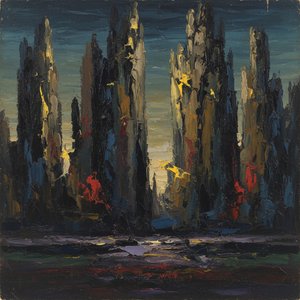
Clyfford Still's Abstract Expressionism: A Study of Color, Form & the Existential Landscape
Explore the profound world of Clyfford Still's Abstract Expressionism with OriginalUniqueArt. Discover his unique style, existential themes & investment potential. Expert analysis for discerning collectors.

Masterpieces of Abstraction: The Top 25 Wassily Kandinsky Artworks
Explore 25 iconic Wassily Kandinsky masterpieces. From Blue Rider to abstraction, discover his genius. Explore the full collection on OriginalUniqueArt.com.
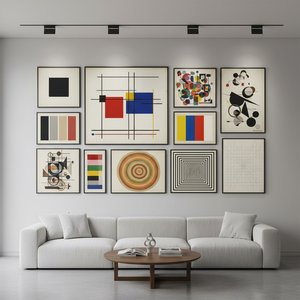
Geometric Abstraction's 10 Defining Masterpieces | Art for Your Home - OriginalUniqueArt
Explore 10 defining masterpieces of Geometric Abstraction! Discover Kandinsky, Mondrian & Malevich’s iconic works. Find museum-quality art reproductions and curated decor ideas to elevate your home at OriginalUniqueArt.com.
Explore artworks organized by themes, styles, and characteristics.


