
 Preview
 Send
Send Share
Share
 Details
 Guide
Guide

 Download
 Similars
 X-Ray
X-Ray Diaporama
 Q&A
Q&A Stats
StatsScène de grève


 Read More
Giclée / Art Print
Museum-quality giclée or canvas print with fast production and flexible finish options. ( Buy Hand Made Painting Switch to Digital Image)




P118B $10

P118H $10

P118W $10

P438Z $10

P508JH $12

P508YH $12

P805H $10

P805Z $10

P919BZ $10

P919G $10

P919XJ $10

P959ZH $10

P968JZ $12

W106C $8

W218G $10

W218JH $8

W218Y $10

W307PJ $10

W316G $10

W316PJ $8

W316Y $10

W398PJ $8

W4111J $10

W500HY $15

W500JH $15

W692G $12

W849H $8

W940BG $15

W953PJ $8




Pick from our preset sizes that match the artwork's original proportions.

Type the width and the height you need, to fit your frame or your wall. A print can only be cut, never made bigger than the picture, so a size with a different shape loses a part of the image. We send you a digital mockup to approve before we print anything. The picture shown on this page does not show the real cut — only the mockup does.
Worldwide Delivery () in 2 weeks instead of standard 4/5 weeks. (6 November)

Free Worldwide Express Shipping

High-Quality Linen Canvas

Full Shipping Insurance

Customs Tax Refund Guarantee

True Color Matching Guarantee

100-Day Return Policy (Defects Only)

100% Money-Back Guarantee

Bulk Discount Offer
 Glass option is only available in size under 110 CM

Scène de grève
Giclée / Art Print
Reproduction Size
-


Total Price
$ 81
A Symphony of Despair: The Visceral World of Jean Louis Forain
In the hauntingly evocative Scène de Grève, completed in 1897, Jean Louis Forain invites the viewer into a realm where the boundaries between social reality and emotional expressionism blur. This is not merely a painting; it is a visceral testament to human suffering and the heavy toll of upheaval. At first glance, the canvas presents a landscape of profound devastation, yet as one lingers before its textured surface, a deeper, more complex narrative begins to unfold. Forain, a master who transitioned from the sharp wit of a Parisian caricaturist to the profound depths of Impressionism and Social Realism, utilizes this piece to capture a moment of overwhelming loss that feels both historically grounded and timelessly tragic.
The composition is a masterclass in controlled chaos. Forain employs a deliberately flattened perspective, a technique that strips away the comfort of depth and replaces it with an inescapable sense of claustrophness. The viewer’s eye is immediately drawn to a solitary figure positioned centrally in the foreground—a sentinel of sorrow dressed in dark, somber tones. This individual appears to be engaged in a grim task, perhaps using a surveying tool to assess the wreckage of what has been lost. Behind this lone observer, the background erupts into a sprawling, amorphous mass of bodies, creating a stark contrast between individual isolation and the collective tragedy of the crowd. The horizontal, gestural lines that dominate the scene mirror the relentless, crushing weight of destruction, pulling the viewer into the very heart of the gloom.
Technique and the Texture of Tragedy
To behold Scène de Grève is to experience the raw power of oil on canvas. Forain’s technique is characterized by an intense use of impasto, where paint is applied in thick, palpable layers that lend a three-dimensional urgency to the subject matter. The visible, energetic brushstrokes do not merely depict form; they convey the very agitation and grief inherent in the scene. This tactile quality allows light to catch the ridges of the pigment, creating subtle variations in shadow that deepen the atmospheric dread. The color palette is intentionally restrained, relying on a somber arrangement of browns, grays, and ochres. These muted tones work in harmony to reinforce the pervasive sense of decay and the bleakness of an era marked by industrial struggle and social unrest.
Beyond the physical application of paint, the symbolism within the work speaks to the intersection of humanity and industry. The distant, looming factory chimneys serve as a grim reminder of the industrial age's potential for both progress and devastation. For collectors and enthusiasts of fine art, this piece offers more than just aesthetic beauty; it provides a profound meditation on resilience amidst ruin. The way the light is diffused and unevenly cast across the fallen figures heightens the sense of an uncertain future, making the artwork a powerful centerpiece for any collection that values emotional depth and historical gravity. For interior designers, such a piece serves as a sophisticated anchor in a room, demanding contemplation and providing a window into the soul of late 19th-century French expression.
Questions & Answers
Who created "Scène de grève" and in what year?
The author of "Scène de grève" is Jean Louis Forain, and the work is dated 1897.
What is a reproduction of "Scène de grève" by Jean Louis Forain recommended for?
A reproduction of "Scène de grève" by Jean Louis Forain is recommended for mood. This suggestion follows from the work's subject, mood and colors.
What kind of colors does "Scène de grève" use?
"Scène de grève" by Jean Louis Forain uses an earthy color palette. The palette summarizes the work's overall color character.
Artist Biography
Early Life and Artistic Beginnings
- Born: Reims, France (1852)
- Died: 1931
- Jean Louis Forain's artistic journey began in Reims, France, on October 23, 1852. His family relocated to Paris when he was eight years old, a pivotal move that shaped his future career.
- His father, an ornamental sign painter, provided initial support and exposure to art.
- Forain started as a caricaturist, contributing satirical drawings to Parisian journals like Le Monde Parisien and Le Rire Satirique. This honed his observational skills and wit.
- Formal training followed at the École des Beaux Arts under Jean-Léon Gérôme and Jean-Baptiste Carpeaux.
Impressionist Influences and Artistic Development
- Forain became involved with the Impressionist movement, participating in several exhibitions between 1879 and 1884.
- He was influenced by core Impressionist principles: capturing fleeting moments, light effects, and scenes from everyday life.
- Unlike some contemporaries focused on landscapes, Forain centered his work on Parisian popular entertainments – bustling cafés, racetracks, ballet.
- His style developed with loose brushwork, bold colors, and a keen eye for urban atmosphere.
Notable Works and Artistic Style
- Forain worked in oils, watercolors, pastels, etchings, and lithographs.
- "On the Verses of Verlaine, A Rogue Takes a Stroll in the Country," exemplifies his ability to capture French life with detail.
- His watercolors are celebrated for vibrant colors and atmosphere.
- Forain’s style blended caricature and Impressionism, creating humorous and insightful works.
- He was skilled at portraying human figures, often exaggerating features for memorable characters.
- His depictions of Parisian nightlife, opera audiences, and racegoers offer a window into late 19th-century French society.
Later Life and Legacy
- During World War I, Forain contributed patriotic illustrations. He even enlisted in the camouflage section.
- In his later years, he depicted scenes of law courts and Parisian institutions.
- He was elected a member of the Royal Academy of Arts in London.
- Jean-Louis Forain passed away on July 11, 1931, leaving behind a significant body of work admired for its wit, observation, and portrayal of Parisian life.
Collections and Further Exploration
- Musée Maurice Denis (France)
- Musée National Jean-Jacques Henner (Paris, France)
- Explore more artworks: Jean Louis Forain | 121 Artworks
- Order paintings reproductions: Order Paintings Reproductions of Jean Louis Forain

Jean Louis Forain
1852 - 1931 , France
Quick Facts
- Full Name: Jean-Louis Forain
- Nationality: French
- Date Of Birth: 1852
- Date Of Death: 1931
- Place Of Birth: Reims, France
- Notable Artworks:
- On the Verses of Verlaine
- La République sur le banc
- Artistic Movement Or Style: Impressionism
- Artists Who Influenced This Artist:
- Jean-Léon Gérôme
- Jean-Baptiste Carpeaux
- Edgar Degas
- Honoré Daumier
- Artists Or Movements Influenced By This Artist: ['Henri de Toulouse-Lautrec']
Related Articles

Romantic Realism's Finest: 10 Masterpieces for Your Home | OriginalUniqueArt
Explore 10 defining masterpieces of Romantic Realism! Discover Courbet, Millet & Daumier's powerful paintings—capturing emotion and social realities. Find museum-quality reproductions for your home at OriginalUniqueArt.com.
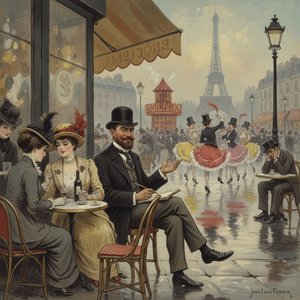
Jean-Louis Forain: Capturing Parisian Life with Wit & Realism
Explore the captivating world of Jean-Louis Forain, a master Impressionist chronicler of Belle Époque Paris. Discover his satirical paintings, realistic scenes & lasting legacy. Learn about collecting Forain's art today!

Mastering Form: The 25 Greatest Paintings by Paul Cézanne
Explore 25 iconic Paul Cézanne masterpieces and his Post-Impressionist legacy. Discover the full collection online at OriginalUniqueArt.com.

The Enduring Legacy of Oil on Canvas: Technique, History & Aesthetic Impact
Explore the rich history & techniques of oil painting – from Renaissance masters to Impressionism. Discover pigments, layering methods, and why this timeless medium endures. Expert insights for artists & art enthusiasts.

The Soul of Impressionism: Why Oil on Canvas Captures Eternal Light and Timeless Emotion
Discover the enchanting alchemy of Impressionism. Explore how the mastery of oil on canvas, through glazing and impasto, captures eternal light and emotion. Perfect for lovers of Monet and Van Gogh seeking the profound depth of hand-painted fine art.


