Preview
 Send
Send Share
Share
 Details
 Guide
Guide

 Download
 Similars
 X-Ray
X-Ray Diaporama
 Stats
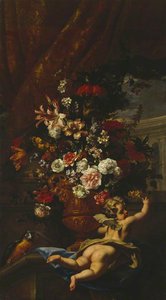
StatsFlower Study
 84.0 x 84.0 cm
 Read More
Giclée / Art Print
Museum-quality giclée or canvas print with fast production and flexible finish options. ( Buy Hand Made Painting Switch to Digital Image)




































Pick from our preset sizes that match the artwork's original proportions.

Type the width and the height you need, to fit your frame or your wall. A print can only be cut, never made bigger than the picture, so a size with a different shape loses a part of the image. We send you a digital mockup to approve before we print anything. The picture shown on this page does not show the real cut — only the mockup does.
Worldwide Delivery () in 2 weeks instead of standard 4/5 weeks. (24 October)

Free Worldwide Express Shipping

High-Quality Linen Canvas

Full Shipping Insurance

Customs Tax Refund Guarantee

True Color Matching Guarantee

100-Day Return Policy (Defects Only)

100% Money-Back Guarantee

Bulk Discount Offer
 Glass option is only available in size under 110 CM

Flower Study
Giclée / Art Print
Reproduction Size
-


Total Price
$ 81
Artist Biography
A Life in Blooms: The World of Jean-Baptiste Monnoyer
Born in Lille, France, in 1636, Jean-Baptiste Monnoyer emerged as a pivotal figure bridging the worlds of floral still life and decorative arts during the Baroque period. His journey began not amidst fields of wildflowers, but within the structured environment of artistic apprenticeship, relocating to Paris by 1650 where he first contributed to the elaborate decorations of the Hôtel Lambert. This early exposure to grand commissions foreshadowed a career deeply intertwined with royal patronage and opulent design. Monnoyer’s talent quickly drew the attention of Charles Le Brun, the preeminent painter of the era, who employed him in decorating prestigious residences like the Château de Marly and the Grand Dauphin's château at Meudon. These formative experiences instilled within him a refined aesthetic sensibility and access to influential circles that would shape his artistic trajectory. He wasn’t merely painting flowers; he was crafting elements for a world of regal splendor, learning to translate nature’s beauty into designs fit for kings.From Royal Palaces to Tapestry Halls
Monnoyer's specialization in flower pieces blossomed during his time with Le Brun and culminated in his acceptance into the Académie Royale de Peinture et de Sculpture in 1665, a testament to his growing reputation. However, it was his involvement with the Gobelins and Beauvais tapestry workshops that truly cemented his legacy. He wasn’t simply creating paintings; he was designing *patterns* for an industry. His role extended beyond artistic expression to encompass practical application – crafting detailed cartoons, or preliminary designs, for fruit and flower motifs destined to be woven into lavish tapestries. These weren't isolated artworks but integral components of grand decorative schemes, adorning the walls of palaces and aristocratic homes. The celebrated suite “The Emperor of China,” a testament to the era’s fascination with exoticism, stands as a prime example of his ability to translate floral elegance into large-scale, immersive works of art. His designs weren't merely illustrative; they were structural elements defining the aesthetic character of entire rooms.A Transatlantic Career: England and Enduring Influence
The late 1680s marked a significant shift in Monnoyer’s career, as political and religious tensions in France prompted his relocation to England in 1690 at the invitation of Ralph Montagu. This move wasn't a retreat but an expansion of his artistic horizons. For nearly a decade, he dedicated himself to creating over fifty panels of fruit and flowers for Montagu House (the future British Museum) and other prominent estates like Boughton House in Northamptonshire. These commissions demonstrate not only his adaptability to English tastes but also the enduring demand for his distinctive style – vibrant colors, meticulous detail, and an overall sense of opulent abundance. He successfully navigated a new cultural landscape while maintaining the hallmarks of his artistic identity. This period solidified his reputation as a master of decorative painting, sought after by England’s elite.Legacy in Paint and Print
Jean-Baptiste Monnoyer's influence extended far beyond the walls of palaces and estates. His publication, *Le Livre de toutes sortes de fleurs d'après nature* (The Book of All Kinds of Flowers According to Nature), proved particularly impactful. This meticulously detailed collection of engravings disseminated his floral designs widely, becoming an invaluable resource for decorative designers for decades to come. The accuracy with which he rendered each bloom wasn’t merely aesthetic; it was a contribution to botanical understanding and a source of inspiration for countless artisans. Even the poet Wallace Stevens acknowledged Monnoyer's enduring presence, referencing *Livre de toutes sortes de fleurs d'après nature* in his poem “Esthétique du Mal,” demonstrating the work’s lasting cultural resonance. Monnoyer is remembered not only as a master of floral still life and tapestry design but also as an artist who skillfully bridged French and English artistic traditions, leaving behind a legacy that continues to bloom centuries later. His ability to capture the ephemeral beauty of flowers—and transform it into enduring works of art—ensures his place among the most celebrated decorative painters of the Baroque era. His work remains a testament to the power of nature’s artistry and the skill of those who seek to replicate its splendor.
Jean Baptiste Monnoyer
1636 - 1699 , France
Quick Facts
- Artistic Movement Or Style: Baroque
- Artists Or Movements Influenced By This Artist:
- Decorative arts
- Tapestry makers
- Artists Who Influenced This Artist: ['Charles Le Brun']
- Date Of Birth: 1636
- Date Of Death: 1699
- Full Name: Jean-Baptiste Monnoyer
- Nationality: Franco-Flemish
- Notable Artworks:
- Vases et Fleurs
- Flowers
- An Urn with Flowers
- Place Of Birth: Lille, France