Menu

() ·

A painting made for you, by hand

Fleurs

Hand Made Oil Reproduction

Hand-painted oil on canvas in your size and frame, made to order by our artists. ( Switch to Print Switch to Digital Image)

Collectible Description

Immerse yourself in the vibrant beauty of Jean Baptiste Monnoyer's 'Fleurs.' This Baroque still life showcases exquisite blooms & rich textures, a timeless masterpiece.

Artist Biography

Jean-Baptiste Monnoyer (1636-1699) was a Franco-Flemish painter celebrated for his exquisite floral still lifes & decorative arts, bridging Baroque elegance with royal patronage.

from ·

Chapter 1

How large should it be?

Slide to change the size; the picture on the left shows the frame at its real width. The proportions of the original are kept.

Standard
custom
CM
INCH

Pick from our preset sizes that match the artwork's original proportions.

width
height

Type the width and the height you need, to fit your frame or your wall. This is hand-painted, so for a size with a different shape the artist can paint a bit more around the picture, or cut a bit — you choose. We send you a digital mockup to approve before the painting starts. The picture shown on this page does not show the real result — only the mockup does.

Chapter 2

How should it arrive?

Choose the edges of the stretched canvas

Choose your frame

Corner sample of the WhiteWrap canvas edge finish, stretched on solid wood bars
White $1
Corner sample of the BlurSideWrap canvas edge finish, stretched on solid wood bars
Blurside $1
Corner sample of the ExtendedWrap canvas edge finish, stretched on solid wood bars
Extended $1
Corner sample of the P118B picture frame: moulded polystyrene, 5 cm wide and 3 cm thick
P118B $10
Corner sample of the P118H picture frame: moulded polystyrene, 5 cm wide and 3 cm thick
P118H $10
Corner sample of the P118W picture frame: moulded polystyrene, 5 cm wide and 3 cm thick
P118W $10
Corner sample of the P438Z picture frame: moulded polystyrene, 5.5 cm wide and 3.5 cm thick
P438Z $10
Corner sample of the P508JH picture frame: moulded polystyrene, 7 cm wide and 3.5 cm thick
P508JH $12
Corner sample of the P508YH picture frame: moulded polystyrene, 7 cm wide and 3.5 cm thick
P508YH $12
Corner sample of the P805H picture frame: moulded polystyrene, 5 cm wide and 3.5 cm thick
P805H $10
Corner sample of the P805Z picture frame: moulded polystyrene, 5 cm wide and 3.5 cm thick
P805Z $10
Corner sample of the P919BZ picture frame: moulded polystyrene, 7 cm wide and 3.5 cm thick
P919BZ $10
Corner sample of the P919G picture frame: moulded polystyrene, 7 cm wide and 3.5 cm thick
P919G $10
Corner sample of the P919XJ picture frame: moulded polystyrene, 7 cm wide and 3.5 cm thick
P919XJ $10
Corner sample of the P959ZH picture frame: moulded polystyrene, 5 cm wide and 3 cm thick
P959ZH $10
Corner sample of the P968JZ picture frame: moulded polystyrene, 6 cm wide and 4 cm thick
P968JZ $12
Corner sample of the W106C picture frame: solid wood, 5 cm wide and 3 cm thick
W106C $8
Corner sample of the W218G picture frame: solid wood, 5 cm wide and 3 cm thick
W218G $10
Corner sample of the W218JH picture frame: solid wood, 5 cm wide and 3 cm thick
W218JH $8
Corner sample of the W218Y picture frame: solid wood, 5 cm wide and 3 cm thick
W218Y $10
Corner sample of the W307PJ picture frame: solid wood, 6 cm wide and 3 cm thick
W307PJ $10
Corner sample of the W316G picture frame: solid wood, 6 cm wide and 3 cm thick
W316G $10
Corner sample of the W316PJ picture frame: solid wood, 6 cm wide and 3 cm thick
W316PJ $8
Corner sample of the W316Y picture frame: solid wood, 6 cm wide and 3 cm thick
W316Y $10
Corner sample of the W398PJ picture frame: solid wood, 5 cm wide and 3 cm thick
W398PJ $8
Corner sample of the W4111J picture frame: solid wood, 6.5 cm wide and 3.5 cm thick
W4111J $10
Corner sample of the W500HY picture frame: solid wood, 7 cm wide and 5 cm thick
W500HY $15
Corner sample of the W500JH picture frame: solid wood, 7 cm wide and 5 cm thick
W500JH $15
Corner sample of the W692G picture frame: solid wood, 8 cm wide and 4 cm thick
W692G $12
Corner sample of the W849H picture frame: solid wood, 5 cm wide and 3 cm thick
W849H $8
Corner sample of the W940BG picture frame: solid wood, 7.5 cm wide and 4.5 cm thick
W940BG $15
Corner sample of the W953PJ picture frame: solid wood, 6 cm wide and 3.5 cm thick
W953PJ $8
Corner sample of the H24-GOLD picture frame: carved wood with gesso, 10 cm wide and 6 cm thick
H24-GOLD $30
Corner sample of the H24-SILVER picture frame: carved wood with gesso, 10 cm wide and 6 cm thick
H24-SILVER $30
Corner sample of the H36-GOLD picture frame: carved wood with gesso, 15 cm wide and 6.5 cm thick
H36-GOLD $45
Corner sample of the H36-SILVER picture frame: carved wood with gesso, 15 cm wide and 6.5 cm thick
H36-SILVER $45
Frame preview
Framed

Moulding: . Overall size with the frame: .

Chapter 3

Who paints it, and should anything change?

Examples of what can be changed: Replace face with customer photo; Add pet (e.g., replace cat with dog); Include hidden message in background; Change background landscape or elements.
After order, OriginalUniqueArt.com team will email client for instructions and provide a mockup preview

Worldwide Delivery () in 3/4 weeks instead of standard 5 weeks. (31 October). No compromise on quality.

Chapter 4

The finishing touches

A nameplate, as in a museum?

Engraved Bronze Plaque Details

This elegant plaque features the artist's name and the title of the artwork, finely engraved for a timeless presentation.

It is made from bronze with a refined, elegant finish. The text is precisely laser-engraved for a sharp and permanent result. Measuring 9x2 cm, the plaque is compact yet easy to read. It's built to be durable and scratch-resistant, offering a professional, museum-quality look. Mounting is simple thanks to the included adhesive backing.

Transparent Acrylic Plaque Details

The plaque includes essential engraved details such as the artist's name, the title of the artwork, the date it was created, the type of media used-like oil on canvas or watercolor-a brief description of the piece, and a QR code that links to the complete artwork information.

It is crafted from clear acrylic, offering a sleek, modern appearance. The text is UV-engraved in black to ensure strong visual contrast. With a size of 10x15 cm, it ensures optimal readability. It comes equipped with two metal hooks for secure wall mounting. The plaque is designed to be weather-resistant, making it suitable for various environments, and it includes interactive features that work seamlessly with smartphone scanning.

Black Acrylic Plaque Details

This elegant plaque includes engraved information such as the artist's name, the title of the artwork, the date it was created, the type of media used (like oil on canvas or watercolor), a short description of the artwork, and a QR code for quick access to more information.

The plaque itself is made from refined black acrylic with a premium finish. The text is laser-engraved in white for high contrast and readability. Its size is 10x15 cm, designed to be easy to read. It comes with two metal hooks for professional mounting. The design is sleek and fits any interior style. It is also weather-resistant and durable, with built-in digital integration for mobile compatibility.

A protective varnish?

When do you need it?

Chapter 5

Your painting, as you ordered it

Fleurs

Reproduction Medium

Reproduction Size

-

Elite Senior Artist

More detail, finesse, and extra production time

-

Reproduction Frame

-

-

For artworks or reproductions larger than 105 cm (approximately 41 inches) on any side, the frame will be shipped as a kit, disassembled. This method ensures safe delivery and prevents damage during transport.

Professional assembly required - this is not a DIY product.
The kit must be assembled and the canvas stretched by an experienced professional framer, using wood glue (not supplied), a canvas stretching plier and clamps to hold the bars square while the glue dries. Incorrect assembly or uneven canvas tension can permanently damage the artwork and is not covered by our warranty.

  • All solid wood bars are included, precisely cut to size.

  • Assembled with the screws provided, plus wood glue for the corner joints, which is not supplied and must be sourced by your framer.

  • Professional tools are required and not included: a canvas stretching plier (tensioner) and clamps to hold the bars square while the glue dries.

Important:
The corner joints require wood glue, the bars must be held with clamps until the glue is fully dry, and tightening the canvas on the assembled frame requires a canvas stretching plier. None of these are included in the kit. Please arrange an experienced professional framer before ordering this size.

Nameplate

-

-

Protective Varnish

Glossy Varnish (enhances colors, protects against light/moisture)

-

Customize My Artwork

Examples of what can be changed: Replace face with customer photo; Add pet (e.g., replace cat with dog); Include hidden message in background; Change background landscape or elements.

-

Urgent

Worldwide Delivery () in 3/4 weeks instead of standard 5 weeks. (31 October). No compromise on quality.

-

Express Shipping

Worldwide Delivery () in 5 weeks. (7 November).

Included

Total Price

$ 300

Total Price $ 300

Glass option is only available in size under 110 CM

Included with every order

  • Free Worldwide Express Shipping
  • High-Quality Linen Canvas
  • Full Shipping Insurance
  • Customs Tax Refund Guarantee
  • True Color Matching Guarantee
  • 100-Day Return Policy (Defects Only)
  • 100% Money-Back Guarantee
  • Bulk Discount Offer

A Symphony of Blooms: Jean-Baptiste Monnoyer's "Fleurs"

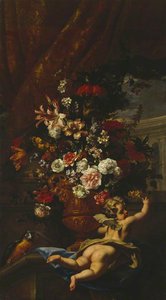
This captivating still life, titled “Fleurs,” showcases the remarkable talent of Jean-Baptiste Monnoyer, a prominent Franco-Flemish painter celebrated for his exquisite floral depictions. Dating from an unknown period within his career (1636-1699), this artwork exemplifies the Baroque style prevalent in 17th-century European art, particularly admired in France and Flanders. The composition presents a lavish arrangement of flowers spilling forth from an earthenware vase, set against a dramatically dark background that intensifies the vibrancy of the blossoms. It’s a testament to Monnoyer's skill in capturing both botanical accuracy and artistic beauty.

Baroque Opulence: Style & Technique

Monnoyer’s style is firmly rooted in the Baroque tradition, characterized by its rich color palettes, dramatic lighting, and meticulous attention to detail. The painting utilizes oil paints on canvas, allowing for subtle gradations of tone and texture achieved through layered application – a technique often referred to as impasto in certain areas where the paint sits thickly upon the surface. Observe how the artist masterfully uses light; it appears to emanate from above and slightly left, highlighting the petals and vase while plunging much of the background into shadow. This creates a striking contrast that draws the viewer's eye directly to the floral display. The composition itself is vertically oriented, emphasizing the height and grandeur of the arrangement. Lines are primarily defined by the edges of petals, stems, and leaves, contributing to a naturalistic feel, while flowing lines within the arrangement create a sense of movement and life.

A Language of Flowers: Symbolism & Emotional Resonance

Floral still lifes during the Baroque period were far more than mere decorative objects; they carried profound symbolic weight. Flowers often represented themes of transience – the fleeting beauty of life, mirroring the ephemeral nature of blossoms. The abundance depicted in this painting can symbolize prosperity and joy, while the dark background introduces a touch of mystery or contemplation, hinting at the inevitability of decay and mortality—a common *vanitas* motif within the era. The careful selection and arrangement of specific flower types could also have conveyed hidden meanings known to contemporary audiences; though these are now often lost to time, they add another layer of intrigue to the artwork's interpretation. The overall emotional impact is one of luxurious beauty tempered with a subtle awareness of life’s fragility.

Monnoyer: A Master of Floral Art

Jean-Baptiste Monnoyer (1636-1699) was highly regarded in his time, serving as a vital link between the artistic world and the decorative arts. He worked extensively for the Gobelins and Beauvais tapestry workshops, creating cartoons—preliminary designs—for their elaborate tapestries. His skill in depicting flowers and fruit made him an invaluable asset to these prestigious institutions. His acceptance into the Académie Royale de Peinture et de Sculpture in 1665 solidified his reputation as a leading artist of his generation. This "Fleurs" painting exemplifies Monnoyer’s dedication to botanical accuracy combined with artistic flair, making it a compelling example of Baroque floral still life and a testament to his enduring legacy.

Questions & Answers

How does the subject of "Fleurs" relate to Jean Baptiste Monnoyer's usual themes?

"Fleurs" depicts still life, flowers, vase, baroque, floral, arrangement, opulence, earthenware, while Jean Baptiste Monnoyer's recorded themes are dutch golden age still life tradition, baroque emphasis on detail & richness, typical of monnoyer's floral specialty, reflects his work for tapestry workshops, demonstrates mastery of color & texture, celebration of natural beauty, vanitas symbolism (transience), display of wealth and luxury. Comparing the two shows how the work relates to the artist's usual subjects.

Can I see "Fleurs" by Jean Baptiste Monnoyer under different lights?

"Fleurs" can be examined layer by layer on the artwork's X-Ray page, a viewer inspired by a conservator's light bench with eleven optical readings of the image.

What style does "Fleurs" belong to?

The movement associated with "Fleurs" by Jean Baptiste Monnoyer is Baroque. This classification situates the work among related artists and artworks.

More about this painting

Preview AR preview Switch to Print Switch to Digital Image Send
Details Guide Add to favorites Download Similars X-Ray Diaporama Q&A Stats

In numbers

  • 29frames to choose from
  • standard sizes, in its own proportions
  • 5weeks to paint and deliver it
Jean Baptiste Monnoyer

Jean Baptiste Monnoyer

1636 - 1699, France

Quick facts about Jean Baptiste Monnoyer

  • Artistic Movement Or Style: Baroque
  • Artists Or Movements Influenced By This Artist:
    • Decorative arts
    • Tapestry makers
  • Artists Who Influenced This Artist: ['Charles Le Brun']
  • Date Of Birth: 1636
  • Date Of Death: 1699
  • Full Name: Jean-Baptiste Monnoyer
  • Nationality: Franco-Flemish
  • Notable Artworks:
    • Vases et Fleurs
    • Flowers
    • An Urn with Flowers
  • Place Of Birth: Lille, France

Artist Biography

A Life in Blooms: The World of Jean-Baptiste Monnoyer

Born in Lille, France, in 1636, Jean-Baptiste Monnoyer emerged as a pivotal figure bridging the worlds of floral still life and decorative arts during the Baroque period. His journey began not amidst fields of wildflowers, but within the structured environment of artistic apprenticeship, relocating to Paris by 1650 where he first contributed to the elaborate decorations of the Hôtel Lambert. This early exposure to grand commissions foreshadowed a career deeply intertwined with royal patronage and opulent design. Monnoyer’s talent quickly drew the attention of Charles Le Brun, the preeminent painter of the era, who employed him in decorating prestigious residences like the Château de Marly and the Grand Dauphin's château at Meudon. These formative experiences instilled within him a refined aesthetic sensibility and access to influential circles that would shape his artistic trajectory. He wasn’t merely painting flowers; he was crafting elements for a world of regal splendor, learning to translate nature’s beauty into designs fit for kings.

From Royal Palaces to Tapestry Halls

Monnoyer's specialization in flower pieces blossomed during his time with Le Brun and culminated in his acceptance into the Académie Royale de Peinture et de Sculpture in 1665, a testament to his growing reputation. However, it was his involvement with the Gobelins and Beauvais tapestry workshops that truly cemented his legacy. He wasn’t simply creating paintings; he was designing *patterns* for an industry. His role extended beyond artistic expression to encompass practical application – crafting detailed cartoons, or preliminary designs, for fruit and flower motifs destined to be woven into lavish tapestries. These weren't isolated artworks but integral components of grand decorative schemes, adorning the walls of palaces and aristocratic homes. The celebrated suite “The Emperor of China,” a testament to the era’s fascination with exoticism, stands as a prime example of his ability to translate floral elegance into large-scale, immersive works of art. His designs weren't merely illustrative; they were structural elements defining the aesthetic character of entire rooms.

A Transatlantic Career: England and Enduring Influence

The late 1680s marked a significant shift in Monnoyer’s career, as political and religious tensions in France prompted his relocation to England in 1690 at the invitation of Ralph Montagu. This move wasn't a retreat but an expansion of his artistic horizons. For nearly a decade, he dedicated himself to creating over fifty panels of fruit and flowers for Montagu House (the future British Museum) and other prominent estates like Boughton House in Northamptonshire. These commissions demonstrate not only his adaptability to English tastes but also the enduring demand for his distinctive style – vibrant colors, meticulous detail, and an overall sense of opulent abundance. He successfully navigated a new cultural landscape while maintaining the hallmarks of his artistic identity. This period solidified his reputation as a master of decorative painting, sought after by England’s elite.

Legacy in Paint and Print

Jean-Baptiste Monnoyer's influence extended far beyond the walls of palaces and estates. His publication, *Le Livre de toutes sortes de fleurs d'après nature* (The Book of All Kinds of Flowers According to Nature), proved particularly impactful. This meticulously detailed collection of engravings disseminated his floral designs widely, becoming an invaluable resource for decorative designers for decades to come. The accuracy with which he rendered each bloom wasn’t merely aesthetic; it was a contribution to botanical understanding and a source of inspiration for countless artisans. Even the poet Wallace Stevens acknowledged Monnoyer's enduring presence, referencing *Livre de toutes sortes de fleurs d'après nature* in his poem “Esthétique du Mal,” demonstrating the work’s lasting cultural resonance. Monnoyer is remembered not only as a master of floral still life and tapestry design but also as an artist who skillfully bridged French and English artistic traditions, leaving behind a legacy that continues to bloom centuries later. His ability to capture the ephemeral beauty of flowers—and transform it into enduring works of art—ensures his place among the most celebrated decorative painters of the Baroque era. His work remains a testament to the power of nature’s artistry and the skill of those who seek to replicate its splendor.

Quick Facts

  • Subject or theme: Floral arrangement, Transience
  • Movement: Baroque
  • Artist: Jean Baptiste Monnoyer
  • Influences: Dutch Golden Age

Art Quiz

There is only one correct answer for each question.

Question 1:
What artistic period is this artwork most closely associated with, based on its style and techniques?
Question 2:
The dark background in the painting primarily serves to:
Question 3:
Jean-Baptiste Monnoyer was known for his work in which related field, besides painting?
Question 4:
What is a common symbolic interpretation associated with floral still life paintings like this one?
Question 5:
The visible 'impasto' effect in the painting contributes to: