Switch to Print
 Read More







































 For artworks or reproductions larger than 105 cm (approximately 41 inches) on any side, the frame will be shipped as a kit, disassembled. This method ensures safe delivery and prevents damage during transport.


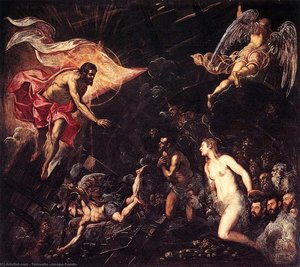
A Scene of Profound Loss: Tintoretto’s *The Deposition* (1563)
This powerfully emotive painting, *The Deposition*, by Jacopo Comin – better known as Tintoretto – offers a dramatic interpretation of the Lamentation over Christ. Completed in 1563, this Baroque masterpiece encapsulates the grief and spiritual weight surrounding the descent from the cross, presenting a moment of intense human sorrow and divine sacrifice. Measuring 108 x 170 cm, it’s a substantial work that commands attention and invites contemplation.Baroque Drama & Venetian Innovation
Tintoretto was a pivotal figure in the Venetian School of Italian painting, renowned for his dynamic compositions and audacious brushwork – earning him the nickname Il Furioso (“the furious”). *The Deposition* exemplifies this style. The scene is rendered with characteristic Baroque intensity: strong chiaroscuro (the dramatic contrast between light and dark) sculpts the figures, emphasizing their emotional states and creating a palpable sense of depth within a relatively shallow space. While adhering to some Renaissance principles, Tintoretto pushes towards Mannerist sensibilities, prioritizing expressive power over strict realism. The composition is skillfully pyramidal, grounding the scene with Christ’s body as its base, while the converging figures – Mary Magdalene, John the Apostle, and an angel – draw the viewer's eye toward this central point of sorrow.Technique & Materials
Executed in oil on canvas, *The Deposition* showcases Tintoretto’s masterful handling of paint. The texture is visibly rich and somewhat rough, revealing energetic brushstrokes that contribute to the painting’s dynamism. He expertly blends colors within a warm earth-toned palette punctuated by highlights of white and gold, further enhancing the dramatic lighting effects. Lines are used expressively – flowing drapery adds movement, sharp outlines define faces, and diagonal lines in the partially visible wooden structure above create a sense of instability mirroring the emotional turmoil.Symbolism & Religious Context
The subject matter itself is deeply rooted in Christian theology, depicting a pivotal moment following Jesus’ crucifixion. The painting isn't merely a historical depiction; it’s an invitation to share in the grief and contemplate themes of loss, faith, and compassion. The angel present suggests divine witness to human suffering, while the figures surrounding Christ embody different facets of mourning – Mary Magdalene’s despair, John’s sorrowful support. The composition deliberately focuses on the immediate aftermath of the descent, emphasizing the raw emotional impact rather than a serene acceptance of fate.Tintoretto's Legacy & Lasting Impact
Tintoretto’s influence extended far beyond his Venetian contemporaries. His innovative use of perspective, dramatic lighting, and expressive brushwork paved the way for future generations of artists. Many of his works can still be seen today in Venice at locations such as the Scuola Grande di San Rocco, Madonna dell'Orto, and Palazzo Ducale. *The Deposition* stands as a testament to Tintoretto’s genius, offering a powerful visual meditation on faith, loss, and the enduring human capacity for empathy. A reproduction of this work would bring a sense of dramatic beauty and spiritual depth to any interior space, serving as both an artistic statement and a poignant reminder of one of Christianity's most profound moments.Questions & Answers
Which museum holds the original "The Deposition"?
The original "The Deposition" by Jacopo Tintoretto is held at the Pinacoteca di Brera, Milan, Italy. A reproduction allows the work to be displayed at home.
Can "The Deposition" by Jacopo Tintoretto, held at the Pinacoteca di Brera, be legally reproduced?
The copyright status of "The Deposition" by Jacopo Tintoretto is clear: the work is in the public domain - its copyright has expired. Its presence at the Pinacoteca di Brera does not change that status.
Who created "The Deposition"?
"The Deposition" is attributed to Jacopo Tintoretto.
More about this painting
 Preview
 Send
Send Share
Share
 Details
 Guide
Guide

 Download
 Similars
 X-Ray
X-Ray Diaporama
 Q&A
Q&A Stats
Stats