Preview
 Send
Send Share
Share
 Details

 Download
 Similars
 X-Ray
X-Ray Diaporama
 Stats
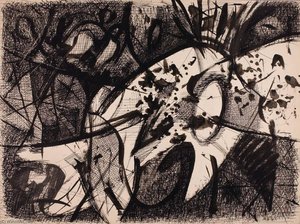
StatsThe Enforcer
 Lithograph
- Art Singulier
 1972
1972- Modern
 77.0 x 61.0 cm
 Read More
Giclée / Art Print
Museum-quality giclée or canvas print with fast production and flexible finish options. ( Buy Hand Made Painting Switch to Digital Image)




P118B $10

P118H $10

P118W $10

P438Z $10

P508JH $12

P508YH $12

P805H $10

P805Z $10

P919BZ $10

P919G $10

P919XJ $10

P959ZH $10

P968JZ $12

W106C $8

W218G $10

W218JH $8

W218Y $10

W307PJ $10

W316G $10

W316PJ $8

W316Y $10

W398PJ $8

W4111J $10

W500HY $15

W500JH $15

W692G $12

W849H $8

W940BG $15

W953PJ $8




Pick from our preset sizes that match the artwork's original proportions.

You may enter your own dimensions to fit a specific frame or space. If your selected size does not match the original image's proportions, we will either crop the artwork or extend the image with a mirrored or solid-fill edge. A digital mockup will be sent for your approval before production begins.
Please note that the on-screen preview does not reflect the actual cropping or extension. Only the mockup will accurately show the final composition.
While custom sizes are available, we recommend selecting a dimension from the predefined list to preserve the original proportions.
Worldwide Delivery () in 2 weeks instead of standard 4/5 weeks. (8 September)

Free Worldwide Express Shipping

High-Quality Linen Canvas

Full Shipping Insurance

Customs Tax Refund Guarantee

True Color Matching Guarantee

100-Day Return Policy (Defects Only)

100% Money-Back Guarantee

Bulk Discount Offer
 Glass option is only available in size under 110 CM

The Enforcer
Giclée / Art Print
Reproduction Size
-


Total Price
$ 81
The Enforcer: A Study in Power and Restraint
Jacob Kainen's "The Enforcer," created in 1972, is more than just a lithograph; it’s a compelling visual narrative exploring themes of authority, control, and the complexities of human nature. Housed within the esteemed Smithsonian American Art Museum, this piece (measuring 77 x 61 cm) exemplifies Kainen's unique ability to blend dramatic realism with abstract expressionism, creating an artwork that resonates long after initial viewing.
Artistic Style and Influences
Kainen’s artistic journey was deeply rooted in the study of masters. His work reveals a profound understanding of Rembrandt's chiaroscuro, Velázquez's masterful use of light and shadow, and Cézanne's exploration of form and structure. However, Kainen wasn't merely replicating these influences; he synthesized them with the burgeoning expressionist movements sweeping Europe and America in the 20th century. "The Enforcer" stands as a testament to this synthesis – a work that honors tradition while forging its own distinct path. The lithograph’s stark black and white palette, combined with layered brushstrokes, evokes a sense of drama reminiscent of German Expressionism, yet retains a compositional clarity influenced by the earlier masters.
Decoding the Imagery: Symbolism and Composition
The central figure in "The Enforcer" is immediately striking. The individual, depicted wearing a shirt emblazoned with a prominent circle, becomes an enigmatic symbol within the composition. This circular motif could represent various interpretations – unity, completeness, or even cyclical power dynamics. The surrounding chaotic brushwork, rendered in stark black and white, creates a sense of tension and unrest, suggesting the pressures and responsibilities inherent in the role of "the enforcer." The deliberate use of negative space further emphasizes the figure's isolation within this turbulent environment. Kainen’s technique involves layering multiple lithographic stones to achieve depth and complexity, resulting in a visual texture that mimics the multifaceted nature of authority.
Historical Context and Emotional Impact
Created during a period of social upheaval and political unrest in the 1970s, "The Enforcer" can be viewed as a reflection of anxieties surrounding law enforcement and power structures. The artwork doesn't offer easy answers or simplistic portrayals; instead, it invites viewers to contemplate the burdens carried by those tasked with upholding order. The lithograph’s monochromatic palette amplifies its emotional impact, conveying a sense of seriousness and introspection. It evokes feelings of tension, restraint, and perhaps even a touch of melancholy, prompting reflection on the complexities of power and responsibility.
Kainen's Legacy and Further Exploration
“The Enforcer” is just one example of Jacob Kainen’s significant contribution to American art. Other notable works by Kainen, such as "Fabrizio" and “No Dominion,” further showcase his artistic range and intellectual depth. The Smithsonian American Art Museum holds a substantial collection of Kainen's work, providing ample opportunity for deeper exploration of his oeuvre. For those interested in understanding the broader context of Kainen’s artistic development, exploring the Art Singulier Movement can provide valuable insights into his unique approach to artmaking.
Artist Biography
Jacob Kainen: A Life in Art and Scholarship
- Born: Waterbury, United States of America (1909)
- Died: 2002
Jacob Kainen was a multifaceted American artist, renowned as a painter, printmaker, art historian, and collector. His career spanned decades, marked by stylistic evolution, intellectual curiosity, and significant contributions to the art world both through his own creations and his scholarly endeavors.
Early Life and Artistic Beginnings
- Family Background: Born to Russian immigrant parents in Waterbury, Connecticut, Kainen’s upbringing fostered a deep appreciation for culture. His father's inventive spirit and his mother's love of music and literature nurtured his artistic inclinations from an early age.
- Early Studies: Moving to New York City in 1918 provided access to institutions like the Metropolitan Museum of Art and the New York Public Library, fueling his passion for art history. He studied at the Art Students League, where Kimon Nicolaides emphasized freedom and confidence in artistic expression.
- Early Rebellions: Despite showing promise at Pratt Institute, Kainen’s independent spirit led to expulsion three weeks before graduation due to disagreements with the institution's conservative curriculum. This event proved pivotal, pushing him towards avant-garde movements.
Evolution of Style and Artistic Influences
- Early Influences: Initially drawn to Old Masters, Kainen’s artistic trajectory shifted during the 1930s as he embraced German Expressionism and Social Realism. This period saw him engage with artists like Stuart Davis and Arshile Gorky, who encouraged exploration of the unconscious and copying master works.
- WPA Years: His involvement in the WPA’s Graphic Arts Program honed his printmaking skills while allowing him to explore social themes through art.
- Abstraction and Beyond: Kainen gradually moved towards abstraction, influenced by figures like Arshile Gorky. However, he never abandoned humanism or historical awareness, seeking to imbue even abstract forms with a sense of experience.
- The Loyalty Investigation & Psychological Impact: A period of intense scrutiny by the Civil Services Loyalty Board in the 1940s, stemming from his past political activities, profoundly impacted Kainen's work, leading to vivid and psychologically charged abstractions like "Exorcist" and "Unmoored #2."
- Return to Figuration: Following clearance from the loyalty board, Kainen shifted back towards figurative art, rejecting Abstract Expressionism in favor of a return to representational forms.
Curatorial Work and Contributions to the Smithsonian
- Smithsonian Curator: From 1942 to 1970, Kainen served as curator of the Division of Graphic Arts at the Smithsonian's U.S. National Museum. He revitalized the collection through exhibitions and acquisitions.
- Influence on Washington Color Field Painting: Kainen played a crucial role in fostering connections within the art community, introducing Morris Louis to Kenneth Noland, contributing to the development of the Washington Color School movement.
- Post-Smithsonian Career: After retiring from the Smithsonian, Kainen dedicated himself fully to painting and printmaking, returning to pure abstraction and continuing his artistic exploration.
Legacy and Historical Significance
- Collector & Philanthropist: Kainen and his wife, Ruth Cole, were avid collectors of German Expressionist art, donating a significant portion of their collection to the National Gallery of Art in 1985.
- Scholarship: Kainen’s contributions as an art historian are notable for his books on John Baptist Jackson and the etchings of Canaletto, demonstrating his deep knowledge and passion for art history.
- Enduring Artistic Vision: Jacob Kainen's legacy rests on a body of work that reflects his intellectual curiosity, artistic evolution, and unwavering commitment to exploring the human condition through diverse mediums. His influence extends beyond his own creations, encompassing his curatorial contributions and his dedication to fostering artistic dialogue.

Jacob Kainen
1909 - 2002 , United States of America
Quick Facts
- Artistic Movement Or Style:
- Expressionism
- Social Realism
- Abstraction
- Artists Or Movements Influenced By This Artist:
- Morris Louis
- Kenneth Noland
- Artists Who Influenced This Artist:
- Cézanne
- Rembrandt
- Velázquez
- John Constable
- Ernst Ludwig Kirchner
- Edvard Munch
- Date Of Birth: 1909
- Date Of Death: 2002
- Full Name: Jacob Kainen
- Nationality: American
- Notable Artworks:
- Anacharsis
- Flightmaster
- The Enforcer
- Pastorale
- Back
- Place Of Birth: Waterbury, United States
Related Articles
Jacob Kainen: A Pioneer of American Color Field Painting & Abstract Expressionism
Explore the life & work of Jacob Kainen, a pivotal figure in American Abstract Expressionism and Color Field painting. Discover his journey from Social Realism to vibrant abstraction and lasting influence on 20th-century art.

Grant Wood & American Regionalism: Identity, Myth & the Rural Landscape
Explore the world of Grant Wood & American Regionalism with OriginalUniqueArt. Discover the symbolism behind 'American Gothic', recurring themes, and the movement's lasting impact on art history. High-quality reproductions available.

American Realism's Defining Works: 10 Masterpieces for Your Home
Explore 10 defining American Realism masterpieces – Hopper, Homer & more. Discover the stories behind these iconic paintings and bring timeless art to your home with OriginalUniqueArt's museum-quality reproductions. Explore the full collection online.

Alfred Jacob Miller: Chronicling the American West Through Artistic Observation & Narrative
Explore the captivating art of Alfred Jacob Miller, chronicler of the American West. Discover his iconic paintings, techniques & lasting legacy – a valuable addition to any serious collection. Learn more at OriginalUniqueArt.
Top 10 Lithographs That Revolutionized Art | OriginalUniqueArt
Explore 10 legendary lithographs by Toulouse-Lautrec, Munch & Picasso that redefined art! Discover the stories behind these iconic prints and find museum-quality reproductions for your home decor at OriginalUniqueArt.com. Explore the full collection online.