

 Preview
 Send
Send Share
Share
 Details
 Guide
Guide

 Download
 Similars
 X-Ray
X-Ray Diaporama
 Stats
StatsThe King Drinks
 Acrylic On Canvas
- WallArt
- Flemish Baroque
 1638
1638 152.0 x 204.0 cm
 The Louvre
 Read More
Purchase a high-resolution, enhanced digital image, far superior to the online preview.
Each file is meticulously prepared by our in-house specialists using advanced tools and expert manual retouching. We ensure every image has exceptional clarity, precise color accuracy, and fine detail.
The final file is delivered via email within 72 hours, optimized for immediate use in professional, editorial, and print environments. This is the same quality trusted by top-tier design studios, publishers, and galleries.
Digital Image
Download a high-resolution file for personal display, printing, and creative projects. ( Switch to Print Buy Hand Made Painting)
Included in Every Digital Image Order
Expert Digital Delivery, Guaranteed
When you choose OriginalUniqueArt.com, you're not just getting an image - you're receiving a professionally enhanced digital artwork, crafted with precision and backed by a satisfaction guarantee. Here's everything that comes with your order, automatically:

Fast Email Delivery
Your high-resolution digital image file will be emailed to you within 72 hours of ordering - ready for immediate use.

AI-Enhanced Digital File
Your artwork is professionally optimized using advanced AI tools and manual editing, ensuring maximum detail, clarity, and color accuracy.

Free Lifetime Re-Delivery
Accidentally deleted or lost your file? No worries - we'll resend it to you anytime, free of charge.

No Import Fees - Ever
Enjoy your artwork instantly with zero customs, duties, or delivery fees - digital downloads are always tax-free.

Color Accuracy Guarantee
We ensure your digital image reflects the original colors as closely as possible using professional tools and color management.

100-Day Satisfaction Guarantee
If you're not satisfied with your digital image, we'll revise it or refund 100% within 100 days - no questions asked.

100% Money-Back Guarantee
Not satisfied? Get a full refund within 100 days of receiving your digital file - no questions asked.

Bulk Order Discounts
Buy 3 images, save 10% - Buy 5, save 15% - Buy 10+, save 20%. Great for creative projects, galleries, and agencies.
A Celebration of Abundance: Decoding Jacob Jordaens’ ‘The King Drinks’
Jacob Jordaens (1593-1678), a Flemish Baroque master, stands as a testament to the artistic fervor of his era – an artist who captured not just visual splendor but also the very essence of human experience. Unlike many contemporaries drawn to the grandeur of Rome, Jordaens remained firmly rooted in Antwerp, cultivating a distinctive style characterized by dynamism and earthy realism that celebrated the pleasures and realities of everyday life. His father’s success as a linen merchant afforded him a privileged upbringing, fueling his ambition for an education commensurate with his social standing before embarking on his artistic journey under Adam van Noort – also the mentor of Peter Paul Rubens. This formative influence instilled in Jordaens a meticulous technique honed by Rubens's masterful guidance and a profound understanding of composition that would define his oeuvre.The Scene Unfolds: Composition and Narrative
‘The King Drinks,’ completed in 1638, exemplifies Jordaens’ signature approach to portraying social gatherings. The painting depicts a lavish banquet scene—a tableau vivant brimming with figures engaged in lively conversation and exuberant enjoyment of food and drink. Approximately thirteen individuals populate the canvas, seated on chairs and benches, creating an immersive panorama of aristocratic conviviality. Careful attention to spatial arrangement contributes significantly to the artwork’s impact; Jordaens skillfully utilizes converging lines to draw the viewer's eye into the center of the table, where a magnificent array of goblets overflows with wine—a visual symbol of prosperity and indulgence. The artist’s masterful use of light enhances the dramatic effect, illuminating faces and highlighting textures, conveying both warmth and palpable energy.Technique and Materiality: Rubensian Influence
Jordaens' technique reflects the legacy of Rubens himself – a meticulous blending of oil paint with glazing techniques that achieves remarkable luminosity and depth. The artist’s painstaking attention to detail is evident in every brushstroke, capturing the nuances of facial expressions and clothing folds with astonishing accuracy. The rich palette—dominated by warm reds, golds, and browns—further reinforces the painting's opulent aesthetic. Furthermore, Jordaens skillfully employs chiaroscuro – dramatic contrasts between light and shadow – to sculpt forms and heighten emotional intensity, mirroring Rubens’s masterful manipulation of tonal values.Historical Context: Antwerp’s Golden Age
‘The King Drinks’ emerged during Antwerp’s “Golden Age,” a period of unparalleled artistic creativity fueled by the city's economic prosperity and its role as a major European trading hub. The painting reflects the prevailing humanist ideals of the time, emphasizing human dignity and celebrating earthly pleasures—a conscious departure from the solemn religious iconography favored by earlier Baroque artists. It speaks to the spirit of aristocratic patronage, demonstrating how wealthy families commissioned artworks to showcase their status and commemorate important occasions.Symbolism: Revelry and Societal Status
Beyond its visual splendor, ‘The King Drinks’ carries symbolic weight. The overflowing goblets represent abundance and generosity—qualities highly valued in aristocratic society. The animated expressions of the guests convey a sense of camaraderie and delight, underscoring the importance of social bonds during this era. Moreover, the varied attire of the figures serves as a visual marker of social hierarchy, reinforcing Jordaens’ commitment to portraying realistic depictions of human life within its broader cultural framework.Emotional Resonance: Capturing Human Experience
Ultimately, ‘The King Drinks’ transcends mere representation; it succeeds in capturing the emotional essence of a celebratory feast—a moment of shared joy and convivial connection. The painting evokes feelings of warmth, indulgence, and social harmony, inviting viewers to contemplate the beauty and richness of human experience. It remains an enduring masterpiece – a testament to Jacob Jordaens' artistic genius and his ability to transform ordinary scenes into unforgettable narratives.Questions & Answers
Which artist is "The King Drinks" attributed to?
"The King Drinks" is attributed to Jacob Jordaens.
What technique was used for "The King Drinks", and when was it created?
The medium of "The King Drinks" by Jacob Jordaens is acrylic on canvas, and the work is dated 1638.
What style does "The King Drinks" belong to?
The movement associated with "The King Drinks" by Jacob Jordaens is Flemish Baroque. This classification situates the work among related artists and artworks.
What mood does "The King Drinks" by Jacob Jordaens express within Flemish Baroque?
The joyful emotion of "The King Drinks" accompanies its Flemish Baroque style.
What medium is "The King Drinks" by Jacob Jordaens executed in?
Jacob Jordaens used the acrylic on canvas technique for "The King Drinks". The technique defines the material nature of the original work.
How old was Jacob Jordaens when creating "The King Drinks" in 1638?
Jacob Jordaens made "The King Drinks" at the age of 45. The artist was born in 1593 and the work is dated 1638.
What is the creation date of "The King Drinks" by Jacob Jordaens?
The creation of "The King Drinks" by Jacob Jordaens is dated 1638.
Artist Biography
A Flemish Master of Life’s Abundance: Jacob Jordaens
Born into a prosperous Antwerp family in 1593, Jacob Jordaens emerged as one of the most significant and vibrant voices within the Flemish Baroque. Unlike many of his contemporaries who sought training in Italy, Jordaens remained rooted in his native Flanders, developing a uniquely robust and earthy style that celebrated the pleasures and realities of everyday life. His father, a successful linen merchant, provided him with a comfortable upbringing, allowing for an education befitting his social standing before he began his artistic journey under Adam van Noort – also the master of Peter Paul Rubens. This formative training instilled in Jordaens a foundation in meticulous technique and a keen understanding of composition, yet he quickly diverged to forge his own distinct path. In 1616, solidifying his connection to the established Antwerp art world, he married Van Noort’s daughter, Katharina.The Painter of Peasant Revelry and Baroque Grandeur
Jordaens' artistic output was remarkably diverse, encompassing religious narratives, mythological scenes, allegorical compositions, genre paintings brimming with life, and even portraits. However, he is perhaps best remembered for his boisterous depictions of peasant festivals and tavern scenes – works that radiate a palpable energy and an uninhibited joy in earthly pleasures. Paintings like *The King Drinks* (also known as the Feast of the Bean King) exemplify this characteristic style: crowded compositions filled with robust figures engaged in lively revelry, rendered in warm, glowing colors and dramatic chiaroscuro. These scenes weren’t merely celebrations of merriment; they were often imbued with subtle moralizing undertones, reflecting the complex relationship between indulgence and restraint prevalent in 17th-century society. Yet, Jordaens was equally adept at handling grander, more formal commissions. His involvement in decorating the Huis ten Bosch palace near The Hague – alongside collaborations with Rubens – showcased his ability to create monumental allegorical works that seamlessly integrated painting and architecture.Influences and a Distinct Artistic Voice
While Jordaens never traveled to Italy, he was deeply influenced by Italian masters like Jacopo Bassano, Paolo Veronese, and Caravaggio—artists whose work reached Flanders through engravings and paintings brought back by other artists. The influence of Caravaggio is particularly evident in his dramatic use of light and shadow, a technique known as tenebrism, which heightens the emotional intensity of his scenes. However, Jordaens didn’t simply imitate these influences; he synthesized them with his own Flemish sensibilities, creating a style that was uniquely his own. He differed from Rubens and Van Dyck in his preference for realism over idealism, embracing a more direct and unrefined approach to depicting the human form. His figures are often substantial, even corpulent, their faces flushed with health and vitality. This commitment to naturalism, combined with his masterful command of color and composition, set him apart from his contemporaries and established him as a leading figure in Flemish Baroque painting.Legacy and Enduring Impact
Throughout his long and prolific career, Jordaens trained numerous pupils – fifteen were officially recorded by the Guild of St. Luke between 1621 and 1667— ensuring the continuation of his artistic legacy. His influence can be seen in the work of later artists like Jan Steen, who shared his penchant for depicting lively genre scenes. Beyond his direct impact on other painters, Jordaens’ classically inspired peasant themes had a lasting effect on the art world, challenging traditional hierarchies and celebrating the dignity of everyday life. Even today, his paintings continue to captivate audiences with their energy, vitality, and honest portrayal of human experience. His ability to blend realism with allegory, sensuality with morality, and grandeur with intimacy makes him one of the most compelling and enduring figures of the Baroque period. Discover more of Jordaens’ masterpieces and explore the rich artistic landscape of the Baroque era through resources available online, including detailed databases of his works and insightful analyses of his life and art.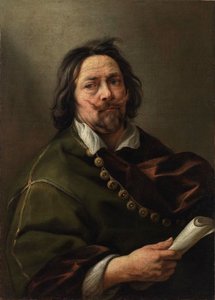
Jacob Jordaens
1593 - 1678 , Belgium
Quick Facts
- Full Name: Jacob Jordaens
- Nationality: Flemish
- Date Of Birth: 1593
- Date Of Death: 1678
- Place Of Birth: Antwerp, Belgium
- Notable Artworks:
- The Adoration of the Shepherds
- Argus and Mercury
- Artistic Movement Or Style: Baroque
- Artists Who Influenced This Artist:
- Jacopo Bassano
- Paolo Veronese
- Caravaggio
- Artists Or Movements Influenced By This Artist: ['Jan Steen']