Preview
 Send
Send Share
Share
 Details
 Guide
Guide

 Download
 Similars
 X-Ray
X-Ray Diaporama
 Stats
StatsDublin Evening


 Read More
The artwork displayed on this page is protected by copyright law, which means we cannot legally create or sell an identical reproduction. This protection is enforced under international agreements such as the Berne Convention and by national laws, including those outlined by the U.S. Copyright Law - Title 17.
As a respectful and legal alternative, we offer custom, hand-painted artworks inspired by the original. Our skilled and professional artists carefully study the original's style, mood, and artistic essence to create a new, unique piece that evokes the same feeling - while remaining an original creation in its own right.
This method fully complies with copyright regulations because it does not involve copying or duplicating the protected artwork. Instead, it is a creative reinterpretation - a new painting that is influenced by the original but not identical to it.
Hand Made Oil Reproduction
Hand-painted oil on canvas in your size and frame, made to order by our artists. ( Switch to Print Switch to Digital Image)




P118B $10

P118H $10

P118W $10

P438Z $10

P508JH $12

P508YH $12

P805H $10

P805Z $10

P919BZ $10

P919G $10

P919XJ $10

P959ZH $10

P968JZ $12

W106C $8

W218G $10

W218JH $8

W218Y $10

W307PJ $10

W316G $10

W316PJ $8

W316Y $10

W398PJ $8

W4111J $10

W500HY $15

W500JH $15

W692G $12

W849H $8

W940BG $15

W953PJ $8




Pick from our preset sizes that match the artwork's original proportions.

Type the width and the height you need, to fit your frame or your wall. This is hand-painted, so for a size with a different shape the artist can paint a bit more around the picture, or cut a bit — you choose. We send you a digital mockup to approve before the painting starts. The picture shown on this page does not show the real result — only the mockup does.
After order, OriginalUniqueArt.com team will email client for instructions and provide a mockup preview
Worldwide Delivery () in 3/4 weeks instead of standard 5 weeks. (27 October). No compromise on quality.

Free Worldwide Express Shipping

High-Quality Linen Canvas

Full Shipping Insurance

Customs Tax Refund Guarantee

True Color Matching Guarantee

100-Day Return Policy (Defects Only)

100% Money-Back Guarantee

Bulk Discount Offer
 Glass option is only available in size under 110 CM

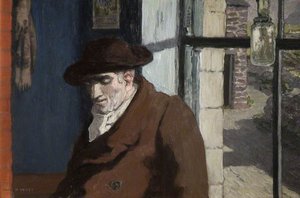
Dublin Evening
Reproduction Medium
Reproduction Size
-


Total Price
$ 300
Dublin Evening: A Portrait of Urban Solitude
Jack Butler Yeats’s “Dublin Evening,” painted in 1946, isn't merely a depiction of a street scene; it’s a poignant meditation on the quiet dignity and inherent loneliness of urban life. This oil painting, housed within the Ashmolean Museum in Oxford, captures a fleeting moment along St. Stephen’s Green, Dublin, rendered with Yeats’s signature blend of evocative realism and expressive abstraction. The work immediately draws the viewer into a scene populated by figures seemingly lost in their own thoughts – a cluster of men seated on benches, engaged in an unspoken ritual of observation. They are not grand heroes or dramatic characters; rather, they represent the everyday citizens of Dublin, quietly existing within the heart of the city.
Yeats’s style during this period is particularly compelling. He moved away from a purely illustrative approach, embracing a more gestural and emotionally charged technique. Notice how the paint itself seems to vibrate with energy – thick impasto strokes build up layers of color, creating a palpable sense of texture and movement. The figures are not sharply defined; instead, they’re suggested through loose brushwork and subtle shifts in tone, lending them an almost spectral quality. This deliberate ambiguity invites speculation about their individual stories and inner lives. The muted palette – dominated by blues, greens, and browns – reinforces the painting's melancholic mood, mirroring the subdued light of a late evening.
A Celtic Visionary: Context and Influences
To fully appreciate “Dublin Evening,” it’s crucial to understand Jack Butler Yeats’s broader artistic context. Born in London but deeply rooted in Irish culture, Yeats spent much of his life navigating the complexities of identity as an Anglo-Irish artist. His childhood experiences in Sligo profoundly shaped his work, imbuing it with a deep connection to the landscape and folklore of Ireland. He was heavily influenced by the Romantic movement, particularly its emphasis on emotion and the sublime beauty of nature – qualities he translated into his depictions of the Irish countryside.
However, Yeats’s artistic journey took an unexpected turn in the 1920s, as he embraced Expressionism. This shift is powerfully evident in “Dublin Evening.” He began to experiment with bolder colors, distorted forms, and a more direct approach to conveying emotion. His work became increasingly concerned with capturing the psychological states of his subjects – their anxieties, hopes, and vulnerabilities. The painting’s quiet intensity reflects this evolving artistic sensibility.
Symbolism and Narrative Resonance
The title itself, “Dublin Evening,” is laden with symbolic weight. It evokes a sense of transition, of twilight and reflection. The men on the benches can be interpreted as representatives of Dublin society – perhaps observing the city’s changing fortunes, contemplating their own place within it, or simply seeking solace in shared silence. The act of sitting together, yet remaining largely apart, speaks to the inherent isolation that can exist even amidst human connection.
There's a subtle nod to James Joyce’s “Ulysses,” which was published just a few years later. The painting shares with the novel a focus on the mundane details of everyday life and a sense of searching for meaning within the ordinary. The figures, like Bloom, are caught in a moment of contemplation, grappling with the complexities of existence. Yeats’s masterful use of light and shadow further enhances this narrative resonance, creating an atmosphere of mystery and intrigue.
A Legacy of Quiet Intensity
“Dublin Evening” stands as one of Jack Butler Yeats's most enduring works – a testament to his ability to capture the essence of human experience with remarkable sensitivity and skill. It’s not a painting that shouts for attention; rather, it invites quiet contemplation and rewards repeated viewing. Its understated beauty and profound emotional depth continue to resonate with audiences today, solidifying Yeats’s place as one of Ireland's most important artists.
Questions & Answers
Where does "Dublin Evening" fall in Jack Butler Yeats's career?
"Dublin Evening" represents the Mature Period of Jack Butler Yeats.
Are there works similar to "Dublin Evening"?
Works similar to "Dublin Evening" are listed on the artwork's Similars page.
How do medium and movement combine in "Dublin Evening"?
"Dublin Evening" by Jack Butler Yeats combines the oil on canvas technique with the Expressionism style. Technique and movement describe the making and the style of the work.
Artist Biography
A Life Immersed in Ireland: The World of Jack Butler Yeats
Jack Butler Yeats, born in London in 1871, was more than just a painter; he was a storyteller, a poet of the canvas, and a uniquely Irish voice resonating within the broader currents of modern art. Though initially overshadowed by his celebrated brother, the poet W.B. Yeats, Jack carved out an artistic identity entirely his own—one deeply rooted in the landscapes, people, and spirit of Ireland. His journey began amidst a family steeped in creativity; his father, John Butler Yeats, was also a painter, instilling in young Jack a love for art from an early age. However, it was his formative years spent with his maternal grandparents in Sligo that truly shaped his artistic vision. The rugged beauty of the Irish countryside, the folklore whispered through generations, and the everyday lives of its inhabitants became enduring themes woven into the fabric of his work. Initially pursuing a career as an illustrator—contributing to publications like *Boy's Own Paper* and *Judy*, even crafting comic strips under pseudonyms—Yeats honed his observational skills and narrative flair. This early experience would later inform the dynamic, often theatrical quality of his paintings. He married Mary Cottenham in 1894, establishing a home in County Wicklow, where he gradually transitioned from illustration to oil painting around 1906, marking a pivotal moment in his artistic development.From Romantic Echoes to Expressionist Fire
Yeats’s early forays into oil painting were characterized by a lyrical romanticism, reminiscent of the Irish landscape tradition but imbued with a personal sensitivity. These works often depicted tranquil scenes of rural life, bathed in soft light and gentle hues. However, around 1920, his style underwent a dramatic transformation. Influenced by the burgeoning Expressionist movement in Europe—though he developed this approach independently—Yeats began to abandon representational accuracy in favor of conveying raw emotion and subjective experience. His canvases erupted with vibrant, often jarring colors, bold brushstrokes, and distorted forms. This shift wasn’t merely stylistic; it reflected a deeper engagement with the complexities of modern life and the anxieties of a nation grappling with political upheaval and social change. He didn't simply paint what he *saw*; he painted what he *felt*. Recurring motifs emerged—horses galloping across windswept fields, bustling circus scenes brimming with energy, traveling players embodying both joy and melancholy—each serving as a vehicle for exploring universal themes of human existence: loneliness, suffering, resilience, and the search for meaning.A Champion of Irish Life & Olympic Glory
Central to Yeats’s artistic vision was his unwavering commitment to depicting Irish life in all its multifaceted glory. He wasn't interested in idyllic pastoral scenes or romanticized nationalism; instead, he sought to capture the gritty reality of everyday existence—the hardships faced by ordinary people, the vibrancy of street life, and the enduring spirit of a nation steeped in history and folklore. His paintings are populated with figures who embody this resilience: laborers, musicians, gamblers, and dreamers, each rendered with empathy and psychological depth. This dedication to his homeland was recognized on an international stage when he won a silver medal in the arts and culture segment at the 1924 Summer Olympics in Paris for his painting *The Liffey Swim* (recorded as “Swimming”). A remarkable achievement, it cemented his status not only as Ireland’s leading artist but also as a cultural ambassador. His works began to command increasingly high prices at auction—a testament to their growing recognition and artistic merit, with pieces like *A Fair Day, Mayo* fetching over €1 million in 2011.Legacy & Enduring Influence
Jack Butler Yeats stands as a towering figure in 20th-century Irish art, an artist who defied categorization and forged his own unique path. He was elected to the Royal Hibernian Academy in 1916, further solidifying his position within the Irish art establishment. Beyond painting, he was a prolific writer, producing novels—including *The Careless Flower* and *The Amaranthers*—plays performed at the Abbey Theatre, and insightful essays. His stream-of-consciousness writing style even influenced literary giants like James Joyce. He remained an enigmatic figure throughout his career, refusing to take pupils or allow anyone to observe his working process, fiercely guarding the intimacy of his creative world. Critics have drawn comparisons between his work and that of Austrian Expressionist Oskar Kokoschka, recognizing a shared intensity of emotion and experimentation with form. Samuel Beckett lauded Yeats as one of the “great of our time,” while John Berger praised him as a “great painter” possessing a remarkable sense of the future. His legacy continues to inspire artists today, reminding us of the power of art to capture not just what is seen, but what is *felt*—the very essence of the human condition.- Born: London, United Kingdom (1871)
- Died: 1957
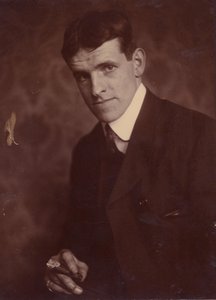
Jack Butler Yeats
1871 - 1957 , United Kingdom
Quick Facts
- Full Name: Jack Butler Yeats
- Nationality: Irish
- Date Of Birth: 1871
- Date Of Death: 1957
- Place Of Birth: London, United Kingdom
- Notable Artworks:
- The Liffey Swim
- A Fair Day, Mayo
- Artistic Movement Or Style: Expressionism
- Artists Who Influenced This Artist: ['Oskar Kokoschka']
- Artists Or Movements Influenced By This Artist: ['Modernism']
Related Articles

Watercolor Wonders: 10 Masterpieces That Redefined Art History | OriginalUniqueArt
Journey through 10 legendary watercolor masterpieces by Sargent, Turner & Homer! Explore iconic landscapes, portraits & floral art that redefined history. Find museum-quality reproductions and curated decor ideas at OriginalUniqueArt.com.

Ephemeral Visions: Exploring the Artistic Legacy & Contemporary Practice of Watercolor Painting
Explore the captivating world of watercolor painting! Discover its rich history, essential techniques, influential artists & collecting tips. A comprehensive guide for art enthusiasts from OriginalUniqueArt.

Ephemeral Visions: Exploring the History & Emotional Resonance of Watercolor Painting
Explore the captivating history of watercolor painting, from ancient techniques to modern masters like Kandinsky & Blake. Discover essential artists, collecting tips & the emotional power of this luminous medium. Expert insights for art enthusiasts.

Ephemeral Visions: Exploring the Artistic Legacy & Nuances of Watercolor Painting
Explore the captivating world of watercolor painting! Discover its rich history, essential techniques, influential artists & collecting tips from art experts. A comprehensive guide for enthusiasts.

The Enduring Appeal of Watercolor: History, Techniques & Contemporary Practice
Explore the captivating world of watercolor painting! Discover its rich history, essential techniques, influential artists, and collecting tips. A comprehensive guide for art enthusiasts.