Preview
 Send
Send Share
Share
 Details
 Guide
Guide

 Download
 Similars
 X-Ray
X-Ray Diaporama
 Stats
StatsMelrose


 Read More
Giclée / Art Print
Museum-quality giclée or canvas print with fast production and flexible finish options. ( Buy Hand Made Painting Switch to Digital Image)




P118B $10

P118H $10

P118W $10

P438Z $10

P508JH $12

P508YH $12

P805H $10

P805Z $10

P919BZ $10

P919G $10

P919XJ $10

P959ZH $10

P968JZ $12

W106C $8

W218G $10

W218JH $8

W218Y $10

W307PJ $10

W316G $10

W316PJ $8

W316Y $10

W398PJ $8

W4111J $10

W500HY $15

W500JH $15

W692G $12

W849H $8

W940BG $15

W953PJ $8




Pick from our preset sizes that match the artwork's original proportions.

Type the width and the height you need, to fit your frame or your wall. A print can only be cut, never made bigger than the picture, so a size with a different shape loses a part of the image. We send you a digital mockup to approve before we print anything. The picture shown on this page does not show the real cut — only the mockup does.
Worldwide Delivery () in 2 weeks instead of standard 4/5 weeks. (25 October)

Free Worldwide Express Shipping

High-Quality Linen Canvas

Full Shipping Insurance

Customs Tax Refund Guarantee

True Color Matching Guarantee

100-Day Return Policy (Defects Only)

100% Money-Back Guarantee

Bulk Discount Offer
 Glass option is only available in size under 110 CM

Melrose
Giclée / Art Print
Reproduction Size
-


Total Price
$ 81
Melrose: A Vision of Light and Landscape by J.M.W. Turner
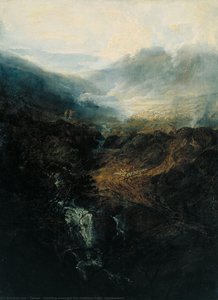
J.M.W. Turner’s “Melrose,” painted in 1831, isn't merely a depiction of a Scottish landscape; it’s an immersive experience—a fleeting moment captured on canvas where light, atmosphere, and the sublime intertwine. The painting transports us to the rolling hills and verdant valleys surrounding Melrose Abbey in the Borders region, rendered not with precise detail but with Turner’s signature blend of emotion and evocative color. It's a work that speaks volumes about his revolutionary approach to landscape art, moving beyond topographical accuracy towards an exploration of feeling and the transient beauty of nature.
Turner’s style at this period is characterized by its loose, expressive brushwork—a deliberate departure from the rigid conventions of academic painting. He employs a technique that prioritizes capturing the *impression* of light and color rather than meticulously recreating every element. Notice how the broad strokes of ochre, brown, and gray dominate the foreground, suggesting the earth and vegetation while allowing the sky to bleed into the landscape. The river, a ribbon of shimmering blues and greens, flows with an almost liquid grace, reflecting the diffused sunlight above. This deliberate blurring of edges and forms is central to Turner’s Romantic vision—a world where nature reigns supreme and human perception is secondary.
A Historical Context: Romanticism and the Sublime
“Melrose” firmly resides within the heart of the Romantic movement, a period defined by its emphasis on emotion, imagination, and the power of nature. The Romantics rejected the Enlightenment’s focus on reason and logic, instead celebrating the individual experience and the awe-inspiring grandeur of the natural world. Turner was deeply influenced by this shift, seeking to capture not just what he *saw*, but what he *felt* in response to the landscape. The concept of the “sublime”—a feeling of overwhelming beauty mixed with a sense of terror or insignificance—is powerfully evoked here. The vastness of the hills and sky, combined with the hazy atmosphere, creates an effect that is both captivating and slightly unsettling.
Interestingly, this painting was created during a period when Turner embarked on extensive travels throughout Europe, particularly in Italy and Switzerland. These journeys profoundly shaped his artistic vision, exposing him to new light conditions and inspiring him to experiment with different techniques. The influence of the Italian landscapes—particularly their dramatic lighting effects—can be seen in “Melrose,” contributing to its atmospheric intensity.
Symbolism and Emotional Resonance
Beyond its purely visual qualities, "Melrose" is rich in symbolic meaning. The distant town, barely discernible through the haze, represents human settlement and industry, dwarfed by the overwhelming power of nature. The river, a symbol of life and movement, flows relentlessly onward, suggesting the passage of time and the impermanence of all things. The prominent mountain on the left side acts as a vertical anchor, grounding the composition while simultaneously emphasizing the vastness of the scene.
Perhaps most powerfully, “Melrose” evokes a sense of tranquility and contemplation. The muted colors, soft lighting, and loose brushwork create an atmosphere of serenity—a reminder of the beauty and restorative power of nature. It’s a painting that invites us to slow down, breathe deeply, and lose ourselves in the moment, mirroring Turner's own desire to capture fleeting experiences of light and color.
Technical Details & Reproduction Considerations
Turner employed watercolor on paper for this work, utilizing layering techniques and delicate washes to achieve his characteristic atmospheric effects. The visible brushstrokes contribute to the painting’s sense of movement and energy, while the subtle blending of colors creates a luminous quality. Reproductions, particularly high-quality prints, strive to capture these nuances—the interplay of light and shadow, the texture of the paper, and the overall feeling of atmosphere. When selecting a reproduction, consider the medium – archival inks on fine art paper will best preserve the painting’s delicate colors and details for years to come.
Size: Unknown
Date: 1831
Questions & Answers
Does "Melrose" by J.M.W. Turner use strong contrasts or soft harmonies?
The color analysis of "Melrose" by J.M.W. Turner records a gentle contrast and a strong color unity harmony.
How do movement and era meet in "Melrose" by J.M.W. Turner?
"Melrose" by J.M.W. Turner is placed in the Romanticism movement, within the 19th-Century era of its creator.
Is "Melrose" by J.M.W. Turner a light or a dark artwork?
"Melrose" by J.M.W. Turner is recorded as brilliant, with a bright balance luminance.
Artist Biography
A Life Painted in Light: The World of J.M.W. Turner
Joseph Mallord William Turner, known to the world as J.M.W. Turner, was more than just a painter; he was a visionary who redefined landscape art and paved the way for modern abstraction. Born in Maiden Lane, Covent Garden, London, in 1775, his beginnings were humble – the son of a barber and wig maker. Yet, even as a child, a remarkable talent blossomed within him. By age fourteen, he was enrolled at the Royal Academy, exhibiting his first work just a year later. This early promise wasn’t merely technical skill; it hinted at an innate understanding of light, color, and atmosphere that would become the hallmarks of his extraordinary career. He supplemented his artistic education with practical experience as an architectural draftsman, honing his perspective and compositional abilities – skills that would prove invaluable in rendering both detailed topographical views and vast, emotive landscapes. Turner’s early life was marked by a dedication to his craft, fueled by a natural aptitude and a relentless pursuit of artistic excellence.The Romantic Tempest: Style and Influences
Turner emerged during the height of the Romantic era, but he wasn't simply a follower of its conventions. He absorbed influences from various sources – the Dutch masters like Claude Lorrain and Aelbert Cuyp for their luminous landscapes, and artists such as Richard Wilson for his poetic approach to nature. However, Turner didn’t merely imitate; he synthesized these influences into something entirely new. His work is characterized by an expressive use of color, often employing bold contrasts and vibrant hues to convey emotion and atmosphere. He was fascinated by the power and drama of nature – turbulent seascapes, fiery sunsets, and swirling storms became recurring motifs in his paintings. He wasn’t interested in simply depicting what he saw; he sought to capture the *feeling* of a place, the sublime awe inspired by the natural world. This pursuit led him to experiment with increasingly loose brushwork, dissolving forms into washes of color and light – techniques that would anticipate the Impressionist movement decades later. From 1840, his work gained significant recognition thanks to the championing of John Ruskin, who elevated landscape painting to a new level of critical acclaim.A Prolific Legacy: The Scope of Turner’s Output
The sheer volume of Turner's artistic output is astonishing. He created over 550 oil paintings, nearly 2,000 watercolors, and an astounding 30,000 works on paper. This prolificacy wasn’t simply a matter of quantity; it reflected his tireless exploration of different subjects, techniques, and styles. His paintings range from detailed topographical views of British landscapes to dramatic historical scenes and evocative maritime paintings. He was equally adept at capturing the tranquility of a pastoral scene and the terrifying power of a raging storm. Works like “Fort Vimieux” exemplify his mastery of depicting atmospheric effects – the swirling clouds, the crashing waves, and the intense light all contribute to a sense of drama and sublime beauty. Similarly, "Scene in the Campagna" showcases his ability to capture the warmth and serenity of the Italian countryside with delicate brushwork and luminous colors. Beyond painting, Turner was also a skilled printmaker, further disseminating his artistic vision through engravings and lithographs.Eccentricity and Remembrance: The Man Behind the Masterpieces
Turner’s personal life was as complex and enigmatic as his art. He remained intensely private and reclusive, often shunning social gatherings and preferring the solitude of his studio or the open road. He fathered two daughters, Evelina and Georgiana, with Sarah Danby, the wife of a fellow artist, but maintained a distant relationship with them. His later years were marked by increasing eccentricity and declining health. After his father’s death in 1829, he became increasingly morose and withdrawn, living in squalor and neglecting his appearance. He adopted the pseudonym “Mr. Booth” to avoid recognition and even rowed his boat into the Thames during a census to remain untraceable. Despite his eccentricities, or perhaps because of them, Turner remains one of Britain’s most beloved artists. His final years were spent in Chelsea where he passed away on December 19, 1851, at the age of 76. In a fitting tribute to his enduring legacy, he is buried in St Paul's Cathedral, alongside other British luminaries – a testament to his profound impact on art and culture. His work continues to inspire artists and captivate audiences worldwide, ensuring that the light of J.M.W. Turner will continue to shine for generations to come.
J.M.W. Turner
1775 - 1851 , United Kingdom
Quick Facts
- Full Name: Joseph Mallord William Turner
- Nationality: British
- Date Of Birth: 1775
- Date Of Death: 1851
- Place Of Birth: Maiden Lane, United Kingdom
- Notable Artworks:
- Fort Vimieux
- Scene in the Campagna
- Artistic Movement Or Style: Romanticism
- Artists Who Influenced This Artist:
- John Robert Cozens
- Richard Wilson
- Artists Or Movements Influenced By This Artist:
- Impressionism
- Abstract Art
Related Articles

Ephemeral Visions: Exploring the Artistic Legacy & Nuances of Watercolor Painting
Explore the captivating world of watercolor painting! Discover its rich history, essential techniques, influential artists & collecting tips from art experts. A comprehensive guide for enthusiasts.

Ephemeral Visions: Exploring the History & Emotional Resonance of Watercolor Painting
Explore the captivating history of watercolor painting, from ancient techniques to modern masters like Kandinsky & Blake. Discover essential artists, collecting tips & the emotional power of this luminous medium. Expert insights for art enthusiasts.

Watercolor Wonders: 10 Masterpieces That Redefined Art History | OriginalUniqueArt
Journey through 10 legendary watercolor masterpieces by Sargent, Turner & Homer! Explore iconic landscapes, portraits & floral art that redefined history. Find museum-quality reproductions and curated decor ideas at OriginalUniqueArt.com.

The Enduring Appeal of Watercolor: History, Techniques & Contemporary Practice
Explore the captivating world of watercolor painting! Discover its rich history, essential techniques, influential artists, and collecting tips. A comprehensive guide for art enthusiasts.

Ephemeral Visions: Exploring the Artistic Legacy & Contemporary Practice of Watercolor Painting
Explore the captivating world of watercolor painting! Discover its rich history, essential techniques, influential artists & collecting tips. A comprehensive guide for art enthusiasts from OriginalUniqueArt.