Preview
 Send
Send Share
Share
 Details
 Guide
Guide

 Download
 Similars
 X-Ray
X-Ray Diaporama
 Q&A
Q&A Stats
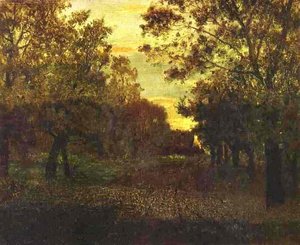
StatsQuiet cloister


 Read More
Giclée / Art Print
Museum-quality giclée or canvas print with fast production and flexible finish options. ( Buy Hand Made Painting Switch to Digital Image)




































Pick from our preset sizes that match the artwork's original proportions.

Type the width and the height you need, to fit your frame or your wall. A print can only be cut, never made bigger than the picture, so a size with a different shape loses a part of the image. We send you a digital mockup to approve before we print anything. The picture shown on this page does not show the real cut — only the mockup does.
Worldwide Delivery () in 2 weeks instead of standard 4/5 weeks. (2 November)

Free Worldwide Express Shipping

High-Quality Linen Canvas

Full Shipping Insurance

Customs Tax Refund Guarantee

True Color Matching Guarantee

100-Day Return Policy (Defects Only)

100% Money-Back Guarantee

Bulk Discount Offer
 Glass option is only available in size under 110 CM

Quiet cloister
Giclée / Art Print
Reproduction Size
-


Total Price
$ 81
A Serene Vision of Rural Russia: "Quiet Cloister" by Isaak Levitan
Isaak Ilyich Levitan’s “Quiet Cloister,” painted around 1890, offers a captivating glimpse into the soul of rural Russia. This evocative landscape transcends mere representation; it's an emotional portrait of tranquility and reflection, capturing a moment suspended in time. The painting depicts a picturesque scene featuring a church with a prominent steeple rising above the surrounding countryside. A bridge gracefully arches over what appears to be a river or lake, leading the eye towards the central focal point – the church itself. Scattered figures enjoying the peaceful setting add a touch of human presence without disrupting the overall sense of serenity.
Style and Technique: The Birth of Mood Landscape
Levitan was a pioneer in what became known as the "mood landscape," moving away from purely topographical depictions to focus on conveying atmosphere and emotional resonance. His style, influenced by masters like Alexei Savrasov, is characterized by its subtle color palette, soft brushstrokes, and masterful use of light and shadow. “Quiet Cloister” exemplifies this approach; the muted tones of green, blue, and grey create a sense of calm and introspection. Notice how Levitan doesn't meticulously detail every element but instead uses suggestion and implication to evoke a feeling of spaciousness and quietude. The atmospheric perspective – where distant objects appear paler and less distinct – further enhances the painting’s depth and contributes to its dreamlike quality.
Historical Context: A Nation in Transition
Painted during a period of significant social and political change in Russia, “Quiet Cloister” can be interpreted as a nostalgic yearning for a simpler, more traditional way of life. The late 19th century saw rapid industrialization and urbanization transforming Russian society. Levitan’s landscapes often served as a counterpoint to this modernity, celebrating the enduring beauty and spiritual significance of the Russian countryside. The church in the painting symbolizes faith and tradition, standing steadfast against the backdrop of an evolving nation. It reflects a broader cultural sentiment – a desire to preserve Russia's unique identity amidst external pressures.
Symbolism and Emotional Impact
Beyond its aesthetic appeal, “Quiet Cloister” is rich in symbolic meaning. The bridge can be interpreted as a link between the earthly realm and the spiritual, while the church represents hope and solace. The figures enjoying the view suggest a connection to nature and a moment of respite from daily life. Levitan’s genius lies in his ability to evoke profound emotions through seemingly simple imagery. The painting's overall effect is one of peaceful contemplation – an invitation to pause, reflect, and appreciate the beauty of the natural world. It resonates with viewers seeking tranquility and a connection to something larger than themselves.
Questions & Answers
What art movement does "Quiet cloister" by Isaak Ilyich Levitan belong to?
"Quiet cloister" is a work of Realism. The movement indicates the artistic tradition the work is part of.
How saturated is the palette of "Quiet cloister"?
"Quiet cloister" by Isaak Ilyich Levitan is recorded with a subtle color saturation.
What other names is Isaak Ilyich Levitan known by?
Other names recorded for Isaak Ilyich Levitan, creator of "Quiet cloister", include Isaak Ilyich Levitan.
Artist Biography
A Symphony of the Russian Soul: The Life and Art of Isaak Ilyich Levitan
Isaak Ilyich Levitan, a name synonymous with the evocative power of Russian landscape painting, was more than just a chronicler of nature; he was a poet of the land, a translator of its moods into visual form. Born in 1860 in Kibarty (present-day Lithuania) to a Jewish family who later settled in Moscow, Levitan’s life was marked by both profound hardship and an unwavering dedication to his art. The early loss of his mother and father cast a long shadow, instilling within him a sensitivity that would permeate his canvases with a melancholic beauty. This sense of longing, coupled with the restrictions imposed upon Jewish communities in Tsarist Russia, fueled a desire to find solace and expression in the natural world. He entered the Moscow School of Painting, Sculpture and Architecture in 1873, where he came under the tutelage of Alexei Savrasov, whose influence would prove pivotal in shaping Levitan’s artistic vision. It was Savrasov who nurtured his student's innate ability to capture not merely the appearance of nature, but its very essence—its atmosphere, its emotional resonance.The Birth of a ‘Mood Landscape’
Levitan quickly distinguished himself as an artist capable of conveying profound emotion through landscape. He wasn’t interested in topographical accuracy for its own sake; rather, he sought to imbue his paintings with a sense of *mood*, a feeling that resonated deep within the viewer's soul. This approach earned him the title of pioneer of the “mood landscape,” a genre that moved beyond simple representation to explore the spiritual connection between humanity and nature. His palette was often subdued, favoring naturalistic colors and poetic elements over vibrant displays. He masterfully employed light and shadow, creating atmospheric effects that evoked feelings of tranquility, solitude, or even quiet despair. Works like *Autumn Day. Sokolniki* (1879), painted when he was just nineteen years old, already demonstrated this remarkable ability to capture the subtle nuances of the Russian countryside. The painting’s muted tones and delicate rendering of light create a sense of wistful nostalgia, hinting at the transience of beauty and the inevitability of change. Later masterpieces such as *The Vladimirka Road* (1892) and *Eternal Rest* (1894), prominently displayed in the Tretyakov Gallery, further solidified his reputation as a master of emotional landscape painting.Influences and Artistic Kinships
While deeply indebted to Savrasov’s influence, Levitan was also receptive to other artistic currents. He collaborated with fellow artists like Konstantin Korovin, Mikhail Nesterov, and Nikolai Chekhov—the brother of the renowned playwright Anton Chekhov, who became a lifelong friend. This circle fostered an environment of creative exchange and mutual support. Though he briefly experimented with Impressionistic techniques, Levitan never fully embraced the movement, maintaining a uniquely Russian sensibility in his work. He found inspiration not only in the visual world but also in music and literature, seeking to translate their emotional power into his paintings. His designs for scenery for Savva Mamontov’s private Russian Opera demonstrate his versatility and willingness to explore different artistic mediums. The influence of these collaborations and experiences can be seen in works like *Spring Flood*, *Stormy Day*, *Vesper Chimes* and *Silent Cloister*, each a testament to his evolving style and deepening understanding of the emotional landscape.Legacy and Enduring Resonance
In 1897, Levitan was elected to the Imperial Academy of Arts, a recognition of his growing stature within the Russian art world. He subsequently became head of the landscape studio at his alma mater in 1898, dedicating himself to nurturing the next generation of Russian landscape painters. His influence extended far beyond his students, however. Levitan’s work played a crucial role in shaping the development of Russian landscape painting, elevating it from mere depiction to a powerful vehicle for emotional and spiritual expression. He instilled within his canvases a sense of national identity and an appreciation for the beauty of the Russian countryside that continues to resonate with audiences today. His untimely death in 1900 at the age of forty left a void in the art world, but his legacy endures as a master of atmospheric landscape painting and a profound interpreter of the Russian soul. In 1941, a poignant tribute was paid to his memory when his remains were moved to the Novodevichy Cemetery in Moscow, where he rests beside Anton Chekhov—a symbolic union of two artistic kindred spirits who captured the essence of their time and place with unparalleled sensitivity and grace. Isaak Ilyich Levitan’s paintings remain a testament to the enduring power of art to evoke emotion, inspire contemplation, and connect us to the beauty and mystery of the natural world.
Isaak Ilyich Levitan
1860 - 1900 , Russia
Quick Facts
- Full Name: Isaak Ilyich Levitan
- Nationality: Russian
- Date Of Birth: 1860
- Date Of Death: 1900
- Place Of Birth: Kyiv, Russia
- Notable Artworks:
- Autumn Day. Sokolniki
- The Vladimirka Road
- Eternal Rest
- Spring Flood
- Stormy Day
- Vesper Chimes
- Artistic Movement Or Style: Mood Landscape, Realism
- Artists Who Influenced This Artist:
- Alexei Savrasov
- Vasily Perov
- Vasily Polenov
- Artists Or Movements Influenced By This Artist: ['Russian Landscape painters']
Related Articles

Mastering Form: The 25 Greatest Paintings by Paul Cézanne
Explore 25 iconic Paul Cézanne masterpieces and his Post-Impressionist legacy. Discover the full collection online at OriginalUniqueArt.com.
Serene Visions: Exploring Themes of Tranquility in Art History & Contemporary Practice
Explore the history of serene landscape art & discover artists who evoke tranquility. Find the perfect calming artwork for your home with expert guidance from OriginalUniqueArt.

Romantic Landscapes: 10 Masterpieces for Your Home | OriginalUniqueArt
Journey through 10 Romantic landscape masterpieces by Friedrich, Turner & Cole. Explore emotional art, sublime nature scenes & iconic 19th-century paintings. Find museum-quality reproductions for your home at OriginalUniqueArt.com – discover the full collection online!

Evocations of Place: A Historical Journey Through Landscape Art
Explore the rich history of landscape art with OriginalUniqueArt. Discover renowned artists, movements like Impressionism & Romanticism, and expert guidance for collecting timeless pieces. Find your perfect serene escape today!

Mastering the English Landscape: The Top 25 John Constable Artworks
Experience the soul of English landscapes through John Constable's top 25 works. Explore the full collection online at OriginalUniqueArt.com.