Preview
 Send
Send Share
Share
 Details

 Download
 Similars
 X-Ray
X-Ray Diaporama
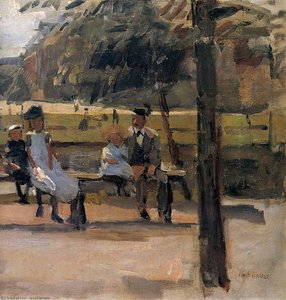
The Drummer


 Read More
Hand Made Oil Reproduction
Hand-painted oil on canvas in your size and frame, made to order by our artists. ( Buy Print Buy Image)




P118B $10

P118H $10

P118W $10

P438Z $10

P508JH $12

P508YH $12

P805H $10

P805Z $10

P919BZ $10

P919G $10

P919XJ $10

P959ZH $10

P968JZ $12

W106C $8

W218G $10

W218JH $8

W218Y $10

W307PJ $10

W316G $10

W316PJ $8

W316Y $10

W398PJ $8

W4111J $10

W500HY $15

W500JH $15

W692G $12

W849H $8

W940BG $15

W953PJ $8




Pick from our preset sizes that match the artwork's original proportions.

You may enter your own dimensions to fit a specific frame or space. If your selected size does not match the original image's proportions, we will either crop the artwork or extend the painting with additional hand-painted elements. A digital mockup will be sent for your approval before production begins.
Please note that the on-screen preview does not reflect the actual cropping or extension. Only the mockup will accurately show the final composition.
While custom sizes are available, we recommend selecting a dimension from the predefined list to preserve the original proportions.
After order, OriginalUniqueArt.com team will email client for instructions and provide a mockup preview
Worldwide Delivery () in 3/4 weeks instead of standard 5 weeks. (13 August). No compromise on quality.

Free Worldwide Express Shipping

High-Quality Linen Canvas

Full Shipping Insurance

Customs Tax Refund Guarantee

True Color Matching Guarantee

60-Day Return Policy (Defects Only)

100% Money-Back Guarantee

Bulk Discount Offer
 Glass option is only available in size under 110 CM

The Drummer
Reproduction Medium
Reproduction Size
-


Total Price
$ 300
Artwork Description
A Portrait of Quiet Intensity: Exploring “The Drummer”
Isaac Lazarus Israëls’s “The Drummer,” painted circa 1885, isn't merely a depiction of a woman holding a drum; it’s a carefully constructed tableau brimming with understated emotion and a subtle commentary on the rhythms of everyday life in late 19th-century Amsterdam. Israëls, a pivotal figure within the Dutch Impressionist movement, masterfully captures a moment suspended between observation and engagement, inviting the viewer to contemplate the woman's gaze and the quiet power held within her posture.
The painting immediately draws attention to its central subject – a young woman seated in a simple wooden chair. Her attire is modest, suggesting a rural or working-class background, yet her presence exudes an unexpected dignity. She cradles a drum, not with flamboyant enthusiasm, but with a deliberate and almost reverent hold. The drum itself, rendered with meticulous detail, hints at its purpose – perhaps a source of entertainment, ritual, or even labor. Her eyes are fixed on something beyond the frame, lost in thought, creating an immediate sense of intimacy and inviting speculation about her inner world.
The Amsterdam Impressionist Palette: Technique and Style
Israëls’s technique is distinctly Impressionistic, characterized by loose brushstrokes, a vibrant yet muted color palette, and a focus on capturing the fleeting effects of light. He employs broken colors – applying paint in small, distinct strokes rather than blending them seamlessly – to create an atmospheric quality that suggests both warmth and shadow. The lighting, diffused and soft, washes over the scene, highlighting the textures of the wooden chair, the woman’s clothing, and the drum's surface. Notice how he uses subtle variations in tone to define form and volume, eschewing sharp outlines in favor of a more suggestive approach.
The composition is carefully balanced, with the woman occupying the central space while two figures – a seated man and a standing one – recede into the background. These secondary elements contribute to the sense of a lived-in scene, hinting at a domestic setting or perhaps a village gathering. The inclusion of the handbag adds another layer of detail, grounding the image in the realities of everyday life.
A Window into Dutch Society and Symbolism
“The Drummer” offers a poignant glimpse into the social fabric of Amsterdam during the late 19th century. Israëls was deeply interested in portraying the lives of ordinary people, particularly those who worked with their hands – farmers, laborers, and craftspeople. The woman’s humble attire and contemplative expression speak to the realities of working-class life, while her quiet strength suggests resilience and dignity. The drum itself carries symbolic weight; it can represent rhythm, tradition, community, or even a connection to ancestral roots.
Furthermore, the painting's composition echoes elements of Dutch genre paintings popular at the time, which often depicted scenes from rural life with a focus on realism and social commentary. Israëls’s work aligns with this tradition while simultaneously injecting it with his own distinctive Impressionistic style. The woman’s gaze, directed towards an unseen point, invites us to consider her thoughts and experiences – perhaps reflecting on the past, contemplating the future, or simply finding solace in the present moment.
Rediscovering Israëls: A Legacy of Observation
Isaac Lazarus Israëls remains a significant figure in Dutch art history. His ability to capture the essence of human experience through subtle observation and masterful technique continues to resonate with viewers today. “The Drummer” stands as a testament to his artistic vision, offering a captivating portrait that transcends its simple subject matter to become a profound meditation on life, memory, and the enduring power of quiet contemplation. Reproductions of this evocative work offer a beautiful way to bring Israëls’s insightful perspective into any space.
Artist Biography
Isaac Lazarus Israëls: A Life in Amsterdam Impressionism
- Born: Amsterdam, Netherlands (February 3, 1865)
- Died: The Hague, Netherlands (October 7, 1934)
Early Life and Artistic Beginnings
Isaac Lazarus Israëls was born into a family deeply rooted in the Dutch art world. He was the son of Jozef Israëls, a prominent painter associated with the Hague School, and Aleida Schaap. This artistic heritage fostered an early appreciation for painting within Isaac, who displayed remarkable talent from a young age. Between 1880 and 1882, he studied at the Royal Academy of Art in The Hague, where he met George Hendrik Breitner, forming a lifelong friendship that would significantly influence his artistic trajectory. At just sixteen years old, Israëls achieved early recognition when he sold "Bugle Practice" to artist and collector Hendrik Willem Mesdag even before it was fully completed. Portraits of his grandmother and a family friend, created in the same year, demonstrated his already considerable technical skill.
The Amsterdam Impressionist
Israëls became a leading figure within the Amsterdam Impressionism movement. Influenced by the philosophy of the Tachtigers—a group of writers and artists advocating for style to reflect content and emotionally charged subjects represented through intense technique—he shifted his focus towards capturing the vibrant scenes of everyday life in Amsterdam. He frequently spent summers with his father in Scheveningen, painting colorful seaside landscapes. His work reflected a desire to portray the bustling streets, cafes, and cabarets of Amsterdam, moving away from the more traditional subject matter favored by earlier Dutch masters.
- Key Works: "Transport of Colonial Soldiers" (Kröller-Müller Museum), "The Coffee Sorters" (Museum Boijmans Van Beuningen), Portrait of Mata Hari (Kröller-Müller Museum)
Travels and Artistic Evolution
In 1904, Israëls relocated to Paris, establishing a studio and embracing the city's unique motifs. He further explored his interest in fashion by studying at Paquin and Drecoll fashion houses. The outbreak of World War I prompted his return to Holland, where he primarily focused on portraiture. Following the war, he embarked on extensive travels throughout Europe and Asia, including two years spent sketching and painting in India and the Dutch East Indies. These experiences broadened his artistic horizons, introducing him to new subjects and perspectives that enriched his later work.
Legacy and Recognition
Isaac Lazarus Israëls left behind a significant body of work celebrated for its vibrant colors, loose brushwork, and insightful portrayals of everyday life. His paintings are now housed in prestigious museums worldwide, including the Van Gogh Museum and the Mauritshuis. He achieved international recognition, notably winning a Gold Medal at the 1928 Olympic Games for his painting "Red Rider." Israëls' legacy lies not only in his artistic achievements but also in his contribution to the development of Amsterdam Impressionism, solidifying his place as one of the most important Dutch painters of his era.

Isaac Lazarus Israels
1865 - 1934 , Netherlands
Quick Facts
- Artistic Movement Or Style: Amsterdam Impressionism
- Artists Who Influenced This Artist: ['Émile Zola']
- Date Of Birth: February 3, 1865
- Date Of Death: October 7, 1934
- Full Name: Isaac Lazarus Israëls
- Nationality: Dutch
- Notable Artworks:
- Transport of Colonial Soldiers
- The Coffee Sorters
- Portrait of Mata Hari
- Ippy and Gertie at Hirsch
- A Lady in Front of Van Gogh's Sunflowers
- Dancer La Cocette Sun
- Cafe dansant, Moulin de la Galette
- The Drummer
- Place Of Birth (City And Country): Amsterdam, Netherlands
Related Articles
Isaac Lazarus Israëls: A Chronicle of Dutch Life & the Evolution of Impressionistic Realism
Explore the captivating world of Isaac Lazarus Israëls (1865-1934), a leading Dutch Amsterdam Impressionist. Discover his city scenes, portraits & travels through Asia – a chronicle of Dutch life and artistic evolution.

Chiaroscuro and Character: A Definitive Guide to Light and Shadow in the Dutch Baroque Era
Explore the dramatic mastery of the Dutch Baroque era. Discover how masters like Rembrandt used chiaroscuro to transform everyday life into timeless art. An expert guide for collectors and enthusiasts seeking to understand the profound interplay of light and shadow.

Golden Light & Dutch Skies: The Timeless Magic of Dutch Golden Age Landscapes
Discover the breathtaking beauty of Dutch Golden Age landscapes. Explore the mastery of light, chiaroscuro, and 17th-century realism through an expert art history lens, celebrating the enduring legacy of the Dutch Masters for discerning collectors and art lovers.

Dutch Baroque Masters: 10 Paintings That Shaped an Era | OriginalUniqueArt
Journey through the Golden Age with our guide to the Top 10 Dutch Baroque masterpieces! Explore iconic paintings by Rembrandt, Vermeer & Frans Hals. Find museum-quality art reproductions and elevate your home decor at OriginalUniqueArt.com.

Cézanne's Masterpieces: 25 Iconic Artworks to Transform Your Space
Journey through 25 iconic artworks by Paul Cézanne – a master of Impressionism and Post-Impressionism. Explore his landscapes, still lifes, and the stories behind these timeless masterpieces. Discover museum-quality reproductions & curated decor at OriginalUniqueArt.com.