Preview
 Send
Send Share
Share
 Details
 Guide
Guide

 Download
 Similars
 X-Ray
X-Ray Diaporama
 Q&A
Q&A Stats
StatsTorero


 Read More
Giclée / Art Print
Museum-quality giclée or canvas print with fast production and flexible finish options. ( Buy Hand Made Painting Switch to Digital Image)




P118B $10

P118H $10

P118W $10

P438Z $10

P508JH $12

P508YH $12

P805H $10

P805Z $10

P919BZ $10

P919G $10

P919XJ $10

P959ZH $10

P968JZ $12

W106C $8

W218G $10

W218JH $8

W218Y $10

W307PJ $10

W316G $10

W316PJ $8

W316Y $10

W398PJ $8

W4111J $10

W500HY $15

W500JH $15

W692G $12

W849H $8

W940BG $15

W953PJ $8




Pick from our preset sizes that match the artwork's original proportions.

Type the width and the height you need, to fit your frame or your wall. A print can only be cut, never made bigger than the picture, so a size with a different shape loses a part of the image. We send you a digital mockup to approve before we print anything. The picture shown on this page does not show the real cut — only the mockup does.
Worldwide Delivery () in 2 weeks instead of standard 4/5 weeks. (3 November)

Free Worldwide Express Shipping

High-Quality Linen Canvas

Full Shipping Insurance

Customs Tax Refund Guarantee

True Color Matching Guarantee

100-Day Return Policy (Defects Only)

100% Money-Back Guarantee

Bulk Discount Offer
 Glass option is only available in size under 110 CM

Torero
Giclée / Art Print
Reproduction Size
-


Total Price
$ 81
The Soul of Spanish Tradition
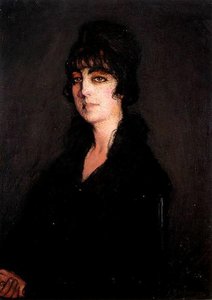
In the evocative portrait titled Torero, created in 1902 by the master of Spanish realism, Ignacio Zuloaga y Zabala, we are invited into a moment of profound stillness and quiet intensity. The painting presents a man whose very presence commands the space, his gaze meeting the viewer with a serious, almost haunting expression that transcends the canvas. Dressed in an elegant suit and tie, topped with a hat adorned by a delicate feather, he embodies a sophisticated blend of masculine strength and refined grace. This is not merely a depiction of a person, but a window into the cultural heartbeat of early 20th-century Spain, where the rugged spirit of the bullfighter meets the polished dignity of the era's social elite.
Zuloaga, a painter whose lineage was deeply rooted in the craftsmanship of his Basque ancestors, possessed a unique ability to capture the "black" soul of Spain—a concept that avoids mere darkness to instead explore depth, gravity, and historical weight. In Torero, we see the artist’s mastery of light and shadow, a technique heavily influenced by his reverence for Spanish masters like Velázquez and Goya. The brushwork is deliberate and textured, lending a tactile quality to the fabric of his clothing and the soft plume of the feather, creating a sense of realism that feels both immediate and timeless.
A Masterpiece of Character and Contrast
The technical brilliance of this work lies in its ability to balance formal elegance with raw emotional resonance. Zuloaga utilizes an earthy, somber palette that anchors the subject within a tradition of Spanish genre painting, yet he infuses the composition with a modern psychological depth. The way the light catches the contours of the man's face highlights a character forged by discipline and perhaps a touch of melancholy. For the discerning collector or interior designer, this piece offers more than just visual beauty; it provides a focal point of intellectual and emotional gravity. It is a work that demands contemplation, making it an ideal centerpiece for a study, a library, or a sophisticated living space where conversation and reflection are encouraged.
Beyond the individual subject, Torero serves as a symbolic bridge between the old world and the new. While Zuloaga was deeply influenced by the vibrant post-impressionist scenes of Paris and the works of Degas and Toulouse-Lautrec, he never abandoned his commitment to his national identity. This painting captures that tension perfectly—the cosmopolitan elegance of the attire juxtaposed with the traditional, almost archetypal presence of the bullfighting figure. To possess a reproduction of this work is to bring a piece of history into the home, an enduring tribute to the artistry of a man who sought to unearth the very essence of his homeland through every stroke of oil on canvas.
Questions & Answers
Where can I find a guide to "Torero"?
The guide to "Torero" is the artwork's Guide page - a printable factsheet showing the artwork with its caption, credit line and identity table (artist, dates, medium, original size, collection).
What does the 1902 date of "Torero" correspond to in Ignacio Zuloaga y Zabala's career?
Given its 1902 date, "Torero" falls in Ignacio Zuloaga y Zabala's Mature Period.
What is the dominant color of "Torero" by Ignacio Zuloaga y Zabala?
The dominant color of "Torero" by Ignacio Zuloaga y Zabala is phthalo green (#201a16).
Artist Biography
A Life Etched in Spanish Realism
Ignacio Zuloaga y Zabala, born in the Basque town of Eibar in 1870, stands as a pivotal figure in late 19th and early 20th-century Spanish painting. His artistic journey wasn’t predestined; rather, it blossomed from an unexpected spark ignited during a trip to Rome with his father. Coming from a family deeply rooted in craftsmanship – his grandfather was the royal armourer, and his father a skilled damascener – Zuloaga initially seemed destined for a more conventional path. However, the allure of artistic expression proved irresistible, leading him at eighteen to immerse himself in the vibrant post-impressionist scene of Paris. This period wasn’t about imitation, but absorption; he observed the innovations of artists like Ramon Casas, Gauguin, and Toulouse-Lautrec, yet steadfastly maintained a distinct focus on his Spanish heritage.Forging an Identity Through Artistic Exploration
Zuloaga's time in Montmartre was formative, exposing him to new ideas and techniques. Yet, the pull of his homeland proved stronger. After several years abroad, he returned to Spain, initially settling in Seville before ultimately finding resonance in Segovia. This relocation marked a turning point, a conscious embrace of his national identity that would become the defining characteristic of his art. He deliberately sought inspiration from Spanish masters – Velázquez and Murillo foremost among them – adopting their earthy color palettes and genre themes while simultaneously forging an expressive style uniquely his own. It was a deliberate act of artistic excavation, unearthing the soul of Spain through paint and canvas. His early works demonstrate this search for authenticity, moving away from Parisian influences towards a distinctly Spanish aesthetic.Themes of Nationhood and Human Experience
Zuloaga’s work is profoundly rooted in portraying the essence of Spain – not a romanticized vision, but an honest, often unflinching depiction of its people and landscapes. He turned his gaze to bullfighters, flamenco dancers, village dwarves, beggars, and the stark beauty of the Spanish countryside. His paintings aren't merely representations; they are visceral experiences, capturing the spirit of a nation with raw honesty. A signature element of his style is a muted color palette – maroons, blacks, and greys dominate, punctuated by vibrant splashes of color in traditional attire or religious garments. This deliberate use of tone creates a sense of drama and intensity, drawing the viewer into the emotional core of each scene. His portraits are particularly compelling, revealing not just physical likeness but also a profound understanding of human psychology, often conveying melancholy, introspection, or quiet dignity. Beyond the everyday lives of his subjects, Zuloaga explored themes of penance and religious fervor, most notably in works like “Cristo de la Sangre” (Christ of the Blood) and depictions of flagellants – reflections of Spain’s deeply ingrained Catholic traditions.Recognition and Lasting Legacy
Zuloaga's talent didn't go unnoticed. His work was exhibited internationally, gaining recognition at prestigious venues like the Paris Salon, Venice Biennale (where he was accepted in 1901 and 1903), and Barcelona International Exposition. He garnered critical acclaim from prominent figures such as Miguel de Unamuno, who lauded his honest portrayal of Spain’s religious and tragic aspects. Patronage played a crucial role in his career, with Alice Warder Garrett becoming a significant supporter; her backing ultimately led to the establishment of the Evergreen Museum & Library in Baltimore, which houses a remarkable collection of his works. Ignacio Zuloaga's legacy lies in his ability to capture the essence of Spanish life with unflinching realism and profound emotional depth. His art provides an invaluable window into the cultural, social, and religious landscape of Spain during a period of significant change. He remains one of the most important Spanish realist painters of his generation, whose evocative portrayals of national identity and human experience continue to resonate powerfully with audiences today.
Ignacio Zuloaga y Zabala
1870 - 1945 , Spain
Quick Facts
- Artistic Movement Or Style: Realism
- Artists Who Influenced This Artist:
- Velázquez
- Murillo
- Gauguin
- Toulouse-Lautrec
- Date Of Birth: 1870
- Date Of Death: 1945
- Full Name: Ignacio Zuloaga y Zabala
- Nationality: Spanish
- Notable Artworks:
- Cristo de la Sangre
- Don Placido Zuloaga in his studio
- People in País Vasco
- The Anchorite
- Place Of Birth: Eibar, Spain
Related Articles

25 Masterpieces by Francisco de Zurbarán: The King of Spanish Baroque
Immerse yourself in the dramatic world of Francisco de Zurbarán. Explore 25 iconic Spanish Baroque masterpieces defined by intense tenebrism and spiritual realism. Find inspiration for museum-quality art reproductions and decor. Discover all masterpieces on OriginalUniqueArt.com.
The Golden Age Reforged: Dramatic Realism & Religious Zeal in Spanish Baroque Art
Explore the dramatic world of Spanish Baroque art! Discover masters like Zurbarán & the powerful influence of religious zeal on painting techniques – a guide for collectors and enthusiasts.

25 Masterpieces by Francisco de Zurbarán: The King of Spanish Baroque Tenebrism
Immerse yourself in the dramatic world of Francisco de Zurbarán. Explore 25 iconic Spanish Baroque masterpieces defined by intense tenebrism and spiritual realism. Find inspiration for museum-quality art reproductions and decor. Discover all masterpieces on OriginalUniqueArt.com.

Romantic Realism's Finest: 10 Masterpieces for Your Home | OriginalUniqueArt
Explore 10 defining masterpieces of Romantic Realism! Discover Courbet, Millet & Daumier's powerful paintings—capturing emotion and social realities. Find museum-quality reproductions for your home at OriginalUniqueArt.com.

25 Masterpieces by Francisco de Zurbarán: The King of Spanish Baroque
Immerse yourself in the dramatic world of Francisco de Zurbarán. Explore 25 iconic Spanish Baroque masterpieces defined by intense tenebrism and spiritual realism. Find inspiration for museum-quality art reproductions and decor. Discover all masterpieces on OriginalUniqueArt.com.