Preview
 Send
Send Share
Share
 Details
 Guide
Guide

 Download
 Similars
 X-Ray
X-Ray Diaporama
 Stats
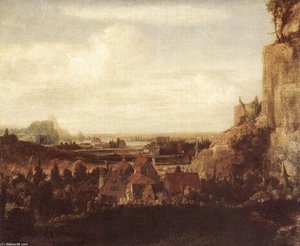
StatsMountain Valley with Fenced Fields


 Read More
Hand Made Oil Reproduction
Hand-painted oil on canvas in your size and frame, made to order by our artists. ( Switch to Print Switch to Digital Image)




P118B $10

P118H $10

P118W $10

P438Z $10

P508JH $12

P508YH $12

P805H $10

P805Z $10

P919BZ $10

P919G $10

P919XJ $10

P959ZH $10

P968JZ $12

W106C $8

W218G $10

W218JH $8

W218Y $10

W307PJ $10

W316G $10

W316PJ $8

W316Y $10

W398PJ $8

W4111J $10

W500HY $15

W500JH $15

W692G $12

W849H $8

W940BG $15

W953PJ $8




Pick from our preset sizes that match the artwork's original proportions.

You may enter your own dimensions to fit a specific frame or space. If your selected size does not match the original image's proportions, we will either crop the artwork or extend the painting with additional hand-painted elements. A digital mockup will be sent for your approval before production begins.
Please note that the on-screen preview does not reflect the actual cropping or extension. Only the mockup will accurately show the final composition.
While custom sizes are available, we recommend selecting a dimension from the predefined list to preserve the original proportions.
After order, OriginalUniqueArt.com team will email client for instructions and provide a mockup preview
Worldwide Delivery () in 3/4 weeks instead of standard 5 weeks. (21 September). No compromise on quality.

Free Worldwide Express Shipping

High-Quality Linen Canvas

Full Shipping Insurance

Customs Tax Refund Guarantee

True Color Matching Guarantee

100-Day Return Policy (Defects Only)

100% Money-Back Guarantee

Bulk Discount Offer
 Glass option is only available in size under 110 CM

Mountain Valley with Fenced Fields
Reproduction Medium
Reproduction Size
-


Total Price
$ 300
A Panoramic Vision of the Sublime
In the quiet corridors of the Rijksmuseum in Amsterdam, there exists a window into a world that feels both ancient and startlingly modern. Hercules Seghers’ "Mountain Valley with Fenced Fields" is not merely a landscape; it is an atmospheric journey into the heart of the Dutch Golden Age's most experimental spirit. Created around 1630, this work transcends the traditional boundaries of 17th-century topography to touch upon the much later, more turbulent emotions of Romanticism. As the eye wanders across the sweeping horizontal expanse, one is immediately struck by a sense of profound scale. Unlike many of his contemporaries who sought to draw the viewer upward toward the heavens, Seghers anchors us in the earth, presenting a panoramic vista where towering, hazy peaks recede into an infinite distance, inviting a contemplative stillness.
The composition is a masterclass in balanced tension. The rugged, detailed rocks of the foreground provide a tactile, grounded reality, their textures suggesting the raw, unyielding strength of nature. Yet, as the gaze drifts toward the middle ground, the scene softens into a rhythmic pattern of fenced fields. These enclosures serve as a subtle, poignant symbol of human presence—a quiet testament to the harmonious, if fragile, coexistence between man and the untamed wild. This interplay between the structured agricultural landscape and the overwhelming grandeur of the mountains creates an emotional resonance that speaks to the human desire for both security and exploration.
The Alchemy of Etching and Light
To truly appreciate this masterpiece, one must look closer at the revolutionary technique Seghers employed. He was a pioneer of the printmaking medium, often described as the most inspired and original landscapist of his era. In "Mountain Valley with Fenced Fields," Seghers utilized the drypoint method, a process that allowed him to bypass the clean, clinical lines of traditional engraving in favor of something far more visceral. By incising directly into the copper plate, he achieved a velvety texture and a depth of shadow that mimics the organic complexity of the natural world.
The lighting in this piece is particularly haunting. Historical records suggest that Seghers often experimented with "plate tone," intentionally leaving excess ink on the surface to create a moody, atmospheric haze. In some interpretations of his work, there is even evidence of blue watercolor overpainting, which lends the valley a nocturnal, ethereal quality—as if the entire landscape were bathed in the silvered light of an invisible moon. This manipulation of light and shadow does more than just define form; it creates a psychological atmosphere, evoking feelings of awe, humility, and perhaps a touch of melancholy. For the collector or interior designer, this piece offers a sophisticated depth that can transform a room, providing a focal point that changes character as the natural light in a space shifts throughout the day.
A Timeless Legacy for the Modern Collector
For those seeking to bring a sense of historical weight and artistic innovation into their personal environments, Seghers’ work offers an unparalleled opportunity. His ability to blend the meticulous detail of the Dutch tradition with a visionary, almost surrealist approach to landscape makes his art eternally relevant. The muted earth tones, punctuated by soft blues and whites, provide a neutral yet deeply textured palette that complements both classical and contemporary interior aesthetics.
Owning a high-quality reproduction of this work is an invitation to inhabit the same sense of wonder that Seghers captured centuries ago. It is more than decoration; it is an enduring piece of art history that celebrates the beauty of the untamed world and the delicate mark of humanity within it. Whether placed in a quiet study or as a commanding feature in a grand living space, "Mountain Valley with Fenced Fields" serves as a constant reminder of the sublime power of nature and the limitless imagination of the human spirit.
Artist Biography
Hercules Seghers: A Life in Landscape and Print
- Born: Haarlem, Netherlands (c. 1590)
- Died: c. 1638
Early Life and Training
- Hercules Pieterszoon Seghers was born in Haarlem, the son of a Mennonite cloth merchant originally from Flanders.
- In 1596, his family moved to Amsterdam.
- He was apprenticed to Gillis van Coninxloo, a leading Flemish landscapist, but this apprenticeship was cut short by Coninxloo's death in 1606. Seghers and his father acquired several of Coninxloo’s works after the artist passed away.
- Following his father's death in 1612, he returned to Haarlem and joined the Haarlem Guild of St. Luke.
Artistic Development and Style
- Seghers is recognized as "the most inspired, experimental and original landscapist" of his period, particularly noted for his innovative printmaking techniques.
- His paintings often feature fantastic mountainous compositions with a wide horizontal view, emphasizing earth over sky.
- He experimented extensively with etching, using drypoint, aquatint (including the "sugar-bite" technique), and other methods to create unique textural effects.
- Seghers’s prints are characterized by their use of colored paper or cloth, colored inks, and hand-coloring, often resulting in miniature paintings.
- His style shows influence from earlier artists like Joos de Momper and Gillis van Coninxloo.
Major Achievements and Innovations
- Innovative Printmaking: Seghers’s most significant contribution lies in his experimental printmaking techniques, particularly the sugar-bite aquatint. This technique was later rediscovered in England.
- Unique Landscapes: His landscapes are characterized by their starkness, originality, and often otherworldly quality. He depicted rocky formations resembling alien terrain.
- Influence on Rembrandt: Rembrandt collected Seghers’s works and reworked elements from his paintings and etchings into his own compositions, demonstrating the significant impact of Seghers' style.
- Diverse Impressions: Unlike many printmakers of his time, Seghers produced multiple impressions of each plate, varying their color schemes and adding hand-coloring to create unique artworks.
Historical Significance
- Seghers’s work was highly regarded during his lifetime, though he faced financial difficulties later in life.
- Samuel van Hoogstraten's *Inleyding tot de hooge schoole der schilderkonst* romanticized Seghers as a misunderstood genius, contributing to his posthumous reputation.
- He is considered a pioneer of landscape printmaking and an important figure in the Dutch Golden Age, known for his experimental techniques and unique artistic vision.
- His influence can be seen in later artists who adopted his innovative printing methods and appreciated his distinctive style.

Hercules Seghers
1590 - 1638 , Netherlands
Quick Facts
- Artistic Movement Or Style: Dutch Golden Age
- Artists Or Movements Influenced By This Artist: ['Rembrandt']
- Artists Who Influenced This Artist:
- Gillis van Coninxloo
- Joos de Momper
- Date Of Birth: c. 1590
- Date Of Death: c. 1638
- Full Name: Hercules Pieterszoon Seghers
- Nationality: Dutch
- Notable Artworks:
- Mountainous Landscape
- Mountain Valley with Fenced Fields
- The Great Tree
- Place Of Birth: Haarlem, Netherlands
Related Articles

Golden Light & Dutch Skies: The Timeless Magic of Dutch Golden Age Landscapes
Discover the breathtaking beauty of Dutch Golden Age landscapes. Explore the mastery of light, chiaroscuro, and 17th-century realism through an expert art history lens, celebrating the enduring legacy of the Dutch Masters for discerning collectors and art lovers.

Romantic Landscapes: 10 Masterpieces for Your Home | OriginalUniqueArt
Journey through 10 Romantic landscape masterpieces by Friedrich, Turner & Cole. Explore emotional art, sublime nature scenes & iconic 19th-century paintings. Find museum-quality reproductions for your home at OriginalUniqueArt.com – discover the full collection online!
Nicolaes Berchem: Dutch Golden Age Pastoralism & the Evolution of Landscape Painting
Explore the captivating world of Nicolaes Berchem, a leading Dutch Golden Age painter. Discover his idyllic landscapes, masterful technique & lasting influence on art history. Learn more at OriginalUniqueArt.
Etching Masters: 10 Legendary Prints That Revolutionized Art | OriginalUniqueArt
Journey through 10 legendary etching masterpieces by Rembrandt, Dürer & Goya. Explore the history of printmaking and discover timeless art for your home. Find museum-quality reproductions at OriginalUniqueArt.com.
Charles Leickert: Capturing the Dutch Golden Age Light – A Comprehensive Study of Technique, Context, and Legacy
Explore the captivating winter landscapes of Charles Leickert, a master of Dutch Golden Age light & atmosphere. Discover his techniques, symbolism, and lasting legacy – a comprehensive study for art enthusiasts and collectors.