Text size

() ·

A painting made for you, by hand

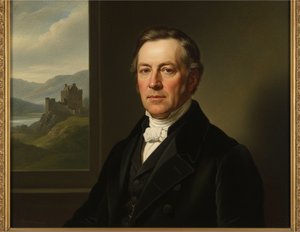
Sir Walter Scott

Hand Made Oil Reproduction

Hand-painted oil on canvas in your size and frame, made to order by our artists. ( Switch to Print Switch to Digital Image)

Collectible Description

Admire Henry Raeburn's masterful portrait of Sir Walter Scott – a Scottish icon captured with vibrant colors and confident brushstrokes. Explore a stunning oil painting reproduction at OriginalUniqueArt.

Artist Biography

Sir Henry Raeburn (1756-1823) was a pioneering Scottish portrait painter celebrated for his realistic style & capturing the character of prominent figures. Explore his legacy!

from ·

Chapter 1

How large should it be?

Slide to change the size; the picture on the left shows the frame at its real width. The proportions of the original are kept.

Standard
custom
CM
INCH

Pick from our preset sizes that match the artwork's original proportions.

width
height

Type the width and the height you need, to fit your frame or your wall. This is hand-painted, so for a size with a different shape the artist can paint a bit more around the picture, or cut a bit — you choose. We send you a digital mockup to approve before the painting starts. The picture shown on this page does not show the real result — only the mockup does.

Chapter 2

How should it arrive?

Choose the edges of the stretched canvas

Choose your frame

Corner sample of the WhiteWrap canvas edge finish, stretched on solid wood bars
White $1
Corner sample of the BlurSideWrap canvas edge finish, stretched on solid wood bars
Blurside $1
Corner sample of the ExtendedWrap canvas edge finish, stretched on solid wood bars
Extended $1
Corner sample of the P118B picture frame: moulded polystyrene, 5 cm wide and 3 cm thick
P118B $10
Corner sample of the P118H picture frame: moulded polystyrene, 5 cm wide and 3 cm thick
P118H $10
Corner sample of the P118W picture frame: moulded polystyrene, 5 cm wide and 3 cm thick
P118W $10
Corner sample of the P438Z picture frame: moulded polystyrene, 5.5 cm wide and 3.5 cm thick
P438Z $10
Corner sample of the P508JH picture frame: moulded polystyrene, 7 cm wide and 3.5 cm thick
P508JH $12
Corner sample of the P508YH picture frame: moulded polystyrene, 7 cm wide and 3.5 cm thick
P508YH $12
Corner sample of the P805H picture frame: moulded polystyrene, 5 cm wide and 3.5 cm thick
P805H $10
Corner sample of the P805Z picture frame: moulded polystyrene, 5 cm wide and 3.5 cm thick
P805Z $10
Corner sample of the P919BZ picture frame: moulded polystyrene, 7 cm wide and 3.5 cm thick
P919BZ $10
Corner sample of the P919G picture frame: moulded polystyrene, 7 cm wide and 3.5 cm thick
P919G $10
Corner sample of the P919XJ picture frame: moulded polystyrene, 7 cm wide and 3.5 cm thick
P919XJ $10
Corner sample of the P959ZH picture frame: moulded polystyrene, 5 cm wide and 3 cm thick
P959ZH $10
Corner sample of the P968JZ picture frame: moulded polystyrene, 6 cm wide and 4 cm thick
P968JZ $12
Corner sample of the W106C picture frame: solid wood, 5 cm wide and 3 cm thick
W106C $8
Corner sample of the W218G picture frame: solid wood, 5 cm wide and 3 cm thick
W218G $10
Corner sample of the W218JH picture frame: solid wood, 5 cm wide and 3 cm thick
W218JH $8
Corner sample of the W218Y picture frame: solid wood, 5 cm wide and 3 cm thick
W218Y $10
Corner sample of the W307PJ picture frame: solid wood, 6 cm wide and 3 cm thick
W307PJ $10
Corner sample of the W316G picture frame: solid wood, 6 cm wide and 3 cm thick
W316G $10
Corner sample of the W316PJ picture frame: solid wood, 6 cm wide and 3 cm thick
W316PJ $8
Corner sample of the W316Y picture frame: solid wood, 6 cm wide and 3 cm thick
W316Y $10
Corner sample of the W398PJ picture frame: solid wood, 5 cm wide and 3 cm thick
W398PJ $8
Corner sample of the W4111J picture frame: solid wood, 6.5 cm wide and 3.5 cm thick
W4111J $10
Corner sample of the W500HY picture frame: solid wood, 7 cm wide and 5 cm thick
W500HY $15
Corner sample of the W500JH picture frame: solid wood, 7 cm wide and 5 cm thick
W500JH $15
Corner sample of the W692G picture frame: solid wood, 8 cm wide and 4 cm thick
W692G $12
Corner sample of the W849H picture frame: solid wood, 5 cm wide and 3 cm thick
W849H $8
Corner sample of the W940BG picture frame: solid wood, 7.5 cm wide and 4.5 cm thick
W940BG $15
Corner sample of the W953PJ picture frame: solid wood, 6 cm wide and 3.5 cm thick
W953PJ $8
Corner sample of the H24-GOLD picture frame: carved wood with gesso, 10 cm wide and 6 cm thick
H24-GOLD $30
Corner sample of the H24-SILVER picture frame: carved wood with gesso, 10 cm wide and 6 cm thick
H24-SILVER $30
Corner sample of the H36-GOLD picture frame: carved wood with gesso, 15 cm wide and 6.5 cm thick
H36-GOLD $45
Corner sample of the H36-SILVER picture frame: carved wood with gesso, 15 cm wide and 6.5 cm thick
H36-SILVER $45
Frame preview
Framed

Moulding: . Overall size with the frame: .

Chapter 3

Who paints it, and should anything change?

Examples of what can be changed: Replace face with customer photo; Add pet (e.g., replace cat with dog); Include hidden message in background; Change background landscape or elements.
After order, OriginalUniqueArt.com team will email client for instructions and provide a mockup preview

Worldwide Delivery () in 3/4 weeks instead of standard 5 weeks. (1 November). No compromise on quality.

Chapter 4

The finishing touches

A nameplate, as in a museum?

Engraved Bronze Plaque Details

This elegant plaque features the artist's name and the title of the artwork, finely engraved for a timeless presentation.

It is made from bronze with a refined, elegant finish. The text is precisely laser-engraved for a sharp and permanent result. Measuring 9x2 cm, the plaque is compact yet easy to read. It's built to be durable and scratch-resistant, offering a professional, museum-quality look. Mounting is simple thanks to the included adhesive backing.

Transparent Acrylic Plaque Details

The plaque includes essential engraved details such as the artist's name, the title of the artwork, the date it was created, the type of media used-like oil on canvas or watercolor-a brief description of the piece, and a QR code that links to the complete artwork information.

It is crafted from clear acrylic, offering a sleek, modern appearance. The text is UV-engraved in black to ensure strong visual contrast. With a size of 10x15 cm, it ensures optimal readability. It comes equipped with two metal hooks for secure wall mounting. The plaque is designed to be weather-resistant, making it suitable for various environments, and it includes interactive features that work seamlessly with smartphone scanning.

Black Acrylic Plaque Details

This elegant plaque includes engraved information such as the artist's name, the title of the artwork, the date it was created, the type of media used (like oil on canvas or watercolor), a short description of the artwork, and a QR code for quick access to more information.

The plaque itself is made from refined black acrylic with a premium finish. The text is laser-engraved in white for high contrast and readability. Its size is 10x15 cm, designed to be easy to read. It comes with two metal hooks for professional mounting. The design is sleek and fits any interior style. It is also weather-resistant and durable, with built-in digital integration for mobile compatibility.

A protective varnish?

When do you need it?

Chapter 5

Your painting, as you ordered it

Sir Walter Scott

Reproduction Medium

Reproduction Size

-

Elite Senior Artist

More detail, finesse, and extra production time

-

Reproduction Frame

-

-

For artworks or reproductions larger than 105 cm (approximately 41 inches) on any side, the frame will be shipped as a kit, disassembled. This method ensures safe delivery and prevents damage during transport.

Professional assembly required - this is not a DIY product.
The kit must be assembled and the canvas stretched by an experienced professional framer, using wood glue (not supplied), a canvas stretching plier and clamps to hold the bars square while the glue dries. Incorrect assembly or uneven canvas tension can permanently damage the artwork and is not covered by our warranty.

  • All solid wood bars are included, precisely cut to size.

  • Assembled with the screws provided, plus wood glue for the corner joints, which is not supplied and must be sourced by your framer.

  • Professional tools are required and not included: a canvas stretching plier (tensioner) and clamps to hold the bars square while the glue dries.

Important:
The corner joints require wood glue, the bars must be held with clamps until the glue is fully dry, and tightening the canvas on the assembled frame requires a canvas stretching plier. None of these are included in the kit. Please arrange an experienced professional framer before ordering this size.

Nameplate

-

-

Protective Varnish

Glossy Varnish (enhances colors, protects against light/moisture)

-

Customize My Artwork

Examples of what can be changed: Replace face with customer photo; Add pet (e.g., replace cat with dog); Include hidden message in background; Change background landscape or elements.

-

Urgent

Worldwide Delivery () in 3/4 weeks instead of standard 5 weeks. (1 November). No compromise on quality.

-

Express Shipping

Worldwide Delivery () in 5 weeks. (8 November).

Included

Total Price

$ 300

Total Price $ 300

Glass option is only available in size under 110 CM

Included with every order

  • Free Worldwide Express Shipping
  • High-Quality Linen Canvas
  • Full Shipping Insurance
  • Customs Tax Refund Guarantee
  • True Color Matching Guarantee
  • 100-Day Return Policy (Defects Only)
  • 100% Money-Back Guarantee
  • Bulk Discount Offer

Sir Walter Scott, A Portrait of Romanticism

Henry Raeburn’s “Portrait of Sir Walter Scott” is more than just a likeness; it's a carefully constructed tableau of Scottish identity and the burgeoning spirit of the Romantic era. Completed in 1822, this iconic painting captures not merely the physical appearance of the celebrated novelist but also his intellectual presence, his connection to the land, and the weight of his literary legacy. The portrait immediately draws the eye with its dramatic lighting – a chiaroscuro technique borrowed from Caravaggio – that sculpts Scott’s features and imbues the scene with an almost theatrical intensity. The dark background serves not as mere backdrop but as a deliberate framing device, intensifying the focus on the subject and suggesting a world of stories waiting to be unveiled.

Raeburn's masterful handling of texture is equally compelling. The rich velvet of Scott’s robe, the worn leather of his slippers, and even the subtle sheen of his spectacles are rendered with painstaking detail. This meticulous realism, however, isn’t simply about accurate representation; it’s a deliberate choice to ground the portrait in the tangible world – a world that Scott so vividly brought to life through his novels. The inclusion of Maida, Scott's beloved terrier, nestled at his feet adds an element of warmth and domesticity, subtly hinting at the author’s deep connection to nature and his appreciation for simple pleasures.

The Context of a Literary Icon

Sir Walter Scott (1771-1832) was arguably the most influential novelist of his time. His works – *Waverley*, *Rob Roy*, *Ivanhoe* – not only popularized the historical novel but also played a crucial role in shaping Scottish national identity and fostering a renewed interest in its rich folklore and traditions. Raeburn, as Portrait Painter to King George IV in Scotland, was tasked with immortalizing this literary giant, and he understood that the portrait needed to convey more than just Scott’s appearance; it had to embody his spirit and legacy.

The painting was commissioned during a period of significant social and political change in Britain. The Napoleonic Wars were drawing to a close, and there was a growing sense of national pride and a desire to celebrate British achievements. Scott's success coincided with this mood, and his portraits became symbols of Scottish cultural prestige. Furthermore, the portrait’s creation coincided with Raeburn’s own rising fame; it cemented his position as one of Scotland’s most important artists.

A Study in Light and Character

Raeburn's technique is characterized by a remarkable ability to capture character through subtle details. Scott’s gaze, direct and intelligent, invites the viewer into his world. His slightly furrowed brow suggests deep thought, while the hint of a smile hints at wit and wisdom. The artist skillfully uses light and shadow to define Scott’s features, creating a sense of depth and volume that is both realistic and expressive.

The composition itself is carefully considered. Scott is positioned slightly off-center, drawing the eye across the canvas and creating a dynamic visual balance. The arrangement of his clothing – the velvet robe, the leather slippers, the spectacles – contributes to the overall sense of character and reinforces Scott’s status as a man of both refinement and practicality. Notice how Raeburn has used the light to highlight the texture of the fabrics, adding another layer of richness and detail to the portrait.

Symbolism and Enduring Legacy

Beyond its technical brilliance, “Portrait of Sir Walter Scott” is rich in symbolism. The dog Maida represents loyalty and companionship – qualities that were highly valued by Scott himself. The books stacked on a nearby table suggest his lifelong devotion to literature and scholarship. And the overall atmosphere of quiet contemplation reflects Scott’s role as a storyteller and a chronicler of Scottish history.

Today, this painting remains one of Raeburn's most celebrated works and a powerful symbol of Scottish culture. It is housed in the National Gallery of Scotland in Edinburgh, where it continues to captivate viewers with its beauty, its insight, and its enduring legacy. Reproductions offer an accessible way to experience the artistry and historical significance of this remarkable portrait, bringing the spirit of Sir Walter Scott into any space.

Questions & Answers

Can I examine "Sir Walter Scott" in more detail?

"Sir Walter Scott" can be examined layer by layer on the artwork's X-Ray page, a viewer inspired by a conservator's light bench with eleven optical readings of the image.

How strong are the colors of "Sir Walter Scott"?

The colors of "Sir Walter Scott" by Henry Raeburn show a muted saturation with a monochromatic intensity.

Who created "Sir Walter Scott" and what style is it in?

Henry Raeburn created "Sir Walter Scott" within the Romanticism movement.

More about this painting

Preview AR preview Switch to Print Switch to Digital Image Send
Details Guide Add to favorites Download Similars X-Ray Diaporama Q&A Stats

In numbers

  • 1822the year it was painted
  • 29frames to choose from
  • standard sizes, in its own proportions
  • 5weeks to paint and deliver it
Henry Raeburn

Henry Raeburn

1756 - 1823, United Kingdom

Quick facts about Henry Raeburn

  • Full Name: Henry Raeburn
  • Nationality: Scottish
  • Date Of Birth: 1756
  • Date Of Death: 1823
  • Place Of Birth: Stockbridge, United Kingdom
  • Notable Artworks:
    • The Young Polo Player
    • Alexander Allan
    • Sir John Hay
  • Artistic Movement Or Style: Portraiture, Realism
  • Artists Who Influenced This Artist:
    • David Martin
    • Joshua Reynolds
  • Artists Or Movements Influenced By This Artist: Scottish Art

Artist Biography

A Scottish Master of Realism: The Life and Art of Sir Henry Raeburn

Born in 1756 amidst the burgeoning Enlightenment of Scotland, Sir Henry Raeburn emerged as a pivotal figure in British portraiture. His story is one of self-driven artistry, rising from humble beginnings to become the first native Scottish painter to achieve widespread acclaim and royal patronage. Orphaned at a young age, Raeburn’s early life was shaped by the support of his brother William, who secured him an education at Heriot's Hospital in Edinburgh. This foundation proved crucial, though his initial path led not directly to canvas and brush, but to the meticulous craft of goldsmithing under James Gilliland. It was within this world of intricate detail and refined skill that Raeburn honed a precision that would later define his artistic style. He began creating miniature portraits on ivory, demonstrating an innate talent for capturing likenesses with remarkable accuracy. However, it wasn’t long before the allure of larger-scale oil painting beckoned, and he bravely embarked on a self-taught journey to master this more demanding medium.

From Miniature Precision to Grand Portraiture

Raeburn's artistic evolution was marked by a relentless pursuit of skill. He absorbed knowledge from David Martin, a leading portraitist in Edinburgh who had been an assistant to Allan Ramsay, but largely relied on his own dedication and observation. His early works reveal a developing talent, yet it was through consistent practice and a keen eye for detail that he began to distinguish himself. A turning point came with his marriage to Ann Edgar, a wealthy widow, in 1778. This union provided financial stability, allowing Raeburn to fully dedicate himself to painting without the constraints of commercial obligations. He immersed himself in studying the works of masters like Joshua Reynolds, whom he met during a brief sojourn in London en route to Italy – though the Italian journey was ultimately abandoned. Raeburn’s style began to coalesce around a powerful realism, characterized by dramatic lighting and an ability to capture not just physical resemblance but also the inner character of his sitters. He moved away from the softer, more idealized portrayals common at the time, opting for a directness and honesty that resonated with Scottish sensibilities.

Capturing Character: Raeburn’s Artistic Signature

Raeburn's portraits are not merely representations of individuals; they are psychological studies rendered in oil paint. He possessed an extraordinary ability to convey the personality, status, and even the mood of his subjects. His technique was masterful – a combination of meticulous observation, confident brushwork, and a sophisticated understanding of light and shadow. The Young Polo Player, for example, is not simply a depiction of a sporting gentleman; it’s an energetic snapshot of youthful vitality and aristocratic leisure. Similarly, his portrait of Alexander Allan, a prominent figure in Scottish art, reveals a man of intellect and refinement. Raeburn's use of chiaroscuro – the dramatic contrast between light and dark – became a hallmark of his style, lending depth and intensity to his compositions. He often positioned his subjects against dark backgrounds, allowing their faces and figures to emerge with striking clarity. This technique not only enhanced the visual impact of his portraits but also served to focus attention on the individual’s character and presence.

Recognition and Legacy: A Scottish Icon

Throughout his career, Raeburn enjoyed considerable success and recognition. He became a leading member of Edinburgh society, attracting commissions from prominent families and individuals. In 1815, he was elected to the Royal Academy in London, solidifying his reputation on a national level. His appointment as Portrait Painter to King George IV in Scotland in 1822 – shortly before his death in 1823 – was the ultimate acknowledgment of his artistic achievements. Raeburn’s influence on Scottish art is immeasurable. He established a standard for portraiture that subsequent generations would strive to emulate, and his work continues to inspire artists today. His paintings are now held in prestigious collections around the world, including the Scottish National Gallery in Edinburgh and The Frick Collection in New York.
  • His dedication to realism and psychological insight set him apart from many of his contemporaries.
  • He helped establish a distinctly Scottish identity within British art.
  • His masterful technique continues to be studied and admired by artists and scholars alike.
Raeburn’s legacy extends beyond the canvas. He represents a triumph of self-education, perseverance, and artistic vision – a testament to the power of talent nurtured by unwavering dedication. He remains an integral part of Scotland's rich cultural heritage, a master portraitist whose works continue to captivate and inspire audiences centuries after their creation.

Quick Facts

  • Movement: Romanticism
  • Artistic style: Portraiture, Realism
  • Title: Sir Walter Scott
  • Notable elements: Dramatic lighting, suit detail
  • Dimensions: 76.2 x 63.5 cm
  • Influences:
    • Neoclassicism
    • Romanticism

Art Quiz

There is only one correct answer for each question.

Question 1:
What is the primary subject of Henry Raeburn’s ‘Sir Walter Scott’?
Question 2:
In what year was ‘Sir Walter Scott’ painted?
Question 3:
What artistic style is most closely associated with Henry Raeburn’s work?
Question 4:
What does the dark background in ‘Sir Walter Scott’ emphasize?
Question 5:
According to the description, what is Sir Walter Scott’s pose in the painting?