Text size

() ·

A painting made for you, by hand

Provençal Winter

Hand Made Oil Reproduction

Hand-painted oil on canvas in your size and frame, made to order by our artists. ( Switch to Print Switch to Digital Image)

Collectible Description

Discover "Provençal Winter" by Henry La Thangue – a serene Impressionist landscape of lemons & roses. Explore this 1903 oil painting's beauty & detail at the Glasgow Art Gallery.

Artist Biography

Henry Herbert La Thangue: English realist rural landscapes & genre scenes. Associated with the Newlyn School, known for detailed depictions of British countryside.

from ·

Chapter 1

How large should it be?

Slide to change the size; the picture on the left shows the frame at its real width. The proportions of the original are kept.

Standard
custom
CM
INCH

Pick from our preset sizes that match the artwork's original proportions.

width
height

Type the width and the height you need, to fit your frame or your wall. This is hand-painted, so for a size with a different shape the artist can paint a bit more around the picture, or cut a bit — you choose. We send you a digital mockup to approve before the painting starts. The picture shown on this page does not show the real result — only the mockup does.

Chapter 2

How should it arrive?

Choose the edges of the stretched canvas

Choose your frame

Corner sample of the WhiteWrap canvas edge finish, stretched on solid wood bars
White $1
Corner sample of the BlurSideWrap canvas edge finish, stretched on solid wood bars
Blurside $1
Corner sample of the ExtendedWrap canvas edge finish, stretched on solid wood bars
Extended $1
Corner sample of the P118B picture frame: moulded polystyrene, 5 cm wide and 3 cm thick
P118B $10
Corner sample of the P118H picture frame: moulded polystyrene, 5 cm wide and 3 cm thick
P118H $10
Corner sample of the P118W picture frame: moulded polystyrene, 5 cm wide and 3 cm thick
P118W $10
Corner sample of the P438Z picture frame: moulded polystyrene, 5.5 cm wide and 3.5 cm thick
P438Z $10
Corner sample of the P508JH picture frame: moulded polystyrene, 7 cm wide and 3.5 cm thick
P508JH $12
Corner sample of the P508YH picture frame: moulded polystyrene, 7 cm wide and 3.5 cm thick
P508YH $12
Corner sample of the P805H picture frame: moulded polystyrene, 5 cm wide and 3.5 cm thick
P805H $10
Corner sample of the P805Z picture frame: moulded polystyrene, 5 cm wide and 3.5 cm thick
P805Z $10
Corner sample of the P919BZ picture frame: moulded polystyrene, 7 cm wide and 3.5 cm thick
P919BZ $10
Corner sample of the P919G picture frame: moulded polystyrene, 7 cm wide and 3.5 cm thick
P919G $10
Corner sample of the P919XJ picture frame: moulded polystyrene, 7 cm wide and 3.5 cm thick
P919XJ $10
Corner sample of the P959ZH picture frame: moulded polystyrene, 5 cm wide and 3 cm thick
P959ZH $10
Corner sample of the P968JZ picture frame: moulded polystyrene, 6 cm wide and 4 cm thick
P968JZ $12
Corner sample of the W106C picture frame: solid wood, 5 cm wide and 3 cm thick
W106C $8
Corner sample of the W218G picture frame: solid wood, 5 cm wide and 3 cm thick
W218G $10
Corner sample of the W218JH picture frame: solid wood, 5 cm wide and 3 cm thick
W218JH $8
Corner sample of the W218Y picture frame: solid wood, 5 cm wide and 3 cm thick
W218Y $10
Corner sample of the W307PJ picture frame: solid wood, 6 cm wide and 3 cm thick
W307PJ $10
Corner sample of the W316G picture frame: solid wood, 6 cm wide and 3 cm thick
W316G $10
Corner sample of the W316PJ picture frame: solid wood, 6 cm wide and 3 cm thick
W316PJ $8
Corner sample of the W316Y picture frame: solid wood, 6 cm wide and 3 cm thick
W316Y $10
Corner sample of the W398PJ picture frame: solid wood, 5 cm wide and 3 cm thick
W398PJ $8
Corner sample of the W4111J picture frame: solid wood, 6.5 cm wide and 3.5 cm thick
W4111J $10
Corner sample of the W500HY picture frame: solid wood, 7 cm wide and 5 cm thick
W500HY $15
Corner sample of the W500JH picture frame: solid wood, 7 cm wide and 5 cm thick
W500JH $15
Corner sample of the W692G picture frame: solid wood, 8 cm wide and 4 cm thick
W692G $12
Corner sample of the W849H picture frame: solid wood, 5 cm wide and 3 cm thick
W849H $8
Corner sample of the W940BG picture frame: solid wood, 7.5 cm wide and 4.5 cm thick
W940BG $15
Corner sample of the W953PJ picture frame: solid wood, 6 cm wide and 3.5 cm thick
W953PJ $8
Corner sample of the H24-GOLD picture frame: carved wood with gesso, 10 cm wide and 6 cm thick
H24-GOLD $30
Corner sample of the H24-SILVER picture frame: carved wood with gesso, 10 cm wide and 6 cm thick
H24-SILVER $30
Corner sample of the H36-GOLD picture frame: carved wood with gesso, 15 cm wide and 6.5 cm thick
H36-GOLD $45
Corner sample of the H36-SILVER picture frame: carved wood with gesso, 15 cm wide and 6.5 cm thick
H36-SILVER $45
Frame preview
Framed

Moulding: . Overall size with the frame: .

Chapter 3

Who paints it, and should anything change?

Examples of what can be changed: Replace face with customer photo; Add pet (e.g., replace cat with dog); Include hidden message in background; Change background landscape or elements.
After order, OriginalUniqueArt.com team will email client for instructions and provide a mockup preview

Worldwide Delivery () in 3/4 weeks instead of standard 5 weeks. (6 November). No compromise on quality.

Chapter 4

The finishing touches

A nameplate, as in a museum?

Engraved Bronze Plaque Details

This elegant plaque features the artist's name and the title of the artwork, finely engraved for a timeless presentation.

It is made from bronze with a refined, elegant finish. The text is precisely laser-engraved for a sharp and permanent result. Measuring 9x2 cm, the plaque is compact yet easy to read. It's built to be durable and scratch-resistant, offering a professional, museum-quality look. Mounting is simple thanks to the included adhesive backing.

Transparent Acrylic Plaque Details

The plaque includes essential engraved details such as the artist's name, the title of the artwork, the date it was created, the type of media used-like oil on canvas or watercolor-a brief description of the piece, and a QR code that links to the complete artwork information.

It is crafted from clear acrylic, offering a sleek, modern appearance. The text is UV-engraved in black to ensure strong visual contrast. With a size of 10x15 cm, it ensures optimal readability. It comes equipped with two metal hooks for secure wall mounting. The plaque is designed to be weather-resistant, making it suitable for various environments, and it includes interactive features that work seamlessly with smartphone scanning.

Black Acrylic Plaque Details

This elegant plaque includes engraved information such as the artist's name, the title of the artwork, the date it was created, the type of media used (like oil on canvas or watercolor), a short description of the artwork, and a QR code for quick access to more information.

The plaque itself is made from refined black acrylic with a premium finish. The text is laser-engraved in white for high contrast and readability. Its size is 10x15 cm, designed to be easy to read. It comes with two metal hooks for professional mounting. The design is sleek and fits any interior style. It is also weather-resistant and durable, with built-in digital integration for mobile compatibility.

A protective varnish?

When do you need it?

Chapter 5

Your painting, as you ordered it

Provençal Winter

Reproduction Medium

Reproduction Size

-

Elite Senior Artist

More detail, finesse, and extra production time

-

Reproduction Frame

-

-

For artworks or reproductions larger than 105 cm (approximately 41 inches) on any side, the frame will be shipped as a kit, disassembled. This method ensures safe delivery and prevents damage during transport.

Professional assembly required - this is not a DIY product.
The kit must be assembled and the canvas stretched by an experienced professional framer, using wood glue (not supplied), a canvas stretching plier and clamps to hold the bars square while the glue dries. Incorrect assembly or uneven canvas tension can permanently damage the artwork and is not covered by our warranty.

  • All solid wood bars are included, precisely cut to size.

  • Assembled with the screws provided, plus wood glue for the corner joints, which is not supplied and must be sourced by your framer.

  • Professional tools are required and not included: a canvas stretching plier (tensioner) and clamps to hold the bars square while the glue dries.

Important:
The corner joints require wood glue, the bars must be held with clamps until the glue is fully dry, and tightening the canvas on the assembled frame requires a canvas stretching plier. None of these are included in the kit. Please arrange an experienced professional framer before ordering this size.

Nameplate

-

-

Protective Varnish

Glossy Varnish (enhances colors, protects against light/moisture)

-

Customize My Artwork

Examples of what can be changed: Replace face with customer photo; Add pet (e.g., replace cat with dog); Include hidden message in background; Change background landscape or elements.

-

Urgent

Worldwide Delivery () in 3/4 weeks instead of standard 5 weeks. (6 November). No compromise on quality.

-

Express Shipping

Worldwide Delivery () in 5 weeks. (13 November).

Included

Total Price

$ 300

Total Price $ 300

Glass option is only available in size under 110 CM

Included with every order

  • Free Worldwide Express Shipping
  • High-Quality Linen Canvas
  • Full Shipping Insurance
  • Customs Tax Refund Guarantee
  • True Color Matching Guarantee
  • 100-Day Return Policy (Defects Only)
  • 100% Money-Back Guarantee
  • Bulk Discount Offer

A Moment Frozen in Provençal Light: Exploring Henry Herbert La Thangue’s “Provençal Winter”

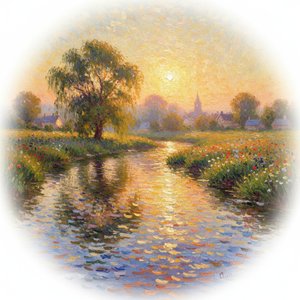
Henry Herbert La Thangue's "Provençal Winter," painted in 1903, isn’t merely a depiction of a rural scene; it’s an immersion into the very soul of the South of France. This oil on canvas transports us to a sun-drenched hillside, where a woman diligently harvests lemons beneath a canopy of roses and ancient trees – a tableau brimming with quiet industry and understated beauty. La Thangue, a key figure in the New English Art Club movement, masterfully captured the essence of Impressionism while firmly rooted in British realist tradition, creating an artwork that resonates with both familiarity and exotic allure.

The painting’s genesis lies within La Thangue's extensive travels throughout Europe. Following his time in Paris, where he honed his skills under Jean-Léon Gérôme, the artist sought to translate the vibrant light and atmosphere of Provence onto canvas. This period marked a significant shift in his style – moving away from purely academic representation towards a more evocative approach that prioritized capturing fleeting moments of natural beauty. “Provençal Winter” exemplifies this evolution; it’s less about precise detail and more about conveying the feeling of warmth, tranquility, and the rhythm of rural life.

Decoding the Palette: Technique and Artistic Choices

La Thangue's technique is characterized by a remarkable sensitivity to light and color. He employs broken brushstrokes – short, distinct marks that blend optically rather than through meticulous layering – creating a shimmering effect reminiscent of sunlight filtering through foliage. The dominant hues are warm earth tones: ochres, siennas, and umbers create the foundation for the landscape, while bursts of pink from the roses and the pale yellows of the lemons inject vibrant energy into the composition. Notice how he uses subtle gradations of color to suggest depth and volume; the distant trees recede into a hazy blue-grey, creating an illusion of atmospheric perspective.

The artist’s choice of medium – oil on canvas – further contributes to the painting's richness and texture. The slow drying time of oil paint allowed La Thangue to build up layers of color gradually, achieving a remarkable sense of luminosity and tactile quality. He skillfully utilizes impasto—thickly applied paint—to accentuate the rough bark of the trees and the textured surface of the lemons, adding a tangible dimension to the scene.

Symbolism and Narrative Resonance

Beyond its aesthetic beauty, “Provençal Winter” is rich in symbolic meaning. The woman harvesting lemons represents not just labor but also abundance, fertility, and the cyclical nature of life. Lemons, traditionally associated with prosperity and vitality, are a potent symbol within this context. The roses, with their delicate fragrance and vibrant color, evoke themes of love, beauty, and fleeting moments of joy. The scene itself suggests a harmonious relationship between humanity and nature – a quiet celebration of the simple pleasures of rural existence.

Furthermore, the painting’s setting—a sun-drenched hillside in Provence—holds historical significance. The region has long been associated with artistic inspiration, attracting painters like Cézanne and Van Gogh who sought to capture its unique light and atmosphere. La Thangue's work reflects this legacy, drawing upon the traditions of plein air painting while forging his own distinctive style.

A Timeless Masterpiece: Reproduction and Legacy

"Provençal Winter" stands as a testament to Henry Herbert La Thangue’s artistic vision and technical skill. OriginalUniqueArt.com offers meticulously crafted, hand-painted oil reproductions that faithfully capture the essence of this iconic artwork. These reproductions are created by skilled artisans using high-quality materials, ensuring that they retain the luminosity, texture, and emotional impact of the original. Whether adorning a living room wall or gracing a corporate office, “Provençal Winter” continues to evoke feelings of serenity, warmth, and timeless beauty—a perfect embodiment of the idyllic charm of Provence.

Questions & Answers

What placement suits the format of "Provençal Winter" by Henry Herbert La Thangue?

The landscape format of "Provençal Winter" by Henry Herbert La Thangue is recommended for a living room. Format and space together guide the placement of a reproduction.

Is "Provençal Winter" typical of what Henry Herbert La Thangue usually created?

Among Henry Herbert La Thangue's recorded themes - landscape focus, british countryside, light & color study, french plein air, impressionist light, rural british scene, rural life values, seasonal beauty - "Provençal Winter" brings its own focus on rural landscape, winter scene, floral composition, lemon still life, british countryside, impressionist colors, peaceful setting.

What is the dominant color of "Provençal Winter" by Henry Herbert La Thangue?

The dominant color of "Provençal Winter" by Henry Herbert La Thangue is clay (#9c7232).

More about this painting

Preview AR preview Switch to Print Switch to Digital Image Send
Details Guide Add to favorites Download Similars X-Ray Diaporama Q&A Stats

In numbers

  • 1903the year it was painted
  • 29frames to choose from
  • standard sizes, in its own proportions
  • 5weeks to paint and deliver it
Henry Herbert La Thangue

Henry Herbert La Thangue

1859 - 1929, United Kingdom

Quick facts about Henry Herbert La Thangue

  • Full Name: Henry Herbert La Thangue
  • Nationality: English
  • Date Of Birth: 1859
  • Date Of Death: 1929
  • Place Of Birth: Croydon, United Kingdom
  • Notable Artworks:
    • The Mulberry Tree
    • Return of the Reapers
    • The Man with the Scythe
  • Artistic Movement Or Style: Realist Landscape & Genre Painting
  • Artists Who Influenced This Artist:
    • Jean-Léon Gérôme
    • Bastien Lepage
    • Dagnan Bouveret
  • Artists Or Movements Influenced By This Artist: ['Newlyn School']

Artist Biography

The Visionary Realism of Henry Herbert La Thangue

Henry Herbert La Thangue stands as a pivotal figure in the tapestry of British realist landscape painting, a master whose brush captured the quiet dignity of the English countryside and the fleeting light of the European continent. Born in Croydon, Surrey, in 1859, his artistic journey began amidst the intellectual ferment of Victorian London. Nurtured by connections to fellow luminaries such as Stanhope Forbes and Frederick Goodall during his time at Dulwich College, La Thangue developed an early, profound appreciation for meticulous observation. This formative period instilled in him a commitment to detail that would become the hallmark of his enduring legacy.

His formal education was marked by rigorous discipline, encompassing both the Lambeth School of Art and the prestigious Royal Academy in London. The year 1879 proved to be a watershed moment when he was awarded a coveted gold medal, an achievement that propelled him toward a transformative scholarship at Jean-Léon Gérôme's atelier in Paris. It was within this French setting that La Thangue encountered the ethos of the Barbizon School. While his instructors occasionally critiqued his inclination toward romanticism, La Thangue successfully synthesized the principles of plein air painting with an unwavering dedication to realism, learning to capture the immediate, atmospheric essence of natural light.

A Journey Through Light and Landscape

La Thangue’s creative spirit was never confined by borders. Between 1881 and 1882, his expeditions to Brittany and the Rhône Valley in Donzère allowed him to immerse himself in the diverse landscapes of France. These travels broadened his artistic horizons, introducing a palette of soft colors and tranquil beauty that would later manifest in works such as "A Provençal Stream." This piece serves as a serene testament to his Impressionist influences, where the movement of water and the warmth of the sun are rendered with a delicate, evocative touch.

Upon returning to England in 1886, La Thangue became an active participant in the shifting tides of the British art establishment. His membership in the Royal Institute of Oil Painters solidified his professional standing, yet he remained a reformer at heart. His involvement in the movement to challenge the traditionalist grip of the Royal Academy eventually contributed to the formation of the New English Art Club (NEAC). Through this new venue, he championed a more democratic approach to art, showcasing works that celebrated the honest, unadorned beauty of rural life and the labor of the working class.

Mastery of the Rural Narrative

The true soul of La Thangue’s oeuvre lies in his ability to transform ordinary agricultural scenes into profound emotional experiences. His later years, particularly his time in South Walsham, Norfolk, saw a deepening of his focus on the rhythms of the land. In masterpieces such as "The Last Furrow" (1895), he captures the poignant beauty of the harvest, utilizing a realist technique that honors the grit and grace of rural existence. His work often employs a rich, impasto texture to lend physical weight to the earth and sky depicted on his canvas.

Perhaps no work encapsulates his ability to blend symbolism with naturalism better than "Nightfall," also known as "The Gleaners." In this poignant 1895 oil painting, La Thangue utilizes warm colors and a sense of encroaching shadow to evoke the solemnity of the harvest season. Through his eyes, the landscape is not merely a setting but a living character, imbued with the history of those who toil upon it. His legacy remains a vital part of the Newlyn School tradition, offering a window into a vanished era of British pastoral life through a lens of exquisite, light-filled realism.

Quick Facts

  • Title: Provençal Winter
  • Artistic style: Impressionism
  • Year: 1903
  • Location: Glasgow Art Gallery
  • Notable elements: Lemon harvest, roses

Art Quiz

There is only one correct answer for each question.

Question 1:
What is the title of the painting?
Question 2:
In what year was 'Provençal Winter' painted?
Question 3:
Which art movement is Henry Herbert La Thangue most closely associated with?
Question 4:
What type of landscape is predominantly depicted in the painting?
Question 5:
The lighting in 'Provençal Winter' is best described as: