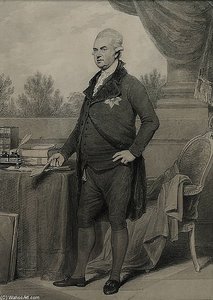
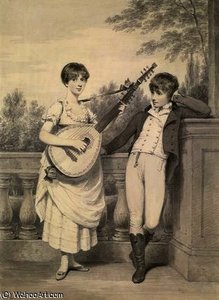
Read More


 For artworks or reproductions larger than 105 cm (approximately 41 inches) on any side, the frame will be shipped as a kit, disassembled. This method ensures safe delivery and prevents damage during transport.


More about this painting
Text size

() ·
A painting made for you, by hand
Hand Made Oil Reproduction
Hand-painted oil on canvas in your size and frame, made to order by our artists. ( Switch to Print Switch to Digital Image)
Artist Biography
Henry Edridge (1768-1821) was a British miniature painter known for detailed, lifelike portraits of prominent figures. Explore his 18th & 19th-century works and historical significance.
from ·
Chapter 1
How large should it be?
Slide to change the size; the picture on the left shows the frame at its real width. The proportions of the original are kept.
Standard
custom
CM
INCH
Pick from our preset sizes that match the artwork's original proportions.
Loading sizes...

width
height
Type the width and the height you need, to fit your frame or your wall. This is hand-painted, so for a size with a different shape the artist can paint a bit more around the picture, or cut a bit — you choose. We send you a digital mockup to approve before the painting starts. The picture shown on this page does not show the real result — only the mockup does.
Chapter 2
How should it arrive?
Choose the edges of the stretched canvas
Choose your frame

White $1

Blurside $1

Extended $1

P118B $10

P118H $10

P118W $10

P438Z $10

P508JH $12

P508YH $12

P805H $10

P805Z $10

P919BZ $10

P919G $10

P919XJ $10

P959ZH $10

P968JZ $12

W106C $8

W218G $10

W218JH $8

W218Y $10

W307PJ $10

W316G $10

W316PJ $8

W316Y $10

W398PJ $8

W4111J $10

W500HY $15

W500JH $15

W692G $12

W849H $8

W940BG $15

W953PJ $8

H24-GOLD $30

H24-SILVER $30

H36-GOLD $45

H36-SILVER $45
Framed
Moulding: . Overall size with the frame: .
Chapter 3
Who paints it, and should anything change?
Examples of what can be changed: Replace face with customer photo; Add pet (e.g., replace cat with dog); Include hidden message in background; Change background landscape or elements.
After order, OriginalUniqueArt.com team will email client for instructions and provide a mockup preview
After order, OriginalUniqueArt.com team will email client for instructions and provide a mockup preview
Worldwide Delivery () in 3/4 weeks instead of standard 5 weeks. (8 November). No compromise on quality.
Chapter 4
The finishing touches
A nameplate, as in a museum?
Engraved Bronze Plaque Details
This elegant plaque features the artist's name and the title of the artwork, finely engraved for a timeless presentation.
It is made from bronze with a refined, elegant finish. The text is precisely laser-engraved for a sharp and permanent result. Measuring 9x2 cm, the plaque is compact yet easy to read. It's built to be durable and scratch-resistant, offering a professional, museum-quality look. Mounting is simple thanks to the included adhesive backing.
Transparent Acrylic Plaque Details
The plaque includes essential engraved details such as the artist's name, the title of the artwork, the date it was created, the type of media used-like oil on canvas or watercolor-a brief description of the piece, and a QR code that links to the complete artwork information.
It is crafted from clear acrylic, offering a sleek, modern appearance. The text is UV-engraved in black to ensure strong visual contrast. With a size of 10x15 cm, it ensures optimal readability. It comes equipped with two metal hooks for secure wall mounting. The plaque is designed to be weather-resistant, making it suitable for various environments, and it includes interactive features that work seamlessly with smartphone scanning.
Black Acrylic Plaque Details
This elegant plaque includes engraved information such as the artist's name, the title of the artwork, the date it was created, the type of media used (like oil on canvas or watercolor), a short description of the artwork, and a QR code for quick access to more information.
The plaque itself is made from refined black acrylic with a premium finish. The text is laser-engraved in white for high contrast and readability. Its size is 10x15 cm, designed to be easy to read. It comes with two metal hooks for professional mounting. The design is sleek and fits any interior style. It is also weather-resistant and durable, with built-in digital integration for mobile compatibility.
A protective varnish?
When do you need it?
Chapter 5
Your painting, as you ordered it
Charles Monro
Reproduction Medium
Reproduction Size
-
Elite Senior Artist
More detail, finesse, and extra production time
-
Reproduction Frame
-
-
For artworks or reproductions larger than 105 cm (approximately 41 inches) on any side, the frame will be shipped as a kit, disassembled. This method ensures safe delivery and prevents damage during transport.
Professional assembly required - this is not a DIY product.
The kit must be assembled and the canvas stretched by an experienced professional framer, using wood glue (not supplied), a canvas stretching plier and clamps to hold the bars square while the glue dries. Incorrect assembly or uneven canvas tension can permanently damage the artwork and is not covered by our warranty.
All solid wood bars are included, precisely cut to size.
Assembled with the screws provided, plus wood glue for the corner joints, which is not supplied and must be sourced by your framer.
Professional tools are required and not included: a canvas stretching plier (tensioner) and clamps to hold the bars square while the glue dries.
Important:
The corner joints require wood glue, the bars must be held with clamps until the glue is fully dry, and tightening the canvas on the assembled frame requires a canvas stretching plier. None of these are included in the kit. Please arrange an experienced professional framer before ordering this size.
Nameplate
-
-
Protective Varnish
Glossy Varnish (enhances colors, protects against light/moisture)
-
Customize My Artwork
Examples of what can be changed: Replace face with customer photo; Add pet (e.g., replace cat with dog); Include hidden message in background; Change background landscape or elements.
-
Urgent
Worldwide Delivery () in 3/4 weeks instead of standard 5 weeks. (8 November). No compromise on quality.
-
Express Shipping
Worldwide Delivery () in 5 weeks. (15 November).
Included
Total Price
$ 300
Glass option is only available in size under 110 CM
Included with every order
- Free Worldwide Express Shipping
- High-Quality Linen Canvas
- Full Shipping Insurance
- Customs Tax Refund Guarantee
- True Color Matching Guarantee
- 100-Day Return Policy (Defects Only)
- 100% Money-Back Guarantee
- Bulk Discount Offer
 Preview
 Send
Send Share
Share
 Details
 Guide
Guide

 Download
 Similars
 X-Ray
X-Ray Diaporama
 Q&A
Q&A Stats
StatsIn numbers
- 29frames to choose from
- standard sizes, in its own proportions
- 5weeks to paint and deliver it
About the original

Henry Edridge
1768 - 1821, United Kingdom
Quick facts about Henry Edridge
- Full Name: Henry Edridge
- Nationality: British
- Date Of Birth: 1768
- Date Of Death: 1821
- Place Of Birth: Paddington, United Kingdom
- Notable Artworks: ['Portrait Of An Academic']
- Artistic Movement Or Style: Miniature Painting
Artist Biography
The Intimate Legacy of Henry Edridge
In the grand tapestry of British art history, certain names shine with a blinding brilliance, while others exist in the soft, delicate light of a well-preserved miniature. Henry Edridge (1768–1821) belongs to that second, more intimate category—a master whose work does not demand space through sheer scale, but rather commands attention through an unparalleled ability to capture the human soul within a tiny frame. Born in the bustling London district of Paddington, Edridge’s journey was one of profound technical evolution, moving from the disciplined world of engraving to the ethereal realms of watercolor and ivory portraiture.
His early years were defined by rigorous apprenticeship, a period that instilled in him a foundational mastery of line and shadow. While historical records suggest he began his training under the influence of masters like William Pether, it was his transition from the heavy, textured world of mezzotint to the delicate surface of ivory that would ultimately define his legacy. This shift was famously catalyzed by an encounter with the legendary Sir Joshua Reynolds, who was so captivated by one of Edridge’s miniatures that he purchased it handsomely. Such an endorsement from the titan of British portraiture served as a transformative signal, prompting Edridge to pivot away from the mechanical precision of engraving toward the expressive freedom of painting.
A Mastery of Medium and Emotion
Edridge’s technical repertoire was remarkably diverse, reflecting a restless artistic spirit that refused to be confined to a single method. His early portraits on ivory are celebrated for their luminous quality, where the translucency of the medium allowed for a lifelike vitality in skin tones. As his career progressed, he experimented with black lead and India ink on paper, often surrounding his subjects with ornate, meticulously detailed backgrounds that added a sense of theatrical grandeur to even the smallest compositions. Eventually, he achieved a sublime synthesis in his later watercolors, where he combined the profound depth and richness typically reserved for oil paintings with the airy, effortless grace of water-based pigments.
This evolution allowed him to capture a vast spectrum of human experience. His subjects were not merely faces, but stories held in suspension. Through his brush, one can encounter:
- The Aristocracy and Political Elite: Capturing the dignified presence of figures such as Lord Nelson and Prime Minister William Pitt the Younger.
- The Intellectual and Clerical Class: Rendering the scholarly authority of academics and the spiritual gravity of missionaries like Thomas Coke.
- The Intimate and Everyday: Finding profound beauty in the delicate features of young women or the contemplative gaze of military officers.
Recognition and Historical Resonance
The pinnacle of Edridge’s professional recognition arrived in 1803, when he was elected an Associate Member of the Royal Academy. This prestigious appointment solidified his standing within the London art establishment, granting him access to a sophisticated circle of patrons who sought his ability to convey character and psychological depth. His studio, which moved through the fashionable streets of Golden Square and Cavendish Square, became a hub for those desiring portraits that functioned as both personal keepsakes and profound psychological studies.
Though he passed away in 1821, leaving behind a body of work that remains a testament to the era's fascination with intimacy and detail, Edridge’s significance endures. He was an artist who understood that greatness is not measured by the breadth of a canvas, but by the depth of the gaze captured upon it. In an age of grand narratives, Henry Edridge mastered the art of the whisper, ensuring that the quietest expressions would resonate through the centuries.
Related Articles

25 Masterpieces by William H. Johnson: The Soul of the Harlem Renaissance
Immerse yourself in the vibrant soul of the Harlem Renaissance. Explore 25 iconic masterpieces by William H. Johnson, from bold expressionism to soulful folk art. Find inspiration for museum-quality decor and fine art reproductions. Discover all masterpieces on OriginalUniqueArt.com.
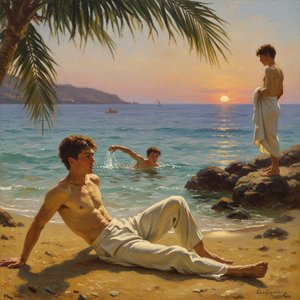
Henry Scott Tuke: Sunlit Masculinity & the Pastoral Ideal in Victorian Painting
Explore the captivating world of Henry Scott Tuke's paintings – a master of British Impressionism renowned for his intimate depictions of youth and sunlit maritime scenes. Discover his legacy & aesthetic influence.
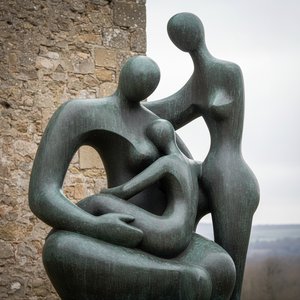
Henry Moore: Sculpting Modernity – Form, Emotion & the Human Condition
Explore the revolutionary sculptures of Henry Moore – abstract forms, reclining figures & powerful expressions of the human condition. Discover his legacy & artistic process with OriginalUniqueArt.

William Hogarth: Satire, Social Commentary & the Birth of Modern British Art
Explore the satirical world of William Hogarth, pioneering British painter & engraver. Discover his iconic works like *A Rake's Progress* and insightful social commentary on 18th-century London life.
Explore artworks organized by themes, styles, and characteristics.