Preview
 Send
Send Share
Share
 Details
 Guide
Guide

 Download
 Similars
 X-Ray
X-Ray Diaporama
 Stats
StatsWinter Scene


 Read More
Giclée / Art Print
Museum-quality giclée or canvas print with fast production and flexible finish options. ( Buy Hand Made Painting Switch to Digital Image)




P118B $10

P118H $10

P118W $10

P438Z $10

P508JH $12

P508YH $12

P805H $10

P805Z $10

P919BZ $10

P919G $10

P919XJ $10

P959ZH $10

P968JZ $12

W106C $8

W218G $10

W218JH $8

W218Y $10

W307PJ $10

W316G $10

W316PJ $8

W316Y $10

W398PJ $8

W4111J $10

W500HY $15

W500JH $15

W692G $12

W849H $8

W940BG $15

W953PJ $8




Pick from our preset sizes that match the artwork's original proportions.

Type the width and the height you need, to fit your frame or your wall. A print can only be cut, never made bigger than the picture, so a size with a different shape loses a part of the image. We send you a digital mockup to approve before we print anything. The picture shown on this page does not show the real cut — only the mockup does.
Worldwide Delivery () in 2 weeks instead of standard 4/5 weeks. (21 October)

Free Worldwide Express Shipping

High-Quality Linen Canvas

Full Shipping Insurance

Customs Tax Refund Guarantee

True Color Matching Guarantee

100-Day Return Policy (Defects Only)

100% Money-Back Guarantee

Bulk Discount Offer
 Glass option is only available in size under 110 CM

Winter Scene
Giclée / Art Print
Reproduction Size
-


Total Price
$ 81
A Frozen Moment in Time
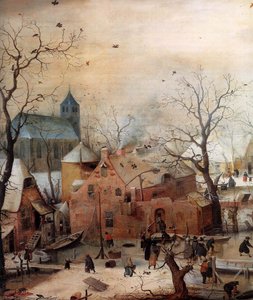
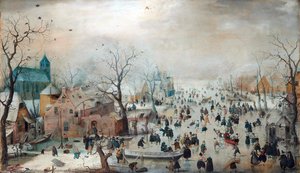
In the heart of the Dutch Golden Age, few artists could capture the biting chill and communal warmth of a frozen landscape as masterfully as Hendrick Avercamp. His Winter Scene, dating from 1609, serves as a breathtaking window into a bygone era, inviting the viewer to step onto the crystalline surfaces of a seventeenth-century Netherlands. The painting is not merely a depiction of weather, but a vibrant tapestry of human existence. As one gazes upon the canvas, the eye is immediately drawn to the rhythmic movement of figures scattered across the ice—some gliding with grace, others trudging through the snow in heavy, frost-dusted coats. There is a profound sense of life persisting amidst the elements; even as the world turns white and silent under a winter shroud, the pulse of society remains undiminished.
The composition is a marvel of narrative depth, where every corner of the frame offers a new discovery for the observant eye. Beyond the central figures, Avercamp weaves in subtle details that ground the scene in a tangible reality: a solitary boat resting near the frozen edge, a horse standing stoically to the right, and even a lone bird caught in flight above the crowd. These elements create a sense of layered storytelling, suggesting that this frozen expanse is a stage where countless small dramas unfold simultaneously. For the collector or interior designer, this piece offers more than just a visual focal point; it provides a sense of nostalgic tranquility and a sophisticated connection to the rich heritage of Northern European landscape painting.
Mastery of Light and Atmosphere
Technically, Avercamp’s work is a testament to his unparalleled ability to manipulate light and texture. The artist employs a delicate, almost ethereal technique to render the translucent quality of the ice and the soft, powdery weight of the snow. Through subtle gradations of cool blues, muted greys, and brilliant whites, he achieves an atmospheric perspective that gives the painting immense depth. One can almost feel the crispness of the air and hear the muffled sounds of skates cutting through the frozen surface. This mastery of light does not just illuminate the scene; it imbues it with a specific emotional temperature, balancing the physical cold of the setting with the psychological warmth of human companionship.
The stylistic brilliance of this work lies in its ability to blend panoramic scale with intimate detail. While the overall vista captures the vastness of the Dutch winter, the precision of the smaller figures—the tilt of a hat, the posture of a traveler, the way a coat hangs against the wind—creates an intimacy that draws the viewer into the painting's very soul. This duality makes the Winter Scene an exceptional choice for high-quality reproductions intended for elegant spaces. Whether placed in a sunlit gallery or a cozy, classically styled study, the artwork acts as a conversational centerpiece, evoking a sense of timelessness and a profound appreciation for the quiet beauty found in the most challenging seasons of life.
Questions & Answers
Where in Hendrick Avercamp's career does "Winter Scene" fall, given its date?
The 1609 date places "Winter Scene" in the Early Period of Hendrick Avercamp's development.
What medium is "Winter Scene" by Hendrick Avercamp executed in?
The medium of "Winter Scene" by Hendrick Avercamp is oil. Reproductions aim to render the appearance of this technique.
How does "Winter Scene" by Hendrick Avercamp connect Dutch Golden Age to the artist's home country?
"Winter Scene" connects the Dutch Golden Age movement with Netherlands through its creator's birthplace.
Artist Biography
A Pioneer of Dutch Winter: The Life and Art of Hendrick Avercamp
Hendrick Avercamp, a name synonymous with the shimmering, frozen landscapes of the Dutch Golden Age, was born in Amsterdam on January 27, 1585. His life story is as intriguing as his art—a tale marked by both artistic innovation and personal circumstance. From an early age, it became apparent that Avercamp lived within a world experienced differently than most; he was mute, and likely deaf, earning him the affectionate yet defining moniker “de Stomme van Kampen” – the Mute of Kampen. This perceived limitation, however, did not stifle his artistic voice but perhaps sharpened his observational skills, allowing him to translate the nuances of the Dutch winter onto canvas with unparalleled clarity and charm. He initially studied in Amsterdam under Pieter Isaacsz, a portrait painter, and possibly also received guidance from David Vinckboons, whose influence can be seen in Avercamp’s early works. In 1608, he relocated to Kampen, where he would spend the majority of his life and establish himself as a unique and celebrated artist.Capturing a Frozen World: Artistic Style and Innovation
Avercamp stands out as one of the first dedicated landscape painters in 17th-century Holland, a period traditionally dominated by portraiture, history painting, and still life. He carved his niche by specializing in winter scenes—a subject rarely explored with such consistent focus before him. His paintings aren’t merely depictions of cold weather; they are vibrant snapshots of Dutch life unfolding on the ice. Figures skate, sled, play *kolf* (a form of golf played on ice), and simply enjoy the frozen waterways, creating a lively tapestry of human activity against the stark beauty of the winter landscape. Avercamp's skill lies in his ability to convey both the chill of the season and the warmth of communal enjoyment. He masterfully employed aerial perspective, subtly shifting colors and details to create a convincing sense of depth, drawing the viewer into these icy worlds. His technique often involved applying watercolor washes over pen and ink drawings, creating delicate and luminous effects. These smaller works were frequently sold as finished pieces intended for inclusion in collectors’ albums—a testament to their intimate scale and appeal.Influences and Development: From Bruegel to Dutch Realism
While Avercamp forged his own distinctive style, he wasn't working in a vacuum. The influence of Flemish masters like Pieter Bruegel the Elder is evident in his early compositions—the bustling scenes filled with numerous figures engaged in everyday activities. However, Avercamp moved beyond mere imitation, developing a uniquely Dutch sensibility characterized by meticulous detail and a keen observation of light and atmosphere. He embraced the growing trend towards realism within Dutch painting, accurately portraying the clothing, tools, and customs of his time. His work also reflects the climatic conditions of the Little Ice Age, a period of unusually cold winters in Europe, which undoubtedly fueled his fascination with frozen landscapes. Unlike some contemporaries who might idealize their subjects, Avercamp presented a realistic—and often humorous—view of life, including playful details that hint at human foibles and everyday occurrences.Legacy and Historical Significance
Hendrick Avercamp’s impact on Dutch painting is considerable. He not only popularized the winter landscape as a legitimate subject for artistic exploration but also helped to define a distinctly Dutch approach to landscape painting—one that emphasized realism, atmospheric effects, and the depiction of everyday life. His work provided inspiration for later generations of artists and continues to captivate audiences today. Notable collections showcasing his artistry include the Rijksmuseum in Amsterdam, which holds a significant number of his paintings, and the Mauritshuis in The Hague. Avercamp’s legacy extends beyond his artistic achievements; he represents a triumph over adversity, demonstrating that creative expression can flourish even in the face of personal challenges. He died in Kampen on May 15, 1634, leaving behind a body of work that continues to offer a window into the vibrant and often-overlooked world of 17th-century Holland—a world frozen in time, yet brimming with life.Notable Works
- Winter Landscape with Skaters: Perhaps his most iconic work, this painting exemplifies Avercamp’s mastery of capturing the energy and atmosphere of a Dutch winter scene.
- Street in Delfi: A rare example of Avercamp venturing beyond landscapes, showcasing his skill in depicting town life.
- Enjoying the Ice near a Town: Demonstrates his ability to create dynamic compositions filled with numerous figures engaged in various activities.

Hendrick Avercamp
1585 - 1634 , Netherlands
Quick Facts
- Full Name: Hendrick Avercamp
- Nationality: Dutch
- Date Of Birth: 1585
- Date Of Death: 1634
- Place Of Birth: Amsterdam, Netherlands
- Notable Artworks:
- Winter Landscape with Skaters
- Street in Delfi
- Artistic Movement Or Style: Dutch Golden Age painting
- Artists Who Influenced This Artist:
- Pieter Isaacsz
- David Vinckboons
Related Articles

Golden Light & Dutch Skies: The Timeless Magic of Dutch Golden Age Landscapes
Discover the breathtaking beauty of Dutch Golden Age landscapes. Explore the mastery of light, chiaroscuro, and 17th-century realism through an expert art history lens, celebrating the enduring legacy of the Dutch Masters for discerning collectors and art lovers.

Jan van Goyen: Master of Dutch Landscape & Atmospheric Perspective
Discover Jan van Goyen, the master of Dutch landscape painting. Explore his subtle technique, atmospheric realism & lasting influence on art history. Learn about this 17th-century pioneer at OriginalUniqueArt.
Charles Leickert: Capturing the Dutch Golden Age Light – A Comprehensive Study of Technique, Context, and Legacy
Explore the captivating winter landscapes of Charles Leickert, a master of Dutch Golden Age light & atmosphere. Discover his techniques, symbolism, and lasting legacy – a comprehensive study for art enthusiasts and collectors.
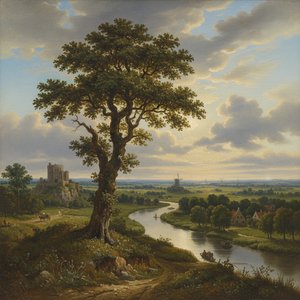
Jacob van Ruisdael: Master of Dutch Landscape & the Evocation of National Identity
Explore the life & work of Jacob van Ruisdael, the preeminent Dutch landscape painter. Discover his technical brilliance, symbolic depth, and lasting influence on art history. Learn about collecting Ruisdael's masterpieces.

Golden Light & Dutch Skies: Bringing the Magic of Dutch Golden Age Landscapes into Your Home
Transform your home with the breathtaking light of Dutch Golden Age landscapes. Discover how hand-painted oil reproductions of masterworks like Ruisdael and Vermeer bring timeless elegance, atmosphere, and soulful texture to modern interiors. Elevate your space with museum-quality art.