Text size

() ·

A painting made for you, by hand

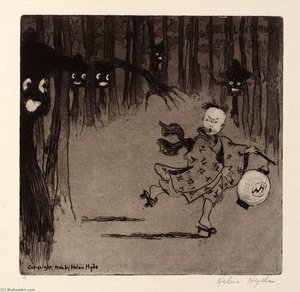
The Furious Dragon

Hand Made Oil Reproduction

Hand-painted oil on canvas in your size and frame, made to order by our artists. ( Switch to Print Switch to Digital Image)

Collectible Description

Helen Hyde’s "The Furious Dragon" (1914) captures a vibrant fusion of Japonism and Impressionism featuring children embracing a furious dragon; this dynamic artwork reflects the artist's innovative style and cultural exploration, perfect for art lovers.

Artist Biography

Explore Helen Hyde (1868-1919), an American etcher & printmaker celebrated for her evocative depictions of Japanese life, women & children. Discover her legacy!

from ·

Chapter 1

How large should it be?

Slide to change the size; the picture on the left shows the frame at its real width. The proportions of the original are kept.

Standard
custom
CM
INCH

Pick from our preset sizes that match the artwork's original proportions.

width
height

Type the width and the height you need, to fit your frame or your wall. This is hand-painted, so for a size with a different shape the artist can paint a bit more around the picture, or cut a bit — you choose. We send you a digital mockup to approve before the painting starts. The picture shown on this page does not show the real result — only the mockup does.

Chapter 2

How should it arrive?

Choose the edges of the stretched canvas

Choose your frame

Corner sample of the WhiteWrap canvas edge finish, stretched on solid wood bars
White $1
Corner sample of the BlurSideWrap canvas edge finish, stretched on solid wood bars
Blurside $1
Corner sample of the ExtendedWrap canvas edge finish, stretched on solid wood bars
Extended $1
Corner sample of the P118B picture frame: moulded polystyrene, 5 cm wide and 3 cm thick
P118B $10
Corner sample of the P118H picture frame: moulded polystyrene, 5 cm wide and 3 cm thick
P118H $10
Corner sample of the P118W picture frame: moulded polystyrene, 5 cm wide and 3 cm thick
P118W $10
Corner sample of the P438Z picture frame: moulded polystyrene, 5.5 cm wide and 3.5 cm thick
P438Z $10
Corner sample of the P508JH picture frame: moulded polystyrene, 7 cm wide and 3.5 cm thick
P508JH $12
Corner sample of the P508YH picture frame: moulded polystyrene, 7 cm wide and 3.5 cm thick
P508YH $12
Corner sample of the P805H picture frame: moulded polystyrene, 5 cm wide and 3.5 cm thick
P805H $10
Corner sample of the P805Z picture frame: moulded polystyrene, 5 cm wide and 3.5 cm thick
P805Z $10
Corner sample of the P919BZ picture frame: moulded polystyrene, 7 cm wide and 3.5 cm thick
P919BZ $10
Corner sample of the P919G picture frame: moulded polystyrene, 7 cm wide and 3.5 cm thick
P919G $10
Corner sample of the P919XJ picture frame: moulded polystyrene, 7 cm wide and 3.5 cm thick
P919XJ $10
Corner sample of the P959ZH picture frame: moulded polystyrene, 5 cm wide and 3 cm thick
P959ZH $10
Corner sample of the P968JZ picture frame: moulded polystyrene, 6 cm wide and 4 cm thick
P968JZ $12
Corner sample of the W106C picture frame: solid wood, 5 cm wide and 3 cm thick
W106C $8
Corner sample of the W218G picture frame: solid wood, 5 cm wide and 3 cm thick
W218G $10
Corner sample of the W218JH picture frame: solid wood, 5 cm wide and 3 cm thick
W218JH $8
Corner sample of the W218Y picture frame: solid wood, 5 cm wide and 3 cm thick
W218Y $10
Corner sample of the W307PJ picture frame: solid wood, 6 cm wide and 3 cm thick
W307PJ $10
Corner sample of the W316G picture frame: solid wood, 6 cm wide and 3 cm thick
W316G $10
Corner sample of the W316PJ picture frame: solid wood, 6 cm wide and 3 cm thick
W316PJ $8
Corner sample of the W316Y picture frame: solid wood, 6 cm wide and 3 cm thick
W316Y $10
Corner sample of the W398PJ picture frame: solid wood, 5 cm wide and 3 cm thick
W398PJ $8
Corner sample of the W4111J picture frame: solid wood, 6.5 cm wide and 3.5 cm thick
W4111J $10
Corner sample of the W500HY picture frame: solid wood, 7 cm wide and 5 cm thick
W500HY $15
Corner sample of the W500JH picture frame: solid wood, 7 cm wide and 5 cm thick
W500JH $15
Corner sample of the W692G picture frame: solid wood, 8 cm wide and 4 cm thick
W692G $12
Corner sample of the W849H picture frame: solid wood, 5 cm wide and 3 cm thick
W849H $8
Corner sample of the W940BG picture frame: solid wood, 7.5 cm wide and 4.5 cm thick
W940BG $15
Corner sample of the W953PJ picture frame: solid wood, 6 cm wide and 3.5 cm thick
W953PJ $8
Corner sample of the H24-GOLD picture frame: carved wood with gesso, 10 cm wide and 6 cm thick
H24-GOLD $30
Corner sample of the H24-SILVER picture frame: carved wood with gesso, 10 cm wide and 6 cm thick
H24-SILVER $30
Corner sample of the H36-GOLD picture frame: carved wood with gesso, 15 cm wide and 6.5 cm thick
H36-GOLD $45
Corner sample of the H36-SILVER picture frame: carved wood with gesso, 15 cm wide and 6.5 cm thick
H36-SILVER $45
Frame preview
Framed

Moulding: . Overall size with the frame: .

Chapter 3

Who paints it, and should anything change?

Examples of what can be changed: Replace face with customer photo; Add pet (e.g., replace cat with dog); Include hidden message in background; Change background landscape or elements.
After order, OriginalUniqueArt.com team will email client for instructions and provide a mockup preview

Worldwide Delivery () in 3/4 weeks instead of standard 5 weeks. (2 November). No compromise on quality.

Chapter 4

The finishing touches

A nameplate, as in a museum?

Engraved Bronze Plaque Details

This elegant plaque features the artist's name and the title of the artwork, finely engraved for a timeless presentation.

It is made from bronze with a refined, elegant finish. The text is precisely laser-engraved for a sharp and permanent result. Measuring 9x2 cm, the plaque is compact yet easy to read. It's built to be durable and scratch-resistant, offering a professional, museum-quality look. Mounting is simple thanks to the included adhesive backing.

Transparent Acrylic Plaque Details

The plaque includes essential engraved details such as the artist's name, the title of the artwork, the date it was created, the type of media used-like oil on canvas or watercolor-a brief description of the piece, and a QR code that links to the complete artwork information.

It is crafted from clear acrylic, offering a sleek, modern appearance. The text is UV-engraved in black to ensure strong visual contrast. With a size of 10x15 cm, it ensures optimal readability. It comes equipped with two metal hooks for secure wall mounting. The plaque is designed to be weather-resistant, making it suitable for various environments, and it includes interactive features that work seamlessly with smartphone scanning.

Black Acrylic Plaque Details

This elegant plaque includes engraved information such as the artist's name, the title of the artwork, the date it was created, the type of media used (like oil on canvas or watercolor), a short description of the artwork, and a QR code for quick access to more information.

The plaque itself is made from refined black acrylic with a premium finish. The text is laser-engraved in white for high contrast and readability. Its size is 10x15 cm, designed to be easy to read. It comes with two metal hooks for professional mounting. The design is sleek and fits any interior style. It is also weather-resistant and durable, with built-in digital integration for mobile compatibility.

A protective varnish?

When do you need it?

Chapter 5

Your painting, as you ordered it

The Furious Dragon

Reproduction Medium

Reproduction Size

-

Elite Senior Artist

More detail, finesse, and extra production time

-

Reproduction Frame

-

-

For artworks or reproductions larger than 105 cm (approximately 41 inches) on any side, the frame will be shipped as a kit, disassembled. This method ensures safe delivery and prevents damage during transport.

Professional assembly required - this is not a DIY product.
The kit must be assembled and the canvas stretched by an experienced professional framer, using wood glue (not supplied), a canvas stretching plier and clamps to hold the bars square while the glue dries. Incorrect assembly or uneven canvas tension can permanently damage the artwork and is not covered by our warranty.

  • All solid wood bars are included, precisely cut to size.

  • Assembled with the screws provided, plus wood glue for the corner joints, which is not supplied and must be sourced by your framer.

  • Professional tools are required and not included: a canvas stretching plier (tensioner) and clamps to hold the bars square while the glue dries.

Important:
The corner joints require wood glue, the bars must be held with clamps until the glue is fully dry, and tightening the canvas on the assembled frame requires a canvas stretching plier. None of these are included in the kit. Please arrange an experienced professional framer before ordering this size.

Nameplate

-

-

Protective Varnish

Glossy Varnish (enhances colors, protects against light/moisture)

-

Customize My Artwork

Examples of what can be changed: Replace face with customer photo; Add pet (e.g., replace cat with dog); Include hidden message in background; Change background landscape or elements.

-

Urgent

Worldwide Delivery () in 3/4 weeks instead of standard 5 weeks. (2 November). No compromise on quality.

-

Express Shipping

Worldwide Delivery () in 5 weeks. (9 November).

Included

Total Price

$ 300

Total Price $ 300

Glass option is only available in size under 110 CM

Included with every order

  • Free Worldwide Express Shipping
  • High-Quality Linen Canvas
  • Full Shipping Insurance
  • Customs Tax Refund Guarantee
  • True Color Matching Guarantee
  • 100-Day Return Policy (Defects Only)
  • 100% Money-Back Guarantee
  • Bulk Discount Offer

A Child’s Embrace of Mythical Fury: Helen Hyde's “The Furious Dragon”

Helen Hyde’s “The Furious Dragon,” painted in 1914, is more than just a charming depiction of children interacting with a dragon; it’s a masterful synthesis of Japonism and Western Impressionistic sensibilities that speaks to themes of courage, imagination, and the transformative power of cultural exchange. Created during a period marked by burgeoning interest in Eastern art forms within American artistic circles, this artwork exemplifies Hyde's dedication to exploring innovative visual languages.

The Style and Technique: Japonisme Influenced Impressionism

Hyde’s stylistic choices reveal a profound influence from Japonism—the Japanese aesthetic movement that captivated European artists at the turn of the century. Specifically, she adopted techniques reminiscent of *ukiyo-e*, traditional woodblock prints characterized by bold outlines, flattened perspective, and vibrant color palettes. However, Hyde skillfully blended these elements with Impressionistic brushstrokes, capturing fleeting moments of light and atmosphere—a hallmark of Parisian art academies during her formative years. The resulting image possesses a dynamic energy that transcends simple representation, prioritizing emotional resonance over photographic accuracy. Notice the loose, textured paint application, particularly around the dragon’s scales and the children's clothing, which contributes to the artwork’s overall sense of immediacy.

Historical Context: San Francisco Chinatown and Artistic Exploration

“The Furious Dragon” emerged from Hyde’s engagement with San Francisco’s Chinatown—a vibrant microcosm of immigrant culture and artistic experimentation. Following her groundbreaking journey to Japan in 1899, where she studied under Kano Tomonobu and Emil Carlsen, Hyde returned to California determined to translate the lessons learned abroad into her own distinctive visual vocabulary. The painting captures a scene brimming with youthful exuberance—a testament to Hyde’s belief that art could foster empathy and understanding across cultural boundaries. It reflects the broader artistic currents of the era, demonstrating how European artists were grappling with new aesthetic ideas originating from distant lands.

Symbolism: Courage, Imagination, and Harmony

Beyond its stylistic brilliance, “The Furious Dragon” is laden with symbolic significance. The dragon itself represents power, nobility, and auspiciousness—concepts deeply rooted in Chinese mythology. Yet, it’s juxtaposed with two children who embody innocence and vulnerability. Their embrace of the dragon symbolizes courage—the willingness to confront fear and embrace the unknown—and underscores the importance of imagination as a catalyst for creativity and personal growth. The harmonious blend of colors—primarily reds and yellows—further reinforces this symbolic message, mirroring the balance between opposing forces that characterizes Eastern philosophy.

Emotional Impact: A Celebration of Wonder

Ultimately, “The Furious Dragon” succeeds in conveying a profound emotional impact. It evokes feelings of wonder, delight, and playful curiosity—capturing the spirit of childhood at its most imaginative. Hyde’s masterful execution invites viewers to contemplate not only the beauty of the artwork itself but also the broader values it champions: bravery, creativity, and an openness to experiencing new cultures. This piece remains a captivating reminder that art can illuminate the human condition and inspire us to embrace the transformative potential of encountering perspectives beyond our own.

Questions & Answers

How can "The Furious Dragon" by Helen Hyde be used in home decor?

"The Furious Dragon" is suggested for accent, and the recommended space is a living room.

How is "The Furious Dragon" by Helen Hyde proportioned, and how big is it?

"The Furious Dragon" by Helen Hyde is a square composition measuring 18 x 13 cm in the original.

How is the color composition of "The Furious Dragon" by Helen Hyde built?

The color analysis of "The Furious Dragon" by Helen Hyde records a statement contrast and a unified palette harmony.

More about this painting

Preview AR preview Switch to Print Switch to Digital Image Send
Details Guide Add to favorites Download Similars X-Ray Diaporama Q&A Stats

In numbers

  • 1914the year it was painted
  • 29frames to choose from
  • standard sizes, in its own proportions
  • 5weeks to paint and deliver it
Helen Hyde

Helen Hyde

1868 - 1919, United States of America

Quick facts about Helen Hyde

  • Full Name: Helen Hyde
  • Nationality: American
  • Date Of Birth: 1868
  • Date Of Death: 1919
  • Place Of Birth: Lima, United States of America
  • Notable Artworks:
    • A Monarch of Japan
    • Baby Talk
    • Sausalito
    • Footbridge
    • Her Bit
  • Artistic Movement Or Style: Color etching, Woodblock prints
  • Artists Who Influenced This Artist:
    • Franz Skarbina
    • Raphael Collin
    • Félix Régamey
    • Emil Carlsen
    • Kano Tomonobu

Artist Biography

Early Life and Education

  • Born: Lima, New York (April 6, 1868)
  • Died: Pasadena, California (May 13, 1919)
  • Helen Hyde's artistic journey began early. She received initial instruction from Ferdinand Richardt at the age of twelve.
  • Her family moved to San Francisco, where she continued her education at the California School of Design.
  • Further studies took her to Europe, including Berlin and Paris, where she studied with Franz Skarbina, Raphael Collin, and Félix Régamey.
  • Régamey's extensive Japanese art collection significantly influenced Hyde’s artistic direction, introducing her to Japonism.

Artistic Development and Influences

  • Upon returning to California, Hyde experimented with color etching and began depicting scenes of San Francisco's Chinatown.
  • A pivotal moment was her 1899 journey to Japan, where she immersed herself in Japanese culture and artistic techniques.
  • She studied traditional ink painting with Kano Tomonobu and learned woodblock printing from Emil Carlsen.
  • Key Influences: Japonism, Mary Cassatt's prints, and the traditional Japanese art forms she encountered during her time in Japan.
  • Her style blended Western artistic training with Japanese aesthetics, creating a unique visual language.

Major Works and Techniques

  • Notable Works: "A Monarch of Japan" (1901), "Baby Talk" (1909), "Sausalito," "Footbridge," and "Her Bit."
  • Techniques: Hyde was primarily known for her color etching and woodblock prints. She employed a divided labor system in Japan, utilizing Japanese carvers and printers.
  • “A Monarch of Japan” earned first place at the Nihon Kaiga Kyokai exhibition in 1901.
  • "Baby Talk" received a gold medal at the Alaska–Yukon–Pacific Exposition in 1909.
  • Her prints often depicted Japanese women and children, reflecting her fascination with their daily lives and cultural traditions.

Achievements and Recognition

  • Exhibitions: Hyde’s work was exhibited widely both nationally and internationally.
  • Awards: She received numerous awards for her prints, including medals at the Alaska–Yukon–Pacific Exposition and the Panama-Pacific International Exposition.
  • Collections: Her works are held in prestigious collections such as the Brooklyn Museum, the Art Institute of Chicago, the Library of Congress, and the Smithsonian American Art Museum.
  • Membership: She was a member of several art societies, including the Chicago Society of Etchers and the Printmakers Society of California.

Historical Significance

  • Helen Hyde played a significant role in bridging Western and Japanese artistic traditions.
  • Her innovative use of color etching and woodblock printing techniques contributed to the development of American printmaking.
  • She is recognized as one of the foremost American artists working within the Japonism movement.
  • Hyde's depictions of Japanese life offer valuable insights into a period of cultural exchange and artistic innovation.
  • Her legacy continues to inspire contemporary artists and collectors alike, with her works remaining highly sought after.

Quick Facts

  • Medium: Color etching
  • Notable elements or techniques: Japonism influence; Woodblock printing
  • Artist: Helen Hyde
  • Artistic style: Symbolic
  • Subject or theme: Mythical Creatures; Childhood Interaction

Art Quiz

There is only one correct answer for each question.

Question 1:
What artistic movement significantly influenced Helen Hyde’s work and introduced her to Japonism?
Question 2:
In what year was Helen Hyde born?
Question 3:
Where did Helen Hyde study art during her European travels?
Question 4:
What technique did Helen Hyde primarily use to depict scenes of San Francisco’s Chinatown?
Question 5:
Helen Hyde collaborated with Emil Carlsen on what artistic endeavor?