Send
Send Share
Share
 Details
 Guide
Guide

 Download
 Similars
 Diaporama
 Q&A
Q&A Stats
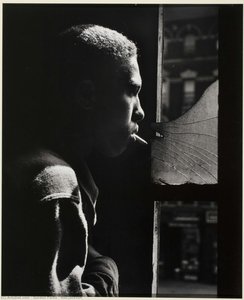
StatsUntitled, Harlem, New York


 Read More
The artwork displayed on this page is protected by copyright law, which means we cannot legally create or sell an identical reproduction. This protection is enforced under international agreements such as the Berne Convention and by national laws, including those outlined by the U.S. Copyright Law - Title 17.
This method fully complies with copyright regulations because it does not involve copying or duplicating the protected artwork. Instead, it is a creative reinterpretation - a new painting that is influenced by the original but not identical to it.
Giclée / Art Print
Museum-quality giclée or canvas print with fast production and flexible finish options. ( Buy Hand Made Painting Switch to Digital Image)




































Pick from our preset sizes that match the artwork's original proportions.

Type the width and the height you need, to fit your frame or your wall. A print can only be cut, never made bigger than the picture, so a size with a different shape loses a part of the image. We send you a digital mockup to approve before we print anything. The picture shown on this page does not show the real cut — only the mockup does.
Worldwide Delivery () in 2 weeks instead of standard 4/5 weeks. (30 October)

Free Worldwide Express Shipping

High-Quality Linen Canvas

Full Shipping Insurance

Customs Tax Refund Guarantee

True Color Matching Guarantee

100-Day Return Policy (Defects Only)

100% Money-Back Guarantee

Bulk Discount Offer
 Glass option is only available in size under 110 CM

Untitled, Harlem, New York
Giclée / Art Print
Reproduction Size
-


Total Price
$ 81
A Moment Frozen in Shadow: Gordon Parks’ “Untitled, Harlem, New York”
Gordon Parks' "Untitled, Harlem, New York," captured in 1948, isn’t merely a photograph; it’s a distilled essence of urban tension and the quiet desperation simmering beneath the surface of mid-20th century America. This gelatin silver print, measuring a modest 11 x 11 cm, punches far beyond its size, delivering a visceral experience that speaks volumes about race, poverty, and the precariousness of daily life in Harlem. The image immediately commands attention with its stark contrasts – an almost brutal interplay of light and shadow that sculpts figures into arresting silhouettes against a crumbling brick wall. It’s a scene ripped from the streets, raw and unvarnished, offering a rare glimpse into a world often obscured by societal narratives.
Composition and Technique: A Masterclass in Documentary Realism
Parks' compositional choices are deliberate and powerfully effective. The photograph is dominated by a man gripping a baseball bat, his arm raised in a gesture that simultaneously suggests threat and vulnerability. This central figure anchors the scene, drawing the viewer’s eye while the surrounding figures – a group of men huddled nearby – contribute to a palpable sense of unease. The diagonal lines created by the bat and the man's posture are expertly utilized to create dynamism and movement within the static frame. The photographer’s slightly angled perspective adds an element of immediacy, as if we’ve stumbled upon this confrontation unexpectedly. Parks masterfully employs the techniques of documentary photography, prioritizing realism over idealized representation. The grainy texture, a hallmark of gelatin silver prints from that era, lends authenticity to the scene, grounding it in the tangible reality of Harlem life.
Historical Context and the Shadow of Segregation
To fully appreciate “Untitled, Harlem, New York,” one must understand its historical context. Captured during a period of intense racial segregation and economic hardship, the photograph reflects the realities faced by African Americans in urban America. Parks’ work was initially commissioned for Life magazine as part of a federal government project documenting poverty and social issues. This assignment thrust him into the heart of Harlem's struggles, forcing him to confront the systemic inequalities that shaped the lives of its residents. The dilapidated building in the background serves as a potent symbol of neglect and decay – a visual representation of the challenges faced by communities marginalized by societal structures. Parks’ ability to capture this atmosphere of hardship speaks volumes about his commitment to portraying the truth, however uncomfortable it may be.
Symbolism and Emotional Resonance
The baseball bat is undoubtedly the photograph's most potent symbol – a loaded weapon representing potential violence and aggression. However, the man holding it isn’t depicted as a menacing villain; rather, his posture suggests a guarded defensiveness, perhaps born of years of facing adversity. The overall mood is one of anxiety and uncertainty, fueled by the dark setting and the tense body language of the figures. Parks doesn't offer easy answers or simplistic judgments; he simply presents a moment frozen in time, inviting viewers to contemplate the complexities of human experience within a context of social injustice. The photograph evokes a deep sense of empathy, prompting reflection on themes of power, vulnerability, and the enduring struggle for dignity.
A Legacy of Powerful Imagery
Gordon Parks’ “Untitled, Harlem, New York” stands as a testament to his extraordinary talent and unwavering commitment to social justice. His work continues to resonate today, reminding us of the importance of confronting uncomfortable truths and amplifying marginalized voices. Reproductions of this iconic image offer a powerful way to engage with history and contemplate the ongoing challenges of inequality. It’s more than just a photograph; it's a window into a specific time and place, a poignant reminder of the human cost of systemic injustice, and a compelling example of documentary photography at its finest.
Questions & Answers
In which movement and which era is "Untitled, Harlem, New York" by Gordon Parks placed?
"Untitled, Harlem, New York" by Gordon Parks is placed in the Documentary Photography movement, within the Modern era of its creator.
What color harmony does "Untitled, Harlem, New York" by Gordon Parks display?
"Untitled, Harlem, New York" by Gordon Parks displays a strong color unity color harmony.
Is "Untitled, Harlem, New York" typical of what Gordon Parks usually created?
Gordon Parks's recurring themes include social justice, documentary realism, race relations, urban america, government project; "Untitled, Harlem, New York" focuses on harlem, conflict, 1948, photography, black and white, tension, urban life.
Artist Biography
early life and career
gordon roger alexander buchanan parks, an american photographer, musician, writer, and film director, was born on november 30, 1912, in fort scott, kansas. he was the youngest of fifteen children to sarah (née ross) and jackson parks. parks' early life was marked by segregation, which he experienced firsthand in his hometown.as a self-taught artist, parks began his career as a photographer, eventually becoming the first african american to work for life and vogue magazines. his iconic photos of poor americans during the 1940s, taken for a federal government project, are a testament to his skill and dedication.
notable works and achievements
- shaft (1971), a film directed by parks, which became a cultural phenomenon.
- the learning tree (1969), a semiautobiographical film that marked parks' directorial debut.
- a choice of weapons (1985), a memoir that showcases parks' writing prowess.
- life magazine's photographic essays, which cemented parks' status as a prominent photojournalist.
museums and collections
- the melvin holmes collection, featuring an extensive collection of parks' work. [https://www.holmesartgallery.com/gordonparks](https://www.holmesartgallery.com/gordonparks)
- moma (the museum of modern art), which has an impressive collection of parks' photographs. [https://www.moma.org/artists/8083](https://www.moma.org/artists/8083)
awards and legacy
- naacp image award (2003)
- pga oscar micheaux award (1993)
- national medal of arts (1988)
- spingarn medal (1972)
gordon parks' legacy extends beyond his impressive body of work, as he paved the way for future generations of african american artists. his contributions to photojournalism, filmmaking, and music continue to inspire and influence artists today.
selected works on OriginalUniqueArt.com
- emerging man (gelatin silver print), a powerful photograph showcasing parks' skill. [https://OriginalUniqueArt.com/d3xgfc-gordon-parks-emerging-man](https://OriginalUniqueArt.com/d3xgfc-gordon-parks-emerging-man)
- portrait of mrs. lucy johnson (gelatin silver print), a poignant portrait that highlights parks' storytelling ability. [https://OriginalUniqueArt.com/d4dblu-gordon-parks-portrait-of-mrs-lucy-johnson](https://OriginalUniqueArt.com/d4dblu-gordon-parks-portrait-of-mrs-lucy-johnson)

Gordon Parks
1912 - 2006 , United States of America
Quick Facts
- Full Name: Gordon Roger Alexander Buchanan Parks
- Nationality: American
- Date Of Birth: 1912
- Date Of Death: 2006
- Place Of Birth: Fort Scott, United States of America
- Notable Artworks:
- Shaft
- The Learning Tree
- Emerging Man
- Harlem Gang Wars
- Night Rumble
- Artistic Movement Or Style: Photojournalism, Social Realism
- Artists Or Movements Influenced By This Artist: Future African American artists
Related Articles
Witnessing History Through Lens & Light: Documentary Photography's Enduring Legacy
Explore the powerful history of documentary photography – from its origins to contemporary masters like Gordon Parks & W. Eugene Smith. Discover how this art form shapes our understanding of society and witness pivotal moments in time.

White on Canvas: 10 Masterpieces & Timeless Elegance for Your Home Decor
Explore 10 iconic white paintings by Monet, Whistler & Rothko! Discover the stories behind these serene masterpieces and their impact on art history. Find museum-quality reproductions for your home decor at .

Monochrome Visions: Exploring the Aesthetic & Historical Significance of Black & White Photography
Explore the rich history & artistic power of black and white photography. From early techniques to iconic masters like Ansel Adams, discover why monochrome continues to captivate art lovers today. Expert insights for collectors.

Shadow & Soul: Why Black & White Photography Remains the Ultimate Power Move in Modern Art
Discover why black & white photography remains a powerful force in contemporary art. Explore the impact of light, shadow, and texture through a visual journey of monochrome mastery and learn how to elevate your space with timeless grayscale aesthetics.
Gordon Parks: A Poetic Lens on American Life – Photography, Social Justice & Storytelling
Explore the profound work of Gordon Parks, a groundbreaking photographer who documented American life with unparalleled empathy and artistry. Discover his iconic images & lasting impact on social justice through Life magazine & beyond.