Send
Send Share
Share
 Details
 Guide
Guide

 Download
 Similars
 Diaporama
 Stats
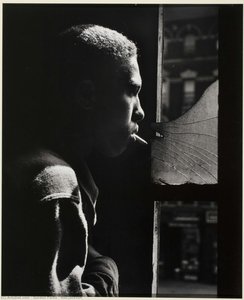
StatsUntitled, Harlem, New York


 Read More
The artwork displayed on this page is protected by copyright law, which means we cannot legally create or sell an identical reproduction. This protection is enforced under international agreements such as the Berne Convention and by national laws, including those outlined by the U.S. Copyright Law - Title 17.
This method fully complies with copyright regulations because it does not involve copying or duplicating the protected artwork. Instead, it is a creative reinterpretation - a new painting that is influenced by the original but not identical to it.
Giclée / Art Print
Museum-quality giclée or canvas print with fast production and flexible finish options. ( Buy Hand Made Painting Switch to Digital Image)




































Pick from our preset sizes that match the artwork's original proportions.

Type the width and the height you need, to fit your frame or your wall. A print can only be cut, never made bigger than the picture, so a size with a different shape loses a part of the image. We send you a digital mockup to approve before we print anything. The picture shown on this page does not show the real cut — only the mockup does.
Worldwide Delivery () in 2 weeks instead of standard 4/5 weeks. (28 October)

Free Worldwide Express Shipping

High-Quality Linen Canvas

Full Shipping Insurance

Customs Tax Refund Guarantee

True Color Matching Guarantee

100-Day Return Policy (Defects Only)

100% Money-Back Guarantee

Bulk Discount Offer
 Glass option is only available in size under 110 CM

Untitled, Harlem, New York
Giclée / Art Print
Reproduction Size
-


Total Price
$ 81
A Moment Frozen in Time: Gordon Parks’ “Untitled, Harlem, New York”
Gordon Parks' "Untitled, Harlem, New York," captured in 1952, isn’t merely a photograph; it’s a distilled essence of urban life—a quiet meditation on solitude, observation, and the unspoken narratives woven within a bustling city. This striking black-and-white image, now housed at The Art Institute of Chicago, immediately draws the viewer into a dimly lit interior space, dominated by a wall pulsating with the warm glow of strategically placed light bulbs. It’s a scene both familiar and profoundly unsettling, hinting at stories untold and lives lived in quiet contemplation.
The photograph's power lies not just in its composition—the carefully arranged furniture, the record players casting long shadows, and the central figure seated with an object held delicately in his hand—but also in Parks’ masterful use of light. The stark contrast between the deep blacks and brilliant whites creates a dramatic effect, highlighting textures and imbuing the scene with a palpable sense of mood. The lighting isn't simply decorative; it feels deliberate, almost theatrical, as if illuminating a private stage within an otherwise anonymous room.
A Window into the 1950s: Context and Technique
To fully appreciate “Untitled, Harlem, New York,” one must consider its historical context. Parks was working during a pivotal period in American history—the early 1950s—a time of burgeoning civil rights movements, economic disparity, and significant social change. His work for Life magazine, particularly his series documenting poverty in the South, brought these realities to a national audience with unflinching honesty. This Harlem image reflects that same commitment to portraying everyday life, albeit within a specific urban landscape.
Technically, the photograph is a testament to Parks’ skill as a photographer. It's a film print, likely developed and printed in a darkroom, showcasing a deliberate graininess that adds to the image’s authenticity and vintage feel. The composition utilizes strong diagonal lines—created by the furniture and the arrangement of light bulbs—to guide the viewer’s eye through the frame, leading towards the central figure. This dynamic interplay of lines contributes to the photograph's overall sense of movement and intrigue.
Decoding the Symbolism: Man, Light, and Observation
The central figure in the image is deliberately ambiguous. Dressed formally, he appears lost in thought, examining a small object with an expression that’s difficult to decipher—is it contemplation, concern, or perhaps simply boredom? He embodies a quiet dignity amidst an unconventional setting, suggesting a man seeking refuge from the surrounding chaos. The wall of light bulbs, a recurring motif in Parks' work, can be interpreted as representing both illumination and potential distraction – highlighting the individual while simultaneously emphasizing the overwhelming nature of urban life.
The placement of the light bulbs is particularly significant. They don’t simply provide illumination; they create patterns—a network of lines that subtly shift our perception of space and form. This deliberate manipulation of light elevates the photograph beyond a simple snapshot, transforming it into a carefully constructed visual statement. The record players, symbols of entertainment and connection, stand in stark contrast to the man's solitary state, further emphasizing his isolation.
An Enduring Legacy: Emotional Resonance and Artistic Impact
"Untitled, Harlem, New York" resonates deeply because it captures a universal human experience—the feeling of being alone within a crowd. It’s a photograph that invites introspection, prompting us to consider the stories behind the faces we see every day. Parks' ability to convey such complex emotions with such understated elegance is what makes this image so enduringly powerful.
Beyond its artistic merit, the photograph serves as a poignant reminder of the social realities faced by African Americans in mid-20th century America. It’s a testament to Parks’ commitment to documenting marginalized communities and giving voice to those often overlooked. Reproductions of this iconic image continue to be valued by collectors and interior designers alike, not just for their aesthetic appeal but also for their historical significance and emotional depth.
Questions & Answers
What orientation does "Untitled, Harlem, New York" by Gordon Parks have?
"Untitled, Harlem, New York" by Gordon Parks has a landscape format. The format describes the proportions of the composition.
What national origin stands behind the Documentary Social Realism of "Untitled, Harlem, New York"?
The Documentary Social Realism work "Untitled, Harlem, New York" was made by an artist born in United States of America.
Is a high-resolution download of "Untitled, Harlem, New York" available?
To get a digital file of "Untitled, Harlem, New York" by Gordon Parks, order a high-resolution digital image download on its Digital Image page.
Artist Biography
early life and career
gordon roger alexander buchanan parks, an american photographer, musician, writer, and film director, was born on november 30, 1912, in fort scott, kansas. he was the youngest of fifteen children to sarah (née ross) and jackson parks. parks' early life was marked by segregation, which he experienced firsthand in his hometown.as a self-taught artist, parks began his career as a photographer, eventually becoming the first african american to work for life and vogue magazines. his iconic photos of poor americans during the 1940s, taken for a federal government project, are a testament to his skill and dedication.
notable works and achievements
- shaft (1971), a film directed by parks, which became a cultural phenomenon.
- the learning tree (1969), a semiautobiographical film that marked parks' directorial debut.
- a choice of weapons (1985), a memoir that showcases parks' writing prowess.
- life magazine's photographic essays, which cemented parks' status as a prominent photojournalist.
museums and collections
- the melvin holmes collection, featuring an extensive collection of parks' work. [https://www.holmesartgallery.com/gordonparks](https://www.holmesartgallery.com/gordonparks)
- moma (the museum of modern art), which has an impressive collection of parks' photographs. [https://www.moma.org/artists/8083](https://www.moma.org/artists/8083)
awards and legacy
- naacp image award (2003)
- pga oscar micheaux award (1993)
- national medal of arts (1988)
- spingarn medal (1972)
gordon parks' legacy extends beyond his impressive body of work, as he paved the way for future generations of african american artists. his contributions to photojournalism, filmmaking, and music continue to inspire and influence artists today.
selected works on OriginalUniqueArt.com
- emerging man (gelatin silver print), a powerful photograph showcasing parks' skill. [https://OriginalUniqueArt.com/d3xgfc-gordon-parks-emerging-man](https://OriginalUniqueArt.com/d3xgfc-gordon-parks-emerging-man)
- portrait of mrs. lucy johnson (gelatin silver print), a poignant portrait that highlights parks' storytelling ability. [https://OriginalUniqueArt.com/d4dblu-gordon-parks-portrait-of-mrs-lucy-johnson](https://OriginalUniqueArt.com/d4dblu-gordon-parks-portrait-of-mrs-lucy-johnson)

Gordon Parks
1912 - 2006 , United States of America
Quick Facts
- Full Name: Gordon Roger Alexander Buchanan Parks
- Nationality: American
- Date Of Birth: 1912
- Date Of Death: 2006
- Place Of Birth: Fort Scott, United States of America
- Notable Artworks:
- Shaft
- The Learning Tree
- Emerging Man
- Harlem Gang Wars
- Night Rumble
- Artistic Movement Or Style: Photojournalism, Social Realism
- Artists Or Movements Influenced By This Artist: Future African American artists
Related Articles
Witnessing History Through Lens & Light: Documentary Photography's Enduring Legacy
Explore the powerful history of documentary photography – from its origins to contemporary masters like Gordon Parks & W. Eugene Smith. Discover how this art form shapes our understanding of society and witness pivotal moments in time.

White on Canvas: 10 Masterpieces & Timeless Elegance for Your Home Decor
Explore 10 iconic white paintings by Monet, Whistler & Rothko! Discover the stories behind these serene masterpieces and their impact on art history. Find museum-quality reproductions for your home decor at .
Shadow & Soul: Why Black & White Photography Remains the Ultimate Power Move in Modern Art
Discover why black & white photography remains a powerful force in contemporary art. Explore the impact of light, shadow, and texture through a visual journey of monochrome mastery and learn how to elevate your space with timeless grayscale aesthetics.

Monochrome Visions: Exploring the Aesthetic & Historical Significance of Black & White Photography
Explore the rich history & artistic power of black and white photography. From early techniques to iconic masters like Ansel Adams, discover why monochrome continues to captivate art lovers today. Expert insights for collectors.
Gordon Parks: A Poetic Lens on American Life – Photography, Social Justice & Storytelling
Explore the profound work of Gordon Parks, a groundbreaking photographer who documented American life with unparalleled empathy and artistry. Discover his iconic images & lasting impact on social justice through Life magazine & beyond.