Send
Send Share
Share
 Details
 Guide
Guide

 Download
 Similars
 Diaporama
 Q&A
Q&A Stats
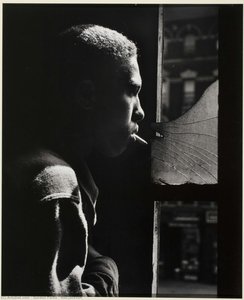
StatsContact sheet 111 R3,


 Read More
The artwork displayed on this page is protected by copyright law, which means we cannot legally create or sell an identical reproduction. This protection is enforced under international agreements such as the Berne Convention and by national laws, including those outlined by the U.S. Copyright Law - Title 17.
This method fully complies with copyright regulations because it does not involve copying or duplicating the protected artwork. Instead, it is a creative reinterpretation - a new painting that is influenced by the original but not identical to it.
Giclée / Art Print
Museum-quality giclée or canvas print with fast production and flexible finish options. ( Buy Hand Made Painting Switch to Digital Image)




































Pick from our preset sizes that match the artwork's original proportions.

Type the width and the height you need, to fit your frame or your wall. A print can only be cut, never made bigger than the picture, so a size with a different shape loses a part of the image. We send you a digital mockup to approve before we print anything. The picture shown on this page does not show the real cut — only the mockup does.
Worldwide Delivery () in 2 weeks instead of standard 4/5 weeks. (4 November)

Free Worldwide Express Shipping

High-Quality Linen Canvas

Full Shipping Insurance

Customs Tax Refund Guarantee

True Color Matching Guarantee

100-Day Return Policy (Defects Only)

100% Money-Back Guarantee

Bulk Discount Offer
 Glass option is only available in size under 110 CM

Contact sheet 111 R3,
Giclée / Art Print
Reproduction Size
-


Total Price
$ 81
The Unfolding Narrative: A Study in Documentary Light
To gaze upon this contact sheet of Gordon Parks’ work is not merely to view a collection of photographs; it is to step directly into the crucible of observation itself. The image presents a mesmerizing grid, a tangible record of moments captured in time—a visual diary assembled from black and white film. Here, the stark poetry of monochrome dominates, allowing light and shadow to become the primary sculptors of form. We are confronted with a sequence of glances, poses, and fleeting interactions involving figures set against an urban backdrop. The composition itself is a masterclass in documentation, suggesting that the act of seeing was as profound as what was seen.
Composition and Technique: The Geometry of Memory
The structure—the very format of the contact sheet—imposes a rigorous, almost scientific order upon inherently spontaneous human moments. This rectangular scaffolding contains dozens of individual frames, each offering a slightly different perspective on the same unfolding scene. Notice how the edges of these photographs create sharp, defining lines that contrast with the organic curves of the human body. Parks employs a variety of viewpoints within this single presentation: from low angles that elevate the subject lying prone to more distant shots that contextualize them within their environment. This technical multiplicity speaks volumes about the photographer’s dedication to capturing not just *what* happened, but *how* it felt from every conceivable angle.
Symbolism and Emotional Resonance
The emotional weight of this piece is palpable, rooted in its documentary spirit. The subject matter—the man reclining, the figure standing watch—evokes a complex interplay between vulnerability and resilience. It feels like an anthropological study filtered through profound empathy. The monochromatic palette strips away the distraction of color, forcing the viewer to concentrate on texture, tone, and gesture. These tonal variations in the grays suggest everything from the rough weave of clothing to the smooth planes of skin, imbuing the work with a timeless, almost sculptural quality. It speaks quietly of the human condition: moments of repose juxtaposed against the enduring structure of the city.
Historical Context and Enduring Appeal
Created in 1952, this photograph sits at a pivotal moment in American history, echoing the powerful social narratives that Gordon Parks so masterfully chronicled. His work was never simply aesthetic; it was reportage imbued with deep humanity. For the collector or designer seeking art with narrative depth, this piece offers more than mere decoration. It offers conversation—a visual meditation on race, experience, and the quiet dignity of everyday life observed through an artist’s unflinching lens. Reproducing this work allows one to bring a piece of that powerful, historical dialogue into a contemporary space.
Questions & Answers
How can I view "Contact sheet 111 R3," by Gordon Parks as a slideshow?
"Contact sheet 111 R3," by Gordon Parks can be viewed as a slideshow on the artwork's Diaporama page.
From which country does the Documentary Photography work "Contact sheet 111 R3," come?
"Contact sheet 111 R3," was created by Gordon Parks, born in United States of America, within the Documentary Photography movement. The artist's origin links the work to Documentary Photography as practiced by artists from United States of America.
Where in the home does a reproduction of "Contact sheet 111 R3," fit well?
A reproduction of "Contact sheet 111 R3," fits well in a living room.
Artist Biography
early life and career
gordon roger alexander buchanan parks, an american photographer, musician, writer, and film director, was born on november 30, 1912, in fort scott, kansas. he was the youngest of fifteen children to sarah (née ross) and jackson parks. parks' early life was marked by segregation, which he experienced firsthand in his hometown.as a self-taught artist, parks began his career as a photographer, eventually becoming the first african american to work for life and vogue magazines. his iconic photos of poor americans during the 1940s, taken for a federal government project, are a testament to his skill and dedication.
notable works and achievements
- shaft (1971), a film directed by parks, which became a cultural phenomenon.
- the learning tree (1969), a semiautobiographical film that marked parks' directorial debut.
- a choice of weapons (1985), a memoir that showcases parks' writing prowess.
- life magazine's photographic essays, which cemented parks' status as a prominent photojournalist.
museums and collections
- the melvin holmes collection, featuring an extensive collection of parks' work. [https://www.holmesartgallery.com/gordonparks](https://www.holmesartgallery.com/gordonparks)
- moma (the museum of modern art), which has an impressive collection of parks' photographs. [https://www.moma.org/artists/8083](https://www.moma.org/artists/8083)
awards and legacy
- naacp image award (2003)
- pga oscar micheaux award (1993)
- national medal of arts (1988)
- spingarn medal (1972)
gordon parks' legacy extends beyond his impressive body of work, as he paved the way for future generations of african american artists. his contributions to photojournalism, filmmaking, and music continue to inspire and influence artists today.
selected works on OriginalUniqueArt.com
- emerging man (gelatin silver print), a powerful photograph showcasing parks' skill. [https://OriginalUniqueArt.com/d3xgfc-gordon-parks-emerging-man](https://OriginalUniqueArt.com/d3xgfc-gordon-parks-emerging-man)
- portrait of mrs. lucy johnson (gelatin silver print), a poignant portrait that highlights parks' storytelling ability. [https://OriginalUniqueArt.com/d4dblu-gordon-parks-portrait-of-mrs-lucy-johnson](https://OriginalUniqueArt.com/d4dblu-gordon-parks-portrait-of-mrs-lucy-johnson)

Gordon Parks
1912 - 2006 , United States of America
Quick Facts
- Full Name: Gordon Roger Alexander Buchanan Parks
- Nationality: American
- Date Of Birth: 1912
- Date Of Death: 2006
- Place Of Birth: Fort Scott, United States of America
- Notable Artworks:
- Shaft
- The Learning Tree
- Emerging Man
- Harlem Gang Wars
- Night Rumble
- Artistic Movement Or Style: Photojournalism, Social Realism
- Artists Or Movements Influenced By This Artist: Future African American artists
Related Articles

Monochrome Visions: Exploring the Aesthetic & Historical Significance of Black & White Photography
Explore the rich history & artistic power of black and white photography. From early techniques to iconic masters like Ansel Adams, discover why monochrome continues to captivate art lovers today. Expert insights for collectors.

White on Canvas: 10 Masterpieces & Timeless Elegance for Your Home Decor
Explore 10 iconic white paintings by Monet, Whistler & Rothko! Discover the stories behind these serene masterpieces and their impact on art history. Find museum-quality reproductions for your home decor at .

Beyond Color: The Timeless Power and Artistry of Black and White Photography
Explore the profound artistry of black and white photography. From the chemistry of gelatin silver to the chiaroscuro of the Old Masters, discover how monochrome captures the eternal essence of light, form, and emotion for the discerning art collector.

Documentary Photography's Defining Moments: 10 Masterpieces for Your Home |
Explore 10 defining documentary photography masterpieces – from Dorothea Lange to Robert Capa. Discover powerful stories, iconic images & timeless art for your home. Museum-quality prints at .

The Unfiltered Lens: Curating the Profound Emotional Depth of Documentary Photography Artworks
Explore the profound emotional depth of documentary photography art. Discover how collectors curate powerful historical narratives through museum-quality black and white prints and fine art reproductions that preserve humanity's most resilient moments.