() ·

A painting made for you, by hand

Confirmation

Hand Made Oil Reproduction

Hand-painted oil on canvas in your size and frame, made to order by our artists. ( Switch to Print Switch to Digital Image)

Collectible Description

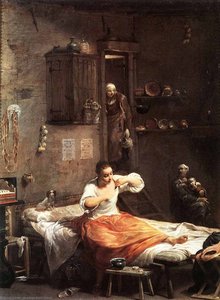
Experience "Confirmation" by Giuseppe Maria Crespi (1712). A captivating Baroque masterpiece depicting a sacred ceremony, hand-painted reproduction available at OriginalUniqueArt.

Artist Biography

Explore Giuseppe Maria Crespi (1665-1747), a leading Bolognese Baroque painter celebrated for his genre scenes, portraits & religious works. Known as 'Lo Spagnuolo', he blended realism with captivating detail.

from ·

Chapter 1

How large should it be?

Slide to change the size; the picture on the left shows the frame at its real width. The proportions of the original are kept.

Standard
custom
CM
INCH

Pick from our preset sizes that match the artwork's original proportions.

width
height

Type the width and the height you need, to fit your frame or your wall. This is hand-painted, so for a size with a different shape the artist can paint a bit more around the picture, or cut a bit — you choose. We send you a digital mockup to approve before the painting starts. The picture shown on this page does not show the real result — only the mockup does.

Chapter 2

How should it arrive?

Choose the edges of the stretched canvas

Choose your frame

Corner sample of the WhiteWrap canvas edge finish, stretched on solid wood bars
White $1
Corner sample of the BlurSideWrap canvas edge finish, stretched on solid wood bars
Blurside $1
Corner sample of the ExtendedWrap canvas edge finish, stretched on solid wood bars
Extended $1
Corner sample of the P118B picture frame: moulded polystyrene, 5 cm wide and 3 cm thick
P118B $10
Corner sample of the P118H picture frame: moulded polystyrene, 5 cm wide and 3 cm thick
P118H $10
Corner sample of the P118W picture frame: moulded polystyrene, 5 cm wide and 3 cm thick
P118W $10
Corner sample of the P438Z picture frame: moulded polystyrene, 5.5 cm wide and 3.5 cm thick
P438Z $10
Corner sample of the P508JH picture frame: moulded polystyrene, 7 cm wide and 3.5 cm thick
P508JH $12
Corner sample of the P508YH picture frame: moulded polystyrene, 7 cm wide and 3.5 cm thick
P508YH $12
Corner sample of the P805H picture frame: moulded polystyrene, 5 cm wide and 3.5 cm thick
P805H $10
Corner sample of the P805Z picture frame: moulded polystyrene, 5 cm wide and 3.5 cm thick
P805Z $10
Corner sample of the P919BZ picture frame: moulded polystyrene, 7 cm wide and 3.5 cm thick
P919BZ $10
Corner sample of the P919G picture frame: moulded polystyrene, 7 cm wide and 3.5 cm thick
P919G $10
Corner sample of the P919XJ picture frame: moulded polystyrene, 7 cm wide and 3.5 cm thick
P919XJ $10
Corner sample of the P959ZH picture frame: moulded polystyrene, 5 cm wide and 3 cm thick
P959ZH $10
Corner sample of the P968JZ picture frame: moulded polystyrene, 6 cm wide and 4 cm thick
P968JZ $12
Corner sample of the W106C picture frame: solid wood, 5 cm wide and 3 cm thick
W106C $8
Corner sample of the W218G picture frame: solid wood, 5 cm wide and 3 cm thick
W218G $10
Corner sample of the W218JH picture frame: solid wood, 5 cm wide and 3 cm thick
W218JH $8
Corner sample of the W218Y picture frame: solid wood, 5 cm wide and 3 cm thick
W218Y $10
Corner sample of the W307PJ picture frame: solid wood, 6 cm wide and 3 cm thick
W307PJ $10
Corner sample of the W316G picture frame: solid wood, 6 cm wide and 3 cm thick
W316G $10
Corner sample of the W316PJ picture frame: solid wood, 6 cm wide and 3 cm thick
W316PJ $8
Corner sample of the W316Y picture frame: solid wood, 6 cm wide and 3 cm thick
W316Y $10
Corner sample of the W398PJ picture frame: solid wood, 5 cm wide and 3 cm thick
W398PJ $8
Corner sample of the W4111J picture frame: solid wood, 6.5 cm wide and 3.5 cm thick
W4111J $10
Corner sample of the W500HY picture frame: solid wood, 7 cm wide and 5 cm thick
W500HY $15
Corner sample of the W500JH picture frame: solid wood, 7 cm wide and 5 cm thick
W500JH $15
Corner sample of the W692G picture frame: solid wood, 8 cm wide and 4 cm thick
W692G $12
Corner sample of the W849H picture frame: solid wood, 5 cm wide and 3 cm thick
W849H $8
Corner sample of the W940BG picture frame: solid wood, 7.5 cm wide and 4.5 cm thick
W940BG $15
Corner sample of the W953PJ picture frame: solid wood, 6 cm wide and 3.5 cm thick
W953PJ $8
Corner sample of the H24-GOLD picture frame: carved wood with gesso, 10 cm wide and 6 cm thick
H24-GOLD $30
Corner sample of the H24-SILVER picture frame: carved wood with gesso, 10 cm wide and 6 cm thick
H24-SILVER $30
Corner sample of the H36-GOLD picture frame: carved wood with gesso, 15 cm wide and 6.5 cm thick
H36-GOLD $45
Corner sample of the H36-SILVER picture frame: carved wood with gesso, 15 cm wide and 6.5 cm thick
H36-SILVER $45
Frame preview
Framed

Moulding: . Overall size with the frame: .

Chapter 3

Who paints it, and should anything change?

Examples of what can be changed: Replace face with customer photo; Add pet (e.g., replace cat with dog); Include hidden message in background; Change background landscape or elements.
After order, OriginalUniqueArt.com team will email client for instructions and provide a mockup preview

Worldwide Delivery () in 3/4 weeks instead of standard 5 weeks. (5 November). No compromise on quality.

Chapter 4

The finishing touches

A nameplate, as in a museum?

Engraved Bronze Plaque Details

This elegant plaque features the artist's name and the title of the artwork, finely engraved for a timeless presentation.

It is made from bronze with a refined, elegant finish. The text is precisely laser-engraved for a sharp and permanent result. Measuring 9x2 cm, the plaque is compact yet easy to read. It's built to be durable and scratch-resistant, offering a professional, museum-quality look. Mounting is simple thanks to the included adhesive backing.

Transparent Acrylic Plaque Details

The plaque includes essential engraved details such as the artist's name, the title of the artwork, the date it was created, the type of media used-like oil on canvas or watercolor-a brief description of the piece, and a QR code that links to the complete artwork information.

It is crafted from clear acrylic, offering a sleek, modern appearance. The text is UV-engraved in black to ensure strong visual contrast. With a size of 10x15 cm, it ensures optimal readability. It comes equipped with two metal hooks for secure wall mounting. The plaque is designed to be weather-resistant, making it suitable for various environments, and it includes interactive features that work seamlessly with smartphone scanning.

Black Acrylic Plaque Details

This elegant plaque includes engraved information such as the artist's name, the title of the artwork, the date it was created, the type of media used (like oil on canvas or watercolor), a short description of the artwork, and a QR code for quick access to more information.

The plaque itself is made from refined black acrylic with a premium finish. The text is laser-engraved in white for high contrast and readability. Its size is 10x15 cm, designed to be easy to read. It comes with two metal hooks for professional mounting. The design is sleek and fits any interior style. It is also weather-resistant and durable, with built-in digital integration for mobile compatibility.

A protective varnish?

When do you need it?

Chapter 5

Your painting, as you ordered it

Confirmation

Reproduction Medium

Reproduction Size

-

Elite Senior Artist

More detail, finesse, and extra production time

-

Reproduction Frame

-

-

For artworks or reproductions larger than 105 cm (approximately 41 inches) on any side, the frame will be shipped as a kit, disassembled. This method ensures safe delivery and prevents damage during transport.

Professional assembly required - this is not a DIY product.
The kit must be assembled and the canvas stretched by an experienced professional framer, using wood glue (not supplied), a canvas stretching plier and clamps to hold the bars square while the glue dries. Incorrect assembly or uneven canvas tension can permanently damage the artwork and is not covered by our warranty.

  • All solid wood bars are included, precisely cut to size.

  • Assembled with the screws provided, plus wood glue for the corner joints, which is not supplied and must be sourced by your framer.

  • Professional tools are required and not included: a canvas stretching plier (tensioner) and clamps to hold the bars square while the glue dries.

Important:
The corner joints require wood glue, the bars must be held with clamps until the glue is fully dry, and tightening the canvas on the assembled frame requires a canvas stretching plier. None of these are included in the kit. Please arrange an experienced professional framer before ordering this size.

Nameplate

-

-

Protective Varnish

Glossy Varnish (enhances colors, protects against light/moisture)

-

Customize My Artwork

Examples of what can be changed: Replace face with customer photo; Add pet (e.g., replace cat with dog); Include hidden message in background; Change background landscape or elements.

-

Urgent

Worldwide Delivery () in 3/4 weeks instead of standard 5 weeks. (5 November). No compromise on quality.

-

Express Shipping

Worldwide Delivery () in 5 weeks. (12 November).

Included

Total Price

$ 300

Total Price $ 300

Glass option is only available in size under 110 CM

Included with every order

  • Free Worldwide Express Shipping
  • High-Quality Linen Canvas
  • Full Shipping Insurance
  • Customs Tax Refund Guarantee
  • True Color Matching Guarantee
  • 100-Day Return Policy (Defects Only)
  • 100% Money-Back Guarantee
  • Bulk Discount Offer

Giuseppe Maria Crespi’s “Confirmation”: A Window into Bolognese Life

Giuseppe Maria Crespi, a name often overshadowed by his more celebrated contemporaries in the vibrant art scene of Bologna during the 17th and 18th centuries, remains a profoundly intriguing figure. His work defies easy categorization, blending elements of genre painting—capturing everyday scenes with remarkable realism—with deeply considered religious iconography. “Confirmation,” painted in 1712, offers an exceptional glimpse into this artist’s unique vision, revealing not just a skilled painter but also a keen observer of human nature and the rhythms of daily life within a devout community.

The painting depicts a scene unfolding within a modest church setting. At its heart stands a priest, clad in the rich robes of his office, engaged in the solemn rite of Confirmation. A young boy, kneeling before him, receives the sacrament—a pivotal moment of spiritual growth and commitment for Catholics. However, Crespi doesn’t present this as a purely formal religious event. Instead, he surrounds the central action with a cast of ordinary individuals: a woman tending to a child, a man observing from the side, and even a pair of birds perched near the upper left corner – details that subtly infuse the scene with a sense of domesticity and quiet contemplation. This deliberate inclusion of secular elements is characteristic of Crespi’s approach; he wasn't interested in simply illustrating religious dogma but rather in portraying faith as interwoven into the fabric of everyday existence.

A Masterclass in Baroque Realism

Crespi’s technique is immediately striking. He employs a loose, expressive brushstroke—a hallmark of his style—that lends the scene a palpable sense of immediacy and movement. The figures are rendered with an astonishing degree of naturalism, capturing their individual expressions and gestures with remarkable accuracy. Notice how he subtly conveys the boy's attentiveness through the slight tilt of his head and the earnestness in his eyes. The use of light is particularly masterful; it’s diffused and warm, bathing the scene in a gentle glow that evokes a feeling of reverence without being overly dramatic. The color palette is restrained—earthy browns, muted reds, and subtle blues—contributing to the painting's overall sense of quiet dignity.

Crespi was known for his ability to capture the nuances of human emotion and interaction. He often depicted scenes from popular life – market stalls, taverns, and street performers – but always with a keen eye for detail and an understanding of psychological depth. “Confirmation” is no exception; it’s not merely a depiction of a religious ceremony but a study in human connection and the quiet moments of faith within a community.

Symbolism and Context

The act of Confirmation itself holds profound symbolic weight within Catholic tradition. It represents the strengthening of an individual's bond with God, marking their transition from childhood to adulthood within the Church. Crespi’s decision to portray this sacrament in such a grounded, relatable manner speaks volumes about his artistic philosophy. He wasn’t interested in creating idealized religious scenes but rather in presenting faith as something lived and experienced by ordinary people.

Painted during the Baroque period, “Confirmation” reflects the broader cultural trends of the time—a fascination with realism, a growing interest in secular subjects, and a desire to connect art with everyday life. Crespi’s work stands apart from many of his contemporaries who favored grand, theatrical compositions. His focus on intimate scenes and nuanced character studies offered a refreshing alternative, cementing his place as one of the most innovative artists of his generation.

A Timeless Reflection

“Confirmation” by Giuseppe Maria Crespi is more than just a painting; it’s a window into a bygone era—a testament to the enduring power of faith and the beauty of human connection. Its quiet dignity, masterful technique, and subtle symbolism continue to resonate with viewers today, inviting us to contemplate the spiritual dimensions of everyday life.

Questions & Answers

Can I use augmented reality to see "Confirmation" by Giuseppe Maria Crespi in my room?

"Confirmation" by Giuseppe Maria Crespi can be previewed on your own wall with the artwork's AR Preview page, using augmented reality on a compatible device.

Where does "Confirmation" fall in Giuseppe Maria Crespi's career?

"Confirmation" belongs to the Late Period of Giuseppe Maria Crespi's career. This classification relates the work to the artist's development.

Where can I buy a digital image of "Confirmation" by Giuseppe Maria Crespi?

A digital image of "Confirmation" by Giuseppe Maria Crespi can be purchased on its Digital Image page: a high-resolution digital image download.

More about this painting

Preview AR preview Switch to Print Switch to Digital Image Send
Details Guide Add to favorites Download Similars X-Ray Diaporama Q&A Stats

In numbers

  • 1712the year it was painted
  • 29frames to choose from
  • standard sizes, in its own proportions
  • 5weeks to paint and deliver it
Giuseppe Maria Crespi

Giuseppe Maria Crespi

1665 - 1747, Italy

Quick facts about Giuseppe Maria Crespi

  • Full Name: Giuseppe Maria Crespi
  • Nationality: Italian
  • Date Of Birth: 1665
  • Date Of Death: 1747
  • Place Of Birth: Bologna, Italy
  • Notable Artworks:
    • Seven Sacraments
    • Santa Maria Maddalena penitente
    • Confession
    • Woman Washing Dishes
  • Artistic Movement Or Style: Late Baroque
  • Artists Who Influenced This Artist:
    • Angelo Michele Toni
    • Domenico Maria Canuti
  • Artists Or Movements Influenced By This Artist:
    • Pietro Longhi
    • G. B. Piazzetta

Artist Biography

A Bolognese Original: The Life and Art of Giuseppe Maria Crespi

Giuseppe Maria Crespi, affectionately known as “Lo Spagnuolo” – the Spaniard – was a captivating anomaly within the Italian Baroque landscape. Born in Bologna in 1665, his nickname stemmed not from ancestry but from a penchant for the tightly fitted clothing fashionable in Spain at the time, a sartorial choice that hinted at the independent spirit simmering beneath the surface of this remarkable artist. Crespi’s journey began with a traditional apprenticeship, first under Angelo Michele Toni and then Domenico Maria Canuti, absorbing the foundational techniques of Bolognese painting. However, he resisted the pull of Rome when invited by Carlo Maratti, choosing instead to forge his own path, one that would ultimately redefine genre painting and offer a strikingly intimate glimpse into everyday life.

Breaking with Tradition: A New Vision Emerges

Crespi’s artistic output was remarkably diverse, encompassing religious paintings, portraits, and etchings inspired by masters like Rembrandt and Salvator Rosa. Yet, it is for his genre scenes – depictions of ordinary people engaged in commonplace activities – that he is most celebrated today. This focus represented a significant departure from the prevailing academic traditions which favored historical or mythological subjects. He wasn’t interested in grand narratives or idealized forms; instead, Crespi turned his attention to the lives unfolding around him—women washing dishes, families sharing meals, children at play. These weren't merely representations of daily life but imbued with a psychological depth and realism previously unseen. His style was characterized by a deliberate restraint in color and brushwork, employing a limited palette with judicious skill, though some critics noted a lack of robust physicality in his application. This subtlety, however, served to heighten the emotional impact of his scenes, drawing viewers into the quiet dramas of domestic existence.

The Seven Sacraments and Lasting Influence

While his genre paintings secured his lasting fame, Crespi’s broader artistic achievements shouldn't be overlooked. A pivotal work is *The Seven Sacraments*, a series of canvases painted around 1712 for Cardinal Ottoboni. This ambitious project demonstrated Crespi’s ability to tackle complex religious themes with an innovative approach. Rather than depicting biblical events in a distant, historical setting, he placed them within the context of his own time, featuring contemporary figures and locales. The result was a series that felt both deeply spiritual and profoundly human. His influence extended beyond Italy; he mentored artists like Giovanni Battista Piazzetta and Pietro Longhi, who carried forward his commitment to realism and genre painting in Venice. Though he became increasingly reclusive later in life, dedicating himself primarily to religious works after the death of his wife in 1722, Crespi’s legacy as a groundbreaking artist remained secure. He was even granted a knighthood by Pope Benedict XIV in 1740, a testament to his artistic standing and cultural significance.

A Legacy of Realism and Intimacy

Giuseppe Maria Crespi died in Bologna in 1747, leaving behind a body of work that continues to resonate with viewers today. He was a master observer of human nature, capable of capturing the subtle nuances of emotion and experience with remarkable sensitivity. His paintings are not merely historical artifacts; they are windows into the lives of ordinary people, offering a timeless glimpse into the universal themes of love, loss, faith, and everyday existence. Lo Spagnuolo's contribution to Italian art lies in his ability to elevate the mundane to the level of artistic significance, proving that beauty and meaning can be found not only in grand narratives but also in the quiet moments of daily life. His work remains a powerful reminder of the enduring human capacity for resilience, connection, and grace.

Exploring Crespi’s World Today

Fortunately, opportunities to experience Crespi's artistry firsthand are plentiful. His works can be found in prominent museums such as the Gemäldegalerie Alte Meister in Dresden, which houses *The Seven Sacraments*, and the Museo dell'Opera di Santa Croce in Florence. Numerous reproductions of his paintings are available, allowing art enthusiasts to bring a piece of this Bolognese master’s vision into their own homes. Resources like OriginalUniqueArt.com and OriginalUniqueArt.com offer high-quality hand-painted reproductions, ensuring that Crespi’s legacy continues to inspire and captivate audiences for generations to come. Further research can be found on Wikipedia and Britannica providing detailed accounts of his life and artistic development.

Quick Facts

  • Notable elements: Priest blessing child
  • Movement: Baroque
  • Medium: Oil on canvas
  • Subject or theme: Sacrament of Confirmation
  • Year: 1712
  • Artist: Giuseppe Maria Crespi

Art Quiz

There is only one correct answer for each question.

Question 1:
What is the primary subject depicted in Giuseppe Maria Crespi’s ‘Confirmation’?
Question 2:
According to the image description, what is prominent in the painting?
Question 3:
In what year was Giuseppe Maria Crespi’s ‘Confirmation’ painted?
Question 4:
Giuseppe Maria Crespi is known for his work in which genre of painting?
Question 5:
The image description suggests what overall atmosphere about the painting?