Preview
 Send
Send Share
Share
 Details
 Guide
Guide

 Download
 Similars
 X-Ray
X-Ray Diaporama
 Q&A
Q&A Stats
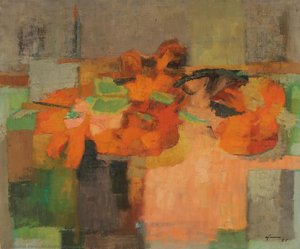
StatsDonna che si lava

- 115.0 x 63.0 cm


 Read More
The artwork displayed on this page is protected by copyright law, which means we cannot legally create or sell an identical reproduction. This protection is enforced under international agreements such as the Berne Convention and by national laws, including those outlined by the U.S. Copyright Law - Title 17.
This method fully complies with copyright regulations because it does not involve copying or duplicating the protected artwork. Instead, it is a creative reinterpretation - a new painting that is influenced by the original but not identical to it.
Giclée / Art Print
Museum-quality giclée or canvas print with fast production and flexible finish options. ( Buy Hand Made Painting Switch to Digital Image)




P118B $10

P118H $10

P118W $10

P438Z $10

P508JH $12

P508YH $12

P805H $10

P805Z $10

P919BZ $10

P919G $10

P919XJ $10

P959ZH $10

P968JZ $12

W106C $8

W218G $10

W218JH $8

W218Y $10

W307PJ $10

W316G $10

W316PJ $8

W316Y $10

W398PJ $8

W4111J $10

W500HY $15

W500JH $15

W692G $12

W849H $8

W940BG $15

W953PJ $8




Pick from our preset sizes that match the artwork's original proportions.

Type the width and the height you need, to fit your frame or your wall. A print can only be cut, never made bigger than the picture, so a size with a different shape loses a part of the image. We send you a digital mockup to approve before we print anything. The picture shown on this page does not show the real cut — only the mockup does.
Worldwide Delivery () in 2 weeks instead of standard 4/5 weeks. (2 November)

Free Worldwide Express Shipping

High-Quality Linen Canvas

Full Shipping Insurance

Customs Tax Refund Guarantee

True Color Matching Guarantee

100-Day Return Policy (Defects Only)

100% Money-Back Guarantee

Bulk Discount Offer
 Glass option is only available in size under 110 CM

Donna che si lava
Giclée / Art Print
Reproduction Size
-


Total Price
$ 81
An Intimate Encounter with Light and Form
In the quiet, private moments of domestic life, there exists a profound beauty that often escapes the hurried gaze of the world. Giuseppe Ajmone, a master of capturing these ephemeral instances, invites us into such a moment with his 1954 masterpiece, Donna che si lava (Woman Washing). The painting presents us with a figure seen from behind, her back turned to the viewer as she engages in a ritual of cleansing. This perspective creates an immediate sense of voyeuristic intimacy, yet it remains deeply respectful, drawing the observer into a private sanctuary rather than intruding upon it. The composition is a delicate dance of light and shadow, where the warmth of pinks and yellows breathes life into the skin, transforming a mundane bathroom setting into a stage of vibrant, chromatic expression.
The technique employed by Ajmone reflects his deep connection to the post-war Italian tradition, blending elements of semi-abstraction with a palpable sense of reality. Influenced by the luminous palettes of Pierre Bonnard and the structural boldness of Picasso, Ajmone utilizes color not merely as a descriptive tool but as an emotional language. The way the light dances across the woman's form suggests a fluid, almost rhythmic movement, where the boundaries between the subject and her environment begin to soften. Scattered throughout the scene, objects such as a delicate cup, a bottle, and various bowls are rendered with a painterly touch that emphasizes texture and light over rigid detail, contributing to a dynamic composition that feels both grounded and dreamlike.
A Legacy of Italian Modernism
To understand the depth of Donna che lava, one must look toward the rich historical tapestry of Ajmone’s career. Emerging from the prestigious Brera Academy under the tutelage of masters like Achille Funi and Carlo Carrà, Ajmone was a central figure in the mid-century Italian art scene. His participation in landmark exhibitions, such as the Manifesto del Realismo and the prestigious Venice Biennale, places this work within a period of intense artistic exploration following World War II. This era was defined by a search for a new visual language—one that could reconcile the weight of tradition with the burgeoning freedom of modern abstraction. In this painting, we see that reconciliation perfectly realized; it is a work that honors the human figure while embracing the expressive potential of color and light.
For the discerning collector or interior designer, this piece offers more than just visual appeal; it provides an emotional anchor for a sophisticated space. The warmth of the palette makes it an ideal centerpiece for rooms designed to evoke tranquility and refinement. Whether placed in a sun-drenched morning room or a moody, contemporary study, the painting’s ability to command attention through subtle nuance ensures it remains a conversation piece for years to come. Owning a reproduction of such a significant work allows one to bring a fragment of Italian modernism into the home, fostering an environment of cultured contemplation and timeless elegance.
Questions & Answers
Is "Donna che si lava" by Giuseppe Ajmone a bright or a dark artwork?
Overall, "Donna che si lava" is recorded as brilliant. Perceived brightness describes how light or dark the work appears.
Can I order an oil reproduction of "Donna che si lava"?
Hand-painted copies of "Donna che si lava" by Giuseppe Ajmone are sold on this website: a hand-painted oil reproduction on linen canvas, ordered from its Hand-Painted Reproduction page.
Can "Donna che si lava" by Giuseppe Ajmone, held at the Museo del Novecento, be legally reproduced?
The original "Donna che si lava" is at the Museo del Novecento, and the work is still protected by copyright.
Artist Biography
early life and education
giuseppe ajmone, a renowned italian painter, was born in carpignano sesia, italy in 1923. he moved to milan in 1941 to study at the brera academy under the guidance of achille funi and carlo carrà.artistic career
ajmone's artistic career was marked by his participation in various exhibitions, including the manifesto del realismo (also known as oltre guernica) in 1946. he received an award at the first national exhibition of painting at bellagio. in 1950, he participated in the 25th international exhibition at the biennale of venice, followed by the premio senatore borletti for young italian painters in 1951.international exhibitions and collaborations
ajmone's work was showcased globally, including:- biennale di san paolo del brasile (1951 and 1959)
- biennale internazionale di tokyo (1959)
- pittsburgh international museum of art (1955 and 1958)
- copenhagen, dortmund, nuremberg, and buenos aires
notable works and style
ajmone's paintings often featured landscapes and semi-abstract figures. his style was influenced by notable artists such as bonnard, picasso, braque, and nicolas de staël. however, ajmone's work was characterized by its subtlety, melancholy, and intimacy.later life and legacy
ajmone settled in romagnano sesia (novara) in 1982, where he lived until his passing in 2005. his legacy continues to be celebrated through various exhibitions and the conservation of his work. view giuseppe ajmone's artworks on OriginalUniqueArt:- giuseppe ajmone | 10 artworks
- giuseppe ajmone: nudo alla finestra (museo del novecento, milan, italy)

Giuseppe Ajmone
1923 - 2005 , Italy
Quick Facts
- Full Name: Roy Fox Lichtenstein
- Nationality: American
- Date Of Birth: 1923
- Date Of Death: 2005
- Place Of Birth: Carpignano Sesia, Italy
- Notable Artworks:
- Look Mickey
- Whaam!
- Drowning Girl
- Artistic Movement Or Style: Pop Art
- Artists Who Influenced This Artist:
- Rembrandt
- Daumier
- Picasso
- Artists Or Movements Influenced By This Artist:
- Comic Strips
- Advertising
Related Articles

Angelo Chiacchio: A Mid-Century American Illustration Master & the Rise of Commercial Art
Explore the captivating world of Angelo Chiacchio, a master of mid-century American illustration. Discover his evolution, signature style, and lasting impact on commercial art & design. Learn about his legacy at the Museum of American Illustration.
Golden Hues: Top 10 Paintings Dominated by Yellow Ochre |
Explore 10 iconic paintings bathed in golden yellow ochre! From Van Gogh's sunflowers to Monet’s haystacks, discover the stories behind these masterpieces. Find museum-quality art reproductions & elevate your home decor on .
Golden Hues: 10 Masterpieces Dominated by Chrome Yellow | OriginalUniqueArt
Immerse yourself in golden light! Explore 10 famous paintings dominated by 'Chrome Yellow', from Van Gogh’s Sunflowers to Monet's Haystacks. Discover the stories behind these iconic Impressionist & Post-Impressionist masterpieces and find museum-quality art reproductions at OriginalUniqueArt.com.
The Golden Hue: Exploring Symbolism & Emotion in Yellow Art
Explore the rich symbolism & emotional power of yellow in art history! From Van Gogh to Kandinsky, discover how artists used this vibrant hue. Expert analysis & high-quality reproductions at OriginalUniqueArt.
Blush & Brilliance: 10 Iconic Paintings Dominated by Light Pink Tones |
Explore 10 iconic paintings bathed in captivating light pink tones! From Monet's Impressionism to Renoir’s romance, discover the stories behind these blush-hued masterpieces. Find museum-quality art reproductions & decor inspiration at .