
 Preview
 Send
Send Share
Share
 Details
 Guide
Guide

 Download
 Similars
 X-Ray
X-Ray Diaporama
 Q&A
Q&A Stats
StatsVirgin with the Child

- 105.0 x 77.0 cm


 Read More
Giclée / Art Print
Museum-quality giclée or canvas print with fast production and flexible finish options. ( Buy Hand Made Painting Switch to Digital Image)




P118B $10

P118H $10

P118W $10

P438Z $10

P508JH $12

P508YH $12

P805H $10

P805Z $10

P919BZ $10

P919G $10

P919XJ $10

P959ZH $10

P968JZ $12

W106C $8

W218G $10

W218JH $8

W218Y $10

W307PJ $10

W316G $10

W316PJ $8

W316Y $10

W398PJ $8

W4111J $10

W500HY $15

W500JH $15

W692G $12

W849H $8

W940BG $15

W953PJ $8




Pick from our preset sizes that match the artwork's original proportions.

Type the width and the height you need, to fit your frame or your wall. A print can only be cut, never made bigger than the picture, so a size with a different shape loses a part of the image. We send you a digital mockup to approve before we print anything. The picture shown on this page does not show the real cut — only the mockup does.
Worldwide Delivery () in 2 weeks instead of standard 4/5 weeks. (5 November)

Free Worldwide Express Shipping

High-Quality Linen Canvas

Full Shipping Insurance

Customs Tax Refund Guarantee

True Color Matching Guarantee

100-Day Return Policy (Defects Only)

100% Money-Back Guarantee

Bulk Discount Offer
 Glass option is only available in size under 110 CM

Virgin with the Child
Giclée / Art Print
Reproduction Size
-


Total Price
$ 81
A Divine Encounter: Giulio Romano’s ‘Virgin with the Child’
Giulio Romano's “Virgin with the Child,” painted in Rome around 1520, is more than just a depiction of Mary and infant Jesus; it’s a profound exploration of faith, power, and the nascent complexities of Mannerism. Emerging from the shadow of Raphael’s High Renaissance legacy, Romano boldly pushed beyond idealized beauty, embracing a style characterized by dramatic contrasts, unsettling perspectives, and an intense psychological depth – hallmarks that would define the era of Mannerism. This particular work, housed within a 105 x 77 cm canvas, offers a captivating glimpse into this pivotal moment in art history, showcasing Romano’s evolving artistic voice and his masterful command of color, form, and narrative.
The painting immediately draws the eye to the central figures. Mary, rendered with a subtle yet commanding presence, is not presented as a serene Madonna but rather as a woman imbued with authority and a quiet strength. Her blue dress, rich in texture and subtly shimmering, contrasts dramatically with the gold of her crown – a visual declaration of her divine status while simultaneously hinting at worldly power. The infant Jesus, equally captivating, wears his own miniature crown, mirroring his mother’s adornment and suggesting an immediate equality within their sacred bond. The composition is carefully orchestrated; the figures are not simply placed within a space but actively engaged in a dynamic interaction, creating a sense of movement and narrative tension.
Mannerist Innovation: Style and Technique
Romano’s style in “Virgin with the Child” is distinctly Mannerist. He departs from the balanced compositions and harmonious colors of Raphael, favoring instead elongated figures, distorted perspectives, and an almost theatrical use of light and shadow. Notice how the background recedes sharply, creating a sense of spatial ambiguity – a technique known as *sprezzatura*, intended to evoke a feeling of surprise and disorientation. The artist employs a sophisticated layering of pigments, utilizing glazes and scumbles to build up texture and create a luminous quality that is both ethereal and intensely realistic. The use of gold leaf, particularly in the crown and details of the clothing, adds to the painting’s opulence and reinforces its symbolic weight.
Technically, Romano demonstrates a remarkable understanding of anatomy and drapery – skills honed during his apprenticeship with Raphael. However, he deliberately manipulates these elements to achieve a desired expressive effect. The folds of Mary's dress are not simply decorative; they seem to flow and ripple with an inner energy, mirroring the emotional intensity of the scene. Similarly, the infant Jesus’s pose is subtly unsettling, hinting at a vulnerability beneath his angelic appearance.
Historical Context: Rome in Transition
The creation of “Virgin with the Child” coincides with a period of immense upheaval and transformation in Rome. The Sack of 1527 had shattered the city's artistic and political stability, scattering its artists and patrons. Raphael’s untimely death further compounded this crisis, leaving a void that Romano was uniquely positioned to fill. He inherited not only the responsibility for completing unfinished commissions but also the daunting task of redefining the visual language of High Renaissance art. This painting can be viewed as a deliberate assertion of Romano's artistic independence – a bold departure from his master’s style while retaining a deep respect for his legacy.
The presence of the two secondary figures in the background adds another layer of complexity to the scene. Their identities remain ambiguous, perhaps representing the theological or political forces that shaped Mary’s life and role within the Christian narrative. The small object on the ground – resembling a book or scroll – could symbolize divine revelation or the transmission of sacred knowledge. These subtle details invite viewers to engage in a deeper interpretation of the work, moving beyond a simple representation of a religious subject.
Symbolism and Emotional Resonance
Beyond its technical brilliance, “Virgin with the Child” is rich in symbolic meaning. The crown worn by both Mary and Jesus represents their divine authority and connection to God. The blue color associated with Mary often symbolizes purity, loyalty, and truth – qualities essential to her role as the Mother of God. The painting’s overall effect is one of profound emotional resonance. It evokes a sense of reverence, mystery, and perhaps even a touch of melancholy—a recognition of both the beauty and the challenges inherent in faith. This reproduction captures that same evocative power, offering a stunning addition to any art collection or interior space.
Questions & Answers
What does "Virgin with the Child" by Giulio Romano depict, and in what mood?
"Virgin with the Child" by Giulio Romano combines virgin mary, child jesus, renaissance, halo, crown, religious, composition, romano with an elegant atmosphere.
How strong are the colors of "Virgin with the Child"?
The colors of "Virgin with the Child" by Giulio Romano show a muted saturation with a monochromatic intensity.
Where in Giulio Romano's career does "Virgin with the Child" fall, given its date?
Given its 1520 date, "Virgin with the Child" falls in Giulio Romano's Mature Period.
Artist Biography
A Roman Beginning and Apprenticeship Under a Master
Giulio Romano, born Giulio Pippi around 1499 in Rome, emerged during a period of immense artistic ferment. Details surrounding his early life remain somewhat elusive, yet it is known he swiftly entered the orbit of Raphael, arguably the most celebrated painter of the High Renaissance. This apprenticeship proved pivotal, shaping not only his technical skills but also laying the foundation for his future stylistic explorations. He wasn’t merely a studio assistant; Giulio rapidly became an indispensable collaborator, contributing to significant projects like the decoration of the Vatican Stanze – those magnificent rooms commissioned by Popes Julius II and Leo X. His hand can be identified in the monumental fresco *The Fire in the Borgo*, where he assisted Raphael in depicting a dramatic scene of miraculous intervention. Following Raphael’s untimely death in 1520, Giulio inherited responsibility for completing numerous unfinished commissions, including the ambitious decoration of Villa Madama for Cardinal Giuliano de' Medici. This early exposure to large-scale projects and the demands of aristocratic patronage instilled within him a confidence and ambition that would define his later career.The Birth of Mannerism: A Departure from Classical Harmony
While deeply rooted in the Renaissance tradition, Giulio Romano’s artistic trajectory soon diverged from the prevailing emphasis on classical balance and harmony. He became a key figure in the development of Mannerism – a style characterized by its artificiality, elegance, and often unsettling distortions of form. Influenced profoundly by Michelangelo's powerful figures and dynamic compositions, as well as a broader climate of artistic experimentation, Giulio began to embrace asymmetry, tension, and emotional intensity in his work. This wasn’t a rejection of Renaissance ideals so much as a deliberate exploration of their limits, pushing beyond the constraints of naturalism to create works that were more expressive and intellectually stimulating. He increasingly modified Raphael's plans, injecting a new sensibility into Roman art—a statement of Mannerism on a grand scale. This shift is readily apparent in his drawings, which exhibit a remarkable freedom of line and a penchant for dramatic foreshortening.Mantua’s Master: Palazzo Te and Architectural Innovation
In 1524, Giulio accepted the invitation of Federico Gonzaga, Duke of Mantua, to become court painter and architect. This marked a turning point in his career, providing him with unprecedented creative freedom and resources. He essentially became responsible for all artistic activity within the duchy, overseeing not only paintings and frescoes but also architectural projects, garden designs, and even theatrical productions. His most celebrated achievement during this period is undoubtedly Palazzo Te, an extraordinary suburban villa that stands as a testament to his innovative genius. The palace’s interiors are adorned with illusionistic frescoes of breathtaking complexity and psychological depth. The *Sala dei Giganti* (Hall of the Giants), for example, depicts a chaotic battle between gods and giants, engulfing the viewer in a swirling vortex of figures and architectural fragments. This masterful manipulation of space and perspective creates an immersive experience that is both awe-inspiring and unsettling. Beyond Palazzo Te, Giulio also undertook significant renovations to Mantua’s ducal palace and cathedral, leaving an indelible mark on the city's urban landscape.Legacy and Lasting Influence
Giulio Romano died in Mantua in 1546, leaving behind a legacy that extended far beyond Italy’s borders. His drawings were highly prized by collectors, and engravings based on his work – particularly those by Marcantonio Raimondi – played a crucial role in disseminating Italian artistic styles throughout Europe. He was so famous after his death that he is the only “modern” artist mentioned by William Shakespeare in a play—a testament to his widespread renown. His influence can be seen in the works of numerous subsequent artists, who adopted his dynamic compositions, elongated figures, and expressive use of color. While Mannerism eventually gave way to other stylistic movements, Giulio Romano’s contributions remain essential to understanding the evolution of Western art. He represents a pivotal moment—a transition from the harmonious ideals of the High Renaissance to the more complex and emotionally charged aesthetic of the late 16th century. His work continues to captivate and challenge viewers today, reminding us of the power of art to both reflect and shape our understanding of the world.
Giulio Romano
1499 - 1546 , Italy
Quick Facts
- Full Name: Giulio Romano
- Nationality: Italian
- Date Of Birth: 1499
- Date Of Death: 1546
- Place Of Birth: Rome, Italy
- Notable Artworks:
- The Fire in the Borgo
- Palazzo Te
- Villa Madama
- Artistic Movement Or Style: Mannerism
- Artists Who Influenced This Artist:
- Raphael
- Michelangelo
- Artists Or Movements Influenced By This Artist: ['Mannerist artists']
Related Articles

Divine Grace: An Art Historian's Journey Through Iconic Masterpieces of the Virgin Mary
Explore the profound beauty of Marian iconography through an art historian's lens. Discover iconic masterpieces by Raphael and Renaissance masters, celebrating the divine grace and timeless elegance of the Virgin Mary in classical fine art.

Italian Renaissance Art: A Procurement Guide to Timeless Masterpieces for High-End Hotel Interiors
A professional procurement guide for hotel designers seeking Italian Renaissance masterpieces. Discover how to utilize chiaroscuro, custom oil reproductions, and large-scale murals to elevate hospitality interiors with timeless, high-impact classical art.

25 Divine Masterpieces by Fra Angelico: The Painter of Heaven
Explore 25 divine Fra Angelico masterpieces of the Early Renaissance. Discover museum-quality art on OriginalUniqueArt.com.
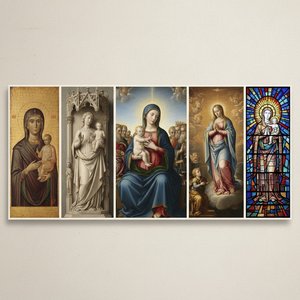
Divine Grace: A Journey Through the Most Iconic Depictions of the Virgin Mary in Art History
Embark on a profound journey through art history with our exploration of the most iconic depictions of the Virgin Mary. Discover the divine grace, symbolism, and masterful techniques found in Renaissance masterpieces and sacred iconography.
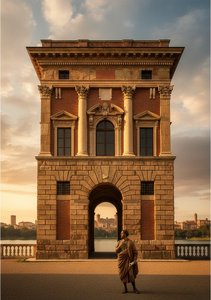
Giulio Romano: A Master of Mannerism & the Palazzo Te Legacy
Explore the revolutionary art of Giulio Romano, master of Mannerism & architect of Palazzo Te. Discover his influence, investment potential, and stunning frescoes – a guide for discerning collectors.


