Preview
 Send
Send Share
Share
 Details
 Guide
Guide

 Download
 Similars
 X-Ray
X-Ray Diaporama
 Stats
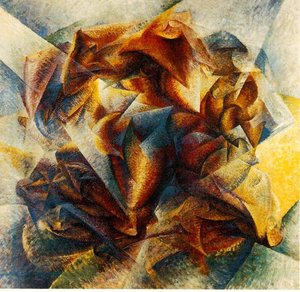
StatsDancer = Propeller = Sea
 Acrylic On Canvas
- WallArt
- Italian Futurism
 1915
1915 75.0 x 78.0 cm
 Metropolitan Museum of Art
 Read More
The artwork displayed on this page is protected by copyright law, which means we cannot legally create or sell an identical reproduction. This protection is enforced under international agreements such as the Berne Convention and by national laws, including those outlined by the U.S. Copyright Law - Title 17.
This method fully complies with copyright regulations because it does not involve copying or duplicating the protected artwork. Instead, it is a creative reinterpretation - a new painting that is influenced by the original but not identical to it.
Giclée / Art Print
Museum-quality giclée or canvas print with fast production and flexible finish options. ( Buy Hand Made Painting Switch to Digital Image)




P118B $10

P118H $10

P118W $10

P438Z $10

P508JH $12

P508YH $12

P805H $10

P805Z $10

P919BZ $10

P919G $10

P919XJ $10

P959ZH $10

P968JZ $12

W106C $8

W218G $10

W218JH $8

W218Y $10

W307PJ $10

W316G $10

W316PJ $8

W316Y $10

W398PJ $8

W4111J $10

W500HY $15

W500JH $15

W692G $12

W849H $8

W940BG $15

W953PJ $8




Pick from our preset sizes that match the artwork's original proportions.

Type the width and the height you need, to fit your frame or your wall. A print can only be cut, never made bigger than the picture, so a size with a different shape loses a part of the image. We send you a digital mockup to approve before we print anything. The picture shown on this page does not show the real cut — only the mockup does.
Worldwide Delivery () in 2 weeks instead of standard 4/5 weeks. (28 October)

Free Worldwide Express Shipping

High-Quality Linen Canvas

Full Shipping Insurance

Customs Tax Refund Guarantee

True Color Matching Guarantee

100-Day Return Policy (Defects Only)

100% Money-Back Guarantee

Bulk Discount Offer
 Glass option is only available in size under 110 CM

Dancer = Propeller = Sea
Giclée / Art Print
Reproduction Size
-


Total Price
$ 81
A Symphony of Motion: Gino Severini’s Dancer = Propeller = Sea
Severini's fascination with dynamism and the interplay between matter and movement—a cornerstone of Italian Futurism—is vividly realized in “Dancer = Propeller = Sea,” painted in 1915. This striking artwork transcends mere visual representation; it embodies a conceptual exploration of sensory experience, mirroring the manifesto’s assertion that seemingly disparate elements resonate with shared aesthetic principles. The artist deliberately employs similar shapes and colors to capture the essence of a dancer's graceful movement alongside the whirling blades of an airplane propeller and the turbulent expanse of the ocean—a masterful demonstration of Futurist artistic vision.- Style & Technique: Severini’s approach aligns perfectly with the tenets of Futurism, prioritizing speed, energy, and abstraction over traditional realism. He utilizes a bold geometric style characterized by angular forms and vibrant hues – predominantly reds, yellows, and blues – to convey an impression of unrestrained movement. The distinctive diamond shape of the canvas itself serves as a compositional device, amplifying the disorientation created by simultaneous visual stimuli.
- Historical Context: Created during the tumultuous period of World War I, “Dancer = Propeller = Sea” reflects the anxieties and aspirations of an era grappling with technological advancement and societal upheaval. Futurism emerged as a reaction against academic art traditions, championing industrial progress and rejecting sentimental emotion in favor of visceral sensation.
- Symbolism & Imagery: The chosen imagery—a dancer, a propeller, and the sea—holds profound symbolic significance. The dancer represents fluidity and grace, while the propeller embodies speed and mechanical power. Simultaneously, the sea symbolizes vastness, unpredictability, and primal energy – mirroring the overarching theme of dynamism. Severini’s deliberate use of color reinforces these ideas, conveying both vibrancy and instability.
- Emotional Impact: Viewing “Dancer = Propeller = Sea” evokes a feeling of exhilaration and disorientation. The artist skillfully manipulates visual elements to stimulate the viewer's senses, prompting contemplation on the relationship between art and experience. It’s a piece that demands attention, inviting viewers to immerse themselves in its energetic composition.
Questions & Answers
Which reproduction size is suggested for "Dancer = Propeller = Sea" by Gino Severini?
"Dancer = Propeller = Sea" is recommended at a large print size. Other sizes are available with the same proportions.
What color harmony does "Dancer = Propeller = Sea" by Gino Severini display?
"Dancer = Propeller = Sea" by Gino Severini displays a discordant palette color harmony.
Where in Gino Severini's career does "Dancer = Propeller = Sea" fall, given its date?
The 1915 date places "Dancer = Propeller = Sea" in the Mature Period of Gino Severini's development.
Artist Biography
Early Life and the Seeds of Artistic Rebellion
Gino Severini emerged into the world on April 7, 1883, in the picturesque Tuscan town of Cortona, Italy. His beginnings were humble; his father a junior court official, his mother a dressmaker – a background that instilled in him both a sensitivity to form and an awareness of societal structures. Formal education proved ill-fitting for the young Severini’s restless spirit. Expelled at fifteen alongside classmates for a youthful indiscretion involving stolen exam papers, he found himself cast adrift from conventional schooling. This expulsion, however, wasn't a derailment but rather a catalyst, freeing him to pursue his burgeoning artistic inclinations independently while working as a shipping clerk. The move to Rome in 1899 marked a turning point; it was there, amidst the ancient ruins and vibrant street life, that he began formal art classes, quickly becoming captivated by the shimmering effects of Divisionism – a technique championed by artists like Giacomo Balla and Umberto Boccioni, who would soon become pivotal figures in his artistic journey. These formative years laid the essential groundwork for Severini’s eventual embrace of Futurism, igniting within him a desire to capture the dynamism of modern life.Embracing the Velocity of Futurism
The invitation to join Filippo Tommaso Marinetti and Umberto Boccioni in the burgeoning Futurist movement proved transformative for Severini. He became a signatory of the *Manifesto of the Futurist Painters* in 1910, aligning himself with a revolutionary ideology that celebrated speed, technology, and the intoxicating energy of modernity. This wasn’t merely an artistic choice; it was a philosophical commitment to shattering tradition and forging a new aesthetic language for a rapidly changing world. Severini played a crucial role in disseminating Futurist ideas internationally, notably organizing the movement's first exhibition outside Italy at Galerie Bernheim-Jeune in Paris in 1912. His work during this period, exemplified by paintings like *North-South* (1915), embodies the Futurist obsession with capturing motion and energy through fragmented forms and a vibrant, almost explosive palette. Unlike some of his colleagues who focused on machines, Severini often turned to urban scenes and dancers as subjects, reflecting his fascination with portraying the rhythms and sensations of modern life – the swirling skirts, the flashing lights, the pulsating crowds.A Synthesis of Styles: Cubism and Beyond
Severini’s artistic style was never confined by rigid dogma; it was a constantly evolving synthesis of influences. While deeply rooted in the Futurist aesthetic, his work also demonstrated a profound engagement with Cubism, particularly after his pivotal visit to Paris in 1911. He absorbed elements of geometric abstraction and fragmented perspectives, incorporating them into his compositions to create dynamic arrangements that conveyed a sense of simultaneity and movement. Artists like Umberto Boccioni, Carlo Carrà, and Giovanni Francesco Romanelli were significant influences, but Severini’s unique vision allowed him to forge his own path. *Waltz*, for instance, showcases this masterful fusion of styles – the swirling energy of dance rendered through a Cubist lens, resulting in a painting that feels both chaotic and harmonious. Following the First World War, a shift occurred in Severini's artistic direction, mirroring a broader “return to order” prevalent throughout Europe. He explored classical themes and forms, yet retained his distinctive use of color and composition, demonstrating an ability to adapt and evolve without abandoning his core aesthetic principles.Later Years and Enduring Legacy
The years following the First World War saw Severini continuing to experiment with diverse artistic media, including mosaic and fresco, expanding his creative horizons beyond the canvas. He divided his time between Paris and Rome, producing works that reflected both his Italian heritage and his immersion in Parisian culture. Beyond his painting, he became a prolific writer on art theory, contributing significantly to the intellectual discourse surrounding modernism. Gino Severini passed away in Paris on February 26, 1966, at the age of 83, leaving behind a rich and multifaceted body of work. His legacy as a key figure in the Futurist movement – and a significant contributor to 20th-century Italian art – endures. Today, his paintings are held in prominent museums worldwide, including the Galleria Civica di Arte Moderna in Venice, serving as testaments to his lasting impact on the development of modern art and continuing to inspire generations of artists and viewers alike. He remains a vital link between the past and present, reminding us of the power of art to capture the energy and complexity of the human experience.
Gino Severini
1883 - 1966 , Italy
Quick Facts
- Full Name: Gino Severini
- Nationality: Italian
- Date Of Birth: 1883
- Date Of Death: 1966
- Place Of Birth: Cortona, Italy
- Notable Artworks:
- North-South
- Waltz
- Self-Portrait
- Artistic Movement Or Style: Futurism, Cubism
- Artists Who Influenced This Artist:
- Giacomo Balla
- Umberto Boccioni
- Artists Or Movements Influenced By This Artist: ['Marino Parenti']
Related Articles

Kandinsky's Masterpieces: 25 Paintings That Define Abstract Art | OriginalUniqueArt
Journey through Wassily Kandinsky's 25 most iconic abstract paintings. Explore his revolutionary use of color, form & spiritual expressionism. Find museum-quality Kandinsky reproductions and elevate your home decor with OriginalUniqueArt.com. Discover all masterpieces on OriginalUniqueArt.com!

Geometric Abstraction's 10 Defining Masterpieces | Art for Your Home - OriginalUniqueArt
Explore 10 defining masterpieces of Geometric Abstraction! Discover Kandinsky, Mondrian & Malevich’s iconic works. Find museum-quality art reproductions and curated decor ideas to elevate your home at OriginalUniqueArt.com.
Lyrical Abstraction: The Emotional Power of Color and Form in Modern Art History
Explore the profound emotional depth of Lyrical Abstraction. Discover how masters like Raymond Parker used color and form to bridge Impressionism and Abstract Expressionism. Learn about this pivotal movement through our expert-led art history guide.

Abstract Expressionism's 10 Defining Masterpieces |
Explore 10 defining Abstract Expressionism masterpieces by Pollock, Rothko & de Kooning. Discover the stories behind these iconic paintings and find museum-quality art reproductions to elevate your home decor on .
The Soul of Color: A Journey into the Emotional Resonance of Lyrical Abstraction
Embark on a cultural journey through Lyrical Abstraction. Explore how masters like Kandinsky used color and motion to translate emotion into visual poetry. Discover the profound beauty of abstract expressionism and learn to curate emotional resonance in your own art collection.