Preview
 Send
Send Share
Share
 Details
 Guide
Guide

 Download
 Similars
 X-Ray
X-Ray Diaporama
 Stats
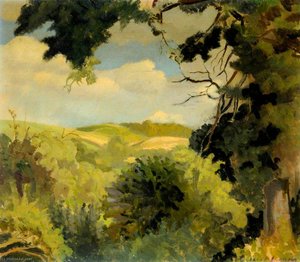
StatsMountain Landscape with a Windmill
 Oil On Canvas
- WallArt
- Post-Impressionism
 26.0 x 35.0 cm
 National Trust
 Read More
The artwork displayed on this page is protected by copyright law, which means we cannot legally create or sell an identical reproduction. This protection is enforced under international agreements such as the Berne Convention and by national laws, including those outlined by the U.S. Copyright Law - Title 17.
This method fully complies with copyright regulations because it does not involve copying or duplicating the protected artwork. Instead, it is a creative reinterpretation - a new painting that is influenced by the original but not identical to it.
Giclée / Art Print
Museum-quality giclée or canvas print with fast production and flexible finish options. ( Buy Hand Made Painting Switch to Digital Image)




P118B $10

P118H $10

P118W $10

P438Z $10

P508JH $12

P508YH $12

P805H $10

P805Z $10

P919BZ $10

P919G $10

P919XJ $10

P959ZH $10

P968JZ $12

W106C $8

W218G $10

W218JH $8

W218Y $10

W307PJ $10

W316G $10

W316PJ $8

W316Y $10

W398PJ $8

W4111J $10

W500HY $15

W500JH $15

W692G $12

W849H $8

W940BG $15

W953PJ $8




Pick from our preset sizes that match the artwork's original proportions.

Type the width and the height you need, to fit your frame or your wall. A print can only be cut, never made bigger than the picture, so a size with a different shape loses a part of the image. We send you a digital mockup to approve before we print anything. The picture shown on this page does not show the real cut — only the mockup does.
Worldwide Delivery () in 2 weeks instead of standard 4/5 weeks. (28 October)

Free Worldwide Express Shipping

High-Quality Linen Canvas

Full Shipping Insurance

Customs Tax Refund Guarantee

True Color Matching Guarantee

100-Day Return Policy (Defects Only)

100% Money-Back Guarantee

Bulk Discount Offer
 Glass option is only available in size under 110 CM

Mountain Landscape with a Windmill
Giclée / Art Print
Reproduction Size
-


Total Price
$ 81
A Vision of the English Countryside: Gilbert Spencer’s ‘Mountain Landscape with a Windmill’
Gilbert Spencer's “Mountain Landscape with a Windmill” isn’t merely a depiction of a rural scene; it’s an immersion into the heart of late 19th-century England. Painted around 19XX, this artwork captures a quintessential moment in time – a quiet afternoon bathed in diffused light, dominated by the steadfast presence of a traditional windmill against a backdrop of rolling hills and verdant fields. Spencer, deeply rooted in his native Cookham, eschewed grand narratives or dramatic events, instead focusing on the subtle beauty of everyday life and the enduring connection between humanity and nature. The painting speaks to a sense of tranquility and timelessness, inviting the viewer into a world where the rhythms of rural existence are both comforting and profoundly evocative.
Fauvist Echoes and Post-Impressionist Sensibilities
Spencer’s artistic approach is immediately recognizable as a synthesis of Fauvist and Post-Impressionist influences. The bold, unblended brushstrokes—a hallmark of the Fauvist movement—create a vibrant energy within the landscape, injecting color with an almost impulsive quality. Yet, these energetic marks are tempered by the more considered techniques of Post-Impressionism, evident in the careful observation of light and form. The colors aren’t realistic representations of nature; instead, they're emotionally charged – deep greens, ochres, and blues conveying a sense of atmosphere and mood rather than precise detail. The simplified forms of the windmill and hills contribute to this stylized effect, prioritizing expressive power over strict adherence to photographic accuracy.
The Symbolism of Industry and Nature
The prominent windmill itself is more than just a picturesque element; it’s a potent symbol. In rural England, windmills represented both industry – the grinding of grain, the harnessing of natural energy – and a connection to the land. Spencer masterfully balances these dualities, presenting the windmill not as a machine imposing itself upon nature, but as an integral part of its landscape. The surrounding hills, bathed in soft light, suggest a harmonious relationship between human endeavor and the natural world. The composition invites contemplation on themes of tradition, progress, and the enduring spirit of rural life.
A Legacy of English Realism
Gilbert Spencer’s “Mountain Landscape with a Windmill” stands as a testament to his commitment to realism while embracing innovative artistic techniques. His work reflects a deep understanding of the English countryside—a landscape he loved and meticulously observed throughout his life. As a brother to the renowned Stanley Spencer, Gilbert forged his own distinct path, prioritizing clarity, directness, and an honest portrayal of everyday life. This painting exemplifies his ability to capture not just the visual appearance of a scene but also its emotional resonance, solidifying his place as a key figure in British art history. Reproductions offer a beautiful way to bring this evocative landscape into your home or office, allowing you to experience the tranquility and timeless beauty of rural England.
Questions & Answers
Is "Mountain Landscape with a Windmill" available as a fine art print?
A print of "Mountain Landscape with a Windmill" by Gilbert Spencer can be ordered directly on its Fine Art Print page: a fine art print on cotton canvas or archival canvas paper.
What feeling do the colors of "Mountain Landscape with a Windmill" by Gilbert Spencer create?
The neutrals palette of "Mountain Landscape with a Windmill" by Gilbert Spencer goes together with its tranquil emotional tone. Color is one of the ways a work conveys feeling.
What other names is Gilbert Spencer known by?
Gilbert Spencer is also known as Stanley Spencer.
Artist Biography
A Life Rooted in English Soil: The World of Gilbert Spencer
Gilbert Spencer, born August 4th, 1892, in the idyllic village of Cookham, United Kingdom, was a painter deeply attuned to the rhythms and nuances of English life. He lived until 1979, leaving behind a body of work that quietly yet powerfully captures the essence of his nation’s landscapes and people. Coming from a large family—the eighth of eleven children—and with a father who instilled a love for music through his role as an organist and teacher, Spencer's early life was one of modest means but rich in intellectual stimulation. This upbringing fostered a sensitivity that would profoundly shape his artistic vision. Perhaps the most significant familial connection was his younger brother, Sir Stanley Spencer, a renowned painter whose own distinctive style often drew comparisons, yet Gilbert forged his own path with unwavering dedication to realism and a uniquely personal interpretation of the world around him. Formal education was limited by financial constraints, but the lively conversations within his family circle provided an invaluable substitute, nurturing a curious mind eager to explore artistic expression.Formative Years and Artistic Awakening
Spencer’s formal artistic training began in 1911 at the Camberwell School of Arts and Crafts, followed by studies in wood carving at the Royal College of Art. However, it was his time at the Slade School of Fine Art in London (1913-1915) that proved truly pivotal. There, he came under the profound influence of Henry Tonks, a master draughtsman whose emphasis on observation and technical skill left an indelible mark on Spencer’s approach to painting. He excelled at the Slade, winning the life drawing prize in 1914 and achieving recognition for his ambitious mural project, "The Seven Ages of Man." This early success hinted at a talent for large-scale compositions that would later manifest in his significant mural work. Beyond the formal curriculum, Spencer’s exposure to the Bloomsbury set through Lady Ottoline Morrell—a prominent patron of the arts and hostess at Garsington Manor—broadened his artistic horizons and introduced him to a vibrant intellectual circle. These early experiences laid the foundation for a career characterized by both technical mastery and a deep engagement with the cultural currents of his time.Evolving Styles and Enduring Themes
Spencer’s artistic development was marked by an exploration of various styles, yet he consistently returned to a core commitment to realism. His early landscapes, such as “Sashes Meadow, Cookham” (1914), reveal the influence of Impressionism in their delicate handling of light and color. Later works, like "Mountain Landscape with a Windmill," demonstrate an embrace of Fauvist and Post-Impressionist elements, characterized by bolder brushstrokes and simplified forms. However, Spencer never fully abandoned his dedication to accurately depicting the English countryside and its inhabitants. His subject matter consistently revolved around landscapes, portraits, genre scenes, and mural decorations—all reflecting a profound connection to rural England. He possessed an exceptional ability to capture the quiet dignity of everyday life, imbuing even seemingly mundane scenes with a sense of beauty and significance. This dedication to portraying English life with clarity and directness became a hallmark of his artistic identity.Achievements and Legacy
Throughout his career, Gilbert Spencer achieved significant recognition for his contributions to British art. His creation of murals at Holywell Manor (1934-1936), depicting the foundation legend of Balliol College, showcased his skill in large-scale narrative painting. During World War II, he served as an official war artist (1940–1943), documenting scenes of military training and life on the home front. This period provided a unique opportunity to observe and record the impact of conflict on the English landscape and its people. Spencer’s talent was further acknowledged through his election as an Associate Royal Academician in 1950, followed by full membership in 1959. He also enjoyed a distinguished teaching career, holding professorships at the Royal College of Art (1932-1948), Glasgow School of Art (1948–1950), and Camberwell School of Arts and Crafts (1950–1957). His published works, including his autobiography "Memoirs of a Painter" (1974) and a biography of his brother Stanley Spencer (1961), offer valuable insights into his artistic philosophy and the creative dynamics within his family. Notable works include “Troops in the Countryside,” which beautifully captures a peaceful coexistence between soldiers and rural life; "Summer Evening, Durdham Downs," a dramatic depiction of social gathering; and “Boy Holding a Rabbit” (1931), a tender portrayal of childhood innocence. Gilbert Spencer is remembered as a significant British painter who captured the essence of English life with clarity, directness, and a keen eye for detail. His work provides valuable insights into the social and rural landscapes of 20th-century England, and his legacy continues to inspire artists and art lovers alike. He also holds significance as Stanley Spencer's brother, contributing to understanding both artists’ careers within a familial context.
Gilbert Spencer
1892 - 1979 , United Kingdom
Quick Facts
- Full Name: Gilbert Spencer
- Nationality: British
- Date Of Birth: 1892
- Date Of Death: 1979
- Place Of Birth: Cookham, United Kingdom
- Notable Artworks:
- Troops in the Countryside
- Summer Evening, Durdham Downs
- Boy Holding a Rabbit
- A Cotswold Farm
- Artistic Movement Or Style:
- Impressionism
- Fauvism
- Realism
- Artists Who Influenced This Artist: ['Henry Tonks']
Related Articles
Beyond Impressionism: The Emotional Depth and Vibrant Evolution of Post-Impressionist Landscapes
Explore the profound evolution of Post-Impressionist landscapes. From Van Gogh's emotional brushwork to Cézanne's structural mastery, discover how these visionaries redefined art history through color and form in this expert guide for fine art enthusiasts.
Beyond the Light: Capturing Raw Emotion and Subjective Vision in Post-Impressionist Landscapes
Explore the profound emotional depth of Post-Impressionist landscapes. Discover how masters like Van Gogh moved beyond light to capture raw human feeling through vibrant color and expressive texture in this expert art history retrospective.

Evocations of Place: A Historical Journey Through Landscape Art
Explore the rich history of landscape art with OriginalUniqueArt. Discover renowned artists, movements like Impressionism & Romanticism, and expert guidance for collecting timeless pieces. Find your perfect serene escape today!

Cézanne's Masterpieces: 25 Iconic Artworks to Transform Your Space
Journey through 25 iconic artworks by Paul Cézanne – a master of Impressionism and Post-Impressionism. Explore his landscapes, still lifes, and the stories behind these timeless masterpieces. Discover museum-quality reproductions & curated decor at OriginalUniqueArt.com.
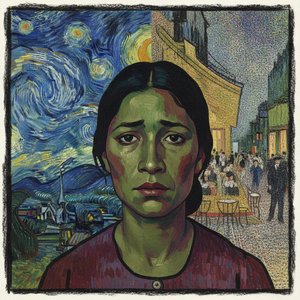
Beyond the Brush: How Post-Impressionism Recharged Modern Art with Bold Color and Raw Emotion
Dive into the high-energy revolution of Post-Impressionism. Discover how masters like Cézanne and Van Gogh traded fleeting light for bold colors and raw emotion, forever recharging modern art with the vibrant, structural intensity that defines today's most iconic visual aesthetics.