Preview
 Send
Send Share
Share
 Details
 Guide
Guide

 Download
 Similars
 X-Ray
X-Ray Diaporama
 Q&A
Q&A Stats
StatsBeggar Resting

- 128.0 x 142.0 cm


 Read More
Giclée / Art Print
Museum-quality giclée or canvas print with fast production and flexible finish options. ( Buy Hand Made Painting Switch to Digital Image)




































Pick from our preset sizes that match the artwork's original proportions.

Type the width and the height you need, to fit your frame or your wall. A print can only be cut, never made bigger than the picture, so a size with a different shape loses a part of the image. We send you a digital mockup to approve before we print anything. The picture shown on this page does not show the real cut — only the mockup does.
Worldwide Delivery () in 2 weeks instead of standard 4/5 weeks. (6 November)

Free Worldwide Express Shipping

High-Quality Linen Canvas

Full Shipping Insurance

Customs Tax Refund Guarantee

True Color Matching Guarantee

100-Day Return Policy (Defects Only)

100% Money-Back Guarantee

Bulk Discount Offer
 Glass option is only available in size under 110 CM

Beggar Resting
Giclée / Art Print
Reproduction Size
-


Total Price
$ 81
The Artist and His Style
Giacomo Ceruti (Pitocchetto) was an Italian painter known for his realistic and dignified portrayals of peasants and beggars. His style is characterized by the use of earthy tones, subtle lighting, and a focus on texture and detail. The Beggar Resting painting is a prime example of his work, with its muted colors and rough textures creating a sense of realism and authenticity.The Painting's Composition
The composition of the painting is simple yet effective, with the beggar seated on a rock or piece of furniture, surrounded by a subtle background. The use of light and shadow adds depth to the scene, while the beggar's contemplative expression draws the viewer in. The painting is a powerful example of genre painting, a style that focuses on depicting everyday life and ordinary people.- The Pinacoteca Tosio Martinengo museum in Brescia, Italy, houses an impressive collection of Giacomo Ceruti (Pitocchetto)'s works, including several paintings of beggars and peasants.
- For more information on the artist and his style, visit the OriginalUniqueArt.com website, which features a range of handmade oil painting reproductions, including works by Giacomo Ceruti (Pitocchetto).
- For a deeper understanding of the artist's life and work, visit the Wikipedia page dedicated to Giacomo Ceruti (Pitocchetto).
The Beggar Resting painting is a testament to the artist's exceptional talent and his ability to create powerful and evocative works of art. As a handmade oil painting reproduction, it is available for purchase on the OriginalUniqueArt.com website, allowing art lovers to own a piece of history.
Questions & Answers
What kind of colors does "Beggar Resting" use?
The palette of "Beggar Resting" by Giacomo Ceruti (Pitocchetto) is described as earthy. It is a compact description of the work's colors.
How harmonious are the colors of "Beggar Resting" by Giacomo Ceruti (Pitocchetto)?
The colors of "Beggar Resting" by Giacomo Ceruti (Pitocchetto) show a strong color unity harmony. Harmony describes how the colors relate to each other.
What is the creation date of "Beggar Resting" by Giacomo Ceruti (Pitocchetto)?
The creation of "Beggar Resting" by Giacomo Ceruti (Pitocchetto) is dated 1720.
Artist Biography
The Soul of the Humble: The Life of Giacomo Ceruti
Born in Milan, Giacomo Antonio Melchiorre Ceruti emerged as one of the most empathetic voices of the Italian late Baroque period. While his early years were rooted in the vibrant artistic atmosphere of Milan, his journey led him to Brescia, where he settled with his family in the parish of Sant'Agata. This transition marked the beginning of a career that would forever link his name to the very people he sought to immortalize. Though his initial forays into history painting were noted by some as clumsy, Ceruti found his true calling not in the grand, sweeping narratives of myth or religion, but in the quiet, dignified realities of the common man.
His profound connection to the marginalized members of society—the beggars, the paupers, and the simple craftsmen—was so central to his oeuvre that he earned the affectionate and descriptive nickname Pitocchetto, or "little beggar." This moniker was not merely a label but a testament to his artistic mission: to elevate the subjects of the street to the status of portraiture, treating their struggles and daily labors with a level of respect and psychological depth rarely afforded to the lower classes during the eighteenth century.
A Mastery of Light and Earthly Tones
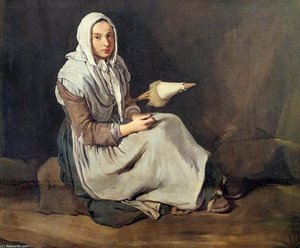
Ceruti’s technical prowess is most evident in his ability to manipulate light and texture to evoke a sense of profound realism. His style, deeply influenced by the Baroque emphasis on chiaroscuro, utilizes dramatic lighting to create volume and emotional weight within his compositions. In works such as The Spinner, one can observe how he employs subtle shadows and warm colors to cultivate an atmosphere of tranquility and contemplation, drawing the viewer's eye to the intricate details of a woman’s hands or the texture of her clothing.
His palette was often dominated by earthy tones, a choice that reinforced the connection between his subjects and the rugged, natural world they inhabited. Whether depicting the weathered face of a man in The Dwarf or the weary posture of a figure in Beggar Resting, Ceruti used muted colors and rough textures to achieve an authenticity that feels almost tactile. This focus on the material reality of his subjects—the weight of a heavy coat, the coarseness of a thatched roof, or the dampness of laundry in The Laundress—allowed him to bridge the gap between the observer and the observed.
Legacy and Artistic Significance
The historical significance of Giacomo Ceruti lies in his ability to transform genre painting into a medium of profound humanism. While he was capable of executing religious scenes, altarpieces, and even portraits for the local nobility, it is his large-scale depictions of everyday life that secure his place in the canon of Italian art. His work serves as a vital historical window into the social strata of Northern Italy, capturing the essence of 18th-century domesticity and survival.
Today, the enduring power of his vision is preserved in prestigious collections, such as the Musei Civici d'Arte e Storia in Brescia and the Fundación Colección Thyssen-Bornemisza in Spain. Through his empathetic lens, Ceruti ensured that the fleeting moments of the disenfranchised—a moment of rest, a repetitive task, or a quiet gaze—were granted a permanent and dignified existence in the annals of art history.

Giacomo Ceruti (Pitocchetto)
1698 - 1767 , Italy
Quick Facts
- Artistic Movement Or Style: Late Baroque
- Artists Who Influenced This Artist: ['Antonio Lucini']
- Full Name: Giacomo Antonio Melchiorre Ceruti
- Nationality: Italian
- Notable Artworks:
- Beggar Resting
- The Dwarf
- The Spinner
- The Laundress
- Place Of Birth: Milan, Italy
- Date Of Birth: 1698
- Date Of Death: 1767
Related Articles
The Art of the Everyday: A Definitive Guide to the History and Mastery of Genre Painting
Explore the profound beauty of genre painting. From Dutch Golden Age masters to global traditions, discover how artists capture the essence of everyday life through masterful realism and timeless storytelling.
18th Century Masters: 10 Artworks That Define an Era | OriginalUniqueArt
Journey through 18th century art! Explore 10 iconic paintings – from Rococo elegance to Neoclassical grandeur. Discover Fragonard, David & more. Find museum-quality reproductions and elevate your home decor on OriginalUniqueArt.com.
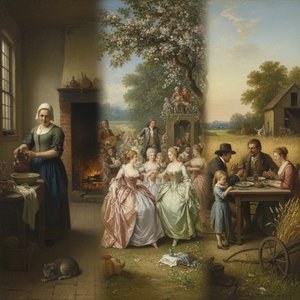
Scenes of Daily Life: A Comprehensive Exploration of Genre Painting Through History
Explore the rich history of genre painting! Discover Dutch Masters & European artists who captured everyday life with stunning realism. Learn about symbolism, techniques & lasting influence.

Joseph Highmore: Moral Tales & Domestic Genre in 18th-Century British Art
Explore the captivating world of Joseph Highmore, a leading British Rococo painter. Discover his elegant portraits, insightful 'Pamela' illustrations & contributions to 18th-century art history. Learn more at OriginalUniqueArt.

Echoes of Daily Life: Genre Painting & Societal Values Through the Ages
Explore the captivating world of genre painting! Discover Dutch Masters like Ostade & de Hooch, hidden symbolism, and social commentary in art history. Shop museum-quality reproductions at OriginalUniqueArt.