

 Preview
 Send
Send Share
Share
 Details

 Download
 Similars
 X-Ray
X-Ray Diaporama
 Stats
StatsThe Virgin of Sorrows


 Read More
Hand Made Oil Reproduction
Hand-painted oil on canvas in your size and frame, made to order by our artists. ( Switch to Print Switch to Digital Image)




P118B $10

P118H $10

P118W $10

P438Z $10

P508JH $12

P508YH $12

P805H $10

P805Z $10

P919BZ $10

P919G $10

P919XJ $10

P959ZH $10

P968JZ $12

W106C $8

W218G $10

W218JH $8

W218Y $10

W307PJ $10

W316G $10

W316PJ $8

W316Y $10

W398PJ $8

W4111J $10

W500HY $15

W500JH $15

W692G $12

W849H $8

W940BG $15

W953PJ $8




Pick from our preset sizes that match the artwork's original proportions.

You may enter your own dimensions to fit a specific frame or space. If your selected size does not match the original image's proportions, we will either crop the artwork or extend the painting with additional hand-painted elements. A digital mockup will be sent for your approval before production begins.
Please note that the on-screen preview does not reflect the actual cropping or extension. Only the mockup will accurately show the final composition.
While custom sizes are available, we recommend selecting a dimension from the predefined list to preserve the original proportions.
After order, OriginalUniqueArt.com team will email client for instructions and provide a mockup preview
Worldwide Delivery () in 3/4 weeks instead of standard 5 weeks. (18 September). No compromise on quality.

Free Worldwide Express Shipping

High-Quality Linen Canvas

Full Shipping Insurance

Customs Tax Refund Guarantee

True Color Matching Guarantee

100-Day Return Policy (Defects Only)

100% Money-Back Guarantee

Bulk Discount Offer
 Glass option is only available in size under 110 CM

The Virgin of Sorrows
Reproduction Medium
Reproduction Size
-


Total Price
$ 300
The Weight of Sorrow: Germain Pilon’s ‘The Virgin of Sorrows’
Germain Pilon's “The Virgin of Sorrows,” painted around 1580, isn’t merely a depiction of the biblical Mary; it’s an embodiment of profound grief and maternal anguish rendered with startling realism and emotional depth. This terracotta sculpture, now residing in the Louvre Museum, transcends its humble material to become a powerful meditation on suffering – a cornerstone of Renaissance art's exploration of human emotion and religious devotion. Pilon, a sculptor deeply rooted in the artistic currents of Fontainebleau, skillfully blended influences from the late Gothic tradition with the burgeoning dynamism of Mannerism, creating an image that is both familiar and unsettlingly intimate.
The sculpture immediately draws the viewer’s eye to Mary's posture – slumped, head bowed, hands clasped together in a gesture of supplication or quiet despair. Her drapery, voluminous and swirling, isn’t simply decorative; it actively conveys her sorrow, mimicking the turbulent emotions within. The folds cascade downwards, mirroring the weight of her grief and creating a sense of instability, as if she might collapse under the burden of her loss. Pilon's mastery lies in his ability to imbue this seemingly simple pose with an overwhelming sense of pathos – a testament to his understanding of human psychology and his skill in translating it into sculpted form.
A Renaissance Echo: Context and Influences
Pilon’s work emerged during a period of intense religious and political upheaval in France. The Valois dynasty, marked by succession crises and devastating wars, had left an indelible scar on the nation's psyche. Catherine de Medici, Queen Mother and patron of the arts, commissioned numerous works to commemorate her deceased sons and consolidate her family’s legacy – a poignant reflection of the constant threat of loss that permeated royal life. This context profoundly shaped Pilon’s artistic vision; his sculptures weren’t simply religious icons but also powerful symbols of mourning and remembrance.
The sculpture's style is deeply influenced by the Fontainebleau School, known for its elegant forms, rich colors, and dramatic use of light and shadow. However, Pilon departs from the idealized beauty often associated with this school, opting instead for a more raw and emotionally charged representation of Mary’s suffering. There’s an undeniable connection to Michelangelo's work, particularly his Pietà, evident in the pyramidal composition and the expressive rendering of human anatomy – though Pilon imbues these elements with a distinctly French sensibility.
Symbolism and the Seven Sorrows
“The Virgin of Sorrows” is inextricably linked to the concept of the “Seven Sorrows,” a popular devotion within Catholic tradition. These sorrows represent key moments in Mary’s life – from the prophecy of Simeon foretelling her son's suffering, through the flight into Egypt, the loss of Jesus in the Temple, and culminating in his crucifixion and burial. The sculpture subtly alludes to these events, inviting viewers to contemplate the depth of Mary’s pain.
The most striking element is undoubtedly the depiction of Mary holding a lance – a direct reference to the spear that pierced her heart at Christ's crucifixion. This visual symbol powerfully conveys the intensity of her grief and serves as a potent reminder of the sacrifice she endured for humanity. The sculpture’s muted color palette—earth tones dominating the robe—further emphasizes the somber mood, reinforcing the sense of profound sorrow.
A Timeless Expression of Maternal Grief
“The Virgin of Sorrows” remains a profoundly moving work of art centuries after its creation. Pilon's ability to capture such intense emotion in terracotta is remarkable, and the sculpture’s enduring appeal lies in its universal themes of loss, grief, and maternal love. It speaks to the shared human experience of sorrow—a reminder that even amidst suffering, there can be a profound sense of dignity and grace. Reproductions of this piece offer a powerful way to bring this timeless expression of maternal grief into any space, serving as both an artistic statement and a poignant meditation on the complexities of the human heart.
Artist Biography
Germain Pilon (1528–1590): The Sculptor of Emotion and Fontainebleau
Germain Pilon stands as one of the most prominent figures in French Renaissance sculpture, bridging the gap between Gothic tradition and Baroque grandeur. Born around 1525 in Paris—though recent scholarship suggests a birth year closer to 1528—he inherited his artistic talent from his father, Antoine Pilon, who established a workshop specializing in sculptural commissions. This familial legacy profoundly shaped Pilon’s formative years, immersing him in the techniques and aesthetics of the era. Early documentation indicates collaborative projects with his father on monumental religious statues and tomb effigies, demonstrating an immediate engagement with the prevailing artistic currents of the time.- Early Training & Collaboration: Antoine Pilon's workshop provided Pilon with invaluable experience in crafting stone sculptures, fostering a mastery that would define his entire career. The collaborative endeavors showcased a keen understanding of sculptural craftsmanship and established a foundation for future achievements.
- The Fontainebleau School Influence: Like many sculptors of his generation, Pilon was deeply impacted by the Fontainebleau School—Michelangelo’s workshop—which championed anatomical accuracy and theatrical emotion. This influence is palpable in his subsequent works, where figures are rendered with remarkable realism and imbued with expressive gestures that convey profound psychological depth.
Notable Commissions & Artistic Style
Pilon quickly gained recognition for his exceptional skill and artistic vision. His involvement in the decoration of Francis I’s tomb at Saint-Denis—a project undertaken alongside Jean Goujon—marked a pivotal moment, solidifying his reputation as one of France's foremost sculptors. This monumental undertaking exemplifies Pilon’s commitment to capturing the grandeur and solemnity of religious iconography while simultaneously exploring innovative sculptural techniques. Subsequent commissions included Henry II’s tomb at Saint-Denis (completed in 1564), a testament to his ability to translate complex narratives into compelling visual representations.- Saint Denis Tomb: The Saint Denis Tomb is considered one of Pilon's masterpieces, showcasing his mastery of marble carving and embodying the Fontainebleau School’s emphasis on anatomical precision and dramatic emotion.
- Diana & Stag Relief: The Diana and Stag relief—commissioned for Diane de Poitiers—is a striking example of Pilon’s sculptural style, characterized by rough textures and expressive poses that convey a sense of dynamism and psychological intensity.
Major Achievements & Legacy
Pilon's contribution to French art extended beyond monumental tombs; he excelled in portrait sculpture and medal design, producing evocative representations of royalty and nobility. His bronze busts of Henry II and Catherine de Medici—particularly the latter—remain iconic symbols of Renaissance elegance and artistic accomplishment. Furthermore, Pilon’s involvement with Pierre Bontemps fostered a collaborative spirit that enriched the artistic landscape of Paris during his lifetime. He became renowned for his ability to capture the essence of human emotion within sculpted form, establishing himself as a champion of Mannerist aesthetics. His influence can be seen in subsequent generations of sculptors who embraced realism and theatricality—a legacy that continues to inspire admiration and scholarly study today.Key Works
- Resurrection of Christ (Louvre)
- Diana with a Stag (Louvre)
- Tomb of Henry II and Catherine de Medici (Saint-Denis Basilica)
- The Lamentation (Bronze Sculpture)
Germain Pilon’s sculptures stand as enduring monuments to the Renaissance spirit—a testament to artistic innovation, technical virtuosity, and a profound engagement with human emotion.

Germain Pilon
1528 - 1590 , France
Quick Facts
- Artistic Movement Or Style: Mannerist
- Artists Or Movements Influenced By This Artist: ['Renaissance Sculpture']
- Artists Who Influenced This Artist:
- Michelangelo
- Fontainebleau School
- Date Of Birth: c. 1525
- Date Of Death: 1590
- Full Name: Germain Pilon
- Nationality: French
- Notable Artworks:
- Resurrection of Christ
- Diana with a Stag
- Henry II and Catherine de Medici Tomb
- Place Of Birth: Paris, France
Related Articles

The Enduring Form: Sculpture Across History, Technique & Emotional Resonance
Explore the rich history of sculpture with OriginalUniqueArt. Discover key techniques, influential artists & investment potential for discerning collectors. Expert insights into valuing and collecting timeless masterpieces.

The Enduring Form: Exploring Themes & Techniques in Sculpture Across Historical Periods
Explore the rich history of sculpture from ancient masterpieces to contemporary innovations. Discover key techniques, influential artists & investment potential for discerning art collectors.

Bronze Sculptures That Defined Art History | OriginalUniqueArt
Journey through art history with our Top 10 bronze sculptures! Explore masterpieces by Rodin, Michelangelo & more. Discover stories behind iconic statues and find museum-quality reproductions for your home decor at OriginalUniqueArt.com.
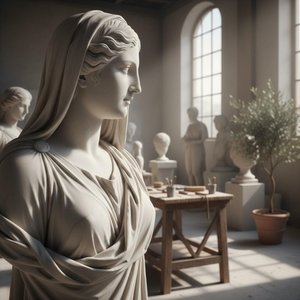
Timeless Elegance: A Complete Guide to the Sublime Beauty and Artistry of Marble Sculpture
Discover the sublime beauty of marble art through an expert exploration of Renaissance and Neoclassical masterpieces. From the delicate textures of Carpeaux to the grandeur of Sansovino, immerse yourself in a guide to timeless elegance and sculptural perfection.

The Enduring Allure of Marble in Art History: From Classical Sculpture to Modern Abstraction
Explore the captivating history of marble sculpture from ancient Greece to modern art. Discover renowned artists like Canova & Michelangelo, carving techniques, and investment insights at OriginalUniqueArt.


