Preview
 Send
Send Share
Share
 Details
 Guide
Guide

 Download
 Similars
 X-Ray
X-Ray Diaporama
 Stats
StatsSamson and Delilah
 Acrylic On Canvas
- WallArt
- Baroque
 1615
1615 129.0 x 94.0 cm
 Cleveland Museum of Art
 Read More
Giclée / Art Print
Museum-quality giclée or canvas print with fast production and flexible finish options. ( Buy Hand Made Painting Switch to Digital Image)




P118B $10

P118H $10

P118W $10

P438Z $10

P508JH $12

P508YH $12

P805H $10

P805Z $10

P919BZ $10

P919G $10

P919XJ $10

P959ZH $10

P968JZ $12

W106C $8

W218G $10

W218JH $8

W218Y $10

W307PJ $10

W316G $10

W316PJ $8

W316Y $10

W398PJ $8

W4111J $10

W500HY $15

W500JH $15

W692G $12

W849H $8

W940BG $15

W953PJ $8




Pick from our preset sizes that match the artwork's original proportions.

Type the width and the height you need, to fit your frame or your wall. A print can only be cut, never made bigger than the picture, so a size with a different shape loses a part of the image. We send you a digital mockup to approve before we print anything. The picture shown on this page does not show the real cut — only the mockup does.
Worldwide Delivery () in 2 weeks instead of standard 4/5 weeks. (23 October)

Free Worldwide Express Shipping

High-Quality Linen Canvas

Full Shipping Insurance

Customs Tax Refund Guarantee

True Color Matching Guarantee

100-Day Return Policy (Defects Only)

100% Money-Back Guarantee

Bulk Discount Offer
 Glass option is only available in size under 110 CM

Samson and Delilah
Giclée / Art Print
Reproduction Size
-


Total Price
$ 81
The Scene Unfolds: Gerard van Honthorst’s Dramatic Portrait
Gerard van Honthorst's "Samson and Delilah," painted in 1615, isn’t merely a depiction of a biblical tale; it’s a meticulously crafted tableau vivant—a stage set frozen in time. The painting immediately commands attention with its intensely focused composition, drawing the viewer into a small, intimate chamber dominated by a sprawling dining table. Three figures occupy this space: Samson, lying prone and vulnerable on the table, his body partially draped with a cloth; Delilah, her hand raised to her face in a gesture of both anguish and calculated seduction; and the enigmatic woman beside her, seemingly observing the unfolding drama with a mixture of concern and perhaps even complicity. The lighting, characteristic of Honthorst’s signature style—tenebrism—is masterful, plunging much of the scene into deep shadow while bathing the central figures in a dramatic, almost theatrical light source. This stark contrast amplifies the emotional intensity, creating an atmosphere thick with suspense and impending doom.
- Composition: The pyramidal arrangement of the figures anchors the scene, drawing the eye upwards to Samson’s exposed form and then downwards to Delilah's expressive face.
- Color Palette: Rich browns, deep reds, and muted golds dominate the palette, lending a sense of opulence and drama while simultaneously hinting at the underlying themes of betrayal and loss.
- Detail: Honthorst’s attention to detail is remarkable—from the texture of the fabrics to the subtle expressions on each figure's face—contributing significantly to the painting’s realism and emotional impact.
A Master of Light and Shadow: The Influence of Caravaggio
Van Honthorst’s artistic journey profoundly shaped this work, mirroring his encounter with the revolutionary techniques of Caravaggio in Rome. Like Caravaggio, Honthorst employed tenebrism to create a heightened sense of drama and psychological intensity. However, while Caravaggio often used stark, almost brutal contrasts of light and dark, Honthorst softens the effect slightly, creating a more nuanced and emotionally complex atmosphere. The careful placement of the light source—a single candle illuminating the central figures—is crucial, directing our attention to the key elements of the narrative and emphasizing the vulnerability of Samson. This technique wasn’t simply an aesthetic choice; it was a deliberate strategy for conveying the story's emotional core – the slow unraveling of strength and trust.
The painting is deeply rooted in the Baroque period, characterized by its dramatic intensity, theatricality, and focus on emotion and storytelling. Honthorst’s work exemplifies these qualities perfectly, showcasing his mastery of light, composition, and psychological realism.Biblical Narrative and Symbolic Weight
The story of Samson and Delilah is a potent allegory of betrayal, temptation, and the loss of innocence. The painting doesn't simply recount the biblical narrative; it delves into its emotional heart. Samson’s vulnerability as he lies exposed on the table speaks to his diminished strength—both physical and spiritual—while Delilah’s seductive gaze embodies the allure of deceit and the destructive power of manipulation. The woman beside her, often interpreted as Semadar, represents a silent witness to this tragic exchange, perhaps reflecting the wider community's complicity in Samson’s downfall. The act of shaving his hair, traditionally a symbol of strength and divine protection, becomes an emblem of utter defeat.
Historical Context:** The painting was created during a period of significant artistic innovation in the Netherlands, marked by a renewed interest in classical art and a growing emphasis on realism and emotional expression. Honthorst’s work reflects these trends, while also incorporating his own distinctive style and influences.Research & Reproduction: A Window into the Past
Further research reveals that this painting is part of a larger collection of biblical scenes created by Honthorst during his time in Rome. The Cleveland Museum of Art holds a remarkably similar version, offering valuable insights into the artist’s technique and compositional choices. The Web Gallery of Art provides detailed images and historical information about Honthorst's life and work, while WikiArt offers a comprehensive overview of the painting itself. These resources highlight the enduring fascination with this dramatic narrative and the skill of the artist who brought it to life on canvas. High-quality reproductions capture the richness of color and detail, allowing viewers to appreciate the artistry of this Baroque masterpiece for generations to come.
Questions & Answers
Where in the home does a reproduction of "Samson and Delilah" fit well?
"Samson and Delilah" by Gerard van Honthorst is recommended for a living room. This suggestion is based on the work's subject, colors and mood.
How can I view "Samson and Delilah" by Gerard van Honthorst as a slideshow?
The diaporama of "Samson and Delilah" can be watched on the artwork's Diaporama page.
How well known is "Samson and Delilah" by Gerard van Honthorst?
"Samson and Delilah" is classified as recognized.
Artist Biography
A Master of Light and Shadow: The Life and Art of Gerard van Honthorst
Gerard van Honthorst emerged from Utrecht in 1592, a pivotal figure poised to illuminate the Dutch Golden Age with his dramatic artistry. Initially guided by his father, a decorative painter, young Gerard’s talent blossomed under the tutelage of Abraham Bloemaert, establishing a solid foundation in draftsmanship and composition. However, it was a transformative journey to Rome that irrevocably altered the course of his artistic development. There, amidst the fervent energy of the Italian Baroque, he encountered the groundbreaking work of Caravaggio – an encounter that would define his signature style and earn him the evocative nickname “Gherardo delle Notti,” or Gerard of the Nights. The dramatic use of tenebrism, a technique employing stark contrasts between light and dark, became Honthorst’s hallmark, imbuing his canvases with a palpable sense of drama and emotional intensity. He wasn't merely imitating Caravaggio; he was translating the Italian master’s innovations into a distinctly Dutch sensibility, focusing on intimate scenes illuminated by artificial light sources – candles, lamps, and fires – creating an atmosphere both realistic and deeply theatrical. This mastery over light wasn’t simply technical skill; it was a means of revealing character, of drawing the viewer into the emotional core of each scene.From Roman Acclaim to Dutch Mastery
Honthorst's time in Rome was marked by considerable success and patronage. He found favor amongst the city’s elite, including Vincenzo Giustiniani, for whom he created the powerful “Christ Before the High Priest,” a work that exemplifies his masterful command of light and shadow. This painting, now residing in London’s National Gallery, showcases not only his technical skill but also his ability to convey profound psychological depth within his figures. He further solidified his reputation by working for Cosimo II de' Medici, Grand Duke of Tuscany, demonstrating an adaptability and versatility that would serve him well throughout his career. Upon returning to Utrecht around 1620, Honthorst quickly established himself as a leading portrait painter in the Dutch Republic. His ability to capture not just physical likeness but also the character and social standing of his sitters made him highly sought after by wealthy merchants, nobles, and even royalty. He became president of the Guild of St. Luke in Utrecht in 1623, a testament to his growing influence within the artistic community. This period saw a flourishing of commissions, allowing Honthorst to refine his style and establish a distinctive voice within Dutch painting.A Courtly Artist: Commissions and Collaborations
The reach of Honthorst’s talent extended beyond the Netherlands. His work attracted the attention of Sir Dudley Carleton, who enthusiastically recommended him to prominent English aristocrats like the Earl of Arundel and Lord Dorchester. This led to commissions from Queen Elizabeth of Bohemia, sister of Charles I, who employed him as both a painter and drawing master for her children. These royal connections culminated in significant works such as the allegorical depiction of Charles and Henrietta Maria as Diana and Apollo, now housed at Hampton Court Palace. Honthorst’s willingness to collaborate with other artists also speaks to his open-mindedness and artistic generosity. He famously hosted Peter Paul Rubens during a visit to Utrecht, even painting him in a playful scene depicting Diogenes searching for an honest man – a testament to the mutual respect between these two Baroque giants. While some collaborative works, like “The Taking of Christ,” were initially attributed solely to Honthorst, modern scholarship has revealed the contributions of other artists, highlighting the complex dynamics of artistic production during this period. These collaborations weren’t simply about sharing workload; they were intellectual exchanges that enriched the artistic landscape.Legacy and the Utrecht Caravaggisti
Gerard van Honthorst’s influence resonated far beyond his lifetime. He was a key figure in the *Utrecht Caravaggisti* movement – a group of Dutch painters who embraced Caravaggio's dramatic realism and tenebrism. Alongside artists like Hendrick ter Brugghen and Dirck van Baburen, he helped to establish a distinctly Dutch interpretation of Italian Baroque style. His emphasis on genre scenes illuminated by artificial light, his masterful portraits, and his ability to convey emotional depth through skillful use of chiaroscuro left an indelible mark on the development of Dutch Golden Age painting. Even his brother, Willem van Honthorst, followed in his footsteps, though often with works initially misattributed to Gerard due to stylistic similarities.- Honthorst’s paintings continue to captivate audiences today.
- His dramatic beauty and psychological insight are enduring qualities.
- He cemented his place as a pivotal figure in art history.

Gerard van Honthorst
1590 - 1656 , Netherlands
Quick Facts
- Artistic Movement Or Style: Baroque, Caravaggism
- Artists Or Movements Influenced By This Artist: ['Utrecht Caravaggisti']
- Artists Who Influenced This Artist: ['Caravaggio']
- Date Of Birth: 1590
- Date Of Death: 1656
- Full Name: Gerard van Honthorst
- Nationality: Dutch
- Notable Artworks:
- Christ in the Garden
- Supper Party
- Diana and Apollo
- Place Of Birth: Utrecht, Netherlands
Related Articles

Golden Light & Dutch Skies: The Timeless Magic of Dutch Golden Age Landscapes
Discover the breathtaking beauty of Dutch Golden Age landscapes. Explore the mastery of light, chiaroscuro, and 17th-century realism through an expert art history lens, celebrating the enduring legacy of the Dutch Masters for discerning collectors and art lovers.

Dutch Masters: 10 Golden Age Paintings That Still Inspire |
Journey into the Dutch Golden Age! Explore 10 iconic paintings by Rembrandt, Vermeer & Hals. Discover the stories behind these Baroque masterpieces and find museum-quality art reproductions to elevate your home decor on .
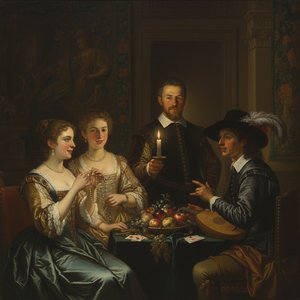
Gerard van Honthorst: Illuminating the Dutch Golden Age with Caravaggism & Courtly Grace
Explore the captivating world of Gerard van Honthorst, a Dutch Golden Age master renowned for his dramatic chiaroscuro & courtly portraits. Discover his life, art, and lasting influence on Baroque painting.

Golden Age Reflections: Dutch Baroque Painting & Cultural Innovation
Explore the Dutch Golden Age of painting! Discover key artists like Vermeer & ter Borch, their innovative techniques, and the rich cultural context behind these Baroque masterpieces. Learn about collecting & appreciating this iconic art period.

Mastering Light & Shadow: A Journey Through the Dutch Golden Age's Luminous Legacy
Embark on a cultural journey through the Dutch Golden Age. Explore the masterful interplay of light and shadow in 17th-century masterpieces, from Rembrandt to Vermeer, and discover how this era of profound realism continues to inspire fine art collectors today.