

 Preview
 Send
Send Share
Share
 Details
 Guide
Guide

 Download
 Similars
 X-Ray
X-Ray Diaporama
 Stats
StatsL'ELEVATION EN CROIX

 Read More
Hand Made Oil Reproduction
Hand-painted oil on canvas in your size and frame, made to order by our artists. ( Switch to Print Switch to Digital Image)




P118B $10

P118H $10

P118W $10

P438Z $10

P508JH $12

P508YH $12

P805H $10

P805Z $10

P919BZ $10

P919G $10

P919XJ $10

P959ZH $10

P968JZ $12

W106C $8

W218G $10

W218JH $8

W218Y $10

W307PJ $10

W316G $10

W316PJ $8

W316Y $10

W398PJ $8

W4111J $10

W500HY $15

W500JH $15

W692G $12

W849H $8

W940BG $15

W953PJ $8




Pick from our preset sizes that match the artwork's original proportions.

Type the width and the height you need, to fit your frame or your wall. This is hand-painted, so for a size with a different shape the artist can paint a bit more around the picture, or cut a bit — you choose. We send you a digital mockup to approve before the painting starts. The picture shown on this page does not show the real result — only the mockup does.
After order, OriginalUniqueArt.com team will email client for instructions and provide a mockup preview
Worldwide Delivery () in 3/4 weeks instead of standard 5 weeks. (25 October). No compromise on quality.

Free Worldwide Express Shipping

High-Quality Linen Canvas

Full Shipping Insurance

Customs Tax Refund Guarantee

True Color Matching Guarantee

100-Day Return Policy (Defects Only)

100% Money-Back Guarantee

Bulk Discount Offer
 Glass option is only available in size under 110 CM

L'ELEVATION EN CROIX
Reproduction Medium
Reproduction Size
-


Total Price
$ 475
Artist Biography
Gaspar de Crayer: A Flemish Master of Counter-Reformation Splendor
Gaspar de Crayer, a name perhaps less familiar than his contemporaries Rubens or Van Dyck, nevertheless stands as a pivotal figure in 17th-century Flemish art. Born in Antwerp in 1584 and passing away in Ghent in 1669, he navigated the turbulent political landscape of the Spanish Netherlands, becoming a court painter, guild master, and prolific creator of both portraits and monumental altarpieces. His work reflects not only the artistic currents of his time but also the profound religious shifts brought about by the Counter-Reformation, making him a crucial link between the Mannerist traditions of the past and the burgeoning Baroque style.
De Crayer’s early life was steeped in art. He was the son of Gaspard de Crayer the Elder, a respected decorative painter, illuminator, and art dealer – a lineage that instilled within him an appreciation for craftsmanship and a deep understanding of artistic materials. Rather than remain in his birthplace, Antwerp, he sought opportunity in Brussels, a city rapidly becoming a center for artistic patronage under the Spanish governors. It was here, around 1607, that he achieved master status within the Guild of Saint Luke, a significant accomplishment demonstrating his technical skill and dedication to the profession.
His early career was marked by commissions from the Spanish court and local dignitaries. He quickly established himself as a portraitist, capturing the likenesses of kings, governors, and members of the Brussels city council – works that showcased both his ability to render realistic features and his growing command of composition. The equestrian portrait of Don Diego Messia Felipe de Guzmán (now housed in the Kunsthistorisches Museum in Vienna) exemplifies this early period, demonstrating a sophisticated understanding of perspective and a meticulous attention to detail. However, it was his work on altarpieces that truly cemented his reputation and established him as a leading artist of his generation.
The Counter-Reformation and Religious Art
De Crayer’s career coincided with the rise of the Counter-Reformation, a period of intense religious reform within the Catholic Church. The church actively sought to utilize art as a tool for propaganda and spiritual instruction, commissioning elaborate altarpieces and devotional paintings that would inspire piety and reinforce Catholic doctrine. De Crayer embraced this opportunity, producing a vast number of works for churches and monasteries throughout Flanders, Germany, and Spain. These altarpieces were not merely decorative; they were carefully constructed narratives designed to convey religious messages through vivid imagery and dramatic composition.
His approach was deeply influenced by the prevailing artistic trends of the time, particularly those championed by Peter Paul Rubens. Like Rubens, De Crayer favored dynamic compositions, rich colors, and a sense of movement – qualities that lent his works an emotional intensity and theatrical flair. He skillfully blended elements of Mannerism with emerging Baroque principles, creating a distinctive style characterized by its elegance, grace, and profound spiritual depth.
Court Painter and Artistic Patronage
De Crayer’s influence extended beyond the religious sphere. In 1635, Cardinal-Infante Ferdinand of Austria, brother of King Philip IV of Spain, appointed him his court painter – a prestigious position that afforded him considerable wealth and access to influential patrons. This appointment marked a significant shift in his career, bringing him into closer contact with the Spanish royal family and providing him with opportunities to create large-scale works for public buildings and religious institutions.
Following Ferdinand’s departure, Archduke Leopold Wilhelm of Austria took up residence in Brussels, continuing De Crayer's patronage. He also engaged De Crayer in a commission to decorate the Huis ten Bosch palace in The Hague, showcasing his versatility as an artist and his ability to adapt to diverse artistic styles. His workshop flourished during this period, employing numerous assistants who helped him fulfill a steady stream of commissions – from portraits of prominent citizens to elaborate altarpieces for churches across Europe.
Key Works and Legacy
Among De Crayer’s most celebrated works are the “Death of the Virgin” (now in Madrid), a powerful depiction of the biblical scene, and his numerous altarpieces, including “The Martyrdom of Saint Blas” and “Caritas Romana.” The latter, painted in 1645, is particularly noteworthy for its dramatic composition and evocative portrayal of Christian charity. It’s a testament to his ability to infuse religious themes with emotional resonance.
De Crayer's legacy lies not only in the beauty of his individual works but also in his role as a bridge between artistic traditions. He absorbed the lessons of Raphael Coxie and Rubens, while simultaneously developing his own distinctive style – one characterized by its elegance, dynamism, and profound spiritual depth. Though often overshadowed by more famous contemporaries, Gaspar de Crayer remains an important figure in Flemish art history, a testament to the enduring power of faith, beauty, and artistic skill.
His final years were spent in Ghent, where he continued to accept commissions until his death in 1669. His workshop continued to operate for several years after his passing, ensuring that his artistic legacy would endure.

Gaspard De Crayer
1582 - 1669 , Belgium
Quick Facts
- Full Name: Gaspar de Crayer
- Nationality: Flemish
- Date Of Birth: 1582
- Date Of Death: 1669
- Place Of Birth: Antwerp, Belgium
- Notable Artworks:
- Caritas Romana
- Portrait of Don Diego
- Death of the Virgin
- Artistic Movement Or Style: Baroque
- Artists Who Influenced This Artist: ['Raphael Coxie']
- Artists Or Movements Influenced By This Artist:
- Rubens
- Van Dyck
Related Articles

Goya's Masterpieces: Explore 25 Iconic Paintings & Art Prints | OriginalUniqueArt
Delve into the world of Francisco Goya with OriginalUniqueArt. Explore 25 iconic paintings – from 'The Third of May' to his haunting Black Paintings. Discover the stories, techniques & emotions behind these Spanish masterpieces. Find museum-quality art reproductions for your home at OriginalUniqueArt.com!

About Us
Discover our story! We bring world-class art into your life through expert curation, personalized creations, and free previews. Trusted by individuals and businesses since 2000.
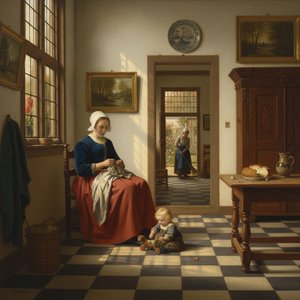
Pieter de Hooch: Illuminating Dutch Domestic Life & Golden Age Charm
Explore the captivating world of Pieter de Hooch, a master of Dutch Golden Age painting. Discover his innovative use of light, intimate domestic scenes, and lasting influence on art history. Learn more at OriginalUniqueArt.

Maurice Quentin de La Tour: Light, Shadow & the Rococo Portrait
Explore the captivating world of Maurice Quentin de La Tour, a master of Rococo portraiture. Discover his innovative pastel techniques, intimate depictions of French aristocracy, and lasting artistic legacy. Learn more at OriginalUniqueArt.
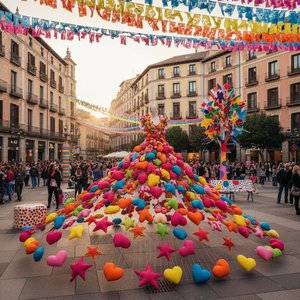
Águeda Ruiz de la Prada: A Study of Eclecticism & Emotional Resonance in Contemporary Spanish Painting
Discover the vibrant world of Ágatha Ruiz de la Prada, a leading figure in contemporary Spanish art. Explore her eclectic style, emotional depth & legacy – a must-read for discerning collectors.


