
 Preview
 Send
Send Share
Share
 Details
 Guide
Guide

 Download
 Similars
 X-Ray
X-Ray Diaporama
 Q&A
Q&A Stats
StatsSt. Paul

- 133.0 x 64.0 cm


 Read More
Giclée / Art Print
Museum-quality giclée or canvas print with fast production and flexible finish options. ( Buy Hand Made Painting Switch to Digital Image)




P118B $10

P118H $10

P118W $10

P438Z $10

P508JH $12

P508YH $12

P805H $10

P805Z $10

P919BZ $10

P919G $10

P919XJ $10

P959ZH $10

P968JZ $12

W106C $8

W218G $10

W218JH $8

W218Y $10

W307PJ $10

W316G $10

W316PJ $8

W316Y $10

W398PJ $8

W4111J $10

W500HY $15

W500JH $15

W692G $12

W849H $8

W940BG $15

W953PJ $8




Pick from our preset sizes that match the artwork's original proportions.

Type the width and the height you need, to fit your frame or your wall. A print can only be cut, never made bigger than the picture, so a size with a different shape loses a part of the image. We send you a digital mockup to approve before we print anything. The picture shown on this page does not show the real cut — only the mockup does.
Worldwide Delivery () in 2 weeks instead of standard 4/5 weeks. (4 November)

Free Worldwide Express Shipping

High-Quality Linen Canvas

Full Shipping Insurance

Customs Tax Refund Guarantee

True Color Matching Guarantee

100-Day Return Policy (Defects Only)

100% Money-Back Guarantee

Bulk Discount Offer
 Glass option is only available in size under 110 CM

St. Paul
Giclée / Art Print
Reproduction Size
-


Total Price
$ 81
A Portrait of Faith: Gaspar Vaz de Caminha’s St. Paul
Gaspar Vaz de Caminha's “St. Paul,” completed in 1540, transcends mere representation; it embodies the spiritual fervor of its time and stands as a testament to Portuguese Renaissance artistry. Executed meticulously in wood – a medium favored for religious iconography – this artwork captures Saint Paul’s solemn gaze and unwavering conviction against a backdrop of rugged mountains, offering viewers an immersive experience into the heart of Christian devotion.The Artist's Journey & Context
Born in Mogi das Cruzes around 1540, Gaspar Vaz de Caminha’s artistic trajectory was profoundly shaped by his involvement with Pedro Álvares Cabral’s expedition to India in 1500. Serving as secretary to the royal factory during this momentous voyage, Caminha absorbed the influences of humanist thought and artistic traditions prevalent in Europe at that time – specifically Venetian Renaissance style. This exposure undoubtedly informed his stylistic choices and deepened his understanding of portraying religious figures with dignity and gravitas. The artwork’s creation coincided with a period of significant cultural exchange between Portugal and India, fostering an environment ripe for artistic innovation.Style & Technique: Venetian Influence
The painting adheres closely to the Venetian Renaissance aesthetic, characterized by luminous color palettes and masterful chiaroscuro – dramatic contrasts between light and dark – techniques that heighten emotional impact and imbue the scene with palpable atmosphere. Caminha skillfully utilizes wood carving to achieve a remarkable level of detail, capturing the textures of Paul’s robe and the contours of the mountainous landscape. The artist's meticulous attention to realism is balanced by idealized proportions, reflecting the Renaissance preoccupation with humanist ideals and elevating Saint Paul’s figure to a symbol of spiritual fortitude.Symbolism & Composition: Strength & Divine Guidance
Beyond its technical prowess, “St. Paul” resonates deeply with symbolic meaning. The central figure, holding a book – representing scripture and divine knowledge – embodies intellectual contemplation and faith. Surrounding him are two swords, symbolizing courage and defense against adversity; they underscore Saint Paul’s unwavering commitment to spreading Christianity despite persecution. The mountainous backdrop serves as a visual metaphor for spiritual ascent and the challenges faced in pursuing righteousness. Caminha's compositional arrangement directs the viewer's gaze upward, emphasizing St. Paul’s stature and conveying a sense of grandeur and solemn reverence.Emotional Impact & Legacy
“St. Paul” evokes feelings of serenity, contemplation, and unwavering faith. Its enduring beauty lies not only in its artistic merit but also in its ability to communicate the profound spiritual significance of Saint Paul's life and ministry. Preserved in the New Hall Art Collection (Cambridge), this artwork continues to inspire admiration for Gaspar Vaz de Caminha’s skill and offers a captivating glimpse into the artistic spirit of the Renaissance era—a timeless masterpiece that speaks volumes about human aspiration and divine grace.Questions & Answers
Which color stands out most in "St. Paul"?
The color that stands out most in "St. Paul" is phthalo green (#191913). The dominant color is useful when matching an artwork to an interior.
Who is the author of "St. Paul", and in which movement?
Behind "St. Paul" stand Gaspar Vaz De Caminha and the Baroque movement.
Is "St. Paul" more bright or more dark overall?
"St. Paul" by Gaspar Vaz De Caminha is recorded as deep_shadow, with a dark luminance.
Artist Biography
early life and artistic pursuits
gaspar vaz de caminha, a knight by title, was born in 1540 in mogi das cruzes, brazil. his life took an intriguing turn when he accompanied pedro álvares cabral to india in 1500 as a secretary to the royal factory. this pivotal journey would later influence his artistic expressions.artistic contributions and notable works
gaspar vaz de caminha is best known for his masterpiece, christ at the home of martha and mary, created in 1540 using wood as his medium. this piece not only showcases his skill but also offers a glimpse into his spiritual inclinations.- medium: wood
- year: 1540
- location: india, during his tenure with pedro álvares cabral
museological significance and preservation
though the details of gaspar vaz de caminha's life are sparse, his artwork has been preserved and showcased in various museums. for instance, the new hall art collection (cambridge, united kingdom) is one such institution that has contributed to the conservation of art pieces like gaspar vaz de caminha’s.- museum: the new hall art collection
- location: cambridge, united kingdom
- notable collections: over 400 artworks from renowned artists
tragic end and lasting legacy
gaspar vaz de caminha’s life was cut short in a riot in calicut, india, at the end of 1501. despite his untimely demise, his artwork continues to inspire and intrigue art enthusiasts worldwide.- year of passing: 1501
- location of passing: calicut, india
- lasting impact: his artwork remains a testament to his skill and artistic vision
further exploration and resources
for more insights into gaspar vaz de caminha’s life and works, explore the following links: - [https://OriginalUniqueArt.com/@/gaspar-vaz-de-caminha](https://OriginalUniqueArt.com/@/gaspar-vaz-de-caminha) - a comprehensive overview of his artistic contributions. - /en/art/show/art-d3alr5-en/ - discover the new hall art collection, featuring gaspar vaz de caminha’s notable piece. delve into the enigmatic world of gaspar vaz de caminha and uncover the mysteries behind his timeless masterpieces.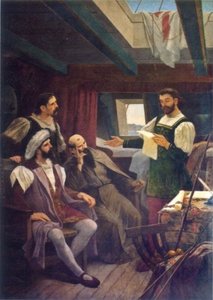
Gaspar Vaz De Caminha
1540 - 1501 , Brazil
Quick Facts
- Full Name: Gaspar Vaz de Caminha
- Nationality: Brazilian
- Date Of Birth: 1540
- Date Of Death: 1501
- Place Of Birth: Mogi das Cruzes, Brazil
- Notable Artworks: ['Christ at the Home of Martha and Mary']
- Artistic Movement Or Style: Renaissance/Early Brazil
Related Articles

Mastering Form: The 25 Greatest Paintings by Paul Cézanne
Explore 25 iconic Paul Cézanne masterpieces and his Post-Impressionist legacy. Discover the full collection online at OriginalUniqueArt.com.

Bronze Age to Modern Masters: 10 Sculptures That Redefined Art | OriginalUniqueArt
Journey through art history with 10 legendary bronze sculptures – from Michelangelo's David to Rodin’s Thinker. Explore the stories, techniques & timeless beauty of these masterpieces. Find museum-quality reproductions & elevate your home decor on OriginalUniqueArt.com.

Mastering Abstraction: The Top 25 Essential Artworks by Paul Klee
Explore 25 iconic Paul Klee masterpieces and his Bauhaus legacy. Discover the full collection online at OriginalUniqueArt.com.

Bronze Sculptures That Defined Art History | OriginalUniqueArt
Journey through art history with our Top 10 bronze sculptures! Explore masterpieces by Rodin, Michelangelo & more. Discover stories behind iconic statues and find museum-quality reproductions for your home decor at OriginalUniqueArt.com.

The Enduring Form: Exploring Themes & Techniques in Sculpture Across Historical Periods
Explore the rich history of sculpture from ancient masterpieces to contemporary innovations. Discover key techniques, influential artists & investment potential for discerning art collectors.


