Preview
 Send
Send Share
Share
 Details

 Download
 Similars
 X-Ray
X-Ray Diaporama
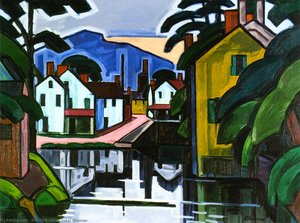
Rosy Light


 Read More
Giclée / Art Print
Museum-quality giclée or canvas print with fast production and flexible finish options. ( Buy Hand Made Painting Buy Image)




































Pick from our preset sizes that match the artwork's original proportions.

You may enter your own dimensions to fit a specific frame or space. If your selected size does not match the original image's proportions, we will either crop the artwork or extend the image with a mirrored or solid-fill edge. A digital mockup will be sent for your approval before production begins.
Please note that the on-screen preview does not reflect the actual cropping or extension. Only the mockup will accurately show the final composition.
While custom sizes are available, we recommend selecting a dimension from the predefined list to preserve the original proportions.
Worldwide Delivery () in 2 weeks instead of standard 4/5 weeks. (27 August)

Free Worldwide Express Shipping

High-Quality Linen Canvas

Full Shipping Insurance

Customs Tax Refund Guarantee

True Color Matching Guarantee

60-Day Return Policy (Defects Only)

100% Money-Back Guarantee

Bulk Discount Offer
 Glass option is only available in size under 110 CM

Rosy Light
Giclée / Art Print
Reproduction Size
-


Total Price
$ 81
Collectible Description
A Glimpse of Domestic Tranquility: "Rosy Light" by Friedrich Julius Oskar Blümner
“Rosy Light,” painted in 1927 by German artist Friedrich Julius Oskar Blümner, is a captivating depiction of a serene sunset scene. The painting portrays a house nestled within an urban landscape, bathed in the warm glow of the setting sun. Vibrant hues of red, pink, and orange dominate the sky, creating a visually striking spectacle that evokes feelings of peace and tranquility. Several other buildings are visible in the background, adding depth and dimension to the composition, while a solitary tree stands near the center, grounding the scene with a touch of nature.
Style and Technique: Bridging Impressionism and Early Modernism
Blümner’s style occupies an interesting space between late 19th-century Impressionism and the burgeoning trends of early Modernism. While he doesn't fully embrace the abstraction of later movements, "Rosy Light" demonstrates a move away from purely representational art. The loose brushwork and emphasis on capturing the fleeting effects of light—a hallmark of Impressionism—are evident in how Blümner renders the sky’s vibrant colors. However, there is also a deliberate simplification of forms and a focus on color harmony that anticipates later Modernist concerns. The painting utilizes oil paints to achieve rich textures and luminous effects, showcasing Blümner's mastery of his medium.
Historical Context: Germany Between the Wars
Created in 1927, "Rosy Light" reflects a period of significant social and political change in Germany. The aftermath of World War I had left the nation grappling with economic hardship and instability. While the painting doesn't explicitly depict these struggles, it offers a sense of refuge and quiet beauty—a yearning for stability and normalcy amidst uncertainty. Blümner’s focus on domestic scenes and landscapes can be interpreted as a response to this desire for solace and connection to everyday life during a turbulent era. The architectural details in the background suggest an urban setting, reflecting Germany's rapid industrialization and urbanization at the time.
Emotional Impact and Symbolism
The emotional impact of "Rosy Light" is profound. The warm colors and gentle light evoke feelings of comfort, nostalgia, and contentment. The setting sun often symbolizes endings or transitions, but in this context, it also suggests a peaceful closure to the day and the promise of rest. The house itself can be interpreted as representing home, family, and security—universal symbols of human connection and belonging. The tree, a symbol of life and resilience, adds another layer of meaning to the composition. The overall effect is one of quiet contemplation and appreciation for the simple beauty of everyday moments.
Artist Biography
The Luminous Vision of Oscar Bluemner
Friedrich Julius Oskar Blümner, known to the art world as Oscar Bluemner, stands as a pivotal figure in the history of American Modernism, representing a fascinating confluence between European avant-garde movements and distinctly American artistic sensibilities. Born in 1867 in Prenzlau, Germany, Blümner embarked on an artistic journey that would ultimately lead him to establish himself as one of the most profound painters of his era. His life was a continuous dialogue between the structured traditions of his German heritage and the expansive, atmospheric possibilities of the American landscape. Through his work, we witness a legacy characterized by bold color palettes and innovative compositional techniques that sought to capture not just the visible world, but the very soul of light and space.
Blümner’s formative years were deeply rooted in the rigorous academic traditions of Europe. Studying at the Düsseldorf Kunstakademie under the guidance of Wilhelm Leibl, he absorbed the Impressionistic ideals that were then reshaping German art circles. This early education fostered a deep appreciation for capturing fleeting moments of natural beauty through luminous color and precise observation. As his journey took him through the cultural epicenters of France and Italy, Blümner’s connection to Impressionism and Post-Impressionism solidified. The works of masters such as Claude Monet and Vincent van Gogh served as crucial inspirations, encouraging him to experiment with expressive brushwork and a more emotive use of pigment that would later define his mature style.
A Synthesis of Two Worlds
The year 1893 marked a transformative chapter in Blümner’s life when he returned to the United States, bringing with him a sophisticated European perspective that would soon merge with American subject matter. He dedicated himself to documenting the diverse landscapes of the American West and Northeast, championing a distinctive approach often termed American Impressionism. In his hands, the landscape became a vessel for tonal harmony and atmospheric perspective. Rather than striving for mere photographic accuracy, Blümner prioritized conveying mood and emotion, using color to evoke the weight of the air and the temperature of the light.
As the twentieth century progressed, Blümner’s artistic evolution took an even more radical turn. He began to embrace the geometric complexities of Cubism, finding common ground with revolutionary figures like Georges Braque and Pablo Picasso. This stylistic shift allowed him to disrupt traditional perspective through the use of structured forms and flattened planes. In masterpieces such as “South Peterson Snow,” one can observe how geometric shapes interact to create a sense of rhythmic tension. This period of his work represents a profound intellectual engagement with the modern age, where the boundaries between object and space began to dissolve into a singular, cohesive vision.
Legacy and Artistic Significance
The enduring significance of Oscar Bluemner lies in his ability to bridge the gap between the old world and the new. His oeuvre serves as a vital link between the European avant-garde and the burgeoning American modern movement. Whether he was capturing the quietude of a New Jersey village or the industrial rhythm of a cityscape, his work remained anchored by a unique preoccupation with the motive of space and form.
His contributions to art history can be summarized through several key achievements:
- Mastery of Color: His ability to use bold, saturated palettes to create emotional resonance.
- Structural Innovation: The seamless integration of Cubist geometry with Impressionistic light.
- Atmospheric Depth: A unique technique in American Impressionism that prioritized the "feeling" of a landscape over its literal depiction.
- Cultural Synthesis: Successfully translating European modernism into a uniquely American visual language.
Today, Blümner’s work continues to captivate audiences, offering a window into a time of immense artistic transition. His paintings remain vibrant testaments to the power of color and form to transcend borders, leaving an indelible mark on the tapestry of modern art.

friedrich julius oskar blümner
1867 - 1938 , Germany
Quick Facts
- Artistic Movement Or Style: American Modernism
- Artists Or Movements Influenced By This Artist: ['Cubism']
- Artists Who Influenced This Artist:
- Georges Seurat
- Paul Cézanne
- Date Of Birth: 1867
- Full Name: Friedrich Julius Oskar Blümner
- Nationality: German
- Notable Artworks:
- Radiant Night
- 'Morning Light (Dover Hills, October)
- South Peterson Snow
- Place Of Birth: Prenzlau, Germany
Related Articles

Grant Wood & American Regionalism: Identity, Myth & the Rural Landscape
Explore the world of Grant Wood & American Regionalism with OriginalUniqueArt. Discover the symbolism behind 'American Gothic', recurring themes, and the movement's lasting impact on art history. High-quality reproductions available.

Evocations of Place: A Historical Journey Through Landscape Art
Explore the rich history of landscape art with OriginalUniqueArt. Discover renowned artists, movements like Impressionism & Romanticism, and expert guidance for collecting timeless pieces. Find your perfect serene escape today!

John Constable's Masterpieces: Explore 25 Iconic Landscapes for Your Home
Journey through John Constable's 25 most celebrated landscapes. Explore Romanticism, Dedham Vale & his masterful use of light in iconic paintings like 'Hay Wain'. Find museum-quality art reproductions and elevate your home decor on OriginalUniqueArt.com.

Romantic Landscapes: 10 Masterpieces for Your Home | OriginalUniqueArt
Journey through 10 Romantic landscape masterpieces by Friedrich, Turner & Cole. Explore emotional art, sublime nature scenes & iconic 19th-century paintings. Find museum-quality reproductions for your home at OriginalUniqueArt.com – discover the full collection online!
Capturing the Soul of Nature: A Journey Through the Sublime Majesty of American Romanticism
Explore the breathtaking beauty of American Romanticism. Discover how Hudson River School masters captured the sublime spirit of the wilderness through luminous oil landscapes and emotional depth. A journey into the soul of nature for the true art enthusiast.