Text size

() ·

A painting made for you, by hand

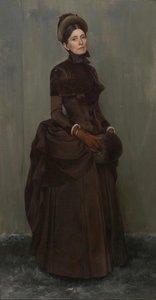
Lady with Fan

Hand Made Oil Reproduction

Hand-painted oil on canvas in your size and frame, made to order by our artists. ( Switch to Print Switch to Digital Image)

Collectible Description

Discover Frank Duveneck’s "Lady with Fan" – a haunting 1873 portrait showcasing Impressionistic brushwork & melancholic beauty. Explore this American Realist masterpiece.

Artist Biography

Explore the life & art of Frank Duveneck (1848-1919), a pivotal American Realist painter influenced by Frans Hals & the Munich School. Discover his legacy today!

from ·

Chapter 1

How large should it be?

Slide to change the size; the picture on the left shows the frame at its real width. The proportions of the original are kept.

Standard
custom
CM
INCH

Pick from our preset sizes that match the artwork's original proportions.

width
height

Type the width and the height you need, to fit your frame or your wall. This is hand-painted, so for a size with a different shape the artist can paint a bit more around the picture, or cut a bit — you choose. We send you a digital mockup to approve before the painting starts. The picture shown on this page does not show the real result — only the mockup does.

Chapter 2

How should it arrive?

Choose the edges of the stretched canvas

Choose your frame

Corner sample of the WhiteWrap canvas edge finish, stretched on solid wood bars
White $1
Corner sample of the BlurSideWrap canvas edge finish, stretched on solid wood bars
Blurside $1
Corner sample of the ExtendedWrap canvas edge finish, stretched on solid wood bars
Extended $1
Corner sample of the P118B picture frame: moulded polystyrene, 5 cm wide and 3 cm thick
P118B $10
Corner sample of the P118H picture frame: moulded polystyrene, 5 cm wide and 3 cm thick
P118H $10
Corner sample of the P118W picture frame: moulded polystyrene, 5 cm wide and 3 cm thick
P118W $10
Corner sample of the P438Z picture frame: moulded polystyrene, 5.5 cm wide and 3.5 cm thick
P438Z $10
Corner sample of the P508JH picture frame: moulded polystyrene, 7 cm wide and 3.5 cm thick
P508JH $12
Corner sample of the P508YH picture frame: moulded polystyrene, 7 cm wide and 3.5 cm thick
P508YH $12
Corner sample of the P805H picture frame: moulded polystyrene, 5 cm wide and 3.5 cm thick
P805H $10
Corner sample of the P805Z picture frame: moulded polystyrene, 5 cm wide and 3.5 cm thick
P805Z $10
Corner sample of the P919BZ picture frame: moulded polystyrene, 7 cm wide and 3.5 cm thick
P919BZ $10
Corner sample of the P919G picture frame: moulded polystyrene, 7 cm wide and 3.5 cm thick
P919G $10
Corner sample of the P919XJ picture frame: moulded polystyrene, 7 cm wide and 3.5 cm thick
P919XJ $10
Corner sample of the P959ZH picture frame: moulded polystyrene, 5 cm wide and 3 cm thick
P959ZH $10
Corner sample of the P968JZ picture frame: moulded polystyrene, 6 cm wide and 4 cm thick
P968JZ $12
Corner sample of the W106C picture frame: solid wood, 5 cm wide and 3 cm thick
W106C $8
Corner sample of the W218G picture frame: solid wood, 5 cm wide and 3 cm thick
W218G $10
Corner sample of the W218JH picture frame: solid wood, 5 cm wide and 3 cm thick
W218JH $8
Corner sample of the W218Y picture frame: solid wood, 5 cm wide and 3 cm thick
W218Y $10
Corner sample of the W307PJ picture frame: solid wood, 6 cm wide and 3 cm thick
W307PJ $10
Corner sample of the W316G picture frame: solid wood, 6 cm wide and 3 cm thick
W316G $10
Corner sample of the W316PJ picture frame: solid wood, 6 cm wide and 3 cm thick
W316PJ $8
Corner sample of the W316Y picture frame: solid wood, 6 cm wide and 3 cm thick
W316Y $10
Corner sample of the W398PJ picture frame: solid wood, 5 cm wide and 3 cm thick
W398PJ $8
Corner sample of the W4111J picture frame: solid wood, 6.5 cm wide and 3.5 cm thick
W4111J $10
Corner sample of the W500HY picture frame: solid wood, 7 cm wide and 5 cm thick
W500HY $15
Corner sample of the W500JH picture frame: solid wood, 7 cm wide and 5 cm thick
W500JH $15
Corner sample of the W692G picture frame: solid wood, 8 cm wide and 4 cm thick
W692G $12
Corner sample of the W849H picture frame: solid wood, 5 cm wide and 3 cm thick
W849H $8
Corner sample of the W940BG picture frame: solid wood, 7.5 cm wide and 4.5 cm thick
W940BG $15
Corner sample of the W953PJ picture frame: solid wood, 6 cm wide and 3.5 cm thick
W953PJ $8
Corner sample of the H24-GOLD picture frame: carved wood with gesso, 10 cm wide and 6 cm thick
H24-GOLD $30
Corner sample of the H24-SILVER picture frame: carved wood with gesso, 10 cm wide and 6 cm thick
H24-SILVER $30
Corner sample of the H36-GOLD picture frame: carved wood with gesso, 15 cm wide and 6.5 cm thick
H36-GOLD $45
Corner sample of the H36-SILVER picture frame: carved wood with gesso, 15 cm wide and 6.5 cm thick
H36-SILVER $45
Frame preview
Framed

Moulding: . Overall size with the frame: .

Chapter 3

Who paints it, and should anything change?

Examples of what can be changed: Replace face with customer photo; Add pet (e.g., replace cat with dog); Include hidden message in background; Change background landscape or elements.
After order, OriginalUniqueArt.com team will email client for instructions and provide a mockup preview

Worldwide Delivery () in 3/4 weeks instead of standard 5 weeks. (10 November). No compromise on quality.

Chapter 4

The finishing touches

A nameplate, as in a museum?

Engraved Bronze Plaque Details

This elegant plaque features the artist's name and the title of the artwork, finely engraved for a timeless presentation.

It is made from bronze with a refined, elegant finish. The text is precisely laser-engraved for a sharp and permanent result. Measuring 9x2 cm, the plaque is compact yet easy to read. It's built to be durable and scratch-resistant, offering a professional, museum-quality look. Mounting is simple thanks to the included adhesive backing.

Transparent Acrylic Plaque Details

The plaque includes essential engraved details such as the artist's name, the title of the artwork, the date it was created, the type of media used-like oil on canvas or watercolor-a brief description of the piece, and a QR code that links to the complete artwork information.

It is crafted from clear acrylic, offering a sleek, modern appearance. The text is UV-engraved in black to ensure strong visual contrast. With a size of 10x15 cm, it ensures optimal readability. It comes equipped with two metal hooks for secure wall mounting. The plaque is designed to be weather-resistant, making it suitable for various environments, and it includes interactive features that work seamlessly with smartphone scanning.

Black Acrylic Plaque Details

This elegant plaque includes engraved information such as the artist's name, the title of the artwork, the date it was created, the type of media used (like oil on canvas or watercolor), a short description of the artwork, and a QR code for quick access to more information.

The plaque itself is made from refined black acrylic with a premium finish. The text is laser-engraved in white for high contrast and readability. Its size is 10x15 cm, designed to be easy to read. It comes with two metal hooks for professional mounting. The design is sleek and fits any interior style. It is also weather-resistant and durable, with built-in digital integration for mobile compatibility.

A protective varnish?

When do you need it?

Chapter 5

Your painting, as you ordered it

Lady with Fan

Reproduction Medium

Reproduction Size

-

Elite Senior Artist

More detail, finesse, and extra production time

-

Reproduction Frame

-

-

For artworks or reproductions larger than 105 cm (approximately 41 inches) on any side, the frame will be shipped as a kit, disassembled. This method ensures safe delivery and prevents damage during transport.

Professional assembly required - this is not a DIY product.
The kit must be assembled and the canvas stretched by an experienced professional framer, using wood glue (not supplied), a canvas stretching plier and clamps to hold the bars square while the glue dries. Incorrect assembly or uneven canvas tension can permanently damage the artwork and is not covered by our warranty.

  • All solid wood bars are included, precisely cut to size.

  • Assembled with the screws provided, plus wood glue for the corner joints, which is not supplied and must be sourced by your framer.

  • Professional tools are required and not included: a canvas stretching plier (tensioner) and clamps to hold the bars square while the glue dries.

Important:
The corner joints require wood glue, the bars must be held with clamps until the glue is fully dry, and tightening the canvas on the assembled frame requires a canvas stretching plier. None of these are included in the kit. Please arrange an experienced professional framer before ordering this size.

Nameplate

-

-

Protective Varnish

Glossy Varnish (enhances colors, protects against light/moisture)

-

Customize My Artwork

Examples of what can be changed: Replace face with customer photo; Add pet (e.g., replace cat with dog); Include hidden message in background; Change background landscape or elements.

-

Urgent

Worldwide Delivery () in 3/4 weeks instead of standard 5 weeks. (10 November). No compromise on quality.

-

Express Shipping

Worldwide Delivery () in 5 weeks. (17 November).

Included

Total Price

$ 300

Total Price $ 300

Glass option is only available in size under 110 CM

Included with every order

  • Free Worldwide Express Shipping
  • High-Quality Linen Canvas
  • Full Shipping Insurance
  • Customs Tax Refund Guarantee
  • True Color Matching Guarantee
  • 100-Day Return Policy (Defects Only)
  • 100% Money-Back Guarantee
  • Bulk Discount Offer

A Portrait of Quietude: Frank Duveneck’s “Lady with Fan”

Frank Duveneck's "Lady with Fan," painted in 1873, is more than just a portrait; it’s a carefully constructed tableau of melancholy and introspection. This intimate scene, rendered in the artist’s signature Impressionistic style, captures a moment suspended between awareness and withdrawal – a young man lost in thought, partially shielded by the delicate grace of a fan. The painting immediately draws the viewer into its somber atmosphere, achieved through a muted color palette dominated by deep blues, browns, and greys, punctuated by subtle highlights that suggest an unseen light source. Duveneck masterfully employs loose brushstrokes, creating a textured surface that invites close examination, revealing the physicality of his technique – thick impastoed layers of oil paint build up the form, lending a tactile quality to the figure’s clothing and face.

The composition itself is subtly arresting. The subject, positioned slightly off-center, avoids direct confrontation, fostering a sense of quiet observation rather than dramatic engagement. His gaze is averted, lost in contemplation, while the fan, held delicately in his hand, becomes a potent symbol – perhaps representing fleeting beauty, a momentary distraction from deeper emotions, or even a veiled attempt to conceal vulnerability. The details are meticulously observed: the subtle lines etched around the eyes, the slight downturn of the mouth, all contribute to an expression of restrained sadness. Duveneck’s skill lies not in idealized representation but in capturing the nuances of human feeling, revealing a depth of emotion beneath a surface of composure.

The Artist and His Context

Frank Duveneck's life was marked by both artistic triumph and profound personal tragedy. Born in Covington, Kentucky, in 1848, he experienced early loss – the death of his father at a young age profoundly shaping his outlook. This formative experience, coupled with his stepfather’s influence and his own burgeoning artistic talent, instilled within him a resilience and sensitivity that would permeate his work. Duveneck's training initially involved church decoration, providing him with invaluable technical skills, but he quickly gravitated towards portraiture, developing a distinctive style influenced by Frans Hals and the Munich School – characterized by its directness, emotional intensity, and vibrant use of color.

The 1870s witnessed a shift in American art away from the rigid conventions of the Hudson River School, and Duveneck was at the forefront of this movement. He embraced Impressionistic techniques, prioritizing capturing fleeting moments of light and atmosphere over meticulous detail. His work resonated with a growing sense of individualism and emotional honesty, reflecting the changing social landscape of late 19th-century America. His decision to move to Europe, particularly Munich, allowed him to refine his technique and connect with other progressive artists, further solidifying his place within this evolving artistic dialogue.

Technique and Materials

“Lady with Fan” is a testament to Duveneck’s mastery of oil paint. The painting's rich texture is achieved through the application of thick, layered impasto – a technique that not only adds visual interest but also emphasizes the physicality of the paint itself. The artist skillfully manipulated light and shadow to create a sense of depth and volume, using subtle gradations of tone to define the figure’s form and clothing. The loose brushstrokes, characteristic of Impressionism, contribute to the painting's atmospheric quality, conveying a sense of movement and immediacy.

Duveneck’s choice of materials – traditional oil paints on canvas – speaks to his commitment to craftsmanship and his desire to create works that would endure over time. The pigments he employed were carefully selected to achieve the desired color palette and luminosity, while the canvas provided a stable surface for his expressive brushwork. The layering technique allows for adjustments and corrections as the painting progressed, demonstrating Duveneck’s deliberate and considered approach to his art.

Symbolism and Emotional Resonance

Beyond its technical merits, “Lady with Fan” is rich in symbolic meaning. The fan itself is a key element, suggesting both elegance and a potential for distraction – a delicate barrier between the subject and the outside world. The muted color palette reinforces the painting’s melancholic mood, while the averted gaze invites contemplation about the inner life of the figure. It's a portrait that doesn’t offer easy answers but instead prompts viewers to engage with their own emotions and interpretations.

Ultimately, “Lady with Fan” is a poignant meditation on solitude, introspection, and the complexities of human emotion. Duveneck’s ability to capture such subtle nuances within a single image speaks volumes about his artistic talent and his profound understanding of the human condition. A reproduction of this evocative work offers a glimpse into a bygone era, inviting us to pause and reflect on the beauty and melancholy inherent in quiet moments.

Questions & Answers

What luminance does "Lady with Fan" by Frank Duveneck have?

The colors of "Lady with Fan" show a dark luminance.

How do contrast and harmony combine in "Lady with Fan"?

The color composition of "Lady with Fan" by Frank Duveneck combines a serene contrast with a strong color unity harmony.

How does "Lady with Fan" fit into Frank Duveneck's themes and style?

Within Frank Duveneck's output, "Lady with Fan" sits in the Realism style, alongside the themes of hals' realism, dark palette, german portrait tradition, impressionistic light & brush, victorian society portraiture, introspective moods", class and status symbolism, "key ea.

More about this painting

Preview AR preview Switch to Print Switch to Digital Image Send
Details Guide Add to favorites Download Similars X-Ray Diaporama Q&A Stats

In numbers

  • 1873the year it was painted
  • 29frames to choose from
  • standard sizes, in its own proportions
  • 5weeks to paint and deliver it
Frank Duveneck

Frank Duveneck

1848 - 1919, United States of America

Quick facts about Frank Duveneck

  • Full Name: Frank Duveneck
  • Nationality: American
  • Date Of Birth: 1848
  • Date Of Death: 1919
  • Place Of Birth: Covington, United States of America
  • Notable Artworks:
    • Lady with Fan
    • Whistling Boy
  • Artistic Movement Or Style: Realism
  • Artists Who Influenced This Artist: ['Frans Hals']
  • Artists Or Movements Influenced By This Artist: ['American Impressionism']

Artist Biography

A Life Forged in Tragedy and Realism

Frank Duveneck, born Frank Decker in 1848 amidst the burgeoning river town of Covington, Kentucky, was an artist whose life story is as compelling as his powerfully rendered canvases. His early years were shadowed by loss; the death of his father to cholera when he was barely a year old indelibly marked his trajectory. This formative tragedy, coupled with his mother’s subsequent marriage to Joseph Duveneck – from whom he adopted his enduring name – instilled within him a sense of resilience and perhaps, a heightened sensitivity that would later permeate his art. The blending of German heritage through his stepfather and the distinctly American landscape of his upbringing created a unique cultural foundation for the artist. Even as a young boy, an aptitude for drawing blossomed, leading to studies under local painter Johann Schmitt and an apprenticeship with a firm specializing in church decoration—a crucial period where he honed technical skills and absorbed the narrative power of visual imagery. This wasn’t merely about mastering technique; it was about understanding how art could evoke emotion and tell stories, lessons that would resonate throughout his career.

The Munich Crucible: Embracing Dark Realism

In 1869, Duveneck embarked on a transformative journey to Munich, Germany, seeking advanced artistic training at the Royal Academy. This move proved pivotal. The prevailing aesthetic in Munich was a stark realism—a deliberate rejection of academic idealism in favor of direct observation and unflinching honesty. It resonated deeply with Duveneck, who embraced a darker palette and a more vigorous, expressive brushstroke. He became captivated by the work of 17th-century Dutch master Frans Hals, whose lively portraits and masterful handling of light profoundly influenced his style. This influence is strikingly evident in paintings like Lady with Fan (1873), where slashing brushwork and a somber tonality echo Hals’s spirit while simultaneously establishing Duveneck's own distinctive voice. It was during these formative years that he began to develop the signature style for which he would become celebrated: a powerful realism imbued with psychological depth and emotional intensity, a departure from the polished surfaces favored by many of his contemporaries. The Whistling Boy (1872) exemplifies this early expressive power, capturing a fleeting moment of youthful exuberance with remarkable immediacy and a palpable sense of life.

A Mentor’s Influence: The “Duveneck Boys” and Beyond

By 1878, Duveneck had established himself as a significant figure in the art world, not only as a painter but also as an educator. He opened his own school in Munich, attracting a cohort of ambitious American artists who became known as the “Duveneck Boys.” Among them were John Twachtman, Otto Bacher, Julius Rolshoven, and John White Alexander—artists who would themselves become prominent figures in American Impressionism and Realism. Duveneck’s teaching philosophy emphasized direct observation, bold brushwork, and a rejection of conventional academic constraints. He encouraged his students to forge their own artistic paths while grounding them in the principles of sound draftsmanship and expressive color. His influence extended back to America when he accepted a position at the Art Academy of Cincinnati, where he mentored another generation of artists including Ida Holterhoff Holloway, John Christen Johansen, and Russel Wright. He fostered a spirit of innovation and independence that helped shape the course of American art, leaving an indelible mark on those who studied under his guidance.

Evolving Visions and Lasting Legacy

Duveneck’s artistic journey continued to evolve after his return to America. While he remained committed to realism, his palette began to lighten, influenced by Impressionism and his frequent travels to Italy and France. He explored landscape painting with increasing frequency, capturing the sun-drenched scenes of Venice and the rugged beauty of coastal Massachusetts. Despite these stylistic shifts, his work always retained a distinctive character—a blend of technical mastery, emotional depth, and psychological insight. The personal tragedy of losing his wife, Elizabeth Boott Duveneck, in 1888 cast a long shadow over his later years, perhaps contributing to the introspective quality of some of his subsequent works. Frank Duveneck passed away in Covington, Kentucky, in 1919, leaving behind a rich artistic legacy. His paintings are now held in prestigious collections such as the Metropolitan Museum of Art in New York City, the National Gallery of Art in Washington, D.C., and the Cincinnati Art Museum—testaments to his enduring contribution to American art. He remains a pivotal figure in the transition from academic tradition to modern realism, an artist who dared to challenge conventions and forge his own path with unwavering conviction.

A Lasting Impact

  • Pioneering Realism: Duveneck’s commitment to portraying life as it was, without idealization, paved the way for future generations of American realist painters.
  • Influential Educator: His mentorship of the “Duveneck Boys” and subsequent students at the Cincinnati Art Academy had a profound impact on the development of American Impressionism and Realism.
  • Technical Mastery: Duveneck’s skillful handling of brushwork, color, and composition continues to inspire artists today.
  • Psychological Depth: His ability to capture the inner lives of his subjects adds a layer of complexity and emotional resonance to his work.
Duveneck’s legacy extends beyond his paintings; it resides in the spirit of artistic independence he instilled in his students and the enduring power of his vision. He stands as a testament to the transformative potential of art, born from personal tragedy and fueled by an unwavering commitment to truth and beauty.

Quick Facts

  • Movement: Impressionism
  • Artist: Frank Duveneck
  • Influences:
    • Hals
    • Munich School
  • Subject or theme: Melancholy woman
  • Medium: Oil on canvas
  • Location: Metropolitan Museum

Art Quiz

There is only one correct answer for each question.

Question 1:
What artistic movement is most closely associated with Frank Duveneck’s "Lady with Fan"?
Question 2:
The painting's muted color palette and loose brushstrokes contribute to which of the following moods?
Question 3:
What symbolic element is represented by the fan in the painting?
Question 4:
According to the description, what is a key characteristic of Frank Duveneck’s artistic style?
Question 5:
In what year was "Lady with Fan" painted?