
 Preview
 Send
Send Share
Share
 Details
 Guide
Guide

 Download
 Similars
 X-Ray
X-Ray Diaporama
 Q&A
Q&A Stats
StatsA Lady in Her Bath

- 92.0 x 81.0 cm


 Read More
Giclée / Art Print
Museum-quality giclée or canvas print with fast production and flexible finish options. ( Buy Hand Made Painting Switch to Digital Image)




P118B $10

P118H $10

P118W $10

P438Z $10

P508JH $12

P508YH $12

P805H $10

P805Z $10

P919BZ $10

P919G $10

P919XJ $10

P959ZH $10

P968JZ $12

W106C $8

W218G $10

W218JH $8

W218Y $10

W307PJ $10

W316G $10

W316PJ $8

W316Y $10

W398PJ $8

W4111J $10

W500HY $15

W500JH $15

W692G $12

W849H $8

W940BG $15

W953PJ $8




Pick from our preset sizes that match the artwork's original proportions.

Type the width and the height you need, to fit your frame or your wall. A print can only be cut, never made bigger than the picture, so a size with a different shape loses a part of the image. We send you a digital mockup to approve before we print anything. The picture shown on this page does not show the real cut — only the mockup does.
Worldwide Delivery () in 2 weeks instead of standard 4/5 weeks. (7 November)

Free Worldwide Express Shipping

High-Quality Linen Canvas

Full Shipping Insurance

Customs Tax Refund Guarantee

True Color Matching Guarantee

100-Day Return Policy (Defects Only)

100% Money-Back Guarantee

Bulk Discount Offer
 Glass option is only available in size under 110 CM

A Lady in Her Bath
Giclée / Art Print
Reproduction Size
-


Total Price
$ 81
A Moment Suspended in Time: The Grace of the French Renaissance
In the quiet, luminous atmosphere of François Clouet’s “A Lady in Her Bath,” the viewer is not merely an observer but a silent guest invited into a moment of profound domestic intimacy. Painted around 1571, this masterpiece serves as a breathtaking window into the private lives of the French aristocracy during the late Renaissance. The composition unfolds with a theatrical grace, where heavy red satin drapes are pulled back like a stage curtain to reveal a scene of serene vulnerability. At its heart sits a woman of ethereal beauty, her presence commanding yet gentle, captured in a state of repose that feels both timeless and fleeting.
The painting is far more than a simple portrait; it is a carefully constructed tableau brimming with the elegance and subtle anxieties of the French court. As we gaze upon the subject, we are drawn into a world where every fold of fabric and every glint of light serves to elevate the status of the sitter. For the collector or the interior designer, this work offers an unparalleled sense of noblesse oblige, bringing a touch of historical grandeur and sophisticated tranquility to any curated space.
Symbolism and the Maternal Ideal
While the definitive identity of the lady remains a subject of scholarly debate, the painting is often whispered to be a portrait of Diane de Poitiers, the legendary and influential mistress of King Henri II. Whether she represents this powerful figure or perhaps even Mary, Queen of Scots, the subject embodies the quintessential Renaissance ideals of femininity. Clouet skillfully portrays the woman reclining in an ornate bath, attended by two infants nestled upon her breasts. This specific pose intentionally harkens back to classical depictions of Venus Pudica, weaving together themes of modesty, maternal virtue, and the divine beauty of nature.
The presence of the children adds a layer of profound emotional depth, transforming a scene of personal grooming into a celebration of lineage and familial continuity. The subtle inclusion of objects—perhaps an apple or a small bird held by a child—serves as a symbolic language common to the era, hinting at fertility, innocence, and the cycle of life. This interplay between the physical body and the spiritual essence of motherhood creates an emotional resonance that continues to captivate viewers centuries after the brushstrokes were dried.
Mastery of Technique: Flemish Realism Meets Italian Grace
Clouet’s artistic approach is a masterful dialogue between two great European traditions. From his Northern roots, he inherited a devotion to Flemish naturalism, which is evident in the meticulous rendering of textures. One can almost feel the coolness of the water, the weight of the heavy drapery, and the delicate, translucent quality of the lady's skin. His ability to capture the tactile reality of the oak panel medium allows the light to dance across the surface, creating a lifelike presence that is rare in portraiture of this period.
Yet, this realism is tempered by an Italianate refinement. Influenced by the likes of Leonardo da Vinci and Raphael, Clouet employs a subtle chiaroscuro to sculpt the figures, giving them a three-dimensional majesty. The proportions are idealized, lending the lady an air of celestial grace that transcends the mundane. For those seeking a high-quality reproduction, this duality of style offers a rich visual experience—a perfect balance of anatomical precision and poetic beauty that serves as a sophisticated focal point for any refined interior.
Questions & Answers
How can "A Lady in Her Bath" by François Clouet be used in home decor?
"A Lady in Her Bath" by François Clouet is recommended for accent, ideally in a living room. Use and space together guide where a reproduction fits.
Where does "A Lady in Her Bath" by François Clouet sit in art history?
"A Lady in Her Bath" by François Clouet belongs to the Renaissance Portraiture movement, within the Renaissance period. Together they give the work its place in art history.
Is "A Lady in Her Bath" by François Clouet a painting, a drawing or a print?
"A Lady in Her Bath" by François Clouet is classified as wall art. The category describes the kind of artwork the original is.
Artist Biography
A Legacy of Likeness: The World of François Clouet
François Clouet, a name synonymous with the refined portraiture of the French Renaissance, emerged from a lineage steeped in artistic skill and courtly favor. Born around 1510 in Tours, France, his life unfolded against a backdrop of evolving artistic sensibilities and the opulent world of the Valois monarchy. He wasn’t merely a painter; he was a chronicler of an era, capturing the essence of kings, queens, and courtiers with a meticulousness that continues to captivate viewers today. The shadow of his father, Jean Clouet, loomed large – both artists shared not only a profession but also the familiar nickname ‘Janet,’ leading to occasional confusion in attributing their works across generations. Yet, François carved his own distinct path, blending Flemish naturalism with an emerging Italianate grace, and establishing himself as one of France’s most celebrated portraitists.Inheriting a Tradition: Early Life and Artistic Formation
The early years of François Clouet remain somewhat veiled in historical obscurity, but his artistic trajectory was undeniably shaped by the legacy of his father. Jean Clouet, originating from the Southern Netherlands, brought with him to the French court the meticulous detail and realistic approach characteristic of Flemish painting. This foundation formed the bedrock of François’s training. A pivotal moment arrived in 1541 when François inherited his father's estate, formally stepping into his artistic inheritance and assuming the responsibilities that came with it. This wasn’t simply a transfer of property; it was an assumption of a role within the very fabric of the French court. The Clouet family also enjoyed a unique connection to the Italian Renaissance through Jean’s time in Amboise, exposing François to the burgeoning ideals and innovative techniques emanating from Italy – a subtle but significant influence that would later manifest in his work. He absorbed not just technique, but an understanding of how art could serve as both documentation and celebration of power and status.The Art of Revelation: Style and Major Works
François Clouet’s oeuvre is defined by a remarkable precision and elegance. His portraits weren't simply likenesses; they were insightful studies of character, capturing not only physical features but also the personality and social standing of his subjects. He possessed an extraordinary ability to convey royal authority and sophistication, as evidenced in several notable depictions of Francis I, examples of which reside in prestigious collections like the Uffizi Gallery and the Louvre Museum. Beyond Francis I, Clouet’s brush immortalized other key figures of the era. He likely painted portraits of Catherine de' Medici at Versailles, contributing to a visual record of her influential reign. Perhaps one of his most celebrated achievements is the chalk drawing of Mary, Queen of Scots, held in the Bibliothèque nationale – a work that showcases his mastery of capturing delicate features and conveying emotional depth with astonishing subtlety. Other notable works include portraits of Elizabeth of Austria (Louvre), Marguerite of France (Chantilly), and Charles IX (Château de Chantilly).A Defining Aesthetic: Characteristics of Clouet’s Art
Several hallmarks define François Clouet's distinctive style.- Elaborate Detail: A meticulous attention to detail permeates his work, evident in the intricate rendering of clothing, jewelry, and facial features – every element contributing to a sense of realism and opulence.
- Accurate Drawing: Clouet’s portraits are grounded in precise anatomical rendering and skillful use of line, demonstrating a mastery of draftsmanship that underpinned his artistic vision.
- Exquisite Completeness: His compositions convey a sense of wholeness and personality, going beyond mere physical representation to capture the inner life of his subjects. He didn’t just paint faces; he painted individuals.
A Lasting Impression: Historical Significance and Legacy
François Clouet’s contributions to French Renaissance art are profound. He played a crucial role in establishing portraiture as a prominent genre in France, elevating the status of the artist and providing invaluable visual records of the royal court. He bridged the gap between medieval artistic traditions and the emerging Renaissance ideals, incorporating naturalism and humanistic principles into his work. As a court painter for multiple French monarchs – Francis I, Henry II, Francis II, and Charles IX – he documented the lives and appearances of key figures in French history, creating a visual archive that continues to inform our understanding of this period. His meticulous style and attention to detail profoundly influenced subsequent generations of French portraitists, solidifying his place as a pivotal figure in the development of French art. François Clouet died on December 22, 1572, shortly after the tumultuous St. Bartholomew's Day Massacre – a poignant end for an artist who had dedicated his life to immortalizing the world around him. His will offers glimpses into his personal life and financial standing, further cementing his legacy as both an artistic master and a significant figure in French society.
François Clouet
1510 - 1572 , France
Quick Facts
- Full Name: François Clouet
- Nationality: French
- Date Of Birth: 1510
- Date Of Death: 1572
- Place Of Birth: Tours, France
- Notable Artworks:
- The Love Letter
- Portrait of Henri II
- Francis I, King of France
- Mary, Queen of Scots
- Artistic Movement Or Style: Renaissance portraiture
- Artists Who Influenced This Artist:
- Jean Clouet
- Leonardo da Vinci
- Artists Or Movements Influenced By This Artist: ['French portraitists']
Related Articles
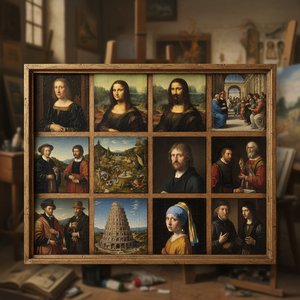
Oil on Panel Masters: 10 Paintings That Revolutionized Art |
Journey through 10 legendary 'Oil on Panel' masterpieces by Van Eyck, Bosch & Bruegel. Explore the stories behind these iconic Renaissance & Baroque paintings and find museum-quality art reproductions to elevate your home decor. Discover all masterpieces on !

Mastering the Surface: The Timeless Elegance and Technical Brilliance of Oil on Panel Painting
Discover the enduring allure of oil on panel painting. Explore the technical mastery, historical significance, and luminous depth that define this prestigious medium, from Renaissance masters to modern fine art reproductions for discerning collectors.
Oil on Panel: A Historical Survey of Technique, Support, and Aesthetic Impact
Explore the rich history of oil on panel painting! Discover Renaissance techniques, support construction, & the enduring legacy of this masterful art form. Expert insights for collectors and enthusiasts.

Mastering the Surface: A Historical and Technical Guide to the Art of Oil on Panel Painting
Explore the profound history and technical brilliance of oil on panel painting. From Renaissance masters to modern techniques, discover why this rigid support offers unparalleled precision and permanence for fine art lovers and collectors.
Oil on Panel: A Historical Survey of Technique, Support & Aesthetic Evolution
Explore the rich history of oil on panel painting! Discover Renaissance techniques, support structures & aesthetic evolution. Expert insights for art collectors and enthusiasts.


