

 Preview
 Send
Send Share
Share
 Details
 Guide
Guide

 Download
 Similars
 X-Ray
X-Ray Diaporama
 Stats
StatsChimpanzee

 Read More
The artwork displayed on this page is protected by copyright law, which means we cannot legally create or sell an identical reproduction. This protection is enforced under international agreements such as the Berne Convention and by national laws, including those outlined by the U.S. Copyright Law - Title 17.
As a respectful and legal alternative, we offer custom, hand-painted artworks inspired by the original. Our skilled and professional artists carefully study the original's style, mood, and artistic essence to create a new, unique piece that evokes the same feeling - while remaining an original creation in its own right.
This method fully complies with copyright regulations because it does not involve copying or duplicating the protected artwork. Instead, it is a creative reinterpretation - a new painting that is influenced by the original but not identical to it.
Hand Made Oil Reproduction
Hand-painted oil on canvas in your size and frame, made to order by our artists. ( Switch to Print Switch to Digital Image)




P118B $10

P118H $10

P118W $10

P438Z $10

P508JH $12

P508YH $12

P805H $10

P805Z $10

P919BZ $10

P919G $10

P919XJ $10

P959ZH $10

P968JZ $12

W106C $8

W218G $10

W218JH $8

W218Y $10

W307PJ $10

W316G $10

W316PJ $8

W316Y $10

W398PJ $8

W4111J $10

W500HY $15

W500JH $15

W692G $12

W849H $8

W940BG $15

W953PJ $8




Pick from our preset sizes that match the artwork's original proportions.

Type the width and the height you need, to fit your frame or your wall. This is hand-painted, so for a size with a different shape the artist can paint a bit more around the picture, or cut a bit — you choose. We send you a digital mockup to approve before the painting starts. The picture shown on this page does not show the real result — only the mockup does.
After order, OriginalUniqueArt.com team will email client for instructions and provide a mockup preview
Worldwide Delivery () in 3/4 weeks instead of standard 5 weeks. (25 October). No compromise on quality.

Free Worldwide Express Shipping

High-Quality Linen Canvas

Full Shipping Insurance

Customs Tax Refund Guarantee

True Color Matching Guarantee

100-Day Return Policy (Defects Only)

100% Money-Back Guarantee

Bulk Discount Offer
 Glass option is only available in size under 110 CM

Chimpanzee
Reproduction Medium
Reproduction Size
-


Total Price
$ 300
A Portrait of Existential Anxiety: Exploring Francis Bacon’s “Chimpanzee”
Francis Bacon's "Chimpanzee," painted in 1962, stands as a haunting testament to the artist’s preoccupation with themes of vulnerability and psychological torment—a characteristic hallmark of his oeuvre. This deceptively simple monochrome depiction captures a single chimpanzee seated rigidly on a chair, an image that transcends mere representation to embody profound emotional resonance. It's not merely a visual observation; it’s an invitation into Bacon’s intensely personal worldview.Style and Technique: Brutal Minimalism
Bacon eschewed traditional artistic conventions, prioritizing visceral expression over meticulous detail. His technique—characterized by thick impasto brushstrokes—creates a surface texture that pulsates with energy, mirroring the turbulent inner landscape he sought to convey. The stark black and white palette amplifies this effect, stripping away any illusion of comfort or serenity. Unlike many artists of his time striving for idealized beauty, Bacon deliberately rejected polished surfaces, favoring instead a brutal honesty that confronts viewers with uncomfortable truths about human existence. He achieved this unsettling impact through layering paint—often multiple coats—creating a palpable sense of depth and distortion. This deliberate disregard for conventional aesthetics cemented Bacon’s reputation as an innovator who challenged the boundaries of artistic expression.Historical Context: The Shadow of Nuclear Anxiety
Painted during the height of Cold War paranoia, “Chimpanzee” reflects the pervasive anxieties surrounding nuclear annihilation that gripped Europe in the early 1960s. Bacon himself was deeply affected by these fears, and this influence is palpable in the painting’s unsettling stillness. The chimpanzee's posture—rigidly seated, arms crossed—suggests a profound sense of confinement and vulnerability, mirroring the psychological pressures experienced by individuals facing imminent danger. Furthermore, the inclusion of a second figure, partially obscured on the left side of the canvas, introduces an element of unease and isolation, hinting at the pervasive fear of being alone in a hostile world. Bacon’s work wasn't simply reacting to political events; it was delving into the fundamental questions of human psychology—questions about mortality, suffering, and the inescapable awareness of our own insignificance.Symbolism: The Ape as Embodiment of Humanity
The choice of chimpanzee as subject is deliberately provocative. Bacon famously stated that he wanted to depict “the animal within man,” and the ape serves as an ideal vehicle for exploring this concept. Unlike humans, chimps lack the veneer of rationality and social decorum; they are driven by instinctual impulses and prone to violent outbursts. By portraying a chimpanzee in formal attire—a suit and tie—Bacon ironically highlights the absurdity of attempting to impose order onto chaos. The juxtaposition underscores the inherent instability of human existence and exposes the vulnerability beneath our carefully constructed facades. It’s a visual metaphor for confronting uncomfortable realities about ourselves, mirroring Bacon's own artistic mission.Emotional Impact: Confronting Darkness
“Chimpanzee” is undeniably disturbing—a painting designed to provoke contemplation rather than elicit pleasure. The unsettling stillness of the chimpanzee combined with the oppressive monochrome palette creates an atmosphere of palpable dread. It compels viewers to confront their own anxieties about mortality and isolation, mirroring Bacon’s profound engagement with existential themes. More than just a depiction of an animal, it's a portrait of psychological torment—a visual representation of the darkness that resides within us all. The painting lingers in the mind long after viewing, prompting reflection on the fragility of human existence and the inescapable confrontation with our own inner demons.Questions & Answers
How do the colors of "Chimpanzee" relate to each other?
The colors of "Chimpanzee" by Francis Bacon show a discordant palette harmony. Harmony describes how the colors relate to each other.
Where do the visitors of "Chimpanzee" by Francis Bacon come from?
The Stats page of "Chimpanzee" by Francis Bacon presents public visit statistics: monthly visits of this artwork, a comparison with the artist's most viewed works, and where its visitors come from.
Where does "Chimpanzee" stand among Francis Bacon's recurring subjects?
Francis Bacon's recurring themes include surrealist echoes, human condition anxiety, existential isolation, formaldehyde printing technique, iconic bacon image; "Chimpanzee" focuses on animal figure, formal wear, psychological tension, human presence, chair placement, existentialism, distorted form.
Artist Biography
The Brutality of the Human Image
To look at a Francis Bacon canvas is to encounter a direct assault on the nervous system. He did not seek to decorate; he sought to capture the raw, often terrifying reality of existence through a distinctive and disturbing realism. While his contemporaries drifted toward the safety of abstraction, Bacon anchored himself in the human form, though he stripped that form of any dignity or comfort. His work functions as a visceral response to the mid-twentieth century, translating anxiety and physical vulnerability into smeared, violent colors and contorted limbs.
The power of his imagery stems from a refusal to look away from degradation. He utilized oils with a fluidity that allowed for the depiction of flesh that seems to be dissolving or bruising under pressure. By placing figures within geometric structures—transparent cages or architectural space-frames—he forced a sense of claustrophobia upon the viewer. These frames were not mere compositional tools; they were devices to concentrate the image and trap the subject in a state of permanent isolation.
A Life of Displacement and Design
Bacon’s path to the canvas was far from academic. Born in Dublin, Ireland, his early years were marked by instability and a difficult relationship with his parents. He moved through London, Berlin, and Paris, living a life that was often as turbulent as his later paintings. Before he was recognized as a painter, he worked as an interior designer and decorator. This period of his life produced tangible, structured objects:
- Royal Wilton rugs featuring abstract motifs.
- Cocktail shelves and room screens with geometric silhouettes.
- Calfskin pouffes and tubular steel furniture.
This background in design provided a structural foundation that would later manifest in his use of cubic, architectural framing. He was a self-taught artist who bypassed the traditional art school route, instead absorbing influences through direct observation and chance encounters. His transition from decorator to painter was catalyzed by seeing Picasso’s work in Paris, which revealed the possibilities of using organic, bone-like structures to distort the human image.
The Mechanics of Terror
Bacon’s visual language was built from a specific set of cinematic and classical references. He did not invent his horrors in a vacuum; he reconfigured existing imagery to suit a more primal purpose. The screaming face, a recurring motif, finds its roots in the visceral imagery of Sergei Eisenstein's film Battleship Potemkin. Similarly, his fascination with the distortion of the body was informed by the works of Picasso and the studies of motion by Eadweard Muybridge.
His most famous reinterpretations involved taking established authority and breaking it. In his series of works based on Velázquez’s Portrait of Pope Innocent X, he transformed a dignified papal figure into a nightmarish, screaming specter. He used the concept of the crucifixion not as a religious statement, but as an armature to hang sensations of suffering. This approach allowed him to explore universal themes of mortality and the human condition without the distraction of spiritual solace.
The Final Verdict
Bacon’s significance lies in his ability to confront the darker corners of the soul with brutal honesty. He rejected the polished beauty of traditional portraiture in favor of an unflinching portrayal of agony and isolation. His later works, while often utilizing lighter colors, maintained this core intensity, focusing on the psychological weight of his subjects, including his lover George Dyer. He remains a central figure because he provided a visual language for the twentieth century's deepest anxieties, ensuring that the image of the suffering human remains impossible to ignore.
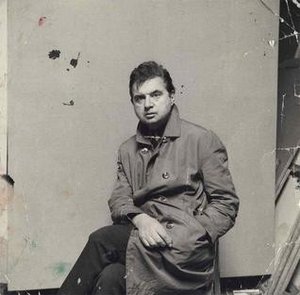
Francis Bacon
1909 - 1992 , Ireland
Quick Facts
- Artistic Movement Or Style: Expressionism, Cubism, Surrealism
- Artists Or Movements Influenced By This Artist: ['Post-War Expressionism']
- Artists Who Influenced This Artist:
- Pablo Picasso
- Egon Schiele
- Diego Velázquez
- Sergei Eisenstein
- Full Name: Francis Bacon
- Nationality: Irish/British
- Notable Artworks:
- Three Studies for Figures at the Base of a Crucifixion
- Study After Velázquez’s Portrait of Pope Innocent X
- Place Of Birth: Dublin, Ireland
- Date Of Birth: 1909
- Date Of Death: 1992
Related Articles
Francis Bacon's Masterpieces: Exploring 25 Iconic Paintings | OriginalUniqueArt
Delve into the haunting world of Francis Bacon with OriginalUniqueArt. Explore 25 iconic paintings, from his visceral portraits to powerful triptychs. Discover the stories behind these masterpieces & find museum-quality art reproductions for your home. Explore the full collection online!

White on Canvas: 10 Masterpieces & Timeless Elegance for Your Home Decor
Explore 10 iconic white paintings by Monet, Whistler & Rothko! Discover the stories behind these serene masterpieces and their impact on art history. Find museum-quality reproductions for your home decor at .

Dark Masterpieces: 10 Iconic Paintings Dominated by Black Tones |
Explore 10 iconic paintings dominated by black tones, from Rembrandt’s chiaroscuro to Goya's dark expressions. Discover the stories behind these masterpieces & find museum-quality art reproductions for your home at .
The Existential Anguish of Francis Bacon: Trauma, Form & the Post-War Condition
Explore the profound existential anguish of Francis Bacon's art. Discover how trauma shaped his iconic paintings & lasting influence on modern expressionism. A guide for discerning collectors.

Monochrome Visions: Exploring the Aesthetic & Historical Significance of Black & White Photography
Explore the rich history & artistic power of black and white photography. From early techniques to iconic masters like Ansel Adams, discover why monochrome continues to captivate art lovers today. Expert insights for collectors.


