
 Preview
 Send
Send Share
Share
 Details
 Guide
Guide

 Download
 Similars
 X-Ray
X-Ray Diaporama
 Stats
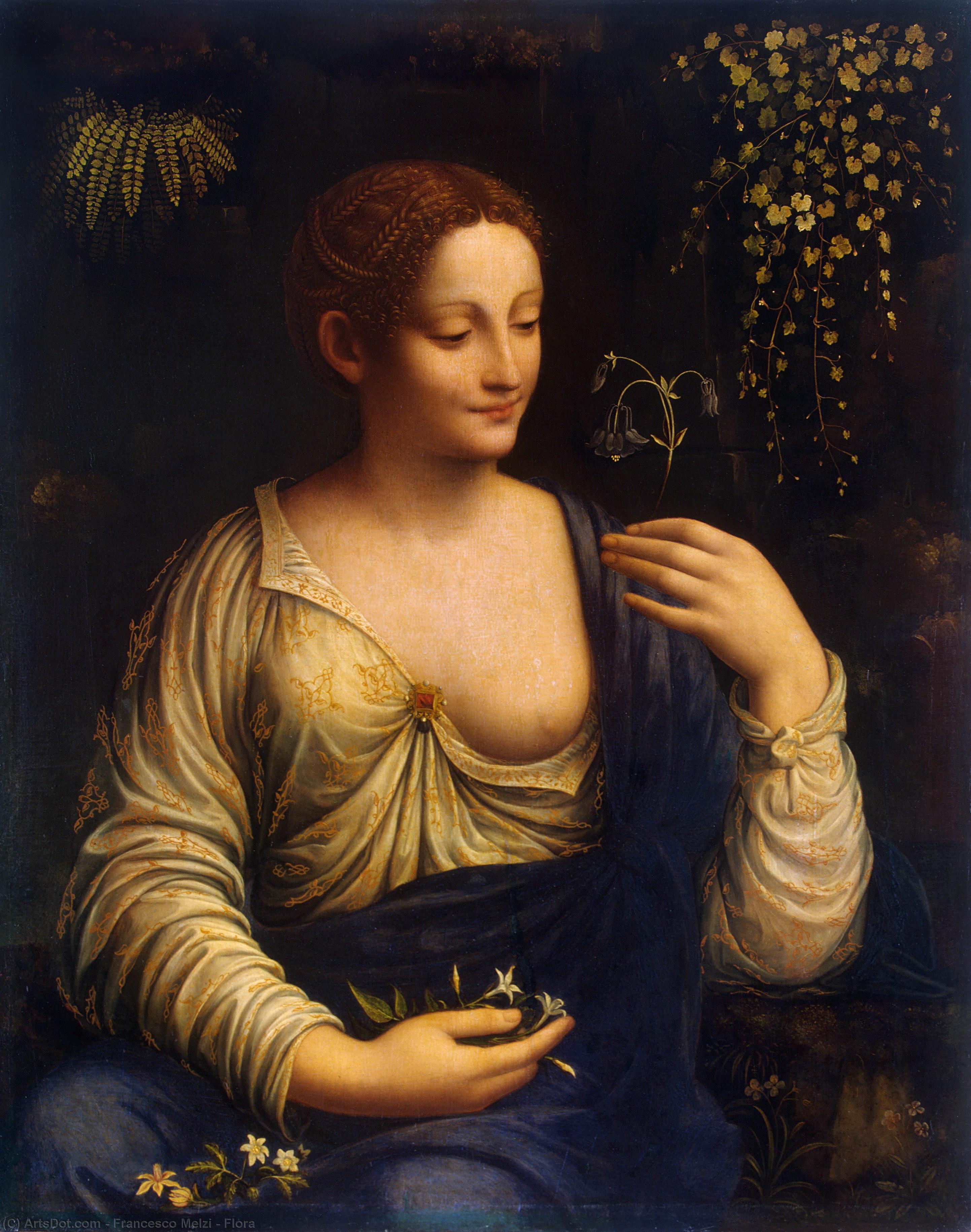
StatsFlora
 Acrylic On Canvas
- WallArt
- High Renaissance
 1517
1517 76.0 x 63.0 cm
 Hermitage Museum
 Read More
Get a print-ready file that goes far beyond the web preview. Every digital image we sell comes from a high-resolution master in our stock database — usually 5,000 to 15,000 pixels wide — so you can print large, crop tightly, or reproduce fine detail with confidence.
No file leaves our studio untouched. A digital expert checks the colors against the original painting and corrects them if needed, then improves clarity and detail with professional retouching tools — always staying faithful to the artist's brushwork and style. The result is an image that looks like the painting, not like a filtered scan.
You approve before you're done: our expert sends the image by e-mail within 72 hours for your review. Not satisfied? Ask for improvements or corrections, or request a refund if the quality falls short.
This is the quality relied on by publishers, design studios, galleries and print shops.
Digital Image
Download a high-resolution file for personal display, printing, and creative projects. ( Switch to Print Buy Hand Made Painting)
Included in Every Digital Image Order
Expert Digital Delivery, Guaranteed
When you choose OriginalUniqueArt.com, you're not just getting an image - you're receiving a professionally enhanced digital artwork, crafted with precision and backed by a satisfaction guarantee. Here's everything that comes with your order, automatically:

Fast Email Delivery
Your high-resolution digital image file will be emailed to you within 72 hours of ordering - ready for immediate use.

AI-Enhanced Digital File
Your artwork is professionally optimized using advanced AI tools and manual editing, ensuring maximum detail, clarity, and color accuracy.

Free Lifetime Re-Delivery
Accidentally deleted or lost your file? No worries - we'll resend it to you anytime, free of charge.

No Import Fees - Ever
Enjoy your artwork instantly with zero customs, duties, or delivery fees - digital downloads are always tax-free.

Color Accuracy Guarantee
We ensure your digital image reflects the original colors as closely as possible using professional tools and color management.

100-Day Satisfaction Guarantee
If you're not satisfied with your digital image, we'll revise it or refund 100% within 100 days - no questions asked.

100% Money-Back Guarantee
Not satisfied? Get a full refund within 100 days of receiving your digital file - no questions asked.

Bulk Order Discounts
Buy 3 images, save 10% - Buy 5, save 15% - Buy 10+, save 20%. Great for creative projects, galleries, and agencies.
A Portrait of Contemplation: Francesco Melzi’s “Flora”
Francesco Melzi's "Flora," painted in 1517-21, is more than just a beautiful depiction of a young woman; it’s a poignant window into the heart of the Renaissance and the enduring legacy of Leonardo da Vinci. This exquisite oil painting, now residing within the walls of the State Hermitage Museum in St. Petersburg, captures a moment of quiet introspection, inviting viewers to contemplate the delicate balance between beauty, nature, and the human spirit.
The subject, believed to be a lady from Leonardo’s circle – possibly Isabella de' Medici or another noblewoman – is presented with an almost ethereal grace. Her gaze, directed slightly downward, suggests a private thought, a moment of absorption lost in the contemplation of a flower held delicately in her hand. The composition is remarkably balanced, drawing the eye to the central figure while subtly incorporating elements of the natural world—a vase overflowing with lush greenery and a scattering of blossoms – that reinforce the painting’s thematic core.
The Master's Apprentice: Melzi and Leonardo
Francesco Melzi’s role in the artistic landscape of 16th-century Italy is often understated, overshadowed by the towering genius of Leonardo da Vinci. Yet, he was undeniably a pivotal figure, not merely as a student but as Leonardo’s closest companion and, crucially, his literary executor. After Leonardo's death, Melzi meticulously documented the master’s vast collection of notes, sketches, and ideas, culminating in the Codex Urbinas – a monumental undertaking that preserved Leonardo’s intellectual legacy for posterity. Melzi’s dedication to preserving this knowledge speaks volumes about their profound bond and his commitment to carrying on Leonardo's work.
The painting itself reflects Melzi’s artistic development, heavily influenced by Leonardo’s meticulous observation of nature and his masterful use of sfumato – the subtle blurring of lines and colors that creates an atmospheric depth. Melzi’s ability to capture this delicate effect is evident in the soft transitions between light and shadow, particularly around the figure's face and hands.
Symbolism and Renaissance Ideals
“Flora” resonates deeply with the core values of the High Renaissance. The painting celebrates beauty, harmony, and the interconnectedness of humanity and nature – themes central to humanist thought during this period. The flower itself is a potent symbol of fertility, renewal, and earthly delight, while the woman’s contemplative pose suggests an appreciation for the finer things in life and a connection to the natural world.
Furthermore, the inclusion of botanical details—the precise rendering of each leaf and petal—demonstrates the Renaissance fascination with scientific observation and knowledge. Leonardo himself was a keen student of botany, and this interest undoubtedly influenced Melzi’s approach to painting. The scene evokes a sense of quietude and serenity, reflecting the humanist ideal of finding beauty and meaning in the everyday world.
A Timeless Masterpiece: Reproduction Possibilities
Reproductions of “Flora” offer an exceptional opportunity to bring this captivating artwork into your home or office. Available through reputable sources like 1st Art Gallery, these high-quality prints capture the painting’s rich colors and intricate details with remarkable fidelity. Whether you choose a framed version for immediate display or a rolled canvas for custom framing, you'll possess a tangible connection to one of the Renaissance’s most enduring treasures.
Consider commissioning a hand-painted reproduction – a truly unique piece that honors the original while adding your own personal touch. The meticulous craftsmanship and attention to detail will ensure that your reproduction is not just a print, but a faithful representation of Melzi's masterpiece, ready to inspire for generations to come.
Questions & Answers
What color saturation does "Flora" by Francesco Melzi have?
"Flora" by Francesco Melzi is recorded with a subtle color saturation.
Is a download available for "Flora"?
"Flora" by Francesco Melzi can be downloaded from the artwork's Download page, as a high-resolution digital image download.
What is the emotional tone of "Flora" by Francesco Melzi?
The emotional tone recorded for "Flora" by Francesco Melzi is melancholic. It summarizes the feeling the work expresses.
Artist Biography
A Life Entwined with Genius: The Story of Francesco Melzi
Francesco Melzi, born into the nobility of Milan in 1491, occupies a unique and often understated position within the narrative of Renaissance art. He wasn’t a master who blazed his own trail with revolutionary paintings, but rather a devoted disciple, a trusted companion, and ultimately, the guardian of Leonardo da Vinci's extraordinary legacy. His life became inextricably linked to that of the Florentine genius, shaping not only his artistic development but also defining his enduring contribution to art history. Melzi’s upbringing within the sophisticated Milanese court instilled in him a sense of refinement and responsibility, qualities that would prove invaluable as he navigated the complex world surrounding Leonardo. His father, Gerolamo Melzi, served both Francesco Sforza and Louis XII, providing a backdrop of political engagement and cultural awareness for the young artist. It was within this environment that fate intervened, bringing the fourteen-year-old Francesco into the orbit of Leonardo da Vinci upon the master’s return to Milan around 1505.The Apprenticeship: A Bond Beyond Art
Leonardo quickly recognized something special in Francesco – a gentle nature, an eager intellect, and a handsome presence that captivated him. This wasn't merely a professional arrangement; it blossomed into a deep and affectionate bond. Francesco became Leonardo’s favorite pupil, his constant companion, and more than just an assistant. He accompanied the master on his travels, witnessing firsthand the unfolding of Leonardo’s multifaceted genius in Rome (1513) and later in France (1516). Beyond assisting with paintings and sketches, Francesco served as a secretary, meticulously scribing manuscripts like the *Codex Trivulzianus*, preserving Leonardo's thoughts and observations. Perhaps his most crucial contribution during this period was his role in compiling and organizing Leonardo’s vast collection of notes on painting into what became known as the *Codex Urbinas*. This painstaking work wasn’t simply transcription; it was an act of intellectual curation, ensuring that Leonardo’s artistic theories and techniques wouldn't be lost to time. He remained steadfastly by Leonardo’s side until his death in 1519, becoming the last of his pupils to share in the master’s final years – a testament to their profound connection.Preserving a Legacy: Beyond Artistic Creation
While capable as a painter himself—examples like his *Purported Self-Portrait* and *Seven Caricatures* demonstrate a refined hand and an understanding of Renaissance aesthetics—Francesco Melzi’s artistic output remains relatively limited when compared to the monumental achievements of Leonardo. His true legacy lies not in creating a vast body of original work, but in safeguarding and disseminating that of his master. Following Leonardo's death, Francesco diligently worked to complete unfinished paintings and plans left behind, ensuring their realization even after the artist’s passing. More importantly, he became the executor of Leonardo’s will, entrusted with the immense responsibility of caring for his artistic estate. This involved not only protecting the physical artworks but also preserving the intellectual wealth contained within Leonardo's notebooks and manuscripts. He understood the importance of these writings, recognizing them as a key to unlocking the secrets of Leonardo’s genius. Though immediate publication wasn’t undertaken, Francesco ensured that Leonardo’s ideas were carefully preserved for future generations.Family, Inheritance, and Enduring Influence
Returning to Italy after Leonardo's death, Francesco married Angiola di Landriani and established a family, fathering eight children. The responsibility of continuing Leonardo’s legacy remained paramount, however. His son, Orazio, would eventually inherit the precious manuscripts—a continuation of the trust placed in the Melzi family by Leonardo himself. This ensured that the knowledge contained within those pages wouldn't be scattered or lost but would remain accessible to scholars and artists for centuries to come. While often overshadowed by his illustrious mentor, Francesco Melzi’s contribution to art history is undeniable. He was more than just a pupil; he was a custodian of genius, a dedicated preserver of knowledge, and a vital link in the transmission of Leonardo da Vinci's revolutionary ideas. Some scholars, like Sigmund Freud, have even suggested that his close association with Leonardo may have inadvertently hindered his own artistic development, preventing him from fully establishing an independent style. Nevertheless, Francesco Melzi’s name remains forever intertwined with that of Leonardo da Vinci—a testament to a unique and enduring partnership that shaped the course of Renaissance art.
Francesco Melzi
1491 - 1570 , Italy
Quick Facts
- Artistic Movement Or Style: High Renaissance
- Artists Or Movements Influenced By This Artist: ['Renaissance art']
- Artists Who Influenced This Artist: ['Leonardo da Vinci']
- Date Of Birth: 1491
- Date Of Death: 1570
- Full Name: Francesco Melzi
- Nationality: Italian
- Notable Artworks:
- Self-Portrait
- Portrait of Melzi
- Seven Caricatures
- Place Of Birth: Milan, Italy