

 Preview
 Send
Send Share
Share
 Details

 Download
 Similars
 X-Ray
X-Ray Diaporama
Holy Family


 Read More
Hand Made Oil Reproduction
Hand-painted oil on canvas in your size and frame, made to order by our artists. ( Buy Print Buy Image)




P118B $10

P118H $10

P118W $10

P438Z $10

P508JH $12

P508YH $12

P805H $10

P805Z $10

P919BZ $10

P919G $10

P919XJ $10

P959ZH $10

P968JZ $12

W106C $8

W218G $10

W218JH $8

W218Y $10

W307PJ $10

W316G $10

W316PJ $8

W316Y $10

W398PJ $8

W4111J $10

W500HY $15

W500JH $15

W692G $12

W849H $8

W940BG $15

W953PJ $8




Pick from our preset sizes that match the artwork's original proportions.

You may enter your own dimensions to fit a specific frame or space. If your selected size does not match the original image's proportions, we will either crop the artwork or extend the painting with additional hand-painted elements. A digital mockup will be sent for your approval before production begins.
Please note that the on-screen preview does not reflect the actual cropping or extension. Only the mockup will accurately show the final composition.
While custom sizes are available, we recommend selecting a dimension from the predefined list to preserve the original proportions.
After order, OriginalUniqueArt.com team will email client for instructions and provide a mockup preview
Worldwide Delivery () in 3/4 weeks instead of standard 5 weeks. (21 August). No compromise on quality.

Free Worldwide Express Shipping

High-Quality Linen Canvas

Full Shipping Insurance

Customs Tax Refund Guarantee

True Color Matching Guarantee

60-Day Return Policy (Defects Only)

100% Money-Back Guarantee

Bulk Discount Offer
 Glass option is only available in size under 110 CM

Holy Family
Reproduction Medium
Reproduction Size
-


Total Price
$ 300
Artwork Description
The Serene Embrace: Fra Bartolomeo’s “Holy Family”
Fra Bartolomeo’s “Holy Family,” painted around 1490 in the heart of Florence, isn't merely a depiction of Christ, Mary, and Joseph; it’s an invitation to contemplate the quiet dignity and profound love at the core of their existence. Emerging from the workshops of Cosimo Rosselli and Mariotto Albertinelli, Bartolomeo—originally Baccio della Porta—developed a distinctive style that blended the dynamism of his early influences with a deeply contemplative spirituality. This particular work, housed in the Alte Pinakothek in Munich, exemplifies this evolution – a harmonious blend of Renaissance idealism and a nascent sense of emotional depth.
The scene itself is deceptively simple: the Holy Family gathered within a softly rendered interior space. Mary cradles the infant Jesus, her gaze filled with an almost palpable tenderness. Joseph stands protectively beside them, his posture radiating quiet strength and devotion. But it’s the introduction of Saint John the Baptist, a young child reaching out to Christ, that elevates this composition beyond a straightforward family portrait. This seemingly minor detail—the meeting of two pivotal figures in Christian iconography—is laden with symbolic weight. It speaks to the lineage of faith, the promise of salvation, and the interconnectedness of divine grace.
A Renaissance Palette: Technique and Style
Bartolomeo’s mastery lies not just in his subject matter but also in his meticulous technique. Painted primarily in oil on panel, he employs a restrained yet luminous palette dominated by earth tones—ochres, browns, and subtle greens—that evoke the warmth of domesticity and the solemnity of religious devotion. The artist skillfully utilizes *sfumato*, a technique borrowed from Leonardo da Vinci, to soften outlines and create an atmospheric haze that envelops the figures, lending them an ethereal quality. Notice how the drapery flows with a gentle grace, each fold meticulously rendered to suggest both weight and movement.
The composition itself is carefully balanced, drawing the eye towards the central trio while subtly incorporating elements of the surrounding space—a suggestion of architecture in the background, hinting at a stable or dwelling place. Bartolomeo’s attention to detail extends beyond mere representation; he imbues every element with meaning, creating a visual narrative that resonates deeply with the viewer.
Echoes of Savonarola: Spiritual Context
It's crucial to understand the historical context in which this painting was created. Fra Bartolomeo’s artistic journey was profoundly shaped by the rise and fall of Girolamo Savonarola, a Dominican friar who preached against the excesses of Renaissance Florence. Savonarola’s austere teachings emphasized simplicity, piety, and a return to biblical values – principles that deeply influenced Bartolomeo's work. This influence is evident in the painting’s restrained emotionalism and its focus on spiritual contemplation rather than opulent display.
The inclusion of Saint John the Baptist, often associated with repentance and baptism—symbolic cleansing—further reinforces this connection to Savonarola’s message. The scene subtly suggests a journey towards righteousness, guided by the unwavering love and protection of the Holy Family.
A Timeless Resonance: Emotional Impact
Despite its historical context, “Holy Family” transcends time with its enduring emotional resonance. It's not a grand, dramatic depiction of divine power but rather a quiet celebration of human connection—the intimate bond between parents and child, the unwavering devotion of a husband to his wife, and the profound grace of God’s presence in everyday life. The painting invites us to pause, reflect, and consider the values that underpin our own families and communities.
Reproductions of this masterpiece offer an exceptional opportunity to bring this serene embrace into your home—a visual reminder of love, faith, and the enduring power of family. It’s a piece that speaks volumes without uttering a single word, a testament to Fra Bartolomeo's artistic vision and his profound understanding of the human spirit.
Artist Biography
Early Life and Artistic Formation in Florence
Born Baccio della Porta on March 28, 1472, in the Tuscan town of Savignano di Prato, Fra Bartolomeo’s early life was steeped in the vibrant artistic atmosphere of Renaissance Italy. The nickname “Baccio della Porta” itself—meaning “Kiss of the Gate”—hints at a humble beginning, his family dwelling near the Gate of San Pier Gattolini. His formal training began around 1483 or 1484 when he entered the workshop of Cosimo Rosselli, a well-regarded Florentine painter known for his expansive fresco cycles. This apprenticeship provided a crucial foundation in the technical skills and stylistic conventions of the period, exposing young Baccio to the burgeoning artistic innovations sweeping through Florence. It was during this formative time that he began to absorb the principles of perspective, composition, and color that would later define his own unique style. From 1490 or 1491, a significant collaboration with Mariotto Albertinelli further honed his skills; their partnership resulted in shared commissions and a fertile exchange of artistic ideas, solidifying Baccio’s position within the Florentine art scene.The Shadow of Savonarola and a Spiritual Awakening
The late 1490s marked a turning point in Fra Bartolomeo's life, profoundly influenced by the fiery sermons and moralistic teachings of Girolamo Savonarola. The Dominican friar’s denunciation of worldly vanities and perceived corruption within Florentine society resonated deeply with Baccio, leading him to question the purpose and value of artistic representation. This spiritual crisis culminated in a pivotal moment: in 1500, profoundly moved by Savonarola's message, he renounced painting altogether and entered the Dominican Convent of San Marco as a friar. His most famous work from this period, the portrait of Savonarola painted in 1498, stands as a powerful visual testament to the reformer’s influence. The intensity of Savonarola’s gaze and the stark simplicity of the composition reflect the austere religious climate of the time. For several years, Fra Bartolomeo dedicated himself entirely to religious life, seemingly abandoning his artistic pursuits. However, fate—and the needs of his order—would soon intervene.Return to the Canvas: High Renaissance Serenity and Raphael’s Influence
In 1504, at the behest of his superiors within the monastery, Fra Bartolomeo was asked to resume painting, becoming head of the San Marco workshop. This marked a remarkable return to artistic creation, but one transformed by his years of spiritual contemplation. His style began to evolve towards an idealized High Renaissance aesthetic, characterized by serene compositions, graceful figures, and a masterful use of light and shadow. The “Vision of St. Bernard” (1507), though now in fragile condition, exemplifies this new direction—its ethereal quality and harmonious balance reportedly captivated the young Raphael during his visit to Florence. A close friendship blossomed between the two artists, fostering a reciprocal exchange of ideas and techniques. Fra Bartolomeo eagerly absorbed Raphael’s knowledge of perspective, while imparting his own expertise in coloring and the delicate rendering of drapery. This collaboration proved pivotal in shaping both their artistic trajectories. His figures became more elegant, imbued with a sense of inner peace and spiritual grace, and he increasingly focused on capturing the subtle effects of light upon form.Legacy: A Pioneer of Landscape and Religious Devotion
Fra Bartolomeo’s contributions to Renaissance art extend beyond his religious paintings. He was also a pioneering figure in landscape art, creating some of the earliest pure landscape sketches from Italy—remarkable for their sensitive observation of nature and atmospheric effects. These drawings demonstrate an early interest in capturing the beauty of the natural world, foreshadowing later developments in landscape painting. Throughout his career, he produced numerous altarpieces for churches across Italy, including works commissioned in Venice, Lucca, and Besançon. His final work, a fresco of “Noli Me Tangere” (Do Not Touch Me) at Pian di Mugnone near Fiesole, stands as a poignant culmination of his artistic journey. Fra Bartolomeo’s influence on Raphael is undeniable, contributing to the development of High Renaissance art. He uniquely combined profound religious devotion with exceptional artistic skill, creating works that served both spiritual and aesthetic purposes. His career represents a crucial transition from the earlier Florentine style towards the idealized forms and balanced compositions characteristic of the High Renaissance. Fra Bartolomeo died in Florence on October 31, 1517, leaving behind a legacy of serene beauty, spiritual depth, and artistic innovation that continues to inspire awe and admiration today.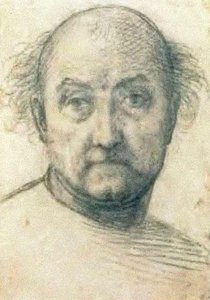
Fra Bartolomeo
1472 - 1517 , Italy
Quick Facts
- Artistic Movement Or Style: High Renaissance
- Artists Or Movements Influenced By This Artist:
- Raphael
- Mannerism
- Artists Who Influenced This Artist:
- Cosimo Rosselli
- Mariotto Albertinelli
- Raphael
- Date Of Birth: March 28, 1472
- Date Of Death: October 31, 1517
- Full Name: Fra Bartolomeo
- Nationality: Italian
- Notable Artworks:
- Savonarola Portrait
- Vision of St. Bernard
- Worship of Venus
- God the Father
- Place Of Birth: Prato, Italy
Related Articles

Turn Family Photos into Masterpiece Oil Portraits: The Art of Timeless Legacy
Transform cherished family memories into timeless legacies with bespoke, hand-painted oil portraits. Our master artists reimagine your photos as museum-quality masterpieces, offering unparalleled craftsmanship and elegance for the discerning collector.



